
It’s been a very busy week. For the world. For our country. And for me. So, this could easily be a very long issue – but I’m going to keep it to less than 10,000 words by touching on the major news issues and then giving you a link to a perspective about them that I thought was smart. Much of the rest of this issue is on two topics I’ve written about before: the gigantic economic and social shift that’s going to happen in the next few years because of the pandemic of artificial intelligence, and my thoughts about “the challenge of charity.”
When Artificial Intelligence Sounds Intelligent but Also Artificial

Renato’s social media post this morning was about meeting one of his BJJ mentors. The message was written in his usual confidently positive + nimbly humble style and voice. But there was something wrong with it. Something too smooth. Artificial. Missing were the little grammatical and diction errors that I suddenly realized were a part of the personality of Renato’s writing. Not flagrant mistakes, but the minor peccadillos one would expect from someone who had learned to speak English as an adult. It was obvious to me what the problem was. Renato had used AI to edit his post (or maybe even write it from scratch).
My first response to grokking this was a positive feeling about how useful this simple AI function could be for Renato and millions of multilingual people whose second (and third) languages are not fluent or even idiomatic.
I also had a mildly negative feeling that surprised me. His AI editing had managed to maintain several of the strongest aspects of his personality. But for me, as someone who knows Renato as a close and beloved friend, I found this “improved” version of his writing lacking.
I sent him a text to let him know how I felt about it. I told him that using AI was probably a very good idea for business correspondence and for social media communication with people that don’t know him. But when he wrote to me, I’d rather it be written in the imperfect but more human voice I’m familiar with.
Challenge After Challenge After Challenge!
Making Sense Out of Being Charitable

Before 1998, I had lots of interesting ideas about the goodness and the badness of charity. Most of these ideas were upside-downed through experienced.
In retrospect, I can understand why my dream of building a multi-functional community center in a remote and poverty-stricken area of a Third World country was destined for difficulties. In the 27 years since I opened that door, I’ve been hit by dozens of reality checks, which will be recounted in the book I’m writing about it: The Challenge of Charity. (You’ll find a chapter from the book in “Works in Progress,” below.)
I don’t feel that way about my other two dreams: creating a botanical garden specializing in palm trees and building a museum.
Creating the Botanical Garden: How Could This Have Been Problematic?
When I bought the first five acres of swamp land for the garden in 2013, I was confident that I’d get full support from the city of Delray Beach, Palm Beach County, and the neighboring residents who would have the daily use of it as a secondary, luxurious backyard.
That’s not what happened. Instead, it’s been a mind-numbing slog. Delray Beach isn’t supporting us. Palm Beach County is treating us like we are creating the county’s largest rehab center. The Lake Worth Drainage Something is trying to annex swatches of our property so they can sell the rights to them to GL Homes. And GL Homes is trying to run a road through the middle of the (now 25-acre) property as a fire lane for one of their multimillion-dollar developments.
In the last several years, I’ve spent at least a million dollars on lawyers and land planners and professional advocates to persuade these bureaucracies to allow me to realize my dream. That’s a million on top of at least $15 million I’ve already spent on buying the acreage, clearing it, building out the infrastructure (always to code), and planting thousands of plants and trees, including hundreds of rare species that botanical scientists and palm tree aficionados will love. And yet I’ve not yet gotten the permission I need to do the normal things botanical gardens must do to pay the rent – like allowing for business meetings and weddings to take place on the property.
But never mind. We will make it happen.
Building the Museum: A Simple Idea That Just Keeps Getting More and More Complicated
I’ve been an art collector for many years with a special interest in Central American modern and contemporary art that began when I started my resort and non-profit projects in Nicaragua.
I have the conviction that the art produced since the 1960s in Central America (Nicaragua, Honduras, Costa Rica, El Salvador, and Guatemala) is every bit as subtle and sophisticated as the art that has been produced in Mexico – or, for that matter, in the US and Europe – at the same time.
So the mission is to get the art world to recognize the value of modern and contemporary Central America art. And one of the ways we thought we’d do that was to build a museum specifically devoted to that cause and furnish it with hundreds of outstanding examples.
About five or six years ago, I had the brilliant idea of building that museum in the botanical garden. More than a few of the botanical gardens I’ve seen have museums, and I always felt that added substantially to the enjoyment of visiting them.
And so I picked out a three-acre parcel on the property and set about designing the building. It began, like most of my plans, with a modest footprint (for a museum) of 10,000 square feet. It ended up (after I read somewhere that the Parthenon was 20,000 square feet) at 21,000 square feet.
It was a fantastic plan. If I were Donald Trump, I couldn’t describe how fantastic it was.
But then problems with the local government bureaucrats popped up. They were using the very good proposal of building that museum to extort more land from me – land that they would then sell to GL Homes for a profit.
With the money I was spending on getting the garden approved, I realized I couldn’t afford to fight them. So I decided we would locate the museum somewhere else.
And that’s where we stand now – a government approved 501-C3 non-profit museum with all the requirements such museums must adhere to, but without a building to adhere to them in.
For example, we must be open to the public at least 20 weeks a year. How to do that without a 21,000 square-foot building? Or even a measly 10,000 square feet?
The solution was to warehouse most of the collection during the time it will take to find a building and meet the requirements by holding exhibitions of individual Central American modern artists on the second floor of my cigar club/ man cave, which was completed in late February.
We had the opening of our first exhibition on March 30. The featured artist was Benjamin Cañas, a brilliant surrealist from Guatemala whose works I’ve been crazy about since I saw one in Guatemala in 2015.

The opening, I am relieved to say, went over “smashingly.” Click here to read a piece that announced it in the local media.
And to make matters even better, just yesterday morning, Suzanne (my partner in all things art) sent me this.
Listen Up, My Info-Marketing Colleagues!
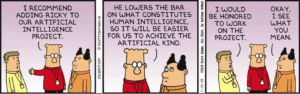
AI Is Going to Rock Our World… Get Ready!

Artificial Intelligence (AI) wasn’t much more than a curiosity for direct-response marketers and publishers (like me!) until very recently. But it’s fast becoming a real thing – something everyone in the information industry needs to pay attention to. And it’s not because it’s going to make all of us happier and richer, which is what some pundits are claiming. We have to pay attention to AI because it is going to significantly change the economics of what we’re doing.
I should not have said “going to.” AI is already moving forward with its inevitable, unconscious mission. It is making it much easier and cheaper to produce informational content. And it is doing so in a very user-friendly manner, so that anyone – even people without any AI experience or interest in learning about it – can do it.
The effect of that is already obvious. AI is drastically expanding the supply side of information marketing by allowing millions of complete amateurs all over the world to insert themselves into the arena and compete with the rest of us who have been in it for decades.
You may be thinking: “Okay. AI may be allowing some newbies to try their hand at what we do, but – given the knowledge and skill that we apply to it – it can’t possibly do it with truly creative work.”
Well, I’m here to tell you that, yes, there are undeniable limits to AIs abilities now. But my recent experience working with it has me thinking that there may be no limits to what it can do. And in fact, much of the high-paid “creative” work that exists in plenitude in the information industry now may be the first to be replaced.
AI is not currently producing the highest levels of creative and analytical writing that most of our best writers are producing. And there are good reasons for that which I’ll mention later. But from what I’ve been seeing in the last few months, it’s clear to me that AI is capable right now of producing B-level writing. And that’s not nothing. Especially when you consider that probably 80% of all commercial (i.e., paid for) writing is B-level quality.
With respect to writing, AI’s biggest handicap is how it’s designed: as a predictive machine that is always searching for the word or sentence more likely to follow the word or sentence that was just written.
What this does is bias the writing towards logic and common sense. And writing that is both logical and sensible is writing that is correct but also obvious and therefore unremarkable.
TS, a colleague of mine and an A-level copywriter, pointed this out to me several months ago. In response to my amazement at the many writing chores that AI does perfectly well and with lightning speed, he said that most of the copywriters in our industry are using AI now – but as far as he knew, none of the AI-generated copy was outperforming copy written by flesh-and-blood masters.
His theory on that was very good. He said that breakthrough advertising is almost always in some important way unconventional. It could be in the theme, or in the language, or in the writer’s approach to the subject, or even in the tone of voice. But there is always something about copy that blows away its competition that is uncommon.
As soon as he said it, I knew he was right. But he was talking about the capability of AI to write advertising copy today. The nature of AI is that it is a self-teaching and learning machine. It improves its skills, all of its skills, every day and hour and minute.
If you contemplate how many millions of ambitious people are already using AI to get into information marketing, it’s impossible to avoid the possibility (probability) that in the not too distant future, AI will be producing copy that will be as good as or better than the copy produced by A-level human copywriters And if that happens, what?
Am I the Only One Worried About This?
That’s the question I ask my colleagues when they tell me they don’t believe AI will ever be able to match what the best copywriters can do.
When they make that claim, I wonder if it’s because they don’t grasp the precarious situation they (we) are in. Or if it’s because they do understand the threat, but have no idea what to do about it, so they’ve decided to simply ignore it.
I tell myself that they could be reassuring themselves with an almost-always-true fact about technological innovations – that most of the time, while they do lay waste to some jobs and some professions, they stimulate alternative market needs and opportunities that make up for all the jobs lost, and usually expand the economy.
And I consider the possibility that I am wrong to worry about AI as a job disruptor and they are right.
If that is so, then reading what I have to say here may be a 15-minute waste of your time.
But what if I’m right?
If I’m right, you should not only read what I have to say but read it twice and think about it more than twice and get prepared to survive the future.
There is one thing that no one that knows anything about AI would dispute: AI technology is developing extremely fast – much faster than anyone believed just a year ago. And the speed at which it is changing is getting faster.
How Will That Affect Our Industry?
My prediction – well, I’ll call it an intuition at this point – is that we are at the first stage of a reconstitution of the market environment we’ve been working in for the last 20 to 25 years. It will render obsolete a good part of the marketing and product-development knowledge we have gained and many of the valuable skills we have developed – the important competitive advantages that have made so many of us so many hundreds of millions of dollars for so many years.
And unless we begin to act now, we could very well be left struggling and losing market share to the many smaller competitors that are coming online in droves every month as they figure out the new standards and protocols and move ahead of us.
What I’m Seeing That Worries Me
In the June 6 issue of this blog, I recounted some recent experiences I’ve had with small- and medium-sized companies that produce graphic art – everything from creating signs for local businesses to making videos for influencers and direct response marketers on the internet to making A-quality video commercials for TV.
And what has shocked me is not that so many of these businesses are beginning to incorporate AI into their production protocols, but that they are losing contracts and clients to much newer and smaller companies (and sometimes even to individual creatives) that are producing equal or better quality graphic products and selling them for a fraction of what they were getting just a year ago.
What I’ve seen convinces me that this area of the information publishing/marketing industry is at the early stages of a massive deflation in both the perceived value of the products they produce and also in the prices they will be able to charge.
I see the same future for the production of editorial and marketing content.
In fact, I just heard a story about a freelance copywriter who was given a contract for $10,000 to write one long-form advertising piece and supplied it, along with three variants, two weeks before his deadline.
I wonder how he did that!
Those of us on the content side of the information industry may be able to accept my view of the implosion of the graphic side of our business, but we are much less willing to believe that the same thing could happen to us.
And that’s because we believe that there is something in the work we do that is so high on the skill hierarchy of creativity that no mechanical system will ever be able to compete with us.
I don’t think that’s true. My secret belief is that the greater the amount of creativity required, the easier it will be for AI to eventually learn how to do it. But that’s a theory.
What AI Is Capable of Delivering Now
I know from personal experience and because I am working with content creators on a daily basis that AI is already being used for several of the most common content-creation jobs.
Doing Research: Most of the writers (editorial and copy) I know, for example, are currently using AI for research. It doesn’t take much experimentation to discover that research that would take hours without AI can be done in – at most – half an hour. And that’s assuming the AI user is new to the subject he is writing about and is thus not capable of giving AI all the direction it needs to produce what he’s looking for.
He reviews the 30-minute output and spends maybe another 30 minutes giving AI some corrections and directions (mostly things he could have done on the first round if he’d had more experience). He hits “send,” and in about 15 seconds he gets pretty much the equivalent of what he could have produced in eight hours the old-fashioned way.
Creating Outlines: Experienced writers know that they will produce much better work with much less rewriting if they start with an outline, however much they may chaff at doing it.
I’ve been using AI to write outlines for my longer essays and even, retroactively, for the books I’m writing. I’ve found it enormously helpful in providing structure for what I’m planning to cover, right from the start. And that, too, can save me a lot of time.
As with research, I don’t expect the first outline I ask for to be exactly what I need. But since I know I can give AI feedback on how to revise the outline, and get that done in a matter of seconds, I am now in the habit of generating two or three outlines before I begin a writing project, just to see what the possibilities are.
Fact-Checking: The speed at which AI can run through a 2,500-word essay or article and identify all questionable facts is almost scary. And since we know that facts can be spun in any number of ways, we can use AI to give us the facts we want and give us ways of presenting the facts we don’t want in a way that does not completely undermine our intents.
Editing: AI can also edit copy – and not just in the way we writers have become used to editing – i.e., spelling and grammar checks and FK scores and other ways of rating readability. AI can provide a higher level of editing, the sort you’d expect to get from a seasoned professional, to make your argument solid and even persuasive.
The one thing that, in my experience, AI cannot do all that well right now is generate text from the outlines that satisfies me. Because of the way AI works – i.e., looking for the next most likely word or phrase – the bulk of the text itself will tend to feel solid enough but hardly riveting.
So what I’m saying is that, right now, writers can use AI to reduce the time it takes to produce a middle-to-longish piece by between 20% and 50%.
And what that means to businesses that buy information content is that their expectations of how many dollars they are willing to pay for each word they purchase is going to come down gradually but significantly in the next five years, starting in 12 to 18 months.
What Will Change (Sooner Than We Think)
Here’s how I think all of the above is going to change the economics of content creation and the value of information in the years ahead.
Let’s begin by thinking in terms of Economics 101: supply and demand.
On the supply side, I foresee an exponential increase in the volume of published content – both free and paid. Consider these scary facts…
* In 2025, there are more than 4,100 Media Streaming Services, Social Networks, and other content providers in the US alone.
* The number of internet service providers is much higher, with nearly 3,000 providers, including those offering DSL, cable, fiber, fixed wireless, and mobile broadband.
* And how about this? In 2023 alone, daily AI-assisted blog production rose from under 1 million to over 5 million posts.
* But that’s nothing compared to this: The number of active bloggers in the US in 2025 is approximately 31.7 million.
* And by 2026, over 90% of online content will be AI-generated, (according to Europol)
* And finally this: OpenAI’s GPT-4 Turbo and Google’s Gemini 1.5 can already produce hundreds of pages per hour.
On the demand side, I don’t see AI reducing the public appetite for information, even though the literate world is already flooded with – no, drowning in – information. Even as I write this, I’d bet that the supply of information available for sale in the information industry is probably ten times more than the current demand.
And as I alluded to before, I don’t see any other industries popping up as a result of all this increase in supply. There may be something I haven’t thought of, but I’ve been trying to imagine what that could be, and so far, I’ve got nothing.
What I do see, thanks to AI, is a gradual increase in the expectations of information consumers. They will expect more than what they are getting now for less. And they will expect the quality of what they are getting to get better over time, just as their technological tools have gotten better over the last 20 to 25 years.
Specifically, I believe information consumers are going to fairly quickly become…
* Less trusting of information and advice they receive from sources they know
* Skeptical of information and advice they receive from sources they don’t know
* Leery of anything presented as fact
* Distrustful of visual evidence, such as videos and photos
At the same time, they will expect…
* An infinite supply of digital information/ education/ entertainment on any topic of interest to them for free
* Hollywood-level production values for information/ education/ entertainment presented in video formats
* Intuitive, one-touch navigation and ordering technology, including forms, queries, and passcodes delivered automatically, safely, and instantly by AI
* One-touch, hyper-helpful and friendly AI-driven customer service, including order taking, complaint making, and processing address changes, cancellations, and refunds
What Won’t Work Anymore
If I’m right about that, then a lot of the kinds of information we are publishing and marketing now will become less and less valuable in the eyes of consumers in the years ahead.
On the positive side, I see an advantage for information publishers and marketers that can produce more specialized, high-quality content that the small- and medium-sized producers will not be able to afford.
On the negative side, I believe that a great deal of content that is just good enough for yesterday’s information consumers will no longer be marketable.
Even some of the content delivery systems – blogs, vlogs, digital newsletters, and so on – will have trouble keeping up with consumers’ growing expectations.
What the Information Publishing Industry Must Do to Survive (and Maybe Prosper)
We need to rethink the nature and value of the information products we are selling.
We need to recognize that the market for “okay” level information is going to shrink as it becomes flooded with okay-information producers. And we must find ways to reinvent our products so that they provide better quality information at either the same prices we are charging now or more.
We must also recognize that in every universe of every sort of information buyer, there will be a large block of consumers that are going to demand “okay” and even “good” quality information in more quantity and at cheaper prices. But there will also be a smaller segment of the market (maybe 20%) that will be more than happy to pay considerably more for what they see as ultra-high-quality information. If we can acquire a fair portion of those customers, it’s possible that our profit margins may even go up.
And there is something else I believe we must do that is even more important than increasing the amount and quality of the information we sell. I think we need to figure out how to give our customers things that AI will never be able to give them – things like trust, respect, admiration, affirmation, comradery, intimacy, and hope.
How, you might rightly ask, do we do that?
Here’s where I have to look into my crystal ball. And what I see is that we need to convert our publications into something bigger and more inviting, into something that can deliver trust, respect, affirmation, etc.
Instead of just disembodied ideas and advice from distant experts, we need to provide our customers with environments – immersive, evolving, multi-platform digital communities where they can go not just for news and education and information and entertainment, but for identity, connection, and transformation.
We need to put our customers on journeys they are inspired to take, journeys they can take with like-minded travelers with the same world views and values, moving along the same road towards a common objective that is, for them, a worthy personal and social good.
These communities must also be populated with people whom they admire and trust. Not just as experts talking to them, but as fellow travelers they can meet, not just on a printed page, but on the community’s social media sites and, at least once a year, in person.
What Our Publications Will Look Like… If I’m Right About This
The following is, admittedly, speculation. But because we don’t know exactly what will happen, we need to speculate.
In the future (including the near future), our typical information product would contain three levels of information: superficial, competent, and masterful.
It would also have three delivery information vehicles: text content, audio content, and video content. (This is inevitable because of how efficient AI is becoming in translating text content into other media.)
In terms of the quantity and timing of publications, I think it will largely continue as it now: daily, weekly, and monthly content. I think that’s going to stay the same because that protocol has been tested now for more than 25 years and it seems to work universally.
Here’s how I think it might look:
* Daily free content focusing primarily on topic-related news
* A weekly essay or speech that reinforces the core belief system of the “community”
* A weekly Zoom chat between senior members that can be audited by all
* A front-end and several back-end advisories – as we do now, but each would exist within the context of an active community of users with direct access to experts.
And there’s one more big change that AI is going to make for information publishers and marketers…
The Enormous Potential of Using AI to “DOGE” Everything We Do!
For those that get to work on developing it now, AI has the potential to make everything we do easier, faster, and cheaper. That would include basic tasks and functions like inputting and tracking orders, processing payments, making bank deposits, issuing refunds, and all aspects of product fulfillment and back-end sales.
This is already being done by several of my clients and the early results are promising. Based on what I’ve seen, I expect operational costs for businesses like ours to drop by 20% to 50%.
That is no small reduction. It will allow us to significantly increase our gross profit margins or at least keep them where they are if the market demands lower pricing.
I feel confident that these changes are going to happen quickly. The last major shift – from print publishing to digital publishing – took a decade. The shift from human-driven to AI-powered content production (and reduction in overhead costs) may take just three years. And a good deal of it will start happening in the next 6 to 12 months.
Again, I may be wrong about this. But I may be right. And if I am right, or even half right, it behooves every information marketer and publisher reading this to begin preparing for the change now.
Baseball Blues
From The Challenge of Charity

It was probably 20 years ago – several years after three business friends and I decided, on what can only be defined as a whim, to pool some money and buy 1,800 acres of hills and cliffs and cow pastures on the pink sandy coastline of the Pacific Ocean in Nicaragua.
We had reached that point in pioneering where one member of the group looks at the others and asks, “Whose idea was it to do this?” And nobody takes credit.
No, actually we were beyond that point. We were at the point you can get to if you’re attempting to climb a cliff when you have no idea how to climb a cliff, wishing you could turn around and come back down but realizing that your chance of surviving is a little more likely if you keep going.
There’s a book I could write about all the business and investing misunderstandings and mistakes we had made by then in purchasing the land, figuring we could retire there and live like kings cheaply, or even live there free and maybe earn a profit by converting the acreage into some sort of rustic, seaside paradise by selling a few hundred yards of beachfront lots.
But this isn’t about the morass of misunderstandings, mistakes, and mishaps behind what eventually became the resort community of Rancho Santana. It’s about an entirely different morass of misunderstandings, mistakes, and mishaps that I was personally responsible for, having decided to put every dollar I made from developing Rancho Santana, and many more dollars I had made from other businesses, into another brilliant idea – creating a community center to benefit the hundreds of very poor people that lived in the neighboring towns and hamlets.
At that time, Nicaragua was still climbing out of the economic well it had fallen into after the 1979 Sandinista Revolution that brought socialism to the country and implemented the redistribution of wealth and property, followed by a cultural revolution that redistributed social and political power, which, against best intentions, resulted in Nicaragua transitioning from one of the wealthiest countries in all of Latin America to one of the poorest in 11 short years.
But it’s not my point to talk economic theory here. The point I interrupted myself from making is that, thanks to my brilliant idea for the community center, I found myself in a morass of misunderstandings, mistakes, and mishaps that was every bit as difficult as the business situation my partners and I stumbled into when we bought the land.
I could start from the beginning, but I will fast-forward to a story that begins just after we had finished the sports component of the community center, which consisted of an indoor complex featuring a fully-equipped gym, cardio equipment, an aerobics and yoga room, a martial arts wing, covered basketball courts, a European-sized soccer field, and a baseball field that was built to American standards – which meant that, besides having proper dugouts, bleachers, changing rooms, bathrooms, and a concession stand, it had to be covered with grass. So in constructing the field, to ensure proper drainage for the grass, we first had to remove the clay that was already there to about 30 inches, and then raise the whole thing back to ground level with several layers of rocks and gravel and sand and, finally, topsoil.
(The build-out of the sports complex cost me more than three million dollars, with the construction of the baseball field alone taking up about 10% of that because of having to truck in hundreds of loads of material from hundreds of miles away.)
Considering that the local baseball leagues had been, till then, playing their games on rocks, sand, and weeds, I was justifiably proud of our field when we opened it to the public.
On opening day, our Rancho Santana team, dressed sharply in the uniforms and using the new gear I had bought them, took to the field looking like pros, and they played like pros. And when I say that, I’m not exaggerating. The level of skill you will see at amateur baseball games in Nicaragua far surpasses anything you will see in the US.
The rest of the story plays out like a Hallmark cliché. We lost our first game handily – but with support from Rancho Santana’s CEO and several other baseball fans among our employees and homeowners, our team got gradually better, managing to eke out a spectacular win in the last game of the season to take first place in the league.
So… a happy ending. Right?
Yes, but no. The actual story I wanted to tell you is about what happened the following year, a week or two before the start of the second season, when our team was going to be defending its championship against seven or eight other local teams.
Two representatives from the team asked to meet with our CEO and me to discuss what, if anything, we could do to further support the team in the upcoming season.
I was thinking they might be wanting more practice time on one of our fields, or perhaps an automatic pitching machine or a batting cage.
They were, indeed, interested in all those things. But they had other requests that surprised me. They wanted new equipment: new balls and bats and gloves. They also wanted – no, expected –brand-new uniforms.
“Why do you need new uniforms?” I asked. “Last year’s uniforms are still in good shape.”
The two men looked at each other sheepishly. “It is just what the team thinks is right.”
“And why is that?”
“The pro league teams get new uniforms every year,” one of them said. “And we won the championship last year,” the other chimed in.
“But this is an amateur league,” I said. “It’s like Little League in the United States. They don’t get free uniforms every year. In fact, they don’t get free uniforms ever. They have to pay for them.”
This didn’t seem to impress the team reps. Perhaps they thought I was lying. Or perhaps they thought that in America everyone is rich and so nobody needs free uniforms. But in Nicaragua, almost everyone is poor, so… so, I don’t know. Because they were poor, they should get free new uniforms every year?
It made no sense. But instead of trying to argue the point – and against my better judgement – I gave in and offered a compromise: I would buy the team new uniforms if they agreed to spend one of their days off repainting the bleachers and dugouts (which really needed it).
The reps looked almost confused by my proposal, but agreed to take it to the other players to see what they thought of it. I figured it was a no-brainer. How could they say no?
I was wrong.
When they came back a few days later, they told me that the team had discussed it and decided that it was wrong for me to ask them to work on a day off – and that I should really just give them the uniforms for free.
“I don’t think I can do that,” I said.
“If you can’t,” they said, “then we have decided. We will have to go on strike.”
“On strike!” I stammered. “What do you mean you will go on strike?”
They explained that they would not step on the field again until they could do so in brand-new uniforms.
“That’s insane,” I argued. “The old uniforms are fine. And none of the other teams in our league have uniforms like we have. They wear bits and pieces of all sorts of discarded uniforms, some of which are decades old.”
“But the guys that play for the pro leagues get new uniforms every year,” they said.
“They are professionals,” I said. “And the pro league makes a lot of money – more than enough to pay for new uniforms each year.”
They didn’t say anything more. To my credit, neither did I. We left the “negotiation” at a stalemate. I went back to working on my other businesses and didn’t think about our baseball team again until several weeks after the new season had begun. I stopped by a game one Sunday, and they were playing in the old uniforms.
Lesson Learned
I’ve probably told this story a dozen times since it happened and it always seems to have the same effect on those hearing it as it had on me: What were these people thinking?
How is it possible that, after playing league baseball in T-shirts and jeans for years and years, and someone was nice enough to give them uniforms, they would tell that person a year later that he should give them another round of new uniforms every year?
I’ve been asking myself that question since it happened – and I have a couple of ideas about some of the factors that could have contributed to their reaction.
For one thing, growing up in a socialist economy, the only financial assistance they had experienced until then had been in the form of government programs, such as the allotment of rice and beans distributed to public schools throughout the country, and these programs generally continued automatically each year.
Plus, growing up in a socialist education system, they had been taught the socialist view of government and its responsibility to the poor: to redistribute wealth from the Nicaraguans that had too much of it and spread it among those that had too little.
But these were only factors that might have helped them rationalize their expectations. Given the experiences of dozens of others that I’ve read about, providing all sorts and levels of help to people all over the world, the one thing I am sure of is that there is something in the human psyche that applies to all people: We seem to have an amazing ability to feel entitled to things we have been freely given, even if we do nothing to deserve them.
I realize that’s a pretty broad statement to make. In future chapters of this book, I will come back to it, looking at this very curious and mildly disturbing human trait to see what more we can make of it.
“To give away money is an easy matter and in any man’s power. But to decide to whom to give it and how large and when, and for what purpose and how, is neither in every man’s power nor an easy matter.” – Aristotle
“Our Knowledge System Has Collapsed.
Can We Survive Without It?”
By Ted Gioia

I just read an article in The Free Press titled “Our Knowledge System Has Collapsed,” in which the author, Ted Gioia, seems to have the same concern I have about AI, although he takes it to another level.
Like me, he argues that the AI revolution is the most consequential transformation of our century. Like me, too, he says it is already underway, even if it hasn’t been widely recognized at scale. He compares it to past seismic shifts – the Renaissance, the Enlightenment, or the rise of Christianity, events that took centuries to earn names yet reshaped everything. “The biggest changes often happen long before they even get a name,” he says. “By the time the scribes notice, the world is already reborn.”
Another concern we share is that our entire cultural and informational infrastructure – where truth, expertise, and credible knowledge historically resided – is now unravelling. Politically, socially, and economically, Gioia asserts, the system of knowledge that oriented us for centuries has weakened to the point of collapse.
I don’t agree with all of his claims – for example, his assertion that without shared sources of truth, collective decision-making becomes volatile and that populism, misinformation, and factional narratives fill the void. But overall, the essay provides several “takeaways” that are worth considering:
1. We’re mid-transition right now, and the full significance isn’t obvious yet – just like what happened with the Renaissance. But what we are experiencing is a total shift – one that, like the Renaissance, deserves a name.
2. This isn’t insider curation, it’s a grassroots rebellion: We still trust folks with hands-on skills, but distrust those with credentials only.
3. The “knowledge collapse” Gioia refers to in the title of the essay isn’t nostalgia for old institutions. It’s an urgent wake-up call. We must find new ways to ferret out what is true and what is just AI.
You can read the essay here.
From Gratitude to Entitlement
This very short video identifies five “challenges” of charity that I experienced in my early days of developing my non-profit foundations. I resisted the truth, but when I finally came around to accepting it, it put me on a much better journey that has become the motto of all my family’s charitable projects: “Do less harm than good.”
How Foreign Aid Keeps Africa Poor
As someone who spent two years in Africa as a Peace Corps volunteer and as someone who has a non-profit program in Nicaragua, my understanding of Third World economics is probably better than most. In this 5-minute video, Magatte Wade, a Senegal-born entrepreneur, provides a trenchant explanation of how foreign aid to the world’s poorest countries keeps their economies in poverty.
How Do Lobsters Grow?
Here’s another very short video I think you will like. An important lesson about life that is explained by the very watchable Rabbi Abraham J. Twerski in exactly 1 minute.
Magatte Wade

Magatte Wade is the Director of the Center for African Prosperity at Atlas Network, the leading organization of African free market think tanks. She was listed in Forbes “20 Youngest Power Women in Africa,” and was recognized as a Young Global Leader by the World Economic Forum, and as a TED Global Africa Fellow. A sought-after speaker, Magatte has presented at the United Nations, Aspen Institute, World Economic Forum, TED, Harvard, Stanford, Yale, MIT, and UC Berkeley. She’s been featured in The New York Times, The Wall Street Journal, The Guardian, CNN, Fast Company, Fortune, Jordan Peterson’s Podcast, and Lex Fridman’s Podcast. Learn more about her here.
Cannibals of the Insect World
From Smithsonian Magazine’s annual photo contest…
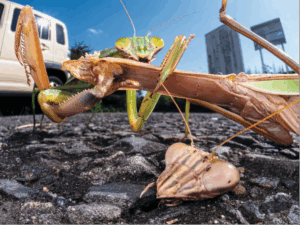
Takuya Ishiguro, who works as a production engineer in Osaki, Japan, was in his car on the lookout for praying mantises to photograph. “I was driving slowly,” he recalls. He pulled over and approached the insects on foot, only to realize he’d happened upon one of the insect world’s most taboo occurrences, at least from a human perspective – a praying mantis snacking on another one. “That this image was caught in such an urban setting – not in a tree, or a bush, or on any type of plant, but on the ground, on what looks like asphalt – amazing!” said Maria Keehan, Smithsonian Magazine’s creative director and a contest judge.