
Can Zohran Mamdani Make NYC as Great as Gavin Newsom Made San Francisco?
For most of my life, the image of a “failed American city” was Detroit, whose population dropped from 1.85 million in 1950 to about 630,000 today. I became familiar with Detroit during the mid-1970s, when I was studying for my MA at the University of Michigan.
I visited the city several times and was saddened to see what was once a wealthy industrial city and the hub of the American automotive industry in the process of rapid decline, with large sections of the cityscape converted to public housing and blocks of the downtown commercial district already in a state of abandonment and disrepair. It has deteriorated since then.
Efforts to revive Detroit through various federal handouts and city projects have failed. It’s now an economic disaster zone. I find it difficult to imagine it ever recovering.
And Now… There’s a New Failing City on the Map
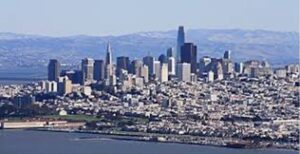
Between 2019 and 2021, San Francisco lost 6.3% of its population, a greater rate of decline than any two-year period in Detroit’s history and unprecedented in any major US city.
Detroit’s fall was primarily driven by the relocation of the US auto industry to southern, right-to-work states, where auto producers, including foreign firms who build autos here, were able to avoid the union conflict that was endemic in Detroit.
San Francisco’s decline is not driven by macro-economic events out of its control, but by absurdly bad local economic policies supported by the same voters that are supporting Mamdani now.
During the same period, San Francisco lost 6.3% of its population, representing nearly $7 billion of household income, even after accounting for people who moved into the city.
Taxpayers who filed 2019 tax returns from San Francisco and 2021 returns from a new location reported an average annual adjusted gross income (AGI) of nearly $196,000. But because the income distribution is such that the median income is greater than its simple arithmetic average, the median income of taxpayers who left San Francisco would probably have been around $250,000.
And as those dollars left, so did the economic activity that those individuals directly and indirectly created.
Where’ve the Big Companies & Wealthy Taxpayers Gone?
They are moving to destinations that do not have San Francisco’s drug and crime issues, its poorly performing public schools, its homelessness, its extremely high cost of doing business, and other problems that people have been tolerating only because San Francisco was once one of the world’s great cities. As someone who loved San Francisco, it pains me to say it no longer is. And I suspect that those who departed the city, whose exits left it with 60,000 fewer taxpayers, feel the same way.
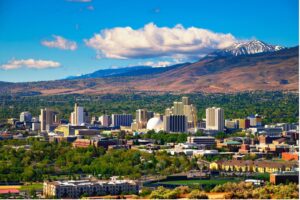
Washoe County, Nevada, site of Lake Tahoe, a popular ski resort, attracted hundreds of San Franciscans who have an average AGI of well over $300,000. So did Palm Beach, Florida (where there is no state income tax).
The broader Bay Area, home to Silicon Valley, lost over 2% of its tax filers. The San Francisco metro area lost a total of nearly $14 billion in household income between 2019 and 2021 – and those leaving were wealthy enough that the city’s median income dropped by 4.6%.
Teton County, Wyoming, home to Jackson Hole and other well-known ski resorts, has been the chosen destination of the wealthiest San Francisco ex-pats, representing an average annual household income of nearly $600,000 and a total income loss for San Francisco of $37 million over that same two-year period.
These people did not leave San Francisco because of high housing prices.
According to Zillow, the median home price in Jackson Hole, one of the few locations in the United States where home prices are still rising, is $1.5 million, which is $200,000 higher than San Francisco’s median home price, which continues to fall.
So How Bad Is San Francisco Now?
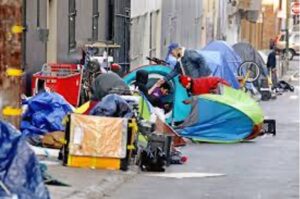
Some city blocks are still safe and beautiful. As in every declining city, the primary tourist areas and wealthiest neighborhoods are well policed and still providing street-savvy citizens and unsuspecting visitors with protected areas to enjoy. But the safe zones are getting smaller as big companies, their rich founders, and their highly paid executives choose to live their lives somewhere else.
Other city blocks have been taken over by drug gangs selling fentanyl in open-air superstores. (Think of an opioid version of Costco, without the membership card.).
San Francisco’s downtown has suffered the most, as many tech companies have decided to reduce or eliminate their office space footprint in the area. The office vacancy rate in the city is 27%, up from just 4% in 2019.
One San Francisco tech entrepreneur took photos of the downtown on weekday mornings, times when the area historically has been crowded. Look at these photos and you will think that they were taken on a Sunday or a holiday, not during a normal workday.
The city estimates that downtown foot traffic has declined about 64% compared to 2019. Empty office buildings could cost San Francisco $200 million per year in lost property taxes. And as tenants have sublet their office space, nearly 50% of that space will be up for renewal in about two years, raising the potential for even more losses.
Can San Francisco Be Saved?
As what happened in Detroit, San Francisco leadership is waking up late to the realization that the city is imploding.
Mayor London Breed has suggested converting part of downtown’s tech and finance presence to biology-based industries – which would likely require a substantial (and expensive) renovation of existing office space.
A San Francisco business group commissioned a 143-page plan to revitalize the downtown. Some of what is recommended is predictable and has all the right buzzwords and phrases, including creating a “Pedestrian Paradise,” envisioning “Downtown as a Stage” with public performances and events, and “Rediscover[ing] Public Open Spaces.”
But none of this will ever become a reality without a more sensible Board of Supervisors and a crime, homelessness, and drug abuse do-over. Interestingly, the plan is silent on these issues.
A search of its 143 pages for the words “homeless,” “homelessness,” “crime,” “drugs,” and “opioids” came up empty. The plan does, however, include the words “safety” and “cleanliness” several times.
Perhaps these euphemisms are as far as a business group could wander into city politics without upsetting the precarious apple cart of the city’s Board of Supervisors, who were not involved in commissioning the study and who don’t seem to understand the gravity of the city’s current state.
Supervisor Aaron Peskin said that it was important for the mayor and other city officials to get past trying to return downtown San Francisco to the economic powerhouse it had been in 2019, noting that he believed the loss in economic activity wasn’t “profound.”
Detroit died a slow, insidious death, one that unfolded over 70 years. San Francisco is experiencing something much more striking, rapid, and prominent. Will San Francisco’s politics change in response to its residents’ leaving – a situation that has created a $7 billion net income loss for the city?
I would like to think that the answer to this question is “yes.” But on the other hand, the city is at the mercy of a Board of Supervisors that is largely responsible for what it has become. A board that ended up quashing the opportunity for the city to have a vacant building turned into a new Whole Foods market – a business that neighborhood residents had hoped to attract, a business that had agreed to the Board’s demand to build affordable housing in order to receive its approval.
That opportunity is now gone. And as of last year, nearly five years after Whole Foods was denied approval, the building for the proposed market remained empty, in disrepair, and subject to frequent break-ins, most likely associated with drug use and prostitution. So, on second thought, the answer to the question posed above is “no.” At least not until San Franciscans decide to vote differently.
