
The last of the cousin-campers departed for various destinations around the world on Saturday afternoon. That evening, K and I had dinner at the eatery nearest to the hotel, which turned out to be a very good restaurant – maybe the best one we ate at during the trip.
How can I describe how I was feeling? Two portmanteau words of my own invention come to mind: exlated and elausted– the feeling I often get after a Cousin Camp. After a week to 10 days of excitement and elation, the bottled-up exhaustion begins to take hold of the body and mind.
Looking back on our time in Portugal, there are a few things that keep coming to mind – the good, the bad, and the “meh.”
The Wine: The Portuguese are known for making port wine, but their dinner wines – from fruity whites to densely aromatic reds – are very, very good. I suppose, had I done any preparatory reading on this, I wouldn’t have been surprised by their quality. But I was. In fact, I didn’t have a glass of any wine I thought was “not good” during the entire trip.
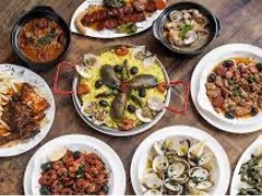
The Food: I was disappointed with the food – especially the food we were served at Cousin Camp. (Though I should say that, as a group of 40, we were eating catering-style – ordering from a limited menu and expecting the kitchen to try to make all of our meals in about half an hour.) The fish dishes that I tasted ranged from oversalted to bland to ordinary. And the meat was worse. Most of it was tough and overcooked. I had only one good meat dish – a tender scallop of veal in a pool of tasty brown sauce.
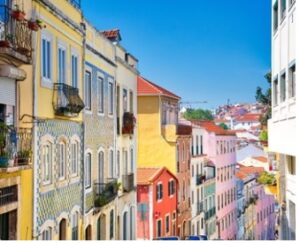
The Architecture: I’m not sure how to describe it. It goes, in vintage, from the 16th century to the 1970s. The mainstay in terms of style is Spanish Renaissance, but there are touches of Italian Baroque here and there, and a fair amount of Moorish influence in the design of the parapets and windows.
The Statuary: I saw at least a thousand statues in Porto and Lisbon, and I could count the number of marble statues on the fingers of one hand. Most of them were carved from wood. And there is something about wooden sculpture – and maybe this is just me – that makes it seem less impressive and imposing. And since wooden statues were generally produced by the dozens in artisan factories, you don’t get the fun of discovering, in the apse of an out-of-the-way chapel somewhere in Rome, a singular statue carved by Bernini or Borromini
