Opinions and an Update on the Charlie Kirk Assassination 

From Eric Rosen, The Rosen Report
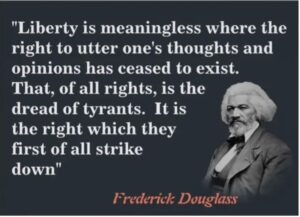
“As a nation, we are divided on a myriad of major topics (border, crime, abortion, deficits, vaccines, wealth distribution, DEI, climate change, men in women’s sports, healthcare, gun laws, wealth distribution, Israel, Ukraine, trade, and the list continues. Great nations don’t stay great forever, and I fear ours is cracking under the weight of division and hate. The cornerstone of this nation is the freedom of free speech. If we lose the ability to have differing political viewpoints, and if the answer to our differences of opinion is violence, we will not survive as a free and democratic nation. Let’s hope Kirk’s needless assassination is a wake-up call to allow people to find commonalities rather than exploit differences.”


From Will Rhan, The Free Press
“We’ve all heard a version of this sentence in the last couple days. The hedging, from those who are keen to express their horror at the assassination of a 31-year-old conservative activist – but even keener to reject any possible association with his views. (Views that, it’s worth mentioning, he shared with millions of Americans.) Perhaps America’s problem is encapsulated by these caveats: Signaling our tribe is more important than basic human decency.


From California Governor Gavin Newsom
“We should all feel a deep sense of grief and outrage at the terrible violence that took place in Utah today…. I knew Charlie, and I admired his passion and commitment to debate. His senseless murder is a reminder of how important it is for all of us, across the political spectrum, to foster genuine discourse on issues that deeply affect us all without resorting to political violence.”

The Chilling Implications of Charlie Kirk’s Assassination 
From Victor Hanson, The Daily Signal 
“I don’t think that he will be replaced because I can’t think of a figure, Left or Right, under the age of 35 who combines such talent….”
Click here.


Bill O’Reilly on the Rise of Evil in Today’s World
“Evil is when a person causes pain to another person and enjoys it.”
Click here.

Are conservatives now engaged in cancel culture? Are they now embracing the idea that “hate speech” is a form of violence and should be prosecuted as a violent crime? Here’s a good piece on this issue from a recent edition of The Free Press. I’ve cut its length down by 70% to convey only the gist of it. – MF

Are Conservatives Embracing Cancel Culture? 
From the Editors of The Free
Press

“In the wake of Charlie Kirk’s murder, an alarming number of Americans made light of his assassination or tried to justify it. An angry right wing has emerged to ensure that such people pay, kicking off a wave of firings and suspensions that have affected journalists, Secret Service agents, and university employees.

“We aren’t supposed to do guilt by association in this country. Conservatives, who for years have rightly complained about the excesses of leftist cancel culture, certainly shouldn’t be engaged in this sort of thing.

“But they are – en masse. To understand why, you have to go back to the first Trump term.

“After Trump won in 2016, the American left was beset by feelings of powerlessness. And so it lashed out, and started a cultural revolution with the aim of making it socially unacceptable to disagree with them. Originally, at least some of the targets were actual racists, sexists, and antisemites. Eventually, they weren’t. Scores of normal, good people were fired from their jobs, kicked out of school, and socially ostracized for expressing opinions that were ‘harmful’ and ‘dangerous’ – definitions that became looser as time went on. Ultimately, as with all revolutions, perfectly innocent people were swept up in the fervor, their reputations and much more forever ruined.

“Now the right is doing precisely the same thing.

“A new site called Charlie’s Murderers is crowdsourcing a list of individuals who reacted inappropriately to Kirk’s assassination…. The site says it has received nearly 20,000 submissions. Some are truly horrific, containing explicit justifications for, or praise of, Kirk’s murder. Some are nihilistic trolling. Others are merely insensitive….

“Already, as in the woke era, the scope of who deserves to be fired for their political beliefs has been expanded to include milquetoast opinions that no reasonable person would construe as dangerous. The very name of the site – Charlie’s Murderers – equates expressing the wrong opinion (however disagreeable or tasteless it might be) with murder itself….

“Some lawmakers believe these grassroots efforts are not enough. The day after Kirk’s assassination, a Louisiana Republican congressman promised he would get a law passed that would ‘ban for life every post or commenter that belittled the assassination of Charlie Kirk…. I’m also going after their business licenses and permitting,’ he said…

“Say what you will about Alexandria Ocasio-Cortez, but she’s never proposed taking away people’s driver’s licenses over an X post….

“Principles don’t matter when things are easy. They matter when they’re hard. They matter now.”

This essay was sent to me by a high school classmate. I thought it was a reasonably evenhanded analysis of this very pressing question: Is there a way out of this for America? – MF


Why America Is at a Dangerous Crossroads Following the Charlie Kirk Shooting 
From Katty Kay, BBC News

“It has been a brutal week in America and I’m not the only one wondering whether the country can pull itself out of this spiral of hatred and violence.

“After one of the most searing assassinations in US history, the governor of Utah pleaded for Americans to turn down the political temperature.

“But hardly anyone that I’ve spoken to since Charlie Kirk’s death thinks that will be the path the country will choose. Not anytime soon, at least….

“Americans didn’t even come together in the face of a global pandemic. In fact, COVID made divisions worse.

“Within days of Charlie Kirk’s death, the country’s political camps had already retreated to opposing narratives.

“The reason is simple, yet hard to change. The incentives that fuel American political life reward the people and platforms that turn up the heat, not those who dial tensions down.

“Around the country, you’re more likely to get elected to political office if you run on policies and rhetoric that appeal to your political base, rather than the political middle. (It’s the depressing byproduct of gerrymandering – the original sin behind America’s dysfunctional, divided politics.)

“Equally, in the media, people who opine about politics are rewarded for being more extreme and stoking outrage – that’s the way to get more eyeballs and, ultimately, more advertising dollars.

“This incentive structure is what makes Utah Governor Spencer Cox something of an American exception.

“Utah Governor Spencer Cox has tried to turn down the political temperature. After Charlie Kirk was killed, he urged Americans to ‘log off, turn off, touch grass, hug a family member, go out and do good in the community.’

“He sounded so sane, so wholesome – an effort, in a sea of division, at reconciliation….

“Division and political violence are not new phenomena in America. Some 160 years ago, the country went to war with itself and it has never really stopped.

“Over a period of five years in the 1960s, a US president was killed and then his brother was killed while campaigning to become president. In that same period, two of the nation’s most prominent civil rights leaders were assassinated too.

“In the 1970s, President Gerald Ford was shot at on two separate occasions. In the 1980s, Ronald Reagan was struck by a bullet while walking to his limousine.

“And of course, just last year Trump was the victim of a failed attempt on his life by a gunman in Pennsylvania – and a second alleged attempt by a gunman in Florida, whose trial began the week Kirk was killed.

“What makes this era so different from the 1960s and 70s, though, is what Governor Cox is worried about….

“‘I believe that social media has played a direct role in every single assassination and assassination attempt that we have seen over the last five, six years,’ Cox said in an interview on Sunday.

“He went on to say that ‘cancer’ was likely too weak a word for what it has done to American society….

“Tragic and ironic, since Kirk saw himself as a champion of free speech, even as his critics often disagreed with that framing. His death though may push the country further from civil discourse.

“Within days of Kirk’s death, the country’s political camps had already retreated to opposing narratives.

“Many on the left are eager to explore the ways that Kirk’s killer might have been radicalised by internet subcultures and group chats. Many on the right prefer to unpack whether the suspect was part of a left-wing conspiracy.

“Neither group seems particularly keen to prioritize reconciliation or healing.

“The reality is that those who study extremism believe that left-right may not even be the most helpful way to look at the division of this current moment.

“‘It’s better to look at what’s causing people to be ungovernable,’ says Rachel Kleinfeld, a senior fellow at the Carnegie Endowment for International Peace who specializes in polarized democracies. It does take a desire to turn down the temperature… [and] requires people to have a little more courage than they’re showing. I think it is more useful to focus on how we as a society turn a page and open a new chapter, because this is like a bad marriage. And like a bad marriage, you can only lose by pointing fingers.’”

The Epstein Saga: My Current Thoughts

I haven’t written about the Epstein saga since July, but I’ve been following it. Trump’s decision to follow in Biden’s footsteps and bury the investigation was deeply disappointing. I can no longer pretend to myself that Trump was different because he was not part of the swamp.

I’ve been hoping for him and his cabinet to do something that would restore my hope for him, but I haven’t found anything that can do that yet.

Here is an update on what I’ve been reading about the story and what I think it means. 

* The DOJ’s Announcement: In recent weeks, the Department of Justice finally claimed that Epstein’s full “client list” does not exist, nor is it being prepared for release. This outright denial conflicts with years of promises and assertions from officials who initially said they had “thousands of pages” of evidence.

* Broken Promises: Attorney General Pam Bondi publicly stated in 2021 that she had a file with evidence of “more than 250 victims” and promised “everything will come out.” Yet in the latest leaks, she and the DOJ admitted they have no such full files. (Source: Bondi’s statements in media interviews, official transcripts)

* The Fabrication of Evidence: The evidence released by the DOJ last year was heavily edited, with Wired reporting that the so-called “raw footage” was a patched-together assemblage of multiple clips with metadata suggesting tampering or editing.

* The Public’s Growing Suspicion: Investigative journalists and critics, including whistleblowers, journalists, and even some former allies of Trump, are voicing increasing doubt. Leading voices have questioned why the most high-profile case of the 21st century remains unresolved and why the government is deliberately opaque. (Sources: articles from the New York Post and The Wall Street Journal)

* Supporters’ Disillusionment: Trump supporters who once believed in his promise of transparency are now openly questioning why the files haven’t been released – many seeing it as a clear indication of a cover-up. (Sources: social media posts)

* Media and Opposition Response: The mainstream media, many Democrats, and anti-establishment commentators are increasingly critical of the DOJ’s refusal to release full documents, framing it as part of a broader system of elites protecting themselves. (Sources: articles from CNN, MSNBC)

Why This Story Should Stay Alive

My concern with the Epstein saga is much less about Epstein as pedophile. It’s not about the list of powerful people who would be humiliated if the list were revealed. It’s not even about the young women who were sexually groomed and victimized by Epstein and his supporting network. (It takes a ton of naivete to believe this was a two-person operation.) My interest in this case, and particularly Epstein’s death and all the covering up, from both sides of the aisle, including first the Biden administration and now the Trump administration – not to mention 95% of the media and our government representatives – is who or what was behind this international, multibillion-dollar scheme whose only logical purpose could have been global blackmail.

Epstein Saga Timeline 
 
1980s–2000: Jeffrey Epstein’s Rise to Prominence
Key Dates
* 1980: Epstein becomes a limited partner at Bear Stearns.
* 1988: Epstein creates his own money-management firm, targeting clients worth $1 billion or more.
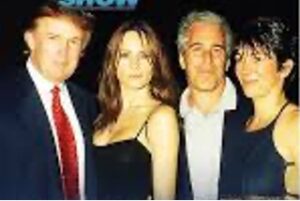
* 1992–97: Trump hosts parties attended by Epstein and flies on Epstein’s private jet multiple times.
 
2000–04: From “Terrific Guy” to “Persona non Grata” – with a Birthday Card in Between
Key Dates
* 2000: Ghislaine Maxwell, Epstein’s associate, invites 16-year-old Virginia Giuffre to become Epstein’s masseuse.
* 2002: Trump says, in a magazine piece on the financier, that Epstein likes women “on the younger side.”
* 2003: Epstein celebrates his 50th birthday. Trump is reported to be one of more than 50 celebrities who contributed to a bawdy album of birthday wishes.
* 2004: Trump and Epstein’s friendship ends.
 
2005–09: Controversial Conviction
Key Dates
* March 2005: Palm Beach police investigate report that Epstein was inappropriate with a 14-year-old.
* July 2006: Grand jury indicts Epstein on soliciting prostitution charge.
* May 2007: Federal prosecutor drafts indictment with 60 criminal charges against Epstein.
* July 2007: Epstein’s attorneys negotiate deal to end federal investigation.
* June 30, 2008: Epstein pleads guilty to state charges and is sentenced to 18 months.
* July 22, 2009: Epstein is freed after 13 months in prison.
 
2011–17: The Giuffre Case
Key Dates
* 2011: Giuffre sells two interviews and a photo of her with Prince Andrew to a British newspaper.
* 2015: Giuffre sues Maxwell for defamation. Suit is settled.
 
2018–19: Investigation, Arrest, and Epstein’s Death
Key dates
* Nov. 2018: The Miami Herald publishes yearlong investigation of Epstein.
* July 6, 2019: Epstein is arrested on federal charges.
* Aug. 10, 2019: Epstein is found dead in jail cell.
 
2020–24: Calls to Release the Files
Key Dates
* Dec. 29, 2021: Maxwell is convicted of sex trafficking.
* Jan. 3, 2024: Court releases more than 900 pages of documents that were part of the Giuffre-Maxwell suit.
* June 2024: Trump says on Fox News that he would release the Epstein files.
 
2025: From “Declassified” Binders to “No Credible Evidence”
Key Dates
* Feb. 21, 2025: Attorney General Bondi says Epstein client list is “on my desk.”
* Feb. 27, 2025: MAGA supporters receive Epstein files binders from Bondi.
* May 2025: Bondi informs Trump that his name appears in the unreleased Epstein files. Trump has denied this.
* July 7, 2025: Justice Department releases memo saying that no other documents will be made public.
* Sept. 8, 2025: Epstein estate releases the birthday book, which includes a drawing and birthday wishes that appear to be signed by Trump.

In the past two weeks, I’ve read at least a dozen essays and articles about Trump’s campaign against the raison d’etre of the Federal Reserve (which makes great sense to me) and his recent campaign to get the Fed to lower the rate. The betting was that they would bring it down but by, at best, half a point. Well, they did. They brought it down 250 basis points (one-quarter of a point) and I figured that was a compromise that probably wouldn’t have an effect on the economy one way or the other. Yesterday, I came across two good pieces that challenged my assumption. The first suggests that gold might be a way to deal with or profit from Trump’s campaign. The second provides four alternatives that are stocks. – MF

Three Good Reasons You Should Not Buy Gold Now…
and One Good Reason You Should 
From Ashwin Thapar, D.E. Shaw Investment Management
“Here are some good reasons not to invest in gold. First, it earns no dividends or interest. Second, you can’t live in it, like real estate. Third, it has doubled in the past few years, so forget about buying at the bottom. 
 
“Nonetheless, a prudent, diversified investor should consider owning gold today. This isn’t about potential return. It is about insurance. Gold tends to go up when bad things happen, from inflation and runaway government debt to war and political instability. Those things seem more likely now than they have for a long time.

In a new report, Ashwin Thapar, of D.E. Shaw Investment Management, argues that as global wealth grows, so should gold holdings. He estimates that since 1975, gold has ranged from 1.8% to 7.3% of developed market liquid wealth. (It has recently broken above that range.)

“Newly mined gold increases the stock of gold less than 2% a year, according to JPMorgan Chase. The remainder of gold wealth comes from a rising price. Over the long run that is probably enough to keep up with Treasury bills, but not a plain vanilla mix of stocks and bonds. The purpose of gold is to damp the impact when something hammers stocks, bonds, or the dollar. The trick is to figure out what that something is.

Inflation: Gold’s Best Friend

“Gold does best when fiat currencies (the kind central banks issue) lose purchasing power. Gold soared during the 1970s as stocks and bonds foundered amid double-digit inflation.

“US inflation, at around 3%, is hardly a disaster. And the Federal Reserve thinks it will be lower in a year in part because of a weaker labor market, which is why it is likely to trim interest rates on Wednesday. [Note: It did. See Porter Stansberry’s piece, below. – MF]

“But the structural forces that kept inflation below the Fed’s 2% target before 2020 have switched direction. Globalization, which brought a flood of low-cost goods to American shores, is out; tariffs, protection and reshoring are in. Before, legal and illegal immigration compensated for an aging labor force. That inflow has been. Cut off even as fertility rates hit new lows.

“These structural pressures need not push inflation higher. The Fed can ensure inflation stays low by raising the real interest rate (the nominal rate minus inflation), which weakens demand and pricing power. As D.E. Shaw points out, higher real rates are bad for gold.

“But making such tough decisions requires the Fed to remain independent. And before long, it may not be. President Trump told reporters the Fed should be independent, ‘but I think they should listen to smart people like me.’

“He is taking unprecedented steps to ensure the Fed listens. He has just installed the chairman of his Council of Economic Advisers, Stephen Miran, as a Fed governor. Miran will retain his White House title while on the Fed. Trump is also trying to fire another governor for alleged mortgage fraud. By next May, he can replace Chair Jerome Powell. He is forthright about his goal: Get interest rates down faster.

“Investors don’t seem to think this will lead to higher long-run inflation, and they might be right. But an end to Central bank independence is the sort of once-in-a generation risk investors struggle to price, and for which gold is well-suited.

Stocks and Bonds

“When interest rates go up, bond prices go down, and gold usually rises. So gold can hedge bonds. But that hedging value depends importantly on why interest rates are going up. In low inflation eras, rates rise and bond prices fall because of better economic prospects, and stocks rally. So stock and bond returns are negatively correlated, and hedge each other.

“But at times of rising inflation, bond and stock prices rise and fall together. Their returns are positively correlated and no longer hedge each other. This makes gold even more attractive, because it can hedge both. There are signs of this now.

“You could hedge against inflation with Treasury inflation-protected securities, or TIPS. But last month, Trump fired the commissioner of the Bureau of Labor Statistics after it reported unflattering jobs data, and nominated a partisan supporter to replace her. Investors must now weigh the risk the BLS will change the consumer-price index to lower reported inflation. That would undercut the protection offered by TIPS, which are indexed to the CPI. Gold isn’t.

Debt and the Dollar

“The publicly held federal debt is on track to rise from almost 100% of gross domestic product now to 120%, exceeding the all-time high during World War II, according to the Committee for a Responsible Federal Budget. Neither political party has a credible plan to stop the rise.

“High debt poses two risks, both of which make gold attractive. The more remote is that the government defaults. The other is ‘fiscal dominance,’ in which the central bank gives priority to keeping the federal debt burden manageable over inflation. Indeed, Trump regularly cites debt costs as a reason why the Fed should cut rates.

“Gold also competes with the dollar as a reserve asset for central banks, sovereign-wealth funds and individuals trapped in kleptocratic regimes. The dollar, however, has lost some of its reserve appeal since early 2022, when Western governments froze Russia’s foreign-exchange reserves because of its full-scale invasion of Ukraine. Goldman Sachs estimates central bank buying accounts for most of gold’s doubling in price since. Trump’s trade war this year further soured investors on the dollar, no doubt helping gold.

“If high inflation, fiscal dominance or a loss of reserve status threaten the dollar, you could buy foreign currencies. But other countries also have high debt and political instability. You can’t be sure the euro will exist in a decade, given the rise of euroskeptic parties in Germany and France. Gold hedges against a collective loss of trust in fiat currencies.

Gold as Insurance

“Fear of inflation, fiscal dominance, dollar depreciation, war and political instability are why gold has already risen so much. Since these risks are already reflected in its price, why buy now? This argument sounds like what you hear at the top of a market.

“The case for gold doesn’t depend on where its price is going, but its role in your total portfolio. According to D.E. Shaw, someone optimizing both return and risk might allocate anywhere from 0.5% to 9% of a portfolio to gold. The share is higher when stocks and bonds are positively correlated, or a financial disaster, such a stock market crash or inflation spike, are a concern. This allocation isn’t right for everyone; it depends on personal risk tolerances.

“And what if your gold goes down? Think of it as an unused insurance policy. And be glad your house didn’t burn down.”


Investing in This Post-Rate-Cut Economy 
From Porter Stansberry

“Rate cuts just might ignite a fire.

“US gross domestic product (GDP) grew 3.3% in Q2. The current unemployment rate is 4.3%. And the latest consumer price index (CPI) showed prices are rising at close to 3% year-over-year. All of this points to a tight economy with little slack. 

“And 3% inflation is nowhere near the 2% rate that the Federal Reserve has officially targeted. 

“Further, many analysts believe the full effects of the Trump administration’s tariff policies have yet to fully feed into the CPI reports. That means inflation could potentially accelerate in the coming months.

“And despite all the promises about Elon Musk and the Department Of Government Efficiency (DOGE) cutting the federal budget, government spending continues to run completely out of control.

“So, given that backdrop, of course the Federal Reserve has decided to… cut interest rates – reducing the Fed funds rate 25 basis points to around 4.25% from 4.50% – and hinting at more to come later this year. As irresponsible as this might seem, this is the current state of affairs.

“Adding liquidity to financial markets in this economic environment is akin to throwing a match on a towering inferno. Gold, one of the clearest barometers of inflationary pressures, has taken another leg up in the last month to yet another all-time high at nearly $3,700 per ounce. Hard assets are sending a very clear signal that inflation is not going away.

“While it might seem like party time for stocks, investors should be wary.

“So far, the reflexive reaction to Fed cuts has been for longer-term US bond rates to fall. The 10-year yield has now dipped from around 4.3% a month ago to just above 4.0%. That is pretty close to panic lows hit immediately after Liberation Day, when on April 2, President Donald Trump announced his tariff plans, and about the lowest levels in close to a year. But the last chapter on this has yet to have been written.

“It isn’t clear why financial markets will just give the US a pass and allow the government to fund such recklessness at lower rates. In fact, if inflation picks up – as gold is signaling – and government spending continues unabated, it seems possible that longer-term rates will end up higher after the Fed executes its series of rate reductions, not lower. That would likely act as a shock to equity prices and force a potentially significant market correction.

“And that would leave the Federal Reserve with no good options.

“So what is an investor to do in such an environment? Certainly, continue to focus on gold and other hard assets that perform well in an inflationary backdrop. And look for equities with strong cash flow, good balance sheets, and high-quality businesses that can thrive even in a volatile economic environment.”

Note: If you’d like to hear more from Porter, he has a free advisory called The Big Secret on Wall Street, which is currently recommending four stocks that he thinks will perform well in the future, despite these economic uncertainties. One is a leader in health and wellness that continues to capitalize on its loyal following. Another is an energy-drink powerhouse in the midst of a potentially transformative acquisition. There is more feedback on a company taking the industry reins in weight-loss drugs. And finally, a value story in the energy space that looks to have dodged a political bullet. Click here to subscribe to The Big Secret on Wall Street and read the full issue.


David Stockman on the Recent Jobs Report 

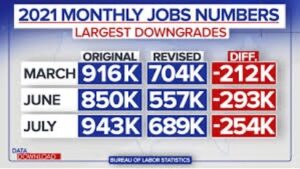
A recent government report on US employment numbers included the surprising fact that state and local school authorities hired an additional 64,000 teachers and administrators in June. In June! When school lets out! And that number accounted for 44% if the entire gain of 147,000, which was heralded as a great achievement and a meaningful reason to believe the US economy was robust and growing. However, as David Stockman pointed out in an article I read last week (I don’t remember when it was published, but it doesn’t matter), there were hints in that same job report that notwithstanding Washington’s best efforts, America is not spending, borrowing, and printing its way to prosperity after all. It turns out that fully 144,00 or 98% of the alleged “new jobs” reported for the month were in government, including education (73,000), private health and education services (51,000,) and Hospitality & Leisure services (20,000). Here is his take on all that… – MF 
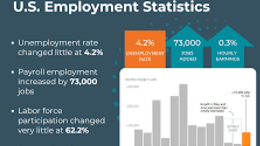
“All the new jobs are either funded by government spending, entitlements or tax subsidies like in Medicare and employer health plans, respectively; or they amount to low-wage, part-time, low-productivity jobs in restaurant kitchens and hotel room-cleaning operations. 

“This underscores the significance of that, it might also be noted that on the other end of the economy in the goods-producing sectors where the high-pay, high-productivity jobs are located, the gain was only a tiny 6,000….

“If we look at the entire past year, we see that these same three sectors, which accounted for 98% of the new” jobs this month, also accounted for 1.492 million or 82% of the total job gains of 1.809 million since June 2024….

“There is nothing new about this pattern….

“Ever since the turn of the century the US economy has been churning out modest overall labor utilization gains… with the index of aggregate hours worked for the entire private sector up by only 0.72% over the last 25 years….

“[And for the past quarter century, those have mostly been] in the government-funded health, education and social services sector and the bars, restaurants, hotels and entertainment venues they frequent outside of working hours….

“During this same 25-year period in which total private sector labor hours rose by just 19.5%, the net worth of the top 1% rose by 327%, the Federal debt increased by 537% and the Fed’s balance sheet exploded by 1,100%….

“[In other words, while] while the Fed was running the printing presses at white hot speeds over the last quarter century, the main street economy suffered a 15% loss of its high-pay, high value-added jobs. In turn, that gap was back-filled by jobs largely attributed to government spending, meaning that the simulacrum of a growing labor market was fueled by the proceeds of public sector taxation or borrowing….
 
“The Fed’s printing press have been running at double digit rates for the past quarter century yet the high pay, high productivity sectors of the labor market have actually been inflated away and off-shored owing to America’s high, uncompetitive cost structure resulting from the Fed’s pro-inflation policies.

“And yet and yet. Here we are again with both Wall Street and Washington clamoring for a new round of ultra-low interest rates and printing press inflation. In the spirit of Einstein’s famous definition of insanity – doing the same thing over and over and expecting a different outcome – it might be wondered as to what will it take for both ends of the Acela Corridor and both wings of the UniParty to grasp the obvious?

“To wit, the trend level of inflation is now stuck smack on 3.0% per annum, as has been posted month and months by the steady 16% trimmed mean CPI, while for all practical purposes rates in the Fed pegged overnight money markets stand at 4%.
 
“So where in the hell is it written in the economic texts – Keynesian, supply side, monetarist or eclectic – that an advanced industrial economy can’t stand real rates of 1.0%?”


Name two things that are eminently predictable about this.

Hints:
1. These are the eight recipients of the Dorothea & Leo Rabkin Foundation yearly prize for “visual arts journalism.” (The foundation is based in Portland, Oregon.)

2. Yes, there are seven women and only one man.

3. Only one of the eight works for a major publication.

Answers:
* The man is not White. He is Comanche.
* The woman who works for a major publication (the NYT) identifies as a “they.”

From RG re my piece on NYC in the Sept. 5 issue: 

“I have a gut feeling what you said is the truth in most places. The touristy places in NYC are probably as safe as anywhere in the world. The other places, not so much. Wealth gap and all that. I’m afraid jealousy anger and fear are only going to grow as the wealth gap gets bigger. It’s a powerful psychological force. Hard to suppress when it’s so easy to see (news, social media, etc.)”


A few of the many comments on my Sept. 13 essay about the Charlie Kirk assassination: 

“I was waiting for your piece to get your take on the Charlie Kirk assassination and I was not disappointed…. My thoughts have been rumbling around in my head since it happened and you pretty much covered it all. I might have put it slightly differently or added a thing or two more, but I would be quibbling with great to get perfection. Thank you for that piece.” – FC

“Excellent and timely piece. You did right, except the part about getting in an argument with Kathy! I especially like, ‘these dark and deranged Orwellian glasses.’

“Thanks for turning me on to Douglas Murray, Ben Shapiro, et al. I listened to him on Bari Weiss’s podcast yesterday about Charlie Kirk.

“Now that I’m in my 70s, I’m more aware of what I call presentism. That is, the cognitive bias of considering our present time to be uniquely special. It is special to us, for sure, since it is the time we are living in. And it is unique in some objective ways, but it is also more like the past than any of us know, both because of the limits of our life spans, and the relatively low knowledge of history most of us have.

“I hear presentism in Bari Weiss when she asks, ‘how can we bring America back from the brink?’ We hear presentism in such tropes as ‘now, more than ever’ and ‘never has the country been more divided.’ It was presentism, luckily, that got the Bulletin of Atomic Scientists to set their doomsday clock at 5 minutes ‘til midnight – for years.

“But I’m also old enough to recognize the beneficial effects of presentism. The fact that Bari Weiss really believes that the country is at the brink energizes her. She feels the vital importance of the choices and actions taken by her fellow citizens. And that’s good, because I think her heart is in the right place.

“I believe our country is more robust and durable than the chattering class would have us believe. The incentives of news organizations lean towards painting our times as perilous.

“Presentism has probably always been with us and so perhaps it’s part of the elixir that keeps the species going, despite the perils – real and imagined.” – SL

“I thought your essay on the murder of Charlie Kirk was well-reasoned and well-balanced. Reading it was welcome relief from reading so many partisan pieces.” – PF

A bit of needed comic relief… 

For the best story about Christopher Walken ever, click here.

Today’s Main Course is a piece I probably should not have written in an issue you probably will not read. It will not in any way improve your day. And it will certainly not improve your impression of me.

Apart from that, I’ve got three updates for you: one on AI, another on vaccine mandates, and another on the dismal state of education in this country. Plus, a report on another 9/11 disbeliever, a short piece on the source of some interesting English language idioms, and a spoof commercial starring Steve Buscemi called “Scamageddon.”