
I’m sure you’ve noticed. In the last several years, we’ve seen a hopeful trend in Latin American politics. In one country after another, South and Central American voters are replacing leftist-leaning and straight-out Socialist leaders with fiscally sensible conservatives. With that change, we are already seeing a sharp decline in murders, rapes, kidnappings, and terror and a demonstrable increase in local and international business, jobs, and national GDPs.
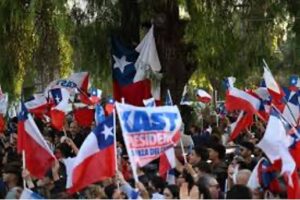
On Sunday, December 14, voters handed a decisive victory to center-right candidate José Antonio Kast, rejecting leftist Jeannette Jara and, by extension, the broader Socialist experiment that’s been running out of credibility across the region.
Kast ran on a bluntly unfashionable platform: faster growth, fiscal discipline, safer streets, and cracking down on illegal immigration. Chile’s result now joins Argentina, Bolivia, Ecuador, Venezuela, and Honduras – all of which have turned away from hard-left presidential candidates since 2023. So much for the Chávez-era fantasy of a Bolivarian domino effect.
What makes Chile especially revealing is how fast the mood flipped. Just four years ago, voters bought into Gabriel Boric’s promise of “social justice” after the 2019 riots paralyzed Santiago. Kast lost that race. But Boric never had the mandate – or the competence – to remake Chile. His tax hikes died in Congress. His hostility toward business bled jobs. Unemployment stayed stubbornly high. And he burned enormous political capital on two failed attempts to rewrite the country’s Constitution.
The economy didn’t implode, but mediocrity can be fatal in politics. Chile saw nearly zero growth in 2023, while crime and disorder climbed. Voters weren’t fooled when Jara tried to distance herself from Boric’s record or his activist base.
Add in the Venezuelan collapse – hundreds of thousands fleeing Nicolás Maduro’s dictatorship into Chile – and the rightward swing makes even more sense. Kast promised border enforcement, deregulation, tax cuts, and a smaller state. He won’t have Congressional majorities, but he does have a clear mandate: Chileans want order, growth, and competence back.
If Kast can revive the 1990s formula – open markets, capital-friendly rules, and controlled legal immigration – Chile could again become the region’s standout. And yes, Washington could help by lowering tariffs and treating Chile as a serious trade partner.
The voters have spoken. This time, Socialism didn’t just lose, it wore out.
You can read much more about it here, here, and here.
Note: In the next issue, I’m going to give you a bunch of predictions about what’s going to happen worldwide and in the US in 2026. My prediction on this topic is that the trend will continue. But I’m also predicting that it will include some changes and agreements that may seem impossible today.
