
This Is What Happens When Japanese Culture Takes On American Baseball
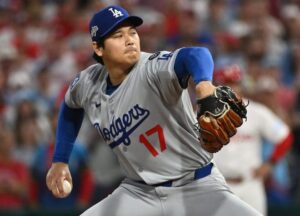
AV, a friend and colleague of mine at Rancho Santana and a self-proclaimed “super fan” of Japanese superstar pitcher Shohei Ohtani, sent me the following article:
Shohei Ohtani: If He Had Been Born in the United States, They Would Have Ruined His Future”
In a town of 120,000 people, surrounded by rice fields and steel factories, a boy named Shohei Ohtani threw baseballs with his father after work, while everyone else watched cartoons. What began as a pastime in Iwate Prefecture became a prophecy: an athlete destined not just to dominate the game, but to reinvent it. What looked like a kid with a glove ended up being a storm that shook the foundations of modern baseball.
From a young age, Ohtani was a genetic and emotional anomaly. His father, Toru, a former amateur baseball player, and his mother, Kayoko, a former national badminton athlete, instilled in him an obsession with excellence. In high school, he was already throwing at 100 mph, but he didn’t brag: He measured, recorded, analyzed. In Japan, he learned that perfection is not pursued for applause, but for respect. There, young Shohei forged his mind of steel.
And here’s the crucial point: If Ohtani had been born in the United States, he would never have become Ohtani.
The American development system would have turned him into a product, not a person. Scouts would have classified him as a pitcher or slugger and forced him to choose. In the United States, baseball is run like a factory: talent packaged, tasks assigned, dreams trimmed.
In contrast, Japan gave him freedom, not labels. It allowed him to explore, fail, learn, and become the impossible player that every other system would have killed before he was born.
When he arrived in the Major Leagues with the Los Angeles Angels, the world discovered the myth was real. In Anaheim, he won his first MVP awards, challenged metrics and reporters, and forced statisticians to invent new categories to describe him. He threw 100 miles per hour and the next day hit two home runs.
It was as if Babe Ruth had been reincarnated with a Japanese chip. And when it seemed he couldn’t grow any more, he arrived at the Dodgers… and turned his talent into a global enterprise. His $700 million contract, with deferred payments and a commercial machinery connecting Asia and America, was not just a sports move: It was a business merger between human talent and financial engineering. In a year, Ohtani generated more money than he cost. In a single uniform, the Dodgers found their gold mine and baseball found its new economic model. But the human body is not a stock.
Surgeries, demands, and media pressure are ticking time bombs. And the real risk lies in deification: When an entire sport depends on one man, the myth can become a prison. If Ohtani gets injured, all of baseball trembles. It’s the paradox of genius: What elevates the game also makes it fragile.
Even so, no one in history has had such a colossal projection. If he maintains his health and pace, Shohei Ohtani could monopolize the MVP for the next decade. No one else has the talent, duality, or cultural impact to compete with him. If he succeeds, he will shatter all existing records for the award and redefine what it means to be “the best player in the world.”
Ohtani didn’t just change baseball: He rewrote it in two languages. And if time proves him right, we won’t be seeing the new Babe Ruth… but the first Ohtani. Because while others aspire to glory, he is managing it for the long term.
