The latest review of Rancho Santana…
Click here to read about Amanda Blakely’s “Five Fun-filled Beach Days in Nicaragua.”

The latest review of Rancho Santana…
Click here to read about Amanda Blakely’s “Five Fun-filled Beach Days in Nicaragua.”
About Fox News: Contrary to popular belief, Fox’s audience is far from ideologically homogeneous. A Morning Consult survey found that more independents watch Fox News than any other network. And according to Nielsen MRI Fusion data, Fox and CNN have a near-identical share of the liberal audience for cable TV news. Last year, for the sixth year in a row, Fox was rated #1 in all of cable news, averaging 1.3 million total day viewers in 2021, compared to CNN at 787,000 and MSNBC at 919,000.
On Timing the Stock Market:
Timing the market – i.e., buying in and selling off according to what you think will happen in the future – is difficult. But if you like the idea, I know of two ways that have, at least, some logical justification.
The first is using P/E (price-to-earnings) ratios. I used to do this, and still do when buying individual stocks. I feel comfortable buying a company when its stock price is at or below 18 times earnings. But this isn’t always reliable. In 2009, for example, in the panic of the mortgage finance crisis, stock prices plummeted and the P/E ratio of the S&P 500 soared over 100. I saw that as an anomaly and didn’t sell, which I’m happy about since prices rose for the next 11 years.
Warren Buffett uses another indicator: Market Cap/GDP, which compares the overall stock market value to the GDP (gross domestic product). Historically, this ratio has been around 80% – or 8 units of stock market capitalization to 10 units of GDP. The rule is to expect a sell-off when the ratio goes above 120%. But in 1999, the ratio hit a high of 140%., and since then, it’s climbed even higher.
Bill Maher on how we spent the COVID trillions:
More evidence to support the fact that America attracts brainpower from all over the world:
* 35% of the Nobel Prizes won by Americans in chemistry, medicine, and physics have gone to immigrants. Click here.
Almost 45% of Fortune 500 companies were founded by immigrants or their children. Click here.
What is conceptual art?
Conceptual art is art for which the idea (concept) behind the work is more important than the finished object. It emerged as a movement in the 1960s, and most commonly applies to pieces made from the mid-1960s to the mid-1970s. It was characterized by the use of text and unconventional materials, including “found objects.”
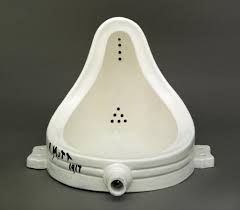
Marcel Duchamp’s “Fountain,” 1917

What is performance art?

Performance art originally meant art that had a performance element to it – i.e., a person (the artist) doing something odd or disturbing or surprising in front of an audience (See Worth Quoting.) It could include dance and dance-like movements, as well as speech and dramatic acting. But it stood apart from dance and acting because it actively involved the audience in the “experience.” The meaning of performance art, if there is meaning, is usually symbolic. And over time, it has broadened to include any form of artistic expression that has a social context.
I know. That sounds like bullshit. Because it is. Here are two definitions that you might prefer:
Here’s one from a docent at the Tate Gallery in London. Click here.
And here’s another one that’s more historical. Click here.
The Dean’s Interest List at Harvard
Nearly half of white students admitted to Harvard between 2009 and 2014 were recruited athletes, legacy students, children of faculty and staff, or on the dean’s interest list (applicants whose parents or relatives have donated to Harvard), according to a 2019 study published by the National Bureau of Economic Research.
Says Ben Hunt of Epsilon Theory: “Other than one bribe being made out in the open and with a few extra zeros in it, can someone explain to me the difference between ‘the dean’s interest list’ at Harvard and the ‘admissions scandal’ at USC?”

Five numbers I came across recently that may interest you:
* 9,827 – the number of cow-related items in a Minnesotan’s personal “Mooseum”
* $17,000 – the cost of a first-class suite on Singapore Airlines
* 85% – the percentage of Americans who are expected to travel this summer
* 13% – the rise in world food prices in March, making it the highest level on record
* 5 – the additional number of women who will appear on US quarters next year
The Two Effects of Inflationary Psychology
Inflationary psychology describes the behavior of consumers when they get accustomed to prices rising month after month. In such economic times, two subconscious behaviors become common.
About Noah Webster
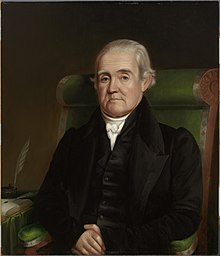
Noah Webster was born in Hartford, CT, in 1758. He died in New Haven, CT, in 1843.
He had a successful career as a teacher. And a secondary career as a politician. But the great thing he did was his work as a lexicographer. He was the Webster behind the Merriam-Webster Dictionary.
After the US won its independence in 1776, Webster noticed that there was something in the post-revolutionary air of the country that wanted even more separation from the old world. In almost every aspect of human endeavor, from law to business to arts and politics, Americans – Webster included – wanted to do things differently than they had been done under English rule. And so, he devoted a good part of the rest of his life to chronicling that development in an area he was particularly interested in: language.
His ambition was to publish a dictionary of American English that identified all the ways it was moving away from British English. One relatively easy task was to record orthographic changes, such as changing the spelling of “honour” to “honor” and “centre” to “center.”
But the real challenge was to create a dictionary that was actually better in many ways than the best-known English dictionaries that existed at the time, such as Robert Cawdrey’s A Table Alphabeticall (1604) and Samuel Johnson’s Dictionary of the English Language (1755). And that meant digging into the history of the English language and its already vast and complicated evolution from Old English through Middle English to Modern English and finally to Modern American English.
To accomplish this ambitious task, he must have been working 18 hours a day for decades. For example, to examine the etymology of the words he included, he learned 28 languages (at least the basis), including Old English, Sanskrit, and Russian.
At 70 years old, he finally published his masterpiece. The two-volume tome defined 70,000 words, 12,000 of which had never been in a dictionary before. It has been printed in four editions since its initial publication, and remains one of the most influential reference books in history.
The next time someone tells me I should be kicking back and enjoying my 70s, I’m going to tell them about all the things I’ve not yet done… and then I’ll tell them the story of Noah Webster.
How Political Ideology Influences Philanthropy
Many issues seem to divide Democrats and Republicans, and new research has found one more: philanthropy.
According to a study I saw in The New York Times (of all places!), red counties, which are overwhelmingly Republican, tend to report higher charitable contributions than Democratic-dominated blue counties.
The study was conducted by four professors from four universities and was published in the academic journal Nonprofit and Voluntary Sector Quarterly. They used a county-by-county examination of tax returns in 2012 and 2013 as the basis of their research, and created a model to interpret the data. To focus on the effect that party affiliation has on philanthropy, they controlled for certain variables, including education, income, race, region, and religion.
The result: The more Republican a county is, the more its residents report charitable contributions.