The Good, the Bad, the Uncertain Making Sense of Recent News Stories

GOOD: Federal Judge Issues Injunction Against Biden’s Race-Based Loan Forgiveness Program 

US District Judge S. Thomas Anderson issued an injunction against the US Department of Agriculture (USDA), halting the distribution of federal loan-forgiveness funds under the Biden-sponsored American Rescue Plan Act (ARPA). The ruling was in favor of Robert Holman, a Tennessee farmer who argued that the “whites-only” provision of the program is unconstitutional.

The injunction will be in place until the case is fully resolved. However, the judge noted that Holman “has shown a substantial likelihood that he will prevail on his claim.”

Is the American Rescue Plan racist? Click here.


BAD: Crime Surges in San Francisco After Passage of a New Law 

I’ve been writing about the violence in Chicago, but Chicago is not alone. San Francisco is having a different kind of crime wave. Ever since they passed Proposition 47, amazingly called “The Safe Neighborhoods and Schools Act,” theft has been on the rise. Organized gangs have taken advantage of it by hiring kids to ransack stores, knowing that so long as each hired thief keeps his score to less than $950, the worst that will happen to him – if he’s caught – is a ticket and a misdemeanor.

There have been dozens of videos of this, but the one that went viral was of about a dozen men rushing out of Nieman Marcus with tens of thousands of dollars’ worth of designer handbags, before jumping into three getaway cars: an Infiniti, a Mercedes, and a Lexus..

Click here to see the video.

And click here for a clip of locals reacting.


UNCERTAIN: European Union’s COVID-19 Vaccine Passport Goes Live

The European Union is taking the lead in creating vaccination certificates, an idea that horrifies proponents of medical privacy and individual liberty, but pleases proponents of Big Government.

“In March, we promised… free and safe travel within the EU by the summer,” said European Commission President Ursula von der Leyen. “We can now confirm… the system is up and running!”

One hopeful note: “Member States must refrain from imposing additional travel restrictions on holders… unless they are necessary and proportionate to safeguard public health.”

How does the EU’s Vaccine Passport work? Click here.


GOOD: FTC to Investigate Non-Compete Contracts 

As part of a broad executive order, President Biden called on the FTC to “ban or limit” non-compete clauses in employment contracts. IMHO, that’s generally a good thing, because it gives employees more freedom to change jobs. About 32% of US companies use such clauses in their employment contracts, according to PayScale Inc. Currently, these sorts of employment issues are handled at the state level, but getting the FTC involved would bring jurisdiction to a federal level, which is, of course, what the government wants.


BAD: FTC to Investigate Non-Compete Contracts 

The problem with banning non-compete clauses is that it would create a serious risk for companies – that their employees would feel free to share trade secrets and other proprietary information with their new employers. And that could set in motion a policy of poaching key employees from one’s competitors simply for that purpose.


UNCERTAIN: FTC to Investigate Non-Compete Contracts 

As an employer, I’ve never required non-compete clauses in employment contracts. Nor do I worry too much about them. If they are very restrictive, they are legally unenforceable (or so I’ve been told). And when it comes to trade secrets, most of them aren’t secrets at all. Just imagined secrets that everyone else is already doing.

On the other hand, if I were in a business whose success depended on developing new technology, I would worry about having that “stolen.”

I have to believe there is a rule that falls in the midground that protects true trade secrets – but only true trade secrets. And even then only within reasonable boundaries.


GOOD: Zaila Avant-garde Becomes the 1st African-American National Spelling Bee Champ 

Eighth-grader Zaila Avant-garde won the 2021 Scripps National Spelling Bee – the first African-American to do so in the competition’s history.

One year after the coronavirus pandemic forced the cancellation of the annual tournament and two years after eight contestants were named co-champions, the Louisiana native correctly spelled the word “murraya” – a type of tree – to claim this year’s title and the $50,000 prize.

(And spelling isn’t her only skill. She’s pretty good at basketball, too.)

Click here.


BAD: Biden’s Not Worried About Inflation 

Joe Biden’s handlers brought him out on in public recently (at a so-called town hall meeting) where he was pitched softballs by CNN’s Don Lemon.

One particularly spongy one was on the subject of inflation – whether Biden felt that it was an emerging problem.

“First of all, our experts” predicted it,” he said.

This is not true. The White House budget office forecast inflation of 2.1% and the Fed had it at 2.2% for 2021. But in June, the number was 5.4% – and that number is artificially low.

Then Biden said that inflation is “just a temporary phenomenon.”

This may be true. There are good arguments on both sides.

Finally, he promised to “keep inflation in check” through his $4 trillion spending plan.

That is just plain crazy. You don’t limit inflation by borrowing money you don’t have paid for by counterfeit dollars. That is, by definition, inflationary.


DISAPPOINTING: Highway Dollars Won’t Rev Up the Economy 

Infrastructure spending can create economic expansion. The government-sponsored interstate highway system of the 1950s-1970s, for example, greatly reduced the time it took to travel cross-country. As a result, businesses gained access to new suppliers and new customers. Cities were able to specialize in certain industries. And international trade opened.

But some economists are saying that the White House’s $116 billion plan won’t have the same effect. Maintaining old infrastructure or adding new roads here and there, though necessary, tends to boost GDP only in developing countries like India and China, not in industrialized ones.

Click here.

 

Wanting Came First; Gratitude Much Later 

I don’t remember being grateful very often when I was young. I remember wanting things – lots of things – all the time.

As a child, I wanted toy trucks and cap guns and Lionel trains and baseball mitts. I wanted toy soldiers and model planes and erector sets. I wanted everything I saw advertised for boys and everything other kids at school had, including boxed lunches and meat sandwiches instead of peanut butter and jelly in a paper bag.

As a teenager, I wanted to live in a nice house instead of the small, shabby house my seven siblings and I grew up in. And I wanted that to be in the “rich” part of town, not across the street from the municipal storage facility and the railroad tracks.

Most of my feelings were focused on wanting, not gratitude, but I was thankful for things when I got them.

I was, for example, thankful to Bruce Conger’s family for donating a box of his clothes to our family one Christmas. Bruce was the coolest dresser in 7th grade. By wearing his secondhand clothes (tight, olive-green pants with creases so sharp they could cut you; shiny black shoes with pointed tips and sky-blue cashmere socks), I felt, for the first time, what it was like to look cool. I’m still thankful to Bruce’s family for that.

I was also thankful when my godmother, Jean Kerr, gave me half of a share of one of her plays. It wasn’t one of her big hits, but it was enough to buy me a brand-new pool cue that I used at the Rockville Centre Cue Club.

In my senior year, I had already lost my faith in religion. But when, after having gotten caught in a riptide at Jones Beach and given up my life in an exhausting attempt to swim directly ashore, I was carried by the current around the jetty and back to safety, I was grateful. Very grateful.

Otherwise, as I said, I spent most of my emotional energy wanting things.

After high school, I was grateful that I wasn’t drafted into the Vietnam War. Someone from my local draft board called me and told me that I was to report for duty, but they never followed up on that call and I never heard from them again. I can only imagine that my file was lost. I still sometimes expect it to be found… and then find myself the oldest recruit in the Army.

In college and graduate school, I developed an appreciation for learning and learned to be grateful for the great teachers I had. Harriett Zinnes, who taught me something about poetry, and Lillian Feder, who taught me to love good writing, were two of the best.

In my mid-20s, I spent two years in the Peace Corps. I remember sitting on my porch in Africa, watching the rain pour down on my plaster-coated mud house and thinking, “You may get rich one day, but you’ll never live in a house that will give you more pleasure than this one.”

I was grateful for that house – for having the privilege to live in it when so many of my students lived in shacks. And I was also grateful for my gratitude. I had begun to understand how good it feels.

When I returned to the States, a married man, I remember feeling grateful each time one of my sons was born. And I remember feeling grateful when, on Sundays, we would take the children on walks up and down 16th Street in Washington, DC, to look at the stately buildings and mansions. Perhaps because of my Peace Corps experience, I was never envious of those who lived in those elegant homes. My gratitude was for the people who’d had the wealth and the taste to build them.

In 1982, we moved to South Florida and I took a job with a small newsletter publishing company. I felt lucky to have the job – running the editorial department – because it meant that I was on my way to achieving my longtime goal of becoming a writer.

But two years later, I had a change of heart. I switched my goal from writing to making money. And when I did that, I once again lost track of the feeling of being grateful.

It was an interesting experience. I was fired up about making money. And I spent all my emotional energy pursuing it. But looking back now, it’s clear to me that I was once again preoccupied with wanting things. I wanted a higher income. I wanted money in the bank. I wanted a new car. And I wanted a mortgage-free home.

I’ve written a good deal about the tricks and techniques I used to acquire a lot of money during those years. But I’ve written too little about how ungrateful I was for the things that money bought me. I felt like I deserved them. And the moment I got something I wanted, I was thinking about the next thing I wanted.

When I turned 50, I abandoned the goal of increasing my wealth. I recognized that in making wealth my number one goal, I had gained one thing of value, but had lost many others.

I am grateful now that I made that decision at 50 and that it wasn’t already too late. I remember the time I visited JSN, my first and most important mentor in building financial wealth. He was dying of pancreatic cancer. I was there to say goodbye to him. I wanted to tell him how much I loved him. He wanted to give me a list of half a dozen deals that he wanted me to finish after he died.

If I had to name four things that I’m most grateful for, I’d say the obvious:

  1. I’m grateful for K and our children, their spouses and our grandkids.
  2. I’m grateful that they (and I) are mentally and physically healthy.
  3. I’m grateful to have so many good friends, some of whom I’ve known since grammar school.
  4. I’m grateful for being able to spend most of my working hours these days writing – which was my first and most important lifetime goal.

If this sounds just too pompous and self-aggrandizing, I should admit that I am still capable of being grateful for material things. I am, for example, grateful for my 30-year-old NSX, my 14-year-old 12-cylinder BMW, and my 21-year-old Ford Ranger pickup truck. I’m grateful for my art collections. And I’m grateful for my homes in Delray Beach and in Nicaragua, each of which give me as much pleasure (in a different way) as the mud house I lived in 45 years ago in Africa.

What’s on your gratitude list?

Back Home in Florida After a Week in Paris 

It’s good to be home. Back, after an impromptu week in Paris, to our family home in Delray Beach.

Paris is as unlike Delray Beach as a dinner of steak au poivre and haricot verts is to a drive-thru, McDonald’s lunch of a cheeseburger with fries.

It is absolutely one of the most beautiful cities in the world. This is partly due to the architecture – the fact that so many of its buildings were constructed during the reign of Napoleon I (1800-1815), when neoclassical elegance and symmetry were still in vogue. But it is probably chiefly due to the city planning that was done under Napoleon III (1848-1870) by Baron Haussmann, who created the boulevards and parks.

And a nod must be given to French culture, too – conservative and sometimes priggish, and committed to preserving and maintaining Paris’s magnificent old buildings.

I’ve loved Paris since I first saw her, in 1976, en route to a two-year Peace Corps stint in Africa. K and I spent part of our honeymoon in Paris nine months later, and we’ve been back to the City of Lights at least 20 times. Every time a pleasure.

When traveling to any foreign destination, we’ve learned that two important things to consider are the weather and the length of time you will be staying.

The weather during our week in Paris this time was not very good – overcast most days with periodic showers and a temperature mostly in the 60s and low 70s. But we made the best of it by planning an indoor itinerary: a gluttony of museums. And because this was such a short trip, we did what we’ve learned to do whenever we have a limited amount of time to spend in any great city. We hit the usual suspects like the locals do.

If we have just a weekend and the city is new to us, we adhere to the “three-days-in-wherever” guides that are ubiquitous in bookstores and online. Most of their suggestions are for what are considered by some to be tourist traps. But they are tourist traps for a good reason: They are the places that you really should see!

If, for example, you are in New York for the first time and have only three days, you should visit the Met and the MOMA or the Guggenheim, walk or take a carriage ride through Central Park, check out a few galleries in SoHo, and have a hot dog in Times Square.

If you are in Paris for just a weekend, you should spend a couple of hours in the Louvre, stroll through the Tuileries, check out the Pompidou Center, and have a café noisette or a drink at the George Cinq hotel.

If you have a week to spend, as we did, you should go to most of these same spots, even if you’ve seen them before.  As I said, they are in the guidebooks for a good reason. They are worth seeing not just once, but over and over again. And if you are a veteran of the city, you will enjoy them with more focus, and still have time for the somewhat less traveled (but still touristy) “musts” like Bryant Park in New York and Place des Vosges in Paris.

If you are lucky enough to be able to spend several weeks or longer in a city – well, good for you. When you have that much time, you don’t feel pressured to pack so much into every day. You can enjoy a more leisurely pace – perhaps doing a single touristy thing each day. And the rest of the time, you can live more or less the way the city’s denizens do – working, shopping, and relaxing. Absorbing the city by osmosis rather than by injection.

After being away from Paris for nearly five years, I would have preferred to do it that way this time. Other obligations made it impossible, but we were happy to do what we could with the week we had.

Some recommendations, in case you are thinking of going…

The Louvre

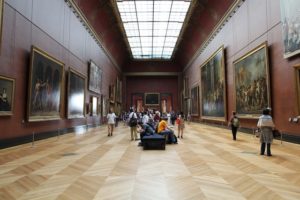
The Louvre is, I think, the world’s largest art museum, as well as a historic monument. It is perhaps best known for being the home of the Mona Lisa, but it has impressive collections of a dozen periods and genres, from ancient to medieval to modern art. Its strength is its European collections, but it has great Greek and Roman art, a fair collection of African art, and a smattering of New World art, as well. A Parisian landmark, it is located on the Right Bank of the Seine.

We spent three hours there, revisiting the French and Italian collections of the 18th, 19th, and early 20th centuries. That was more than enough for us to feel sated.

An interesting note about the Louvre: Before it became the most-visited art museum in the world, it was a fortress built by King Philip II in the 12th century to deter oncoming attacks. Remnants of this fort are still visible in the basement level of the building (called the “Medieval Louvre”).  The Louvre became a public museum during the French Revolution, opening its doors on August 10, 1793. Its iconic pyramid was added in 1989, and became the new main entrance.


Jardin de Tuileries (Tuileries Garden)

The Tuileries is located between the Louvre and the Place de la Concorde. Created by Catherine de’ Medici as the garden of the Tuileries Palace in 1564, it was opened to the public in 1667 and became a public park after the French Revolution.

You can get a good sense of the wonder of the Tuileries in an hour or two. We spent that mostly walking, but we sat down for a half-hour at one of the cafés conveniently located in the middle of the gardens to watch an air show that was taking place – a rehearsal for the official show that was to take place the following day, July 14 (Bastille Day, France’s national holiday).


Musée d’Orsay

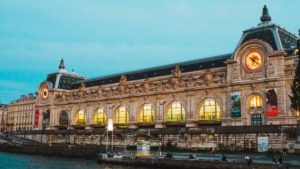
The Musée d’Orsay is located on the Left Bank of the Seine. It is housed in the former Gare d’Orsay, a Beaux-Arts style railway station built between 1898 and 1900. It features mostly French art dating from 1848 to 1914, including paintings, sculptures, furniture, and photography.

We spent most of our time revisiting its collection of Impressionist and Post-Impressionist masterpieces (the largest in the world), by painters including Berthe Morisot, Monet, Manet, Degas, Renoir, Cézanne, Seurat, Sisley, Gauguin, and Van Gogh. We also saw an exhibition of Swiss Impressionists that I very much enjoyed. Like Latin American modernist art, the paintings were clearly influenced by the French Impressionists, but generally dated about 20 years later.


La Samaritaine

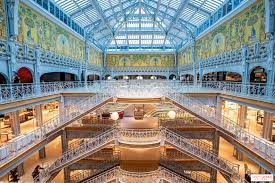
La Samaritaine is a huge department store – seven floors and two interlinking buildings. It is worthy of a visit because of its elegant Art Nouveau architecture. But it was especially fun to see it this time because it was recently remodeled from bottom to top and is now a masterpiece of interior decoration, as well as a storehouse of great haute couture fashion.


Fondation Cartier pour l’Art Contemporain

We spent one rainy morning at the Fondation Cartier pour l’Art Contemporain (more simply, Fondation Cartier), a contemporary art museum located on a wide, tree-lined boulevard.

We were there for “Cherry Blossoms,” an exhibition of several dozen very large paintings by Damien Hirst, the artist that made himself famous for embedding dead animals in polymer, decorating ebony skulls, and painting polka dots.

As you can tell, I’m not a huge fan of his work. (But I do think he’s a brilliant marketer.)

Here he is squatting in front of one of the pieces we saw:


Fondation Alberto et Annette Giacometti (Giacometti House) 

I’m a huge Giacometti fan. So, when K suggested we take a tour of Giacometti House, an old apartment-building-turned-museum where he rented a studio for the last several decades of his life, I said, “Yes!” Just like that… with an exclamation point.

It is a small museum, but it is wonderful for several reasons. The Art Nouveau-inspired interior has been preserved, and the 300-square-foot, ground floor studio is staged as if Giacometti is still in residence.

Best of all, every nook and cranny displays examples of his great gift.

The theme of the museum when we visited was Giacometti’s interest in Egyptian art and artifacts, which was made abundantly clear by more than a dozen arrangements like this one:


Musée d’Art Moderne 

As a collector of modern art, I insist on spending at least a few hours in the modern art museum of every city I visit. This was the third of fourth time we’d been to the Musée d’Art Moderne in Paris. It was well worth it.

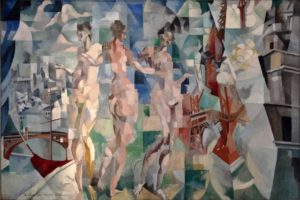
The museum’s collections include more than 15,000 works from art movements of the 20th century. Exhibitions usually focus on European trends. The exhibitions when we were there did not interest us, but there was so much more to enjoy. Like these two treasures:


La Ville de Paris by Robert Delaunay


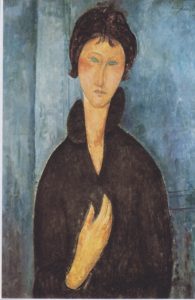
Portrait of a Young Woman by Amadeo Modigliani


Palais Galliera

The Palais Galliera is a museum of fashion and fashion history. That may not sound terribly exciting, but if you’re a longtime reader you know that I am captivated by the great figures of haute couture. One of the best museum shows I ever saw was that of Alexander McQueen at the Met. (It went all over the world.)

On this trip, we were able to check out the work of Coco Chanel, a true early 20th century pioneer.

The first part of the exhibition is chronological – from her little black dresses and sporty models of the Roaring Twenties to her sophisticated dresses of the 1930s. The second part of the exhibition is themed: the braided tweed suit, the two-tone pumps, the quilted bag, and the costume and fine jewelry that is still intrinsic to the Chanel look.

The Chanel show was much more limited than the McQueen, and her artistic comfort range was much narrower than his… but it was still a very exciting way to spend a late afternoon on this all-too-brief trip to this amazing city.

Looking Out the Window…

I sit in my writing studio, which has a view to Vista del Mar, which means “View of the Sea.”

And indeed, I have a view of the sea and of this road that leads to and from it. Every so often, I lift my head from my keyboard to see people walking to and from the beach.

Lately, I’ve been noticing that many of the women walking by are wearing bikinis – just bikinis and flip-flops. In my day, those halcyon days of double standards, that was something no self-respecting woman would do. A bikini was made for swimming or tanning on the beach. And only on the beach. Once on a public sidewalk, some covering garment would be donned.

I look at these mostly young women walking by, and feel sort of… What? I think I feel appalled! And no, I don’t feel the same way about bare-chested men in board shorts. But I would be appalled by a man walking by in one of those… well, male bikinis. (There is a vulgar name for them. I can’t remember it right now.)

But what is it that upsets me? Is it the display of flesh? The decline in civilization it presages? Or is it my own septuagenarian crustiness?

I wondered: How long has the bikini been around?

The Secret History of the Bikini

According to one of the history blogs I subscribe to, the bikini was introduced on July 5, 1946, at a swimming pool in Paris, France:

Created by French designer Louis Réard, the string two-piece swimsuit – made from only 30 inches of fabric with a newspaper print pattern – was an expression of freedom, and controversial from the start. Though one newspaper declared it “four triangles of nothing,” Réard was undeterred. When he could not find an established model to wear it for the photo shoot, he hired an exotic dancer who had little issue showing off her belly button.

The name “bikini” has its own interesting story. As you might remember if you are my age, the 1940s was the beginning of the atomic age. Back then, beautiful women were sometimes referred to as “bombshells.”

Again, according to the same source:

Several days before the swimsuit reveal, the US had begun testing nuclear weapons near a group of islands in the Pacific Ocean called the Bikini Atoll. Being a master marketer, Réard named his new bathing outfit after this explosive state of affairs.

Now here’s something I read that’s hard to believe: Apparently, after the bikini’s debut, the Vatican declared it a sin. Not just the wearing of it. The bikini itself.

I don’t remember seeing many bikinis when I went to the beach with my family in the 1950s and the first half of the 1960s. But by the time I and my coevals were old enough to hitchhike down to Long Beach and gain entry by leaping over the boardwalk, bikinis were almost de rigueur. I never complained about it then.  I probably shouldn’t complain about it now.

I should remember what Réard said when he was asked about the bikini later in his life. He said he felt that he was “putting something good into a world” still reeling from World War II. “I wanted to design something that showed life can start over and be beautiful.”

Please… Tell Us How Evil We Are! 

The Biden/Harris administration is inviting the United Nations to come to the US and study our culture to let us know just how racist we are. Apparently, they are not happy with the fact that most Americans – even most Democrats – don’t subscribe to their BLM/Antifa ideology. They figure that if they can get the UN – that bastion of free market, liberal democracies – to support their contention that we are systemically and irremediably racist, maybe we can get acceptance of Critical Race Theory into our preK-to-12 curricula, and fund those morally necessary reparations.

This is great news for academia, which has succeeded in the past 20 years in convincing college students that controlled economies are superior to free-market economies and Socialism is better than Capitalism.

The US, if you believe Harvard and The New York Times, was founded on conquest, slavery, and oppression, and continues its history of violence and genocide in order to preserve White supremacy. Meanwhile, people of color – even the likes of Oprah Winfrey and LeBron James – continue to suffer from the torments and abuses of the status quo.

July 4th, they told us, should no longer be a day of patriotism and fireworks, but a time for White people (and White men, in particular) to take a knee and reflect on how evil we’ve always been and continue to be.

In light of all that, it was refreshing to read this essay from Alex Green of The Oxford Club.

She’s Living My Dream… Damn It!

It was my second effort at retirement. Or was it the third? No, the second. I was going to spend my retirement as an art dealer and collector, traveling around the world and having a wonderful life.

And I almost did it. I found someone to partner with – someone with similar tastes in art and (although I didn’t know it at the time) a similar idea for the perfect retirement.

We started a business: Ford Fine Art. We started a second one: The Galeria at Rancho Santana. We created an amazing book. But while all this was happening, I couldn’t convince myself to quit my daytime gig.

So I’m still working too many hours a day at my regular biz, and Suzanne is having all the fun – traveling around the world, meeting interesting artists and dealers and collectors, etc. And I sit in my office in Delray Beach reading emails from her that make me jealous.

Here’s one that she sent recently from Managua…

Sometimes opportunities just fall onto my lap. Maybe because I ask for it or maybe just karma.

Recently, I’ve been concentrating on getting our book better distributed… and yesterday, I met someone who spontaneously offered me a venue for doing just that. Johann and I met with the head of the Institute of Culture, Luis Morales Alonso. He is an artist himself and, I think, he wants us to represent his work. He is very knowledgeable about the artists of this country and other Central American nations. He told us of an exhibition at the prestigious National Theatre of important artists of Nicaragua to open next month. He invited us to have our book in the bookstore and also to have an event to present the book before the exhibit ends. We decided on December. I told him that I attended the Praxis 50th anniversary celebration in 2013 and was very impressed with the exhibition and asked if he attended. He smiled because he had created the event.

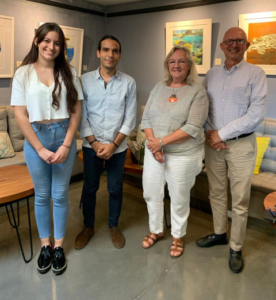
Gabriella Lopez, Johann Bonilla, Suzanne, Luis Morales Alonso

We had lunch at the French Cultural Center with the director, Franck Poupard. It is a very active center open to the public with classes, music, and performing art venues, visual art exhibits, and more. The small theatre is well designed and the courtyard inviting. Johann collaborates with the center to provide artists and musicians for their programs and events. It is obvious that Franck enjoys the successes of his workplace amid a zone of businesses and restaurants.

Suzanne, Franck Poupard

The art show of emerging artists at the Spanish Cultural Center was mostly student art but several interesting artists did have work in it. A father and son, one a sculptor and the other a painter, had several interesting works. An artist, Abner Morales Coleman, from the Caribbean side, had stunning, sensitive oil paintings on very textured tunu bark.

Abner Morales Coleman, “Piel Tunu” (“Tunu Skin”), 2021

oil on tunu bark paper, 19”x 21”

Meeting our graphic artist, Gabriella Lopez, completed the magical moments. She was patient with my requests and competent with her craft. We brainstormed the layout and text for a catalog that we will send out quarterly.

Suzanne

The Good, the Bad, the Whatever 

GOOD: Arizona’s Ballot-Harvesting Ban Is Ruled Non-Discriminatory and Legal 

Arizona’s ban on out-of-district voting and ballot-harvesting doesn’t violate the federal Voting Rights Act, the Supreme Court ruled.

The court, split neatly along ideological lines, found that the Arizona law, known as HB 2023:

* Does not violate Section 2 of the Voting Rights Act (VRA) of 1965.

* Was not enacted with a racially discriminatory purpose.

“The Court obliterated the idea that there must be demonstrable voter fraud to enact a law to deter and prevent it,” J. Christian Adams, president of the Public Interest Legal Foundation, said. “This is a big blow to the vote fraud deniers who have turned to the courts to make our elections less secure.”

Click here.


BAD: Google Secretly Tests Personal Tracking Software on Users

In the Digital Nation of Google, every citizen is monitored 24/7. And that’s a good thing, according to the Google illuminati.

But recently, several Android phone users reported that a COVID-19 notification system was installed on their phones without warning or consent.

In response to a report on this, the tech giant issued this statement: “We have been working with the Massachusetts Department of Public Health to allow users to activate the Exposure Notifications System directly from their Android phone settings. This functionality is built into the device settings and is automatically distributed by the Google Play Store, so users don’t have to download a separate app. COVID-19 Exposure Notifications are enabled only if a user proactively turns it on. Users decide whether to enable this functionality and whether to share information through the system to help warn others of possible exposure.”

One user wrote that the app was “silently installed” on his phone “without any notification.” It “doesn’t have an app icon… you have to go through settings and view all apps. This is a huge privacy and security overstep by [Gov. Charlie Baker] & Google.”

Click here.


SCARY: Teachers’ Union Embraces Woke Idiot-ologies

The National Education Association (NEA), the largest teachers’ union in the US, has called for its members to support and lead campaigns that promote Critical Race Theory (CRT), implicit bias, anti-racism, “trauma-informed practices, restorative justice practices, and other racial justice trainings” for all school employees and for all students from pre-kindergarten to 12th grade.

CRT is a neo-Marxist ideology that teaches that people should identify – and be identified by others – not by the content of their characters, but by, above all else, their race, and then by their gender preference and sexual orientation. It also advocates the idea that American institutions are designed to ensure white supremacy and “the patriarchy.”


GOOD: Parents and Teachers Are Upset 

Despite the endorsements of the NEA and other academic institutions, thousands of local parents and teachers aren’t buying CRT.

Click here.

And here.

And here.

And here.


BAD: Shootings and Killings Continue in Chicago

Since my last report on Chicago, violent crime in the Windy City has continued to climb.

* After Chicago’s Puerto Rico Day parade on June 19, violence spilled over into the Loop, Chicago’s downtown tourist and business district. In one incident, a Puerto Rican driver and passenger were dragged from their car after a traffic accident and shot execution-style.

Click here.


* On the same day, a Maryland student pursuing a doctoral degree in criminal justice was stabbed to death in broad daylight, allegedly by a man who police say is connected to other crimes.

Click here.


* The next day, also in broad daylight and just blocks away, a woman was shot in a hotel lobby.

Click here.


* During the last weekend of June, 17 people were shot, two fatally, and two mass shootings occurred almost back-to-back.

Click here.


* Over the July 4 weekend, more than 100 people were shot, with 16 deaths, including two police.

Click here.

And here.

And here.

And here.

And here.


* 31 of the cities that cut police budgets early last year saw increases in violent crimes, according to the NYT, but Chicago led the pack in terms of murders. Murders increased by 25%, said to be the largest single-year increase since the 1960s.

 * To make matters worse, the Chicago Police Department has lost close to 700 officers since 2019. The number of officers hired in 2020 was a mere 157, compared with 464 hired in 2019.


SCARY: Facebook Is Watching You for “Extremist Content”

Some Facebook users have recently reported being sent warning messages from the social media giant related to “extremists” or “extremist content.”

“Are you concerned that someone you know is becoming an extremist?” one message reads.

On July 1, a Facebook spokesperson confirmed, calling it “a test to some users.”

“This test is part of our larger work to assess ways to provide resources and support to people on Facebook who may have engaged with or were exposed to extremist content, or may know someone who is at risk. We are partnering with NGOs and academic experts in this space and hope to have more to share in the future,” the spokesperson said, without elaborating.

Click here.

John Steinbeck’s The Winter of Our Discontent was June’s selection for The Mules, my all-male book club. I’ve always had the impression that Steinbeck is solidly ensconced in the pantheon of American novelists and that he represents the era when the best writers were defining what an American novel could or should be.

As pointed out by GG, one of our younger members, the title of the book comes from the first two lines of Shakespeare’s Richard III, a soliloquy by the Duke of Gloucester (the future King Richard III):

Now is the winter of our discontent
Made glorious summer by this sun of York

(If you’re interested, you can read the entire soliloquy in the P.S., below.)

When I read Richard III in college, and then in graduate school, I was always slightly troubled by this soliloquy. I thought it was beautiful and thus worthy of my attention. So, I parsed and pondered the lines a dozen times, and was able to appreciate the cleverness of Gloucester’s words.

I eventually arrived at a Cliff Notes-level understanding of their purpose: to very succinctly introduce three of the principal characters and Gloucester’s hamartia (his tragic, fatal flaw). But I always felt that there was something more. Reading The Winter of Our Discontent filled in the blanks for me.

Business, Sports… and Defending the Apostrophe

I ask GP what he’s been doing since he retired late last year.

“Living the dream,” he tells me. “I walk along the beach almost every morning. Once or twice a week I golf. I fill in the rest of the time with crossword puzzles, watching sports or TV or a movie. With Netflix, Hulu, Amazon, and the others, there are so many good things to watch.”

“Too many,” I say.

RS has a part-time job in a hardware store, which he likes. Having spent his life in construction, he knows a lot about building materials and tools. Sharing his wisdom with shoppers makes him feel good.

“I get that,” I say.

I ask him how he spends the rest of his time. Like GP, RS golfs, watches sports, and binge watches “true crime” series on the streaming services.

And then there’s the grandkids. GP and RS agree that time spent with the grandkids is the best. “So long as it doesn’t go more than a few hours,” they add. There’s just so much endurance an old person can muster up for toddlers.

GP and RS are old friends of mine. And they are good friends. But we struggle sometimes to have good conversations. I’ve been trying to figure out why that is.

Here’s my current theory: We grew into adulthood in an era when men were supposed to be the sole breadwinners. It wasn’t until we were in college that the women’s liberation movement kicked in. And even then, it wasn’t about men having less financial and parental responsibility, but about women exercising certain already established rights.

As we made room for women as equals in the workplace and elsewhere, we never expected that our financial responsibilities would be lessened. We would accept some responsibility for the housework and the child rearing, but our primary responsibility to our families continued to be to pay the bills. The more we earned, the better we felt about ourselves. And so, we continued to put most of our energy into our work.

One consequence of all of this was the effect it had on our conversation skills. In responding to the proverbial “What’s new?” we could talk at some length about the challenges, frustrations, and triumphs of our work. Work conversations were generally short and sympathetic, but they were interesting because of shared concerns. After that, the only commonality for most of us was professional sports. We talked about baseball or football or basketball.

For most of my life, I was satisfied with the conversations I had about work. I had plenty to talk about and was always interested in the experiences and opinions of my peers. As for sports, except for several years when I followed the Miami Heat, I had nothing to contribute to sports conversations. So they bored me. But that, as my friends always reminded me, was my problem. It was unnatural for a full-grown man to know nothing about professional sports. To my friends, though, my ignorance posed a different problem: Having nothing to say on the subject, I was, to them, a bore.

Today, almost all of my coevals are retired. That means we no longer talk about work. I am still working, but I’m acutely aware that it isn’t fair to burden my friends with stories of my business struggles. Instead, I talk about what they talk about: what we have done to replace the time we used to spend working – i.e., TV and movies and sometimes books… and the inevitable, golf.

And so, I find that some of the best conversations I have these days are with younger people, my colleagues and protégés that are still actively working. But that makes me sad, because I think that my best conversations should be with my best and oldest friends.

I’m drawing too grim of a picture here. My book club conversations are usually very good. And casual conversations with friends sometimes slip into philosophical discussions about politics, economics, and the disintegration of Western culture. Those I still enjoy. But it makes me second-guess the idea of retiring. I understand the allure of it, but I don’t want to spend the precious time that remains to me pissing away my time with trivial pursuits and then boring others by talking about it.

When we near retirement, we have several choices. One of them is between fixing on what we know or being receptive to continuous learning – narrowing our interests or opening up to more.

I read a short obituary in the WSJ about a British guy that decided to devote his retirement to “Defending the Apostrophe”:

After a career as a newspaper reporter and editor in England, John Richards took up the role of defending the apostrophe, an often-abused punctuation mark.

When he started the Apostrophe Protection Society in 2001, there were only two members, Mr. Richards and his son, Stephen. Soon, however, he had more than 250 members, and some made unsolicited cash donations. Letters and emails arrived from all over with examples of misuse of the apostrophe. Many offenders left the apostrophe out of possessive phrases where it was needed (“The last word was John’s.”) or inserted it where it should not have been (“It’s title was Exodus.”).

He recalled an incident when he saw a restaurant advertising coffee’s: “I said, very politely, to the owner, that it wasn’t needed. That it was a plural. But the man said, ‘I think it looks better with an apostrophe.’ What can you say to that?”

“He was always great fun to listen to,” a mourner said. “If you asked him what’s new, he always had another story and something interesting to say.”

As Anna Quindlen once said, “A finished person is a boring person.”