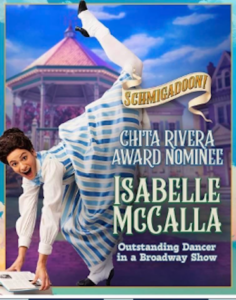
This is my niece, Isabelle McCalla, who’s done the impossible by becoming a Broadway star. Not once. Not twice. But three times! Here she is headlining Schmigadoon!, a breakthrough Broadway comedy.

This is my niece, Isabelle McCalla, who’s done the impossible by becoming a Broadway star. Not once. Not twice. But three times! Here she is headlining Schmigadoon!, a breakthrough Broadway comedy.
As I mentioned above, we had invited three young AI experts to our business retreat in Nicaragua. One of them was a very funny 25-year-old kid who I knew, the very first time I met him, was going to become either the next AI billionaire or a major stand-up comedian. Take a look at my sit-down with him and let me know what you think.
(MoCAArt.org)
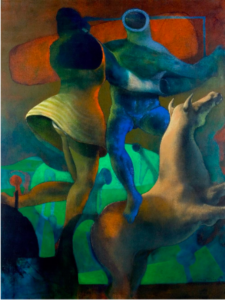
César Menéndez (El Salvador, b 1954) La Danza del Équido, 2003, mixed media on canvas, 78″ x 59″
The ANNEX
290 SE 2nd Avenue, Delray Beach, Florida
This talk examines art as a form of embodied communication — a language that originates in the nervous system and often precedes words. It will explore how emotional memory is stored in the brain and body, why visual expression activates deep limbic networks, and how color, gesture, and texture can communicate experiences that language cannot fully articulate.
The lecture will also explore how art functions as a container for collective and inherited memory — particularly within cultures shaped by migration, displacement, resilience, and layered histories. In this way, creative practice becomes not only personal expression, but a bridge between generations.This offers a rich intersection of science, emotion, and cultural identity, inviting the audience to understand art as a biological, relational, and deeply human act.
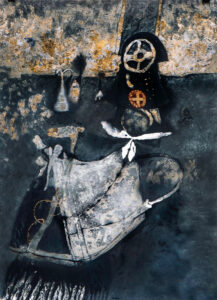
Elmar Rojas. De las magicas tradiciones: Torofuego II, 2016, piezograph, 59″ x 39″
Current Exhibition
Art works by Carlos Mérida, Elmar Rojas, Isabel De Obaldia, Guillermo Trujillo, Francisco Amighetti, Moises Becerra, Benjamin Cañas, Cesar Menendez & more that demonstrate the rich cultural heritage where ancient beliefs about nature, community, and the spiritual world are often interwoven with Spanish colonial influences, creating unique expressions of traditions across Central America.
Coming Events/ Sunday Speaker Series
Sunday, June 14, 2:00 pm
This documentary follows a University of Miami student returning to Panama’s Guna Yala Islands, a community of 360 islands striving to preserve its traditions. Central to the story are molas—handmade textiles that express Guna history and identity and are collected worldwide. The film explores the importance of preserving this art form and the challenges of protecting it from increasing commercial pressures.
Read about how Latin America is seen from across the Atlantic
by MoCAArt colleague, Johann Bonilla
Central America at ARCO Madrid 2026
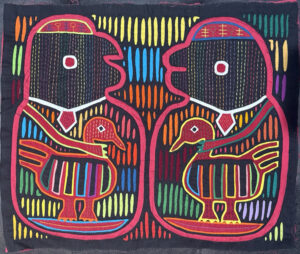
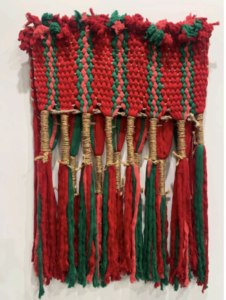
Choose from 30 vintage molas to support us with your $500 donation.
Molas are handmade layered, reverse-appliqué textiles, representing nature, spiritual protection, and cultural narratives.The quality of a Mola is determined by the number of layers of cotton that is used and the fineness of the stitching.
The vintage molas of the 1960s are typically valued up to $500.
In the works: A new book, Central American Postmodernism
a fascinating project to bridge the gap between the modernist movements and the contemporary art of Central America. Focusing on the 1970s, 80s, and 90s, these decades are a period of intense social and political transformation that influences each nation’s visual language and its artists.
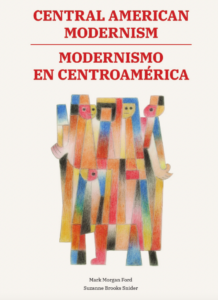
Central American Modernism / Modernismo en Centroamérica
by Mark Ford & Suzanne Snider

MUSEUM OF CENTRAL
AMERICAN
ART
visit by appointment
The ANNEX
290 SE 2nd Avenue
Delray Beach, Florida 33444
Want to change how you receive these emails?
You can update your preferences or unsubscribe from this list.
Contact Us
suzanne@MoCAArt.org | 561.808.8587
Copyright © 2026 Museum of Central American Art. All rights reserved.
Setting: A casual bar on the West Side of Manhattan
Time: Evening
We were on our way to something – a party of some kind that involved seeing several friends we hadn’t seen since our high school graduation. I had taken the train in from Freeport, where K and I had rented a one-bedroom apartment where we would live while we figured out the next chapter of our lives. WC lived in the city, way down south in the financial district, where he worked. We met on 42nd and Broadway and were walking uptown.
It had been just over two years since I’d seen WC. He looked pretty much the same – a gaunt, freckled, formerly good-looking Irishman, but with what looked like ten extra years of wear and tear. We hugged hello and I noticed the familiar odor of alcohol on his breath. Since our high school days, WC had been a drinker, sometimes a solo at-home drinker. So, it did not surprise me that he’d obviously been drinking earlier that evening. Nor did it surprise me when he suggested that we stop on the way to the party for “a quick one.”
“We’ll be at the party in less than ten minutes,” I complained.
“You’ll like this place,” he said.
I knew he didn’t care whether I liked it or not. And I knew that his suggestion wasn’t a suggestion. Before putting himself in the social uncertainty of a party, he needed a bit of liquid confidence – a light thumb on the scale of the evening’s possibilities.
It was more a tavern than a bar, an old tavern, a time-worn tavern, a weathered, dimly lit tavern that promised anonymity. (Which, I realized, was the reason WC had picked it.)
The bar itself looked to have been there since the building was constructed in the early 1900s. The wood was fine-grained and dark. Maybe oak, but darkened by years of neglect, of neglected spilled drinks and neglected cigarette embers. I followed WC to what I guessed was his regular spot in the corner.
My guess was confirmed when the bartender, a stout, red-cheeked, middle-aged man with glossy yellowed eyes, came over and set down a mug of beer and a shot of whiskey in front of WC before asking me what I wanted. I ordered a beer.
We sat in the corner reminiscing about the old days – stories we had told one another too often. When we finished our drinks, I pulled out my wallet to pay. But CW patted my arm and said, “Let’s have one more for the road.”
He motioned to the bartender to bring us a second round.
A moment later, a cluster of people came in and seated themselves. They were a few years older than we were – late 20s or early 30s – and looked fashionable somehow, although I couldn’t tell you why. They were full of energy and talking loudly, as if they felt they had something clever to say.
I didn’t recognize any of them. But CW did. He had been studying them carefully since they entered.
“What’s so interesting?” I asked.
“Do you see that guy? The older guy with the blondish hair?”
He seemed vaguely familiar.
“Yeah, I see him,” I said. “What about him?”
“That’s John Savage,” he said.
“Who’s John Savage?” I replied.
He looked shocked. “Are you kidding? You don’t know who John Savage is?”
I shrugged.
“The Deer Hunter?” he said.
“Yes!” I said. “He’s that guy who lost both his legs in the Vietnam War…”
“Right,” he said.
I looked again. It really was John Savage – the very same man who had been so compelling in The Deer Hunter, the actor who was as good in his role as Robert De Niro and Christopher Walken were in theirs.
And now I could see that the people with him were not a cohort but an entourage. They were at least ten years younger than he was. They were dressed better. And they were very attentive to whatever he was saying, to his every gesture. They were more than fans. They were sycophants. And John Savage looked drunk. And bored.
WC finished his drink.
“Ready to go?” I asked him.
“Nah,” he said. “I’m tired. I’ve got a meeting tomorrow morning.”
“What? You’re leaving? You invited me. You’re the one that wanted to go!”
“Well, I don’t want to go now,” he said.
He put his hand on my shoulder.
“I’ll call you tomorrow,” he said. And he walked out the door.
I was thinking about John Savage and his entourage. Something was wrong there, but I couldn’t put my finger on it. I wondered what he’d been doing since The Deer Hunter. Had he made another movie? Two?
“SDS?” a woman in the entourage said quite loudly. “What’s SDS?”
Savage had his head down, shaking it as if to say, “Who are these people?” and “How did I get here?”
“Students for a Democratic Society,” I replied. The entire group looked at me. I shook my head and went back to sipping my beer.
Their conversation picked up energy. Savage stayed seated, hunched over his drink, nodding reflexively whenever someone spoke to him.
I had to pee. I got up and walked around their table to reach the bathroom. It was as old and decrepit as the rest of the place. There were four full-sized urinals against one of the walls. A few seconds later, someone entered and took the urinal next to me. I thought it was odd that he would not place himself at least one urinal away. I began to feel uncomfortable.
“SDS,” the man said, and laughed a little.
I looked. It was John Savage.
“Nobody remembers,” I said.
As we walked over to the washbasins, we struck up a conversation. Not just a casual, NYC conversation where you trade quips about everything you know about anything that comes up. We went off on a comical diatribe about how the “young” people don’t know anything, and about how the world is changing, and about what things will be like in ten years.
We walked back to the bar, arms over shoulders – literally, arms over shoulders – and sat down at a small table. As we ordered shots of whiskey, it felt to me like we were on screen playing two guys in a bar.
We downed the shots and he said, “I’m going to the China Club. Wanna come along?”
I was not familiar with The China Club. But I was hanging out with a famous movie star. How could I say no?
As we made our way to the door, he stopped at the table where his entourage was sitting.
“Hail a cab,” he said to me. “I’ll be right out.”
He came out of the bar with two girls, one on each arm. He was smiling. They were laughing. I thought I saw a smudge of white on his nose.
“Great timing!” he said as a cab pulled up. He opened the door and climbed into the back seat with the girls. I looked at him, thinking, “Is this SOB dumping me?”
He looked as if he was reading my mind. He gave me a piteous look. “Come on! We’re going to the China Club! You and me. And…”
He looked at the girls, who proudly announced their names.
“Yes!” he shouted happily. “You. Me. Leslie and Jane! “Get in!”
I hopped in the front.
“To the China Club!” he declared.
The charisma that must have been part of his success as an actor was in full force. The women were laughing. The cab driver was laughing. And I felt ecstatic.
I glanced back and smiled at him. Whereupon he grabbed one of the women by the head and began to kiss her, quite aggressively. What was confusing wasn’t that she seemed to enjoy it… it was that while he was kissing her, he was looking at me. And he held that look as he released her head, grabbed the head of the other woman, and began kissing her. It looked like he was trying to send a message to me. I just wasn’t sure what that message was.
I don’t remember what The China Club looked like from the outside, but the inside was cavernous with dozens of small tables and chairs surrounding a dance floor behind which was, I think, a band.
The moment we entered, it was apparent that John Savage knew the China Club and the China Club knew him. We were escorted to a table that was already set with a bucket of champagne and four flutes. But he didn’t want to sit down. He wanted to dance. He took the two women by the hand and led them toward the dance floor.
“Come on!” he said to me.
I stood there. I couldn’t move. I was out of my depth.
As they began dancing, he kept waving at me to come join them.
I couldn’t do it.
As I was walking to the exit, I glanced back. The girls were still dancing… but he was standing still, looking at me as if he expected an explanation.
Postscript: $50,000 Gym Fights
This is a new type of fighting sport. I’m guessing it will catch on… although probably as an amateur event, given the fact that the danger to the individual losers is small and the credit to the winner is not that great. But if what you’re looking for is strikes per minute, it delivers!

“Thank you for this outstanding essay. I’ve never read any defense of the liberal arts that was so powerful, yet so concise. This made me think: I don’t know your stance on religion, but wouldn’t you add theology (as a liberal art) and fear of God as bonus teachings that complete an education?” – CL
My Response: No, I don’t see religion as a liberal art in the sense I was using it. My essay was about essential skills for lifetime success – and my point about the traditional liberal arts curriculum is that it’s designed not just to convey knowledge but, more importantly, to teach the skills I was advocating.
You could argue that some religions espouse behaviors that require skill building, such as kindness and charity. But they cannot be taught the way a skill can be taught. One could even say that they cannot be taught at all, that they can only be learned. And I think that’s generally true. We learn those behaviors primarily by observation and imitation. You can try to teach your children to be kind and charitable, but unless they see you acting with kindness and charity, they will likely become what they see, not what they are told to do. Which is how I see most religions: a set of ideas and beliefs that are not just taught but also enforced, and lots of adherents, including religious leaders, that don’t practice what they preach.
Another reason I wouldn’t include religion as a liberal art is because there is nothing inherent in it that is universally good. If you say it is the belief in a god, I’d point out that though Christians, Muslims, and Jews share a belief in monotheism, the values they teach and embody are, in some ways, radically different.
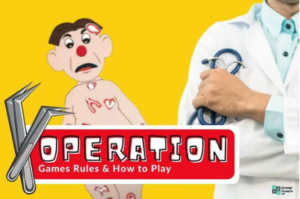
“Operation” is a battery-powered game that was invented in 1964 by an American college student and sold by him to the Milton Bradley company for $500. Today, the franchise is worth about $40 million.
In this sorta-funny, definitely gross bit from “Saturday Night Live UK,” Riz Ahmed plays a man who becomes addicted to playing it.
Postscript:
If you’re familiar with the Fulton Street Subway Station, you know the problem. But even if you’ve never been there, you’ll get the idea in this laugh-out-loud and yet edifying commentary by British comedian Myles Toe.
Notes from My Journal:

Yesterday, I topped the issue with a photo of the sunset from the porch of our house here in Nicaragua. Above is a photo I took a few minutes ago from that same porch. The reason for the repetition is that I haven’t left the house since I got here on the evening of the 25th. I haven’t walked to the beach. Or the clubhouse. Or the restaurant. And despite self-promises to the contrary, I haven’t been to the gym at Fun Limón. In fact, the rental car that brought me here from Managua is still sitting in the driveway – just where I left it.
I’m hunkered down here because I have a shitload of work I need to get done before the troops arrive on Saturday. And because I know that if I show my face anywhere around the resort, I will have lots of fun and pleasant conversations, and lots of people coming over to say hi, but I won’t get anything done.
You may be wondering why you are getting another issue just a day after the last one. That is because I made another self-promise: to publish more than eight issues this month.
Yesterday’s was the eighth April issue. And with just one day to go before the end of the month, I had to find something for one more issue that wouldn’t take much time to prepare.
So what I’ve done is sorted through the more than 100 video clips I’ve saved over the past few months and selected about 30 that I thought you might enjoy. To make your picking and choosing easier, I’ve tagged them with the requisite adjectives (Funny, Inspiring, Informative, Disturbing, etc.) and, wherever possible, noted the time it will take to watch each one.
* Fascinating: 10 amazing inventions that were destroyed. (4:18)
* Informative: Sugar can feed cancer cells. You may have heard that. I had. I’ve even read about it. This short clip from a 60 Minutes episode explains it clearly. (1:33)
* Inspiring: A video biography about the short but brilliant life of Maryam Mirzakami, an Iranian mathematics genius.
* Disturbing: How does AI feel about being used for warfare? (2:34)
* Contrarian: “Michael Masterson” on how long you should persist with your great idea. (1.08)
* Unbelievable: Nick Shirley asks New Yorkers about Mayor Mamdani’s White People tax. (28:16)
* Edifying: An Iranian lawyer in exile has a message for all Americans about the Iranian regime. (1:58)
* Worrisome: Reporting on Nigerian scammers hitting up American tourists in Japan. (8:23)
* Impressive and Adorable: Super-cute kid from Manchester proves that he can play an acoustic guitar. (2:38)
* Clarifying: A proud Muslim refutes some common misinformation about Israel.
* Impressive: Woman with a great voice and amazing vocal range does live looping. (0:58)
* Funny and Painful: Gen Z testing university students with some grammar school questions. (10:13)
* Not Surprising: An update on Mayor Mamdani’s $30 million grocery store election promises. (1:47)
* Worrisome: Muslim Sharia horseback police patrol and force British women to wear hijabs. (15:12)
* Head-shaking: How to get yourself a mansion without paying for it. (28:22)
* Affirming: The psychology of people (like me) that don’t follow sports. (9:37)
* Baffling: Ilhan Omar and her $30 million mistake. (50:04)
* Interesting: What killed the transgender movement? (28:16)
* Informative: How streaming platforms detect your AI music. (6.32)
* Satirical: He has created a great persona for pulling off these satires with such humor.
* Heart-warming (from GM): Being chosen by animals is a rare privilege that words can’t fully define. (0:12)
* Interesting: A day in the life of a modern chossid in yeshiva. (29:21)
* Revealing: Iranian model talks about why she left her country and came to the USA. (29:21)
* Alarming: What’s happening in New York City can’t be stopped. Not even by Mamdani, (23:28)
* Impressive: Why Sophie Cunningham has never spent a penny of her NBA salary. (0:58)
* Surprising: Saks Fifth Avenue is going bankrupt. (23:38)
* Ironic: New York State’s governor is begging big taxpayers to come back home. (13:55)
* Incredible: What happens when you put ChatGPT inside a robot? (14:57)