Otherworldly Grace: A Geisha Performance

It’s quite possible that the tequila I had with Professor Fuji before dinner had something to do with my mood. Or it could have been the dozen small glasses of beer that I enjoyed with my meal. But the dancing we saw that night at the geisha house in Tokyo was as brilliant as it was other-worldly.

Here’s an example of what I’m talking about.

Doubt, Letters, and the Truth About Writing

From RG: “Do I have what it takes to be a writer?”

“I’m a college sophomore. I’ve been reading your blog for about a year now, and I’ve read two of your books (Great Leads and The Power of Persuasion). I like the way you write. Whatever the topic, you make your ideas and opinions easy to understand. It feels like writing comes easily for you. I want to be a professional writer someday, but I’m just starting out and worry sometimes that I just don’t have the talent. I wonder if you ever felt that way.”

My Response: The answer is yes. More importantly, many writers, much better than I, have had the same doubts. Here’s a sampling, from Letters of Note, that might give you hope:

“I am very poorly today & very stupid & hate everybody & everything.” – Charles Darwin, letter to Charles Lyell, Oct. 1, 1861

“No one really takes very much interest, why should they, in my scribblings. Do you think I shall ever write a really good book?” – Virginia Woolf, letter to Violet Dickinson, Oct. 1, 1905

“My god it is hard for anybody to write. I never start a damn thing without knowing 200 times I can’t write – never will be able to write a line – can’t go on – can’t get started – stuff is rotten – can’t say what I mean – know there is a whole fine complete thing and all I get of it is the bacon rinds. You would write better than anybody but the minute it becomes impossible you stop. That is the time you have to go on through and then it gets easier. It always gets utterly and completely impossible. Thank God it does – otherwise everybody would write and I would starve to death.” – Ernest Hemingway, letter to Waldo Pierce, Oct. 1, 1928

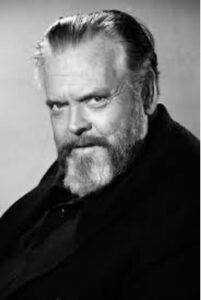
Orson Welles: A Legend in Every Way

Orson Welles: He Was Fat, but He Was Fabulous 

I like this very short clip from Johnny Carson’s Tonight Show for two reasons:

1. It’s Orson Welles.

2. Welles is paraphrasing a famous rejoinder by Winston Churchill. The story (which may be apocryphal) is that a clearly intoxicated Churchill was reproached by the British politician Bessie Braddock. “Sir,” she said, “you are drunk.” To which Churchill replied, “And you, Bessie, are ugly. But I shall be sober in the morning, and you will still be ugly.”

So Little Time… So Many Enticing Ways to Waste It
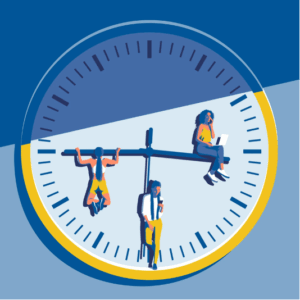
Many years ago, I wrote a series of essays in Early to Rise about the many activities that compete for our spare time.

I began with the obvious point: Since the hours of genuine “free time” we have each day are so limited, it would be foolish to fill them with whatever random diversion happens to appear. Having squandered so much of my own time in the past, I resolved not to let chance – or worse, habit – determine the value of those hours. They were mine, a precious resource, and I had both the ability and the responsibility to choose wisely.

To deal with this challenge, I developed a theory and a method for optimizing the value and pleasure of my spare time.

It began with a simple realization: After any given activity, I would almost always feel one of three ways.

* I felt good about how I’d spent the time.
* I felt nothing at all.
* I felt bad about it.

It didn’t take long to see the obvious conclusion: I needed a system to select spare-time activities that would leave me feeling good and never feeling bad. The next step was to figure out the qualities or characteristics of the activates that left me feeling one way or the other.

That wasn’t difficult either. I kept a simple ledger of what I was doing and how it felt. Within a month, the pattern was clear.

Among the activities that left me feeling good were these:

* Writing books and essays
* Exercising – strength training and hard cardio
* Giving speeches to large audiences
* Running workshops for sharp, ambitious people
* Mentoring young professionals in my industry
* Reading a good book
* Watching a great film
* Watching an edifying documentary
* Developing Paradise Palms, my botanical garden
* Running Fun Limón, our family’s community center in Nicaragua
* Expanding my collection of Central American modern art
* Planning a museum for that art
* Spending time in museums – especially art museums
* Having stimulating conversations
* Learning about art, music, or any subject I cared about
* Practicing jiu jitsu
* Listening to good music
* Enjoying food and drink
* Spending time with my kids and grandkids

Among the activities that left me feeling bad were these:

* Watching bad or mediocre movies or TV
* Reading mediocre books
* Eating junk food or overeating
* Getting drunk
* Playing solitaire
* Gossiping
* Giving unsolicited advice
* Consuming salacious or depressing news

From there, I sorted my spare-time activities into three categories:

* Those that improved me
* Those that damaged me
* Those that did neither but left me with the hollow sense that I’d wasted my time

I then gave names to the three categories: Golden Choices, Vaporous Choices, and Acidic Choices. Mixed metaphors though they were, I felt they captured the essence of why some options leave us nourished, others leave us empty, and still others corrode us from within.

As I laid all this out again recently, it struck me how closely this hierarchy mirrored one I had already developed for my working hours. In earlier essays and in one of my books, I had argued that the best way to maximize the value of your work is to discipline yourself to spend the first hours of the day on the highest-value, most difficult tasks – the ones that move you forward – and push the lower-value, routine tasks to later in the day when your focus and energy are diminished.

I realized the same principle applies to leisure. If I wanted to get the most satisfaction from my spare hours, I needed to rank activities by the value they brought me, and then commit to choosing the higher-value, higher-pleasure options whenever I had a choice.

My Golden Choices 

My best experiences come from activities that are both intellectually challenging and emotionally engaging – the work that I believe is truly necessary and important. That includes writing books, producing films, and building my nonprofit foundations. It also means investing in and sustaining strong personal relationships.

These are the things that matter most to me – the things I think of when someone asks, “How do you want to be remembered?” But they are rarely easy. They demand focus, discipline, and energy. When I’m tired, I tend to avoid them. I have to push myself to begin.

Yet once I start, the resistance fades. Progress breeds hope. I begin to feel the worth of the effort and the value it will have when it’s complete. The work itself becomes energizing. Even inspiring. And when I finally step away at the end of the day, I feel satisfied, not just with what I accomplished but with how I chose to spend my time.

My Vaporous Choices

Welcome to the Vapor Zone. This is where I go when I don’t feel like working hard, but I don’t feel like completely wasting my time either.

Vaporous activities are easy to slip into. They’re also easy to spend hours doing. These are the activities that feel like fun while you’re in them and leave you feeling sort of okay when you’re done and move on to something else. Not good. Not bad either. Just… okay.

We treat them as acceptable choices when we don’t feel like making choices at all – e.g., the neutral, happy world of poker, sitcoms, and gossip.

When I’m ready for some relaxation, my first impulse is to reach for a Vaporous activity. Having “worked hard all day,” I want something simple and mindless so I can gear down. Getting into the Vapor Zone is easy. Staying there is easier still.

The problem with Vaporous activities – and this is a very big problem for me – is that they leave me feeling enervated rather than energized. And empty. Like Vaporous foods (comfort foods), they fill me up, but they wear me out.

My Acidic Choices 

Everybody has vices. And while I haven’t had all of them, I’ve done plenty to destroy, reduce, or disable myself.

Why I do these things, I can only guess. Sometimes I think I need the challenge of surviving self-imposed obstacles. Whatever the reason, the result is almost always the same.

I get a dull pleasure, tinged with a faint trace of pain. Even when the pleasure feels intense, it comes through a foggy brain. It feels like I’m having a great time… but I’m never quite sure. And if the experience of Acidic activities is muddled, the feeling afterward is anything but. It is bad.

The interesting thing about Acidic activities is how seductive they are. Nobody would claim they’re good choices. We pick them because we’re too weak to pick anything else, and then we use what little mind we have left to rationalize our own self-destruction.

A Closer Look at the Three Categories 

As a rule, the easiest choices are rarely the best ones. Bad habits (Acidic choices) are easy precisely because they’re habits. Vaporous choices are easy, too, because they require no fortitude and almost no energy. It’s the Golden choices that are hardest, because they demand effort and focus.

When we are at our best – confident, rested, full of energy – we can easily choose Golden activities. When we’re just okay, we usually have the strength to reject Acidic temptations, but not quite enough to reach for Golden. And when we’re at our worst – tired, discouraged, doubtful – that’s when Acidic choices look most appealing.

I’ve also been thinking about these categories from another angle: through the lens of what I call sustainable pleasures.

Sustainable pleasures are activities that give us genuine satisfaction every time we do them – no matter how many times we repeat them. And, as with spare time, there’s a hierarchy here, too.

In my early writing on this, I broke it down into three sustainable pleasures:

* Working on something you care about
* Learning something you believe has value
* Sharing the benefits of what you’ve gained from that work and learning

Underneath those distinctions is a simple truth: The more importance you attach to the work or learning itself, the deeper and longer-lasting the pleasure you get from it.

You may not agree with every item on my list. And that’s fine. Think of it as a template, a way to establish your own hierarchy of choices.

In creating your list, consider the following:

The Characteristics of Golden Experiences… 

* The activity/experience is intellectually challenging. It teaches you something worth knowing or develops a skill worth having.

* It is emotionally deepening. It helps you understand something you hadn’t understood before and/or makes you sympathetic to situations you had previously closed yourself off to.

* It is energizing. The experience itself charges you spiritually, emotionally, and intellectually. You have greater strength and more endurance because of it.

* It leaves you happy with your choice. During the experience and afterward, you have a strong sense that you are doing the right thing.

* It builds confidence. Because you know that you are improving yourself, choosing Golden activities makes you feel better able to make wise choices in the future.

The Characteristics of Vaporous Experiences… 

* The activity/experience is intellectually and emotionally easy. It feels comfortable and comfortably enjoyable. You’ve done it before, it amused you, and you expect it will amuse you again.

* It is usually passive rather than active. It is watching TV rather than going to a stage play. It is getting a massage rather than practicing yoga. It is chugging a brewsky rather than savoring a good wine.

* It tends to be habit forming. Because it feels good (in a medium-energy sort of way) and is so easy to do, you find yourself doing it again and again.

* Whether it’s eating starch and fat or sitting on the couch and staring at the TV screen, a little doesn’t hurt. But too much leaves you with the unpleasant feeling that you’ve wasted your time.

The Characteristics of Acidic Experiences… 

* The activity/experience is physically or mentally damaging. Often, it kills brain cells. Sometimes, it gives you cancer.

* Although it is bad for you, it is alluring. There is something about the way the experience takes you out of yourself that you find attractive.

* It attracts bad company. Since most healthy people don’t approve, you end up doing it with a different set of friends. Eventually, you reject the ones who don’t “get it.” They’re too straitlaced or lame to understand, so you figure you don’t need them in your life.

* It disables you intellectually, emotionally, and physically. In the moment, you are less capable of performing complex skills or handling complex issues. If you engage in acidic activities often, your overall capacity for peak performance declines.

* It has an ever-rising threshold. What excites you at first is never enough later. You fall into the mistaken belief that more is always better.

Applying the Formula to Your Spare Time 

If you’d like to apply this formula to improve your own experiences of your own spare time, here are some suggestions to help you do it:

1. Don’t let your spare time happen by happenstance.

Unless you take a few extra minutes each day to consider your options, you’ll keep ending up with the same bland – or negative – feelings about how you used your hours.

2. Plan your spare time.

It may seem finicky, and maybe it is, but I’ve found that my leisure is always better when I plan it in advance. After I block out my workday – by the hour or half-hour – I look at what’s left: my spare-time hours.

3. Review your options. 

You don’t need to list your Vaporous or Acidic choices. They’re always right there, clamoring for attention. Focus on your higher-value options. Go for the Gold!

Don’t worry about your privilege. Worry about yourself. 

I dipped into an ongoing Facebook conversation – something I never do – in response to someone confessing to being “privileged.” I did so, against my better judgement, because it gave me an opportunity to set down some thoughts I’ve recently had on the subject of privilege in the context of succeeding in the world of wealth building (and in every competitive arena I can think of).

Here is what I wrote:

“So long as you worry about these economic issues as social problems, you will do nothing to solve them. The solution – the only solution whether you like it or not – is to think of them as your problems.

“Don’t ask yourself what can be done to protect all those underprivileged people. Ask yourself, ‘Given these trends and accepting the fact that some of these predictions may prove out, how can I provide for the current and future living costs of myself and my family.’

“Stop wasting your time, endangering your dependents, and wasting the time of all the millions of underprivileged you don’t really give a shit about. Spend your time and energy on your #1 responsibility as a human being living in a community of human beings – and that is earning the income to pay for your own expenses and those of your dependents.

“You should do that not only because it is the right thing to do ethically, but also because you understand that you can never achieve much for ‘others’ by trying to solve macro-economic and political problems socially and politically.

“Do the hard thing instead. The moral thing. Pay the full price of your own burden to society and the burden of your dependents. After you have done that, if you have money left, then you should extend beyond your immediate family. Not by throwing money at political and social organizations. They are naturally and inevitably corrupt and inefficient. Instead, do the right thing – which is, again, the hard thing.

“Take responsibility for saving one person at a time. When you do that, you will immediately feel the quicksand that social and political programs are built on: that money alone is insufficient to help anyone move above the swamp of poverty. It is nearly a full-time job. Just like the job of trying to make responsible, independent people of your own children.”

The Epstein Saga: My Current Thoughts

I haven’t written about the Epstein saga since July, but I’ve been following it. Trump’s decision to follow in Biden’s footsteps and bury the investigation was deeply disappointing. I can no longer pretend to myself that Trump was different because he was not part of the swamp.

I’ve been hoping for him and his cabinet to do something that would restore my hope for him, but I haven’t found anything that can do that yet.

Here is an update on what I’ve been reading about the story and what I think it means. 

* The DOJ’s Announcement: In recent weeks, the Department of Justice finally claimed that Epstein’s full “client list” does not exist, nor is it being prepared for release. This outright denial conflicts with years of promises and assertions from officials who initially said they had “thousands of pages” of evidence.

* Broken Promises: Attorney General Pam Bondi publicly stated in 2021 that she had a file with evidence of “more than 250 victims” and promised “everything will come out.” Yet in the latest leaks, she and the DOJ admitted they have no such full files. (Source: Bondi’s statements in media interviews, official transcripts)

* The Fabrication of Evidence: The evidence released by the DOJ last year was heavily edited, with Wired reporting that the so-called “raw footage” was a patched-together assemblage of multiple clips with metadata suggesting tampering or editing.

* The Public’s Growing Suspicion: Investigative journalists and critics, including whistleblowers, journalists, and even some former allies of Trump, are voicing increasing doubt. Leading voices have questioned why the most high-profile case of the 21st century remains unresolved and why the government is deliberately opaque. (Sources: articles from the New York Post and The Wall Street Journal)

* Supporters’ Disillusionment: Trump supporters who once believed in his promise of transparency are now openly questioning why the files haven’t been released – many seeing it as a clear indication of a cover-up. (Sources: social media posts)

* Media and Opposition Response: The mainstream media, many Democrats, and anti-establishment commentators are increasingly critical of the DOJ’s refusal to release full documents, framing it as part of a broader system of elites protecting themselves. (Sources: articles from CNN, MSNBC)

Why This Story Should Stay Alive

My concern with the Epstein saga is much less about Epstein as pedophile. It’s not about the list of powerful people who would be humiliated if the list were revealed. It’s not even about the young women who were sexually groomed and victimized by Epstein and his supporting network. (It takes a ton of naivete to believe this was a two-person operation.) My interest in this case, and particularly Epstein’s death and all the covering up, from both sides of the aisle, including first the Biden administration and now the Trump administration – not to mention 95% of the media and our government representatives – is who or what was behind this international, multibillion-dollar scheme whose only logical purpose could have been global blackmail.

Epstein Saga Timeline 
 
1980s–2000: Jeffrey Epstein’s Rise to Prominence
Key Dates
* 1980: Epstein becomes a limited partner at Bear Stearns.
* 1988: Epstein creates his own money-management firm, targeting clients worth $1 billion or more.
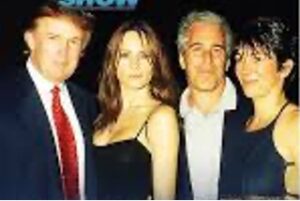
* 1992–97: Trump hosts parties attended by Epstein and flies on Epstein’s private jet multiple times.
 
2000–04: From “Terrific Guy” to “Persona non Grata” – with a Birthday Card in Between
Key Dates
* 2000: Ghislaine Maxwell, Epstein’s associate, invites 16-year-old Virginia Giuffre to become Epstein’s masseuse.
* 2002: Trump says, in a magazine piece on the financier, that Epstein likes women “on the younger side.”
* 2003: Epstein celebrates his 50th birthday. Trump is reported to be one of more than 50 celebrities who contributed to a bawdy album of birthday wishes.
* 2004: Trump and Epstein’s friendship ends.
 
2005–09: Controversial Conviction
Key Dates
* March 2005: Palm Beach police investigate report that Epstein was inappropriate with a 14-year-old.
* July 2006: Grand jury indicts Epstein on soliciting prostitution charge.
* May 2007: Federal prosecutor drafts indictment with 60 criminal charges against Epstein.
* July 2007: Epstein’s attorneys negotiate deal to end federal investigation.
* June 30, 2008: Epstein pleads guilty to state charges and is sentenced to 18 months.
* July 22, 2009: Epstein is freed after 13 months in prison.
 
2011–17: The Giuffre Case
Key Dates
* 2011: Giuffre sells two interviews and a photo of her with Prince Andrew to a British newspaper.
* 2015: Giuffre sues Maxwell for defamation. Suit is settled.
 
2018–19: Investigation, Arrest, and Epstein’s Death
Key dates
* Nov. 2018: The Miami Herald publishes yearlong investigation of Epstein.
* July 6, 2019: Epstein is arrested on federal charges.
* Aug. 10, 2019: Epstein is found dead in jail cell.
 
2020–24: Calls to Release the Files
Key Dates
* Dec. 29, 2021: Maxwell is convicted of sex trafficking.
* Jan. 3, 2024: Court releases more than 900 pages of documents that were part of the Giuffre-Maxwell suit.
* June 2024: Trump says on Fox News that he would release the Epstein files.
 
2025: From “Declassified” Binders to “No Credible Evidence”
Key Dates
* Feb. 21, 2025: Attorney General Bondi says Epstein client list is “on my desk.”
* Feb. 27, 2025: MAGA supporters receive Epstein files binders from Bondi.
* May 2025: Bondi informs Trump that his name appears in the unreleased Epstein files. Trump has denied this.
* July 7, 2025: Justice Department releases memo saying that no other documents will be made public.
* Sept. 8, 2025: Epstein estate releases the birthday book, which includes a drawing and birthday wishes that appear to be signed by Trump.

Yet Another 9/11 Conspiracy Theorist? 

In the Sept. 8 issue, I included a short video about 9/11, pointing out the difficulty of believing that the three buildings – the North Tower, the South Tower, and Building 7 – were taken down by the planes that flew into them.

I just learned that Sen. Ron Johnson has taken up the cause. His version is more moderate than the one I showed you. His problem is with Building 7. He said, “It sure looks like controlled demolition to me.”

Johnson told James Corbett that asking legitimate questions results in instant backlash, which he said just raises his “suspicion level.”

“The Richard Gages of the world, the structural engineers, the firefighters who know the history of these steel buildings not coming down because of basic fires – you need something else,” he said.

How to Fix Our Broken Government: Five Simple Rules 

I loved this video clip. Here’s a guy with no stated credentials talking about how to fix what has been impossible for legislators and political pundits to fix for as long as I’ve been alive: the fundamentally corruptible nature of the US.

The Question I’m Asking Now 

I’m doubtful we’ll ever get a full and clear accounting of the Mega-Crime that was COVID-19. There are simply too many power players – corporations, lobbyists, medical associations, politicians, and the media – involved in producing and promoting this multibillion-dollar scam that will continue to do everything they can to challenge the facts as they surface or simply bury them in the small print of long, boring reports that no one will read.

We know that the virus itself was not just man-made but was produced by labs that were in the business of developing biological warfare. And it never would have existed in the first place – and killed as many as 8.5 million people worldwide – had the US not been actively involved in funding that research.

What we know we do not know is the actual number of deaths from COVID. Because from the very beginning, the way the WHO and many other national health agencies counted the deaths was erratic and completely absurd.

On the economic front, we know that the cost to governments, businesses, and individuals was in the trillions of dollars.

And finally, we know (or should have learned) that the power of our own limited-government US Constitution was not strong enough to persuade a huge percentage of our population to believe a narrative that made no sense when it was first spun at the end of 2019, and only got more absurd as the shutdowns continued.

So the question I’m asking now is: Did we, the people, learn anything from this? Or could it happen to us again next year?


One More Thing: This Just Came Out from the WSJ…

As I was putting this issue to bed, the WSJ published an opinion piece titled “RFK’s Misguided War on mRNA.” The Journal has been promoting every major talking point put out by Big Pharma since the man-made virus appeared six years ago. It’s no surprise that they continue today. I don’t have the time right now to give you a point-by-point refutation of their piece, but I’ll send one to you in the coming days.

Here’s What I Discovered: How DC (and other Blue Cities) Managed to “Lower” Violent Crime Rates in Recent Years

There is no doubt that DC has a crime problem that is not going down. Everyone living in DC knows that. But it’s also true that the crime rates, as reported, are going down. So what gives?

The answer is quite simple – but no one reporting on it seems to have the common sense to identify it.

DC’s crime rate has been going down for the last several years not because there have been fewer muggings, robberies, and assaults, but because the DC government, its mayor and many of the most powerful people in the hierarchy of Justice, have stopped prosecuting crimes.

Cashless bail, a massive downgrading of felonies to misdemeanors (which are often disproved or, if proven, result in no jail time), and the refusal of many new DAs to prosecute crimes committed by “people of color” – that’s why crime rates are dropping.

Consider these facts:

* Of the 5,558 total arrests for carrying a pistol without a license, the US Attorney’s Office for the District of Columbia – essentially the local DA – refused to file a charge in 1,933 (34.2%) of those cases.

* Worse, another 1,213 (32.7%) of the original 5,558 arrests were closed without a conviction.

* In Washington, DC, between 2018 and 2022, only 1.7% of people arrested for carrying a pistol without a license were sentenced to prison.

* Only 2,218 cases (39.9%) of the 5,558 arrests resulted in a conviction for any criminal offense, although 279 cases (7.5%) are still pending. Of those 2,218 convictions, 654 (29.5%) were for misdemeanors and 1,564 (70.5%) for felonies. Out of the 1,564 felony convictions, 85 defendants have yet to be sentenced. Out of the 1,479 cases in which a sentence has been imposed, only 819 contained a conviction for carrying a pistol without a license (CPWL) or its equivalent – although, in fairness, some of the defendants in the remaining 660 cases were convicted of more severe offenses.

* Of those 819 CPWL felony convictions, 57.7% got sentenced to probation and 30.5% got a “split sentence,” meaning they got sentenced within the local sentencing guidelines that included a jail sentence of six months or less.