Historic Signals of Stock Market Crashes 

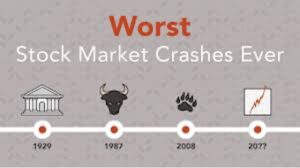
The past is prologue – but only if you can distinguish between correlative events and causal ones. Here’s a good introductory explanation of what the causal events have been for stock market crashes in the past 200 years. Compare the events the narrator in this video has identified with events happening today, and then let me know what you think. Are we in for another meltdown? Or can Trump trigger the economy into a saving surge of growth?

Chronic Traumatic Encephalopathy: Is It a Pandemic?

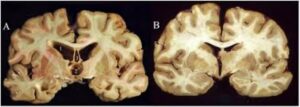
I’m sure you heard about the 27-year-old man who drove from Nevada to NYC last week, entered what he thought was the headquarters of the NFL, and killed four people and critically injured a fifth before offing himself. “Luckily,” he left a note of explanation: He believed he had chronic traumatic encephalopathy (CTE), a degenerative brain disease linked to repeated head trauma, which causes symptoms including memory loss, confusion, and aggression.

The disease is common in football, with 99% of donated NFL player brains indicating CTE.

The thing I don’t understand about the CTE story is why it is always about football players. If it’s caused by repeated small brain concussions, where are all the stories about old boxers getting CTE? If you count the head blows they suffer in training, they must endure far more head trauma than football players do.

Can Zohran Mamdani Make NYC as Great as Gavin Newsom Made San Francisco? 

For most of my life, the image of a “failed American city” was Detroit, whose population dropped from 1.85 million in 1950 to about 630,000 today. I became familiar with Detroit during the mid-1970s, when I was studying for my MA at the University of Michigan.

I visited the city several times and was saddened to see what was once a wealthy industrial city and the hub of the American automotive industry in the process of rapid decline, with large sections of the cityscape converted to public housing and blocks of the downtown commercial district already in a state of abandonment and disrepair. It has deteriorated since then.

Efforts to revive Detroit through various federal handouts and city projects have failed. It’s now an economic disaster zone. I find it difficult to imagine it ever recovering.

And Now… There’s a New Failing City on the Map

Between 2019 and 2021, San Francisco lost 6.3% of its population, a greater rate of decline than any two-year period in Detroit’s history and unprecedented in any major US city.

Detroit’s fall was primarily driven by the relocation of the US auto industry to southern, right-to-work states, where auto producers, including foreign firms who build autos here, were able to avoid the union conflict that was endemic in Detroit.

San Francisco’s decline is not driven by macro-economic events out of its control, but by absurdly bad local economic policies supported by the same voters that are supporting Mamdani now.

During the same period, San Francisco lost 6.3% of its population, representing nearly $7 billion of household income, even after accounting for people who moved into the city.

Taxpayers who filed 2019 tax returns from San Francisco and 2021 returns from a new location reported an average annual adjusted gross income (AGI) of nearly $196,000. But because the income distribution is such that the median income is greater than its simple arithmetic average, the median income of taxpayers who left San Francisco would probably have been around $250,000.

And as those dollars left, so did the economic activity that those individuals directly and indirectly created.

Where’ve the Big Companies & Wealthy Taxpayers Gone? 

They are moving to destinations that do not have San Francisco’s drug and crime issues, its poorly performing public schools, its homelessness, its extremely high cost of doing business, and other problems that people have been tolerating only because San Francisco was once one of the world’s great cities. As someone who loved San Francisco, it pains me to say it no longer is. And I suspect that those who departed the city, whose exits left it with 60,000 fewer taxpayers, feel the same way.

Washoe County, Nevada, site of Lake Tahoe, a popular ski resort, attracted hundreds of San Franciscans who have an average AGI of well over $300,000. So did Palm Beach, Florida (where there is no state income tax).

The broader Bay Area, home to Silicon Valley, lost over 2% of its tax filers. The San Francisco metro area lost a total of nearly $14 billion in household income between 2019 and 2021 – and those leaving were wealthy enough that the city’s median income dropped by 4.6%.

Teton County, Wyoming, home to Jackson Hole and other well-known ski resorts, has been the chosen destination of the wealthiest San Francisco ex-pats, representing an average annual household income of nearly $600,000 and a total income loss for San Francisco of $37 million over that same two-year period.

These people did not leave San Francisco because of high housing prices.

According to Zillow, the median home price in Jackson Hole, one of the few locations in the United States where home prices are still rising, is $1.5 million, which is $200,000 higher than San Francisco’s median home price, which continues to fall.

So How Bad Is San Francisco Now? 
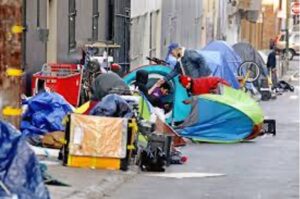
Some city blocks are still safe and beautiful. As in every declining city, the primary tourist areas and wealthiest neighborhoods are well policed and still providing street-savvy citizens and unsuspecting visitors with protected areas to enjoy. But the safe zones are getting smaller as big companies, their rich founders, and their highly paid executives choose to live their lives somewhere else.

Other city blocks have been taken over by drug gangs selling fentanyl in open-air superstores. (Think of an opioid version of Costco, without the membership card.).

San Francisco’s downtown has suffered the most, as many tech companies have decided to reduce or eliminate their office space footprint in the area. The office vacancy rate in the city is 27%, up from just 4% in 2019.

One San Francisco tech entrepreneur took photos of the downtown on weekday mornings, times when the area historically has been crowded. Look at these photos and you will think that they were taken on a Sunday or a holiday, not during a normal workday.

The city estimates that downtown foot traffic has declined about 64% compared to 2019. Empty office buildings could cost San Francisco $200 million per year in lost property taxes. And as tenants have sublet their office space, nearly 50% of that space will be up for renewal in about two years, raising the potential for even more losses.

Can San Francisco Be Saved? 

As what happened in Detroit, San Francisco leadership is waking up late to the realization that the city is imploding.

Mayor London Breed has suggested converting part of downtown’s tech and finance presence to biology-based industries – which would likely require a substantial (and expensive) renovation of existing office space.

A San Francisco business group commissioned a 143-page plan to revitalize the downtown. Some of what is recommended is predictable and has all the right buzzwords and phrases, including creating a “Pedestrian Paradise,” envisioning “Downtown as a Stage” with public performances and events, and “Rediscover[ing] Public Open Spaces.”

But none of this will ever become a reality without a more sensible Board of Supervisors and a crime, homelessness, and drug abuse do-over. Interestingly, the plan is silent on these issues.

A search of its 143 pages for the words “homeless,” “homelessness,” “crime,” “drugs,” and “opioids” came up empty. The plan does, however, include the words “safety” and “cleanliness” several times.

Perhaps these euphemisms are as far as a business group could wander into city politics without upsetting the precarious apple cart of the city’s Board of Supervisors, who were not involved in commissioning the study and who don’t seem to understand the gravity of the city’s current state.

Supervisor Aaron Peskin said that it was important for the mayor and other city officials to get past trying to return downtown San Francisco to the economic powerhouse it had been in 2019, noting that he believed the loss in economic activity wasn’t “profound.”

Detroit died a slow, insidious death, one that unfolded over 70 years. San Francisco is experiencing something much more striking, rapid, and prominent. Will San Francisco’s politics change in response to its residents’ leaving – a situation that has created a $7 billion net income loss for the city?

I would like to think that the answer to this question is “yes.” But on the other hand, the city is at the mercy of a Board of Supervisors that is largely responsible for what it has become. A board that ended up quashing the opportunity for the city to have a vacant building turned into a new Whole Foods market – a business that neighborhood residents had hoped to attract, a business that had agreed to the Board’s demand to build affordable housing in order to receive its approval.

That opportunity is now gone. And as of last year, nearly five years after Whole Foods was denied approval, the building for the proposed market remained empty, in disrepair, and subject to frequent break-ins, most likely associated with drug use and prostitution. So, on second thought, the answer to the question posed above is “no.” At least not until San Franciscans decide to vote differently.

How Much Time Do You Spend on Email Each Day? 
 
A Japanese mentee emailed me last week, apologizing for being late on a promised response and explaining that she had been swamped with other work, including “20 emails a day.”

My first thought was, “Only 20?”

That got me thinking about my own never-ending battle to rule over my email inbox rather than have my email inbox rule over me.

Here’s how it breaks down…

I get an average of 150 emails a day.

About 20 of them are reports from my main client, a digital information publisher based in Baltimore. I don’t spend a lot of time reading them, but if I notice an anomaly – significantly higher or lower sales than usual – I dig in.

Another 50 are free subscriptions to various online newsletters and other digital information services. I subscribe to them because their subject matter falls within my scope of interest and because they are, in my opinion, well written. I spend at least a half-hour every day scanning, selecting, and filing the essays and articles I think I might use for my blog or my personal journal.

I get about 20 pieces of advertising or promotional email every day, too – mostly offers from the above-mentioned free subscriptions. I never take the bait because I get so much useful and interesting information for free. Well, that’s not entirely true. I have “upgraded” three or four of my 50 free subscriptions because they are so good that I felt the need to pay them something.

Another 30 emails are group-sent business memos, all of which I read and about half of which I reply to, either briefly or at length.

And finally, I get 20 to 30 emails each day sent to me by individuals – colleagues or friends and relatives.

Those from colleagues I answer immediately. The emails from friends and relatives I often make the mistake of putting aside until I feel I can give them the time they deserve, which means I’m usually obliged to begin each one with, “Sorry I didn’t reply sooner, but…”

What this boils down to is about 25 outbound emails a day, which, at one-sixth of my inbound volume, seems about right.

If you are still reading this, you may be wondering why you are still reading it. My answer is that I don’t know, except you probably have the same strain of OCD that I have, and you should (we should) spend less time each day reading and responding to email. (And much less time tracking everything we do.)

Is Britain the Most Anti-Free-Speech Country in the World? 

I used to think of Britain as a bastion of liberty. The home of John Locke and George Orwell. The land that gave us the Magna Carta and the stoic principle of “stiff upper lip.” But if you’ve been paying attention lately, you might be asking the same question I am: Has Britain quietly become the most anti-free-speech country in the democratic world?

A recent case makes the point. Hamit Coskun, a Turkish-born atheist and political refugee, burned a Quran outside the Turkish consulate in London in February. He did so in protest against the Erdoğan regime and the rise of Islamist authoritarianism in his home country. The act was symbolic, nonviolent, and explicitly political.

For that, he was assaulted in broad daylight by passersby – and then arrested. He was prosecuted by the Crown for a “religiously aggravated public order offense” and convicted by a judge who said Coskun was motivated by “a deep-seated hatred of Islam and its followers.”

This is how things now work in Britain: If someone attacks you during a protest, your attacker can be used as evidence against you. Coskun’s supposed crime was not his action but the reaction it provoked. In other words, if your speech upsets someone enough to become violent, you may be prosecuted – not them. What better way to encourage the heckler’s veto?

Coskun’s real offense was to criticize a religion now functionally immune from critique. The judge didn’t believe he was protesting Islamism or Erdoğan’s political use of religion because, get this, he didn’t shout “Erdoğan” enough while being kicked and chased. So now, apparently, if you’re physically assaulted in Britain during a protest, you must also offer clear political narration – on the spot – or the courts may infer your true intent.

This isn’t an isolated incident. In recent months, British citizens have been arrested for silently praying near abortion clinics. Not shouting. Not protesting. Not harassing. Just praying – sometimes on their own private property. Why? Because they were within “buffer zones” around the clinics. The authorities call this a form of “intimidation.”

Even Orwell couldn’t have imagined that thinking the wrong thoughts in the wrong place might become a crime act in the land of Churchill.

Meanwhile, British police are spending increasing amounts of time monitoring social media for offensive speech. Comedians have been investigated. Teenagers have been arrested for reposting memes. Online “hate incidents” are logged in official records even when they don’t meet any criminal standard – just in case they’re useful later.

Let’s be clear: Britain isn’t North Korea. You won’t be disappeared for writing a rude tweet. But the country now leads the Western world in soft authoritarianism – prosecuting protest, punishing dissent, and criminalizing disapproval of favored ideologies. And because it does this under the velvet banner of “inclusivity” and “public order,” many citizens accept it.

Coskun fled Turkey because he believed Britain was freer. He now says he’s not so sure. “If criticism of doctrine is redefined as hatred of believers,” he writes, “then space for lawful criticism of that religion – or any religion – collapses.”

He’s right. And the more we allow this inversion of logic to fester, the more Britain begins to resemble the very regimes people like Coskun fled.

So, I ask again: Is Britain the most anti-free-speech country in the democratic world? On paper, no. In practice, it’s getting hard to argue otherwise.

NPR and PBS Should Be Defunded: Here’s Why: 

This article makes an argument I’ve been making for many years: The government should not be using US taxpayer dollars to support organizations and institutions that are politically biased.

NPR and PBS are the two good examples. Their news has a distinctly leftist perspective, promoting left-wing propaganda narratives on such issues as the COVID-19 virus, the effectiveness of the vaccinations, and anything to do with Donald Trump. Their editorials and opinion pieces are consistently pro-Socialist and anti-US.

All that is fine if you are the NYT or The Washington Post, but when an institution that dispenses news and opinions gets tens of millions of dollars each year from the government, it behooves it to be fair and impartial in its reporting. Neither NPR nor PBS can pass that test. On top of that – and this is particularly irksome to me – their stories about business and finance are almost always simplistic, if not naïve. And if all that were not bad enough, both stations have the worst taste in culture, literature, and the arts.

Think about this…

NPR and PBS receive substantial government funding despite being branded as independent public media. NPR receives about $100 million annually, primarily through member stations funded by the Corporation for Public Broadcasting (CPB). PBS indirectly receives over $400 million in federal support, mostly through the CPB and direct congressional allocations.

* The CPB is funded by taxpayers but operates with limited oversight. It distributes about 70% of its federal funds to local radio and TV stations.

* NPR and PBS are demonstrably biased. NPR employees have donated to Democratic campaigns 87 times more than to Republican ones. High-profile departures from NPR (e.g., Uri Berliner) have criticized NPR’s editorial culture as an echo-chamber for leftist journalism. A 2023 Pew survey found that 63% of Republicans distrust NPR, and nearly 50% distrust PBS, signaling a growing partisan perception of these platforms.

Source: Suzy Weiss, The Free Press, “NPR and PBS Aren’t Entitled to Your Money,” May 26, 2025

When’s the Best Time to Tip the Concierge? 
And How Generous Should You Be? 

You arrive at your hotel. It’s as nice as you expected, with friendly receptionists and a knowledgeable-looking concierge. You are glad of that because you’ll be in town for almost a week and you’ve never been in this city before.

You know from experience that an attentive concierge is worth his weight in gold. The old question pops into your head. Should you talk to him now and slip him a big tip? Or do it later, after he’s helped you with something? And when you do tip him, how much?

The traditional protocol is to give the tip either after each act of service or at the end of the stay. Another idea, which you admit came to you from some less noble part of your soul, suggests that you should tip the man now. And make it a big, unforgettable tip.

Which makes more sense?

My inclination is to give a good tip up front. When I worked as a server in various restaurants, I was poor and eager for income, and so I would have preferred to be tipped first so I could expend my courtesies accordingly. Thus, when I’m the guest, I am inclined to give a good tip (even a very good tip) initially to increase the odds that I’ll get A+ service.

On the other hand, if I give the schmuck a great tip and don’t get that A+ service, I’ll be pissed at him and doubly pissed at myself.

If I were more enlightened, I’d probably give the tip upon leaving and give an amount that is considered appropriate for that type of hotel. That way, I’d be giving the concierge a chance to treat me, and everyone else, with that A+ service, which would be better for all the hotel guests and for him doubly because it would put him in the habit of not prejudging guests as they arrive (based on how they are dressed or whatever) and giving superior service to all.

Yes, that would probably be the right thing to do in terms of the universalizing my ethics. But I don’t think I’m going to be doing that. I’m not that evolved. I’m going to stick with my instincts and give the guy a big, fat tip as soon as I come in.


Paris Is So Advanced Now… So Au Courant

When I was first in Paris 50 years ago, everything about the city seemed antiquated. The subway system. The public telephones. The way that banks worked. Public transportation. Even the way you bought coffee and a croissant in the morning.

Today, buying coffee is very much the same. And that feels good. But much of the rest of it – everything technical, mechanical, electrical, etc. – seems more advanced than in the States. Airport transportation is super-quick and efficient. Hotel elevators somehow know what floor your room is on and take you there automatically. Bathrooms are newer and cleaner.

I’ve seen this happen before. With cellphones in Ireland and in Nicaragua. In the US, we have all the modern technology first, but then we must spend years having our gizmos upgraded as the state of technology advances. Other countries that are not so innovated don’t seem to mind waiting a few years before they adopt our technology – so when they start using it, they are using the most advanced version, while we are a few steps behind.

Babies Acting Up in Public Places 

When I was a child, I hardly noticed them. In my self-centered teens, I found them to be weirdly amusing objects of ridicule.

In my aspirational and ambitious twenties, I saw them as extremely annoying and unnecessary distractions and saw their parents as inconsiderate and incompetent.

During my thirties, K and I had and raised three babies of our own, and all that disgruntlement and disdain vanished. I developed a blissful ability to tune out entirely to their crying and screaming and go about my work productively.

That superpower stayed with me until my mid-sixties, when I became a grandparent. Since then, I am once again aware of and even alert to the antics of toddlers and babies. And I find everything they do to be adorable – from smiling to giggling to banshee-level screaming.

This Is Crazy! 

One of the things I researched in preparation for today’s “report card” on Trump’s first 100 days was how the American public was feeling about it. I had the impression, from what I had seen till then, that his numbers were all up – especially when the questions were about his recent executive orders and his subsequent work to make them happen.

I had what I thought was good data backing up my impressions. But when I went back to Google to check the newest polls, I found all of them to be very negative. The poll makers were saying that Trump’s generally favorable numbers had crashed. It didn’t seem possible. With the deadline for this issue nearing, I decided to leave the subject out of my report.

But today, I saw this. 

Do you believe this statement – a famous quote from Oscar Wilde – is true? 

“The moment that an artist takes notice of what other people want, and tries to supply the demand, he ceases to be an artist, and becomes a dull or an amusing craftsman, an honest or a dishonest tradesman.”

My Opinion: That is intellectual rubbish and snobbery of the most naïve kind. Shakespeare, the greatest English writer in history, was keenly devoted to pleasing the public because his life and the life of his wife and children depended on his success. And he is just one of dozens I could point to in every field of art you can name. Mozart? Picasso? Fred Astaire?