
Will Donald Trump be remembered as “the greatest US President since Abraham Lincoln”? That’s the question I try to answer in today’s main essay.
It’s the 4th of July!
I heard this or read this somewhere: You can move to France and live there for the rest of your life and you will never be French. The same would be true if you moved to Germany or Japan or Thailand or Saudi Arabia. But someone from any of those countries can immigrate to the United States and become an American. No other country in the world can do that. The poem that follows does a good job of expressing that without oversimplifying or ignoring the challenges.
Immigrant Picnic
By Gregory Djanikian
It’s the Fourth of July, the flags
are painting the town,
the plastic forks and knives
are laid out like a parade.
And I’m grilling, I’ve got my apron,
I’ve got potato salad, macaroni, relish,
I’ve got a hat shaped
like the state of Pennsylvania.
I ask my father what’s his pleasure
and he says, “Hot dog, medium rare,”
and then, “Hamburger, sure,
what’s the big difference,”
as if he’s really asking.
I put on hamburgers and hot dogs,
slice up the sour pickles and Bermudas,
uncap the condiments. The paper napkins
are fluttering away like lost messages.
“You’re running around,” my mother says,
“like a chicken with its head loose.”
“Ma,” I say, “you mean cut off,
loose and cut off being as far apart
as, say, son and daughter.”
She gives me a quizzical look as though
I’ve been caught in some impropriety.
“I love you and your sister just the same,” she says,
“Sure,” my grandmother pipes in,
“you’re both our children, so why worry?”
That’s not the point I begin telling them,
and I’m comparing words to fish now,
like the ones in the sea at Port Said,
or like birds among the date palms by the Nile,
unrepentantly elusive, wild.
“Sonia,” my father says to my mother,
“what the hell is he talking about?”
“He’s on a ball,” my mother says.
“That’s roll!” I say, throwing up my hands,
“as in hot dog, hamburger, dinner roll….”
“And what about roll out the barrels?” my mother asks,
and my father claps his hands, “Why sure,” he says,
“let’s have some fun,” and launches
into a polka, twirling my mother
around and around like the happiest top,
and my uncle is shaking his head, saying
“You could grow nuts listening to us,”
and I’m thinking of pistachios in the Sinai
burgeoning without end,
pecans in the South, the jumbled
flavor of them suddenly in my mouth,
wordless, confusing,
crowding out everything else.
A Pleasant Conversation

This morning, at 6:30, I met Dylan, the crew chief of the small team of technicians that were going to install solar panels on the roof of my office. He looked young to be in a supervisory position – and, in fact, at 26 years old, he was. I brought him upstairs to my office to sign some paperwork, which meant that we walked through the exhibition gallery and my paintings by Benjamin Cañas, the Salvadoran surrealist for whom we were having a retrospective that I told you about last week. He was visibly excited by the Cañas paintings and said, “I’ve always wanted to do art for a living. And everyone says that you should follow your passion. But I have to pay rent and buy food, so I got this job and it’s okay, but it’s not my passion.”
You are doing the right thing,” I said. “Following your passion is what lucky people that get rich say when they are accepting awards. For the rest of us, we must first follow our moral obligations – and the most important of those is to pay for our lives and the lives of those who depend on us.”
He liked that idea. We became friends.
Is Donald Trump Going to Be Remembered as “the Greatest US President Since Abraham Lincoln”?
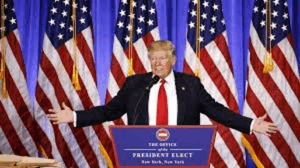
Did you see Trump’s press conference last Saturday?
The purpose of it was for Trump to announce some accomplishments that he and his team had recently achieved. And, in case you didn’t see it (or read about it), the list of the accomplishments he was taking credit for was impressive – maybe even unbelievable. (I’ll get to that in a bit.)
What made it feel so different was the ambiance of the room – starkly different from any press conference I remember seeing since… well, since forever!
Hail to the King?
I’m accustomed – as I’m sure you are – to the standard Trump press conference, with the POTUS, taking from the assembled mainstream journalists one tough question after another. Some of them “gotcha” questions, but just as many about executive decisions and policy proposals and his use of the command of the executive branch of government to ram through his political agenda. (Which, to be fair, got him decisively elected.)
The press corps rarely if ever threw Trump a lob. The questions were more like one down the middle, followed by two curves, followed by one change-up, and topped off with a straight throw at his head.
Nonetheless, I always enjoyed watching those conferences because the questions – or at least the intent of the questions – were obvious, and thus predictable. And so, what you had to spend your TV minutes on was a contest of banalities that would otherwise prompt you to change the channel, except that you never knew how Trump was going to respond.
Often, when asked accusatory questions, Trump would do what most politicians do in such situations. He would say something like, “I’m glad you asked that.” And then go on to say something he wanted to say – something negative about his critics or laudatory about his supporters, and then proceed to make whatever political claim he intended to make when he took to the podium initially.
Other times he would recognize the question as a criticism and argue directly and even specifically against the statements or implications made. But Trump’s best responses were when he asked the questioners whom they worked for and then went on to berate the news agency and tell the reporters how terrible they are at their job.
It was not like that last Saturday. Instead, what I saw was a throng of what sounded like recently born-again Trumpsters, not unlike wannabe partygoers who were stepping over one another to get through the ballroom door before it was shut in their faces for good.
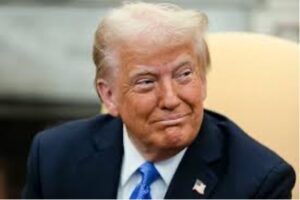
And I wasn’t the only one who noticed it. If you watched it, you noticed that Trump looked like he was having a blast. And legitimately so. It could well have been the most-favorable-to-him press conference the Donald ever experienced – in his life!
What happened?
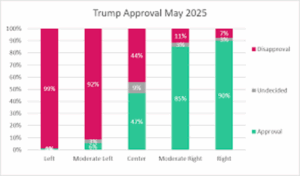
What happened was that several of the longstanding critiques of and charges against Trump and his MAGA agenda had become “inconvenient” to ask. There wasn’t a single critical question about the three primary issues on which he based his campaign: immigration, inflation, and tariffs.
In previous press conferences, it seemed like a third of the questions were about the perceived illegality and/or unfairness of his administration’s deportation policies. Another third were efforts to get Trump to admit that tariffs were just another form of taxation. And the final third were veiled criticisms of his failure to bring down the cost of eggs and gasoline.
These questions were not asked on Saturday because everyone in that press conference knew, as did the media that employed them, that, had they been asked, Trump would have been able to respond to them with answers that they did not want to hear.
The Border Policy

The Trump administration’s efforts to carry out the “largest deportation program in US history” has resulted in many questionable judgement calls and deplorable outcomes, such as the videos we’ve seen of unidentified men in civilian clothing and wearing masks rounding up, roughing up, and then forcibly “detaining” suspected undocumented immigrants without even the level of due process one might expect to be awarded as a foreigner in a Third World country. An especially disturbing example is one of a gardener who attempted to flee from an ICE raid being held down on the ground and punched repeatedly, even though he was clearly not “resisting arrest.” (In that case, it turned out that the 65-year-old man was the father of two decorated Marine Corps veterans.)
This could have been – and really should have been – a topic that merited ongoing critical questions. But several things had changed in the past few months that took the steam out of that engine of attack.
One was the fact that there were no more potential rapists, child molesters, and terrorists crossing the border illegally because there were no more people of any kind crossing the border illegally. In May, according to the US Border Patrol, there were exactly none.
Another was the recent Supreme Court’s ruling restricting federal judges to serve stays and injunctions against executive orders beyond their districts, which mooted questions like, “Aren’t you violating the Constitution by disregarding the rulings of federal judges?”
And a third one – which, although it’s gotten scant attention so far from political pundits, I’d like to believe was already germinating in the hard soil of TDS-addled brains – was the recognition that some brilliant person in the Trump administration had already figured out a way to achieve Trump’s Great Deportation promise in a manner that is less costly, more effective, and more humane. I’m talking about the self-deportation (i.e., pay to leave) program, which has already resulted in (from what I’ve read, at least) the exodus of more than a million undocumented aliens – quietly, quickly, and pleasantly for all.
None of this is to say that critical questions about Trump’s border policy will not return. Or should not return. What it means to me is that US voters no longer have much concern about what’s going on at the border because, regardless of their political affiliation, they are no longer hyped up about immigration.
So I think we are now in a position we’ve not been in for as long as I can remember: a pragmatic, by-default political détente that Congress and the administration could use, if it wanted to, to establish the “sensible” immigration policy that we’ve been unable to talk about sensibly in my lifetime.
It could happen. And if it did, it would be a huge accomplishment for Trump, an achievement that other presidents have worked towards but never got even close to achieving.
Tariffs
During Trump’s campaign, he talked about imposing tariffs to “fix” the US trade imbalance and make trade fair again for US companies. And when he took office on Jan. 20, he began doing just that.
Trump has been making his arguments in favor of tariffs forever. It was part of his campaign in 2015. It was even a talking point he often made when interviewed as an up-and-coming real estate developer in NYC.
He was unable to enact his tariff ideas during his first term for the same reason he didn’t get a lot of his campaign promises done: He had no idea how politics work within the Capital Beltway and how much power the unelected bureaucracy had to quash his initiatives when they aligned themselves with his political opponents.
But that was then and this is now. Trump came back to the Executive Office with a much more realpolitik understanding of how to get things done in DC. He also bolstered his power by appointing a team of smart, capable, and most of all loyal people to head up the various departments and cabinets that he needed to work with – individuals who were happy to work 24/7 to assiduously carry out his plans. And that is why he was able to effectuate his (I think I called it “insane”) strategy of imposing record-breaking tariffs on virtually every country the US trades with.
But why? Why was this plan so important to him? So important that he was willing to push it forward even against almost universal criticism from both the Right and the Left?
I believe that Trump’s motivation for his trade policy is just as he says: He thinks it’s unfair that US companies have their exported products tariffed, which means they are more expensive to the foreign buyer, while foreign companies (often in the same industry) can sell their products into the US without that extra cost, thus, giving them a competitive advantage.
That is one way of looking at it. Another way, the view first espoused by Frederick Hayek and Ludvig von Mises (of the Austrian School of Economics) and then popularized in the US by Milton Friedman fans is that tariffs are bad for both the country on which they are imposed and also the country that imposes them, because the additional cost is ultimately paid for by the consumer with dollars that they would otherwise spend on additional products and services. In other words, tariffs make things more expensive than they should be. And that is always bad – not just for individual consumers, but for the economies of the countries affected by them.
That has been the argument that has, by and large, prevailed in the US for the last 40+ years, and with good reason: It allowed Americans to enjoy dozens of manufactured goods, from children’s toys to automobiles and everything in between, at prices much cheaper than those that could be bought from US suppliers, since they were being made, often by hand, first in Japan and then in China and then in Korea, and so on. But it was also a free-market, pro-Capitalism argument, made primarily by Republicans, whereas the pro-tariff crusade was a big-government cause, promoted largely by Democrats. And that is why it was so amusing to see the mostly Liberal and Leftist mainstream media suddenly embracing it and challenging Trump with it – as if they had converted to free-market, pro-Capitalism advocates in a few short months.
What they failed to understand is that, despite the occasional comment he made about “protecting” US workers, Trump was using tariffs for reasons that had little to do with free trade. He was threatening and then instituting tariffs for political purposes – as in, closing our borders with both Mexico and Canada, and then for all sorts of other geopolitical objectives with our foreign enemies and allies all over the world. And he has been astonishingly successful in that. In fact, he used the threat of tariffs (as well as the threat of other economic sanctions) to negotiate the ceasefires his team achieved in the international disputes he talked about at the beginning of the press conference.
(I’m going to skip, for the moment, Trump’s crazy idea that he was going to create an External Revenue Service, which would use tariffs to eliminate income taxes on Americans imposed by the Internal Revenue Service.)
Inflation
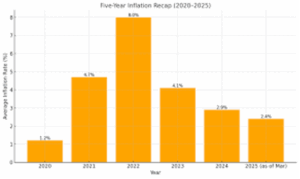
I agree with Milton Friedman and his Austrian progenitors that tariffs are inherently inflationary. And that inflation is inherently bad for economies, large and small.
So I would not have been surprised if consumer prices would have been increased by US manufacturers, wholesalers, and retailers from the beginning as a preemptive response. I would have also expected price inflation to continue to move up, even sharply, as countries that Trump was hitting with tariffs decided to fight back. This was exactly what the lamestream media was anticipating when, after less than 30 days into his term, they began to pepper him with questions about why the price of eggs and gasoline hadn’t come down.
And although for a while the media had some upticks to talk about (caused primarily by the artificial early responses), as the months passed, prices did not go up as expected. In fact, many, if not most, of them went down!
“Why was that?” you might wonder. For a while, I wondered that as well. But what happened was that it was soon clear by his seemingly erratic raising and lowering of tariffs with both threats and executive orders that his plan was not to punish US trading partners and get into a mutually destructive trade war, but to see if he could bully them down to either tariffs that were low (10%) on both sides or, as he said several times he would be happy with, a mutual zero-tariff agreement with any country that wanted it.
At least that was my interpretation. And I think it was the interpretation of many US business CEOs and the bankers and brokers whose fiscal and monetary actions and reactions are reflected in the stock markets.
So by the time Trump stood in front of the press corps last Saturday, those who would have liked to nail him with questions about rising inflation and cratering stock indexes had nothing to say.
Two Big Announcements and Two Huge Accomplishments… If They Hold

I’ve covered the question about why Trump wasn’t assaulted with the usual critical questions. Now, let’s turn to the announcements he made, and why there wasn’t an immediate attack on them.
The principal theme of Trump’s press conference concerned the current state of global politics, and especially the current state of global war.
The two largest conflicts were, of course, the Russia/Ukraine war and the Israel/Iran war. Trump came to announce that he and his team had accomplished what had only a month earlier seemed impossible: ceasefires in both.
It’s difficult to know how he negotiated a ceasefire with Putin and Zelensky, but one imagines that a big part of it was in taking advantage of how exhausted they both must have been with the many lives that were lost and the massive destruction of towns and cities that had taken place on both sides. I believe that Trump has believed from the beginning that Putin’s primary concern was in preventing Ukraine from becoming a NATO member, which he was always opposed to and why he so many times said that the war would never have started had he been in office.
But now that the war was on, I think he also realized that Putin would not be happy with a return to the old equilibrium and was not going to stop until he had an agreement that gave Russia land concessions that would reduce its vulnerability to future threats from Ukraine on its common borders, bolster its own defense capabilities, and provide access to markets and transportation routes that it didn’t have before the war.
I think the ceasefire was struck because Trump had decided, either consciously or otherwise, that it would be in America’s interest if Ukraine was not destroyed by Russia, but lost this war.
I think he told Putin that he would support some of his (Putin’s) objectives in carving up Ukraine as part of the treaty, and he would also continue to veto Ukraine’s entry into NATO, so long as Putin’s demands for war spoils were not so great as to make him (Trump) look like a dupe – or more of a dupe than the Liberal/Leftist media liked to say he was.
I think he told Zelensky that unless he (Zelinsky) agreed to a ceasefire that would ultimately result in a treaty in which Ukraine would have to make some concessions, he (Trump) would start ratcheting back the military aid the US was giving Ukraine, including the US’s stockpile of missiles, and that if Zelensky stayed stubborn, Trump would tighten that flow to a trickle, which meant that Ukraine’s defeat, possibly a much more damaging one, would happen sooner rather than later.
The ceasefire Trump’s administration achieved with Israel and Iran was similar in one way. I think that sometime between his first term of office and this one, Trump came to believe that Iran and its proxies in this conflict – Hamas, Hezbollah, and the Houthi – are deeply and eternally committed to their sworn purpose, which is the obliteration of Israel, the slaughter of all Jews, and the destruction of the Evil Empire (i.e., the United States). I don’t think Trump favors Isreal because of any ethical or ideological principles. (I don’t think he has any.) I think that, like the Russia/Ukraine conflict, he asked himself what outcome would be best for the US. (And his image?)
If that was his thinking, he would have had to conclude that, regardless of what may be said publicly, Iran would continue with its war against Israel, regardless of how many ceasefires were agreed to (during which Iran could arm up), and therefore the only way the war could end definitively would be for Israel to win definitively. From the perspective of what is best for the US, Trump recognized, it would be a total defeat of Iran, and a situation in which Gaza and the West Bank were effectively controlled by Israel.
That, I believe, is Trump’s agenda. He is not taking orders from Netanyahu. If anything, Netanyahu is taking orders from Trump. What is best for America, Trump believes, is to do away with countries that are committed to doing away with America.
Back to the Press Conference
Putting aside my uneducated (but alarmingly astute) speculations as to how Trump and team achieved those two major accomplishments, the question remains: Why didn’t the press corps pummel him with questions that were critical to his decisions and actions in both cases?
I think there is a simple answer to this: I think the entire world is tired of watching these wars drag on and would see a ceasefire, no matter how it was achieved, as a good thing. And the fact that the bombing of Iran did not include thousands or even hundreds of casualties made it even more difficult for journalists to be critical of Trump’s plan. What they did do, which was a short-lived attempt, was make the case that the bombings were not successful. But that was based on a biased reading of a partial document that was also biased, and so the whole thing disappeared in the following two and three days.
Just a few months ago, political pundits from across the political spectrum were warning that either of these conflicts could flare into a global war at any time, and possibly even a war that included atomic weapons. That didn’t happen. And so the reporters who would have otherwise made statements and asked questions that were critical of Trump’s actions in these two arenas apparently decided to hold off with the tough questions until he did something stupid that resulted in a disaster they could feast on. That could happen still. But in the meantime, we are hearing crickets from them.
Trump was there to tell the world that while he and his team were working on these two WWIII potential problems, they were also putting out fires and making peace deals in other parts of the world.
The US–Houthi Ceasefire in Yemen

Trump said he brokered a ceasefire between the US and the Houthi rebels on May 6, during which the Houthis agreed to halt attacks on American ships in the Red Sea. The deal, mediated by Oman, paused a recent US–UK bombing campaign.
The Democratic Republic of the Congo and Rwanda
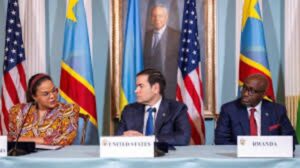
You probably didn’t hear much about this, which is part of the problem. For more than 25 years, the Democratic Republic of the Congo and Rwanda have been locked in a brutal, drawn-out war that has killed an estimated 5 million people – making it the deadliest conflict since World War II. Most of the fighting has taken place in eastern Congo, where Rwandan-backed militias like M23 have been pillaging villages, killing civilians, and fueling chaos for decades. And through all of this, the Western world has done next to nothing. The UN has been on the ground, mostly observing. US diplomats have paid lip service. But because it’s an African war – with no immediate threat to the West and no compelling media narrative – it’s been allowed to rage, year after year, while the bodies pile up.
So yes, it’s significant that Trump managed to get both sides to the table and strike a deal. Rwanda agreed to withdraw its troops within 90 days, and both governments pledged to stop supporting armed groups. In return, the DRC offered US companies access to its vast reserves of critical minerals – cobalt, coltan, lithium. That appears to be the leverage Trump used – not sanctions, but investment. America got the minerals. The region got a shot at peace.
In his typically braggadocio manner, Trump called the agreement a “tremendous breakthrough” and “a glorious triumph,” claiming it would end “one of the worst wars anyone’s ever seen.”
So Trump had a good day making these amazing announcements without having to deal with a single gotcha question about all the old stuff. Those who had been asking those questions for so many years didn’t. I’m not naïve enough to think that Trump has turned the tide on how the mainstream media views him. Already we are hearing criticisms of the ceasefire he negotiated between Rwanda and the DRC (that it was “vague” and “transactional), but they are not gaining any clicks on the internet. Journalists and pundits that still hate Trump and everything he says and stands for (and there are plenty of them) will have to wait for him to be weakened by signing a particularly idiotic executive order or until one of his key people makes some major mistake in carrying out one of his policies (which I have no doubt they will) before they can get back to their sport.
Trump’s Major Foreign Policy Accomplishments Since Taking Office 5 Months Ago
* Brokered ceasefire between Israel and Iran (June 2025): Trump spoke with Netanyahu and Iran via envoys, achieving a lasting pause in hostilities.
* Negotiated a 60-day Gaza ceasefire with Israel on board and urging Hamas to agree – includes phased hostage releases and humanitarian access.
* Brokers a peace deal between DRC and Rwanda (June 27): Rwanda and Congo pledged to halt support for armed groups and improve security and economic ties.
* Secured ceasefire with Yemen’s Houthis (May 2025) following US airstrikes – a calm restoration of Red Sea navigation.
* Lifted most sanctions on Syria (June 30): Executive order aimed at supporting reconstruction under new leadership.
* Made big deals with Middle East leaders (May 2025): Met with leaders from Saudi Arabia, Qatar, UAE – signed massive business, investment, and defense deals including securing sanctions relief for Syria and advancing the Abraham Accords.
* Secured valuable mineral deal with Ukraine (April 2025): Agreed reconstruction fund and natural resource exploitation plan.
* Assisted Pakistan in securing a ceasefire with India. (India downplayed Trump’s involvement, but Pakistan formally nominated Trump for the 2026 Nobel Peace Prize, citing his “pivotal and paramount” role during the conflict.
* Facilitated Ukraine-Russia ceasefire (Feb–Mar 2025): Phoned Putin and Zelensky; facilitated 30‑day ceasefire for energy and Black Sea strikes.
Don’t Get Me Wrong, Even Though I’m Right…
Here is where I need to tell you what I think about Trump as a personality, a deal maker, and as our President – at least, so far!
Donald Trump has a serious issue with narcissism. This is not news. Anyone who watched The Apprentice and The Celebrity Apprentice could have figured that out. Part of the reason the shows did so well was exactly because of Trump’s narcissism. He was pompous but he was also smart. He was bombastic but he was also clever. He was hyperbolic but he used hyperbole for drama and for humor. And that is a big part of why he did so well on TV.
I believe Trump’s narcissism is the key to understanding his thinking and behavior – including his policies and actions as the POTUS.
He does not have a fixed political agenda because he doesn’t have committed political beliefs. Nor does he have any economic views that he takes as gospel. He’s a free-market guy, unless he can see an advantage in tariffs.
He hired Musk to get rid of government waste, fraud, and corruption, but then he came up with the Big Beautiful Bill that will add several trillion dollars to US debt and no doubt spur a good deal of waste and corruption in spending that money.
He joked about making Canada the 51st state and annexing Greenland, but then talked seriously about it when he thought the idea was getting a lot of positive traction on the internet.
He loves trolling his opponents. He loves criticizing those that criticize him. He has brought vulgarity back into the political vernacular, but at the same time he’s brought back a level of honesty and transparency that had all but completely disappeared.
Trump is a businessman and a Washington, DC, outsider. He’s much more aware of politics and bureaucracy now than he was 10 years ago, and that is helping him get his policies enacted. And that is exactly the reason why most politicians don’t trust him –including most Republicans. He doesn’t use their language. He doesn’t play their games. For Trump, everything is a deal, and every deal is a chance to get more love from the people.
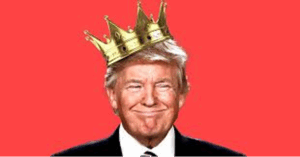
I have no idea what he’ll do next, except that I’m quite sure that if he were offered a crown, he would take it. Hopefully, that won’t happen. In the meantime, we are all going to have to judge him by the effectiveness of his policies. And I’m okay with that.
In the waning days of Biden’s senescent administration but before the election, whoever it was that was running the Democrat campaign decided that they could bolster Biden’s chances of victory by repeatedly calling him “the most consequential president” in this or that many decades.
That never felt like a good tactic to me. It was, by then, so obviously absurd that it must have rung flatly to everyone who heard it, including the most ardent Trump haters.
But here we are just 166 days into Trump’s second term, and I can’t stop myself from thinking that, however challenged I believe Trump is due to his narcissism and complete inability (or unwillingness) to act “like a president,” he may indeed become the greatest – or at least “the most consequential” – president the US has had since… well, for my friends still fevered with TDS, since Abraham Lincoln.
If you disagree, please write to me. I promise to post your letter and respond to it, point by point.
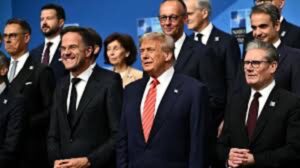
As I was putting the issue to bed, this came in from The Wall Street Journal: “Trump Wins the Battle of NATO”
After decades of US presidents politely asking members of NATO to kick in their “fair share” of the costs of running the alliance, Trump appears to have finally made it happen. On June 25, he announced all of NATO’s major members, except Spain, had agreed to gradually raising their country’s total contributions to the alliance to 5% of their GDPs. (Up from the current 2% floor.)
The allies committed to spending 3.5% of their GDPs on “hard military power” by 2035, and another 1.5% on “peripheral but still useful” defense investments, such as hardening cyber defenses.

Hints: Yes, it’s a Picasso. Well, it was a Picasso. This happened to it last month in Montreal.
Answer: It’s Pablo Picasso’s L’Hetaire, painted in 1901, which was on display at the Montreal Museum of Fine Arts. The pink splash was the work of a man who has been identified only as “Marcel.” He is a member of the Canadian chapter of The Last Generation, a group of nutcases that believe they can save the world by destroying works of art.
How well to you know your American history?
Click here to take CNN’s Independence Day Quiz.
Recommendations from Readers
Worth Checking Out
From KM: Robert Reich on Mamdani – “The Corporate Democrat’s Biggest Nightmare”
From SPM: “Good read in The New Yorker about what ChatGPT does to our brains.”
From SL: “Loved your piece on the impact of AI on commercial writing. Here’s a video of Steven Pinker on a related subject.”
From GM: “Loving the blog as usual. I enjoy the breadth of topics but specifically the business section as I’m in my 30s and starting my own company. Wanted to share this – Elon’s latest update on Neuralink (released 6/27). Thought you’d find it unbelievable, scary, inspiring, all sorts of emotions.”
“We Are the World”
Did this really happen?
No. Of course not. It’s AI. But I wanted you to see it for three reasons that correspond to three responses I had to it.
1. It’s funny. What makes it especially humorous is that all the world leaders are singing in tones and accents that resemble the tones and accents they have when they speak English.
2. The AI is not perfect, but it’s a lot better than I would have expected, considering the challenges involved. The lip synching, for example, is amazingly good.
3. Halfway through the song, I found myself feeling moved by it – adrift in sentiment and thinking, “Wouldn’t it be lovely?” This quickly made, amateurishly produced, AI meme managed to accomplish (in my heart, at least) the naïvely delusional impulse that the people originally involved in it had in mind when it was first recorded.
I’m not sure what that says about anything, but I thought I should send it to you and ask you to watch it and tell me how you reacted to it.