Boy, Was I Wrong About the NBA!
The Only Thing I Knew About the WNBA
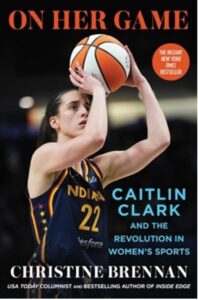
The only reason I knew anything about the WNBA (Women’s National Basketball Association) was because I had been following the controversy over Caitlin Clark, the rookie sensation who, despite making and breaking records on the court (including points and assists per game) – not to mention the fact that her rising popularity was breaking attendance records and boosting revenues for the league, every franchise in the league, and every player – was being disparaged and bullied by some of her opponents, discouraged by her coaches, and ghosted by WNBA management.
It’s a fascinating story – even for someone like me, who doesn’t follow sports – because it provides a dramatic perspective on how the economic and social dynamics of professional sports (as well as just about everything else) have changed in the last several decades.
An Unwelcome Invitation
So when, last week, MM, an old friend who lives in NYC, invited me to spend an evening with him attending a WNBA game, I was not at all eager to go. But when he upped the invitation with dinner at Evalina’s, a restaurant near the stadium that JF, one of my nephews, worked at, I accepted.
He must have sensed my initial reluctance because he promised me – several times – that I would enjoy the game. “I’m sure I will,” I said, making a mental note to prove him wrong.
Softened Up by Food and Drink
Our meal at Evalina’s was delicious. The cocktails, made by JF, were ambrosial. After the first one, I could feel my crankiness ebbing. After the second, I was moving into the mid-7s along my mood scale. With game time approaching, I couldn’t finish the third one, but I didn’t need to. I was happily in Zone 8, which pried open my firmly closed mind about the possibility of enjoying the game.
A good meal (and cocktails) at Evalina’s
The Stadium
Barclays Center in Brooklyn is home to the New York Liberty, founded in 1997 and one of the eight original franchises of the league. The team is owned by Joe Tsai and Clara Wu Tsai, the majority owners of the NBA’s Brooklyn Nets. I presume the team is named after the Statue of Liberty.
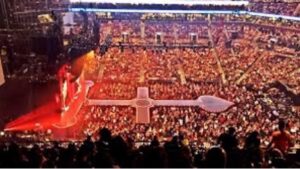
Approaching the stadium, I was surprised by how new (2012) and large (nearly 700,000 square feet) the building was. Entering, I was impressed by the size of the arena (with a seating capacity of almost 18,000 for basketball games), as well as the variety and quality of the restaurants, retail shops, and other amenities inside. (On a par with the Miami Heat arena, but newer and a bit cleaner.)

The Fan Base
The demographics of the crowd were diverse – the same range of ages, races, and (if you can judge from the attire) economic classes that I was accustomed to seeing at Heat games. However, there did seem to be a larger population of women, including lots of small groups of only women, which was both understandable and also different. At Heat games, when you see small groups of same-sex fans, they are mostly men.
When the teams entered the arena, they erupted in shouts and cheers with a level of excitement that reminded me of Heat game finals or when they were playing against arch enemies like the Chicago Bulls or New York Knicks.
The Players
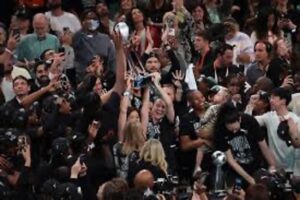
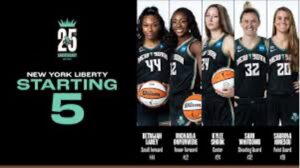
The players themselves looked pretty much as I expected them to look – long and lean, but, at least from where we were sitting, not like members of a different species of humans, the way NBA players look. And there seemed to be a higher percentage of White players on the court (like maybe 40%) than I was accustomed to seeing with NBA teams.
In short, My First Impressions
* Stadium: equal to NBA stadiums
* Age profile of the crowd: roughly the same
* Racial profile of the crowd: roughly the same
* Gender profile: a higher percentage of women
* Initial demeanor of the crowd: more enthusiastic
The Game
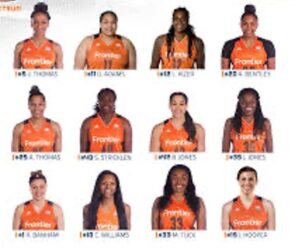
That night, the Liberty were playing the Connecticut Sun. The Sun has been a strong team since the beginning, qualifying for the playoffs in 15 of their 21 seasons in Connecticut.
It would be silly to pretend that the level of athleticism of WNBA players compares to their male counterparts. The difference in size and strength is just too great. Nor did these women play with the same quickness or speed. I was surprised, although I probably shouldn’t have been, that throughout the entire game, I didn’t see any breathtaking blocked shots or a single dunk.
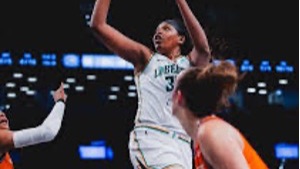
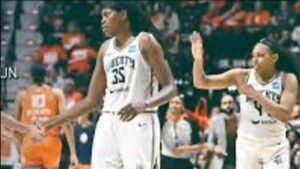
On the other hand, the rebounding was strongly contested, and the passing and the shooting looked just as good as I remembered from watching the men. And the game itself was just as hard fought, with the Liberty maintaining a lead in the first half, the Suns coming back strongly in the second quarter, and then a final quarter that stayed close until the Liberty pulled out an 82/79 victory in the last two minutes.
The Best Part
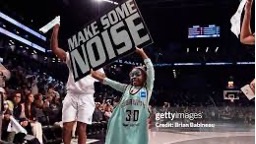
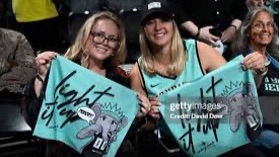
The crowd was fantastic – super-supportive of not just the team but the cheerleaders, the Timeless Torches (middle-aged cheerleaders), and the half-time entertainment. And boy, did they make a lot of noise!
A Necessary Confession
Notwithstanding the lack of connection I had to either team, my appreciation and enjoyment of the game was equal to what I experienced at the best NBA games I’d watched. Leaving the arena, I had to admit to MM that I was wrong!
The Controversy About Caitlin Clark
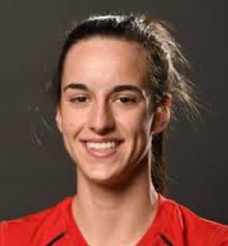
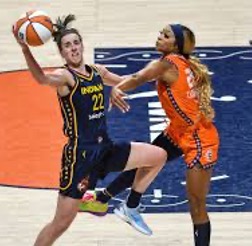
IMHO, the “controversy” surrounding Caitlin Clark in the WNBA is about four things:
She is very good. As a college player, she was the NCAA single-season and all-time scoring leader as well as all-time assist leader. In her rookie years, she set WNBA records for the most points (769) and assists (337) in a rookie season. She also made 100 three-pointers and a record 400 points and 200 assists faster than any player in WNBA history.
She is fearlessly competitive. Clark doesn’t talk smack about other players, like some of her WNBA rivals do about her. She prefers to shut them up by outplaying them on the court, which she does almost every time.
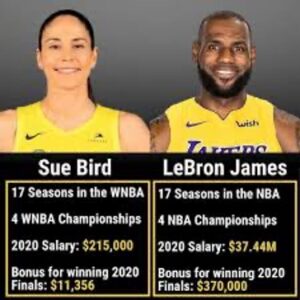
She makes a ton of money. Clark’s salary is basement-level at $85,000 a year. (About a third of what the three highest-paid WNBA players – Kelsey Mitchell, Arike Ogunbowale, and Jewell Lloyd – make, at $250,000 each.) But her commercial endorsements are phenomenal. Her current contracts exceed $11 million, which puts her at the top of the WNBA ladder and in the #10 spot of all professional female athletes in the US.
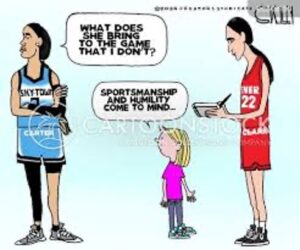
She is White. The NBA is dominated by Black athletes, and until Caitlin Clark arrived, the WNBA was, too. Her remarkable success as a rookie surprised everyone, even many who knew of her performance in the NCAA. Her limitations were supposed to come to light as a pro. Instead, she won Rookie of the Year. This, not surprisingly, bothered lots of people, including some of her fellow players and some in the WNBA management who saw her rising popularity as bad for PR. As her profile extended beyond the WNBA into early celebrity status, the only people on TV defending her were Black former NBA players.
Bottom Line: Caitlin Clark did in the world of basketball what Tiger Woods did in the world of golf and what the Williams sisters did in the world of tennis. By being very good at playing her sport, very smart in how she handled herself with the media, and naturally photogenic, she became not just one of the top players in her rookie year, but one of the most popular and highest paid professional athletes of her generation.
Like Woods and the Williams sisters, Clark was not only making bank for herself, she was making her sport exponentially more popular and profitable – for the franchises, the teams, and the individual players.
During a time when we are supposed to believe in White privilege and systemic racism, having a White athlete break through the color line has made a small number of Black athletes and a whole lot of White NBA executives, managers, coaches, and media commentators jealous and/or upset.