One of my trainers is an officer in the Navy Reserve, but he’s done two tours abroad, both times in connection to the Navy SEALs, the first in Iraq and the second in Afghanistan

Like me, his political views range from conservative to Libertarian. Unlike me, he’s had direct experience with US conflicts overseas.

His respect for and attachment to his fellow soldiers is very strong, but the belief he once had in the purpose and integrity of US foreign policy was severely fractured by what he saw with his own eyes.

I thought of him when I was putting together this issue.

Just One Thing: Drug Trafficking in the Military 

I came across the following little essay by John Leake, a writer I follow, in Courageous Discourse – a good source for content about Big Government, Big Business, Big Health, and Big Media.

He writes about a murder he once investigated that was committed by a soldier who had recently returned from a tour in Afghanistan – and then he recommends an interview that Tucker Carlson did with Seth Harp, the author of The Fort Bragg Cartel, a book about another murder (a double murder) involving members of Delta Force, the most elite unit of soldiers in the American military.

Read the article. Watch the interview. And then you can decide if you want to read the book. Or you can wait till they make a movie about it, for they surely will.

“24 Unsolved Murders” 

This is the interview referred to in John Leake’s article, above – Tucker Carlson talking to Seth Harp, author of the book recommended below, about murder and drug trafficking taking place inside America’s largest military base.

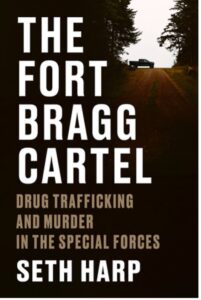
The Fort Bragg Cartel
By Seth Harp 

I haven’t read this book yet, so I won’t review it. But here is a promotional piece for it that makes me want to read it:

“In December 2020, a deer hunter discovered two dead bodies that had been riddled with bullets and dumped in a forested corner of Fort Bragg, North Carolina. One of the dead men, Master Sergeant William ‘Billy’ Lavigne, was a member of Delta Force, the most secretive ‘black ops’ unit in the military.

“A deeply traumatized veteran of America’s classified assassination program, Lavigne had done more than a dozen deployments in his lengthy career, was addicted to crack cocaine, dealt drugs on base, and had committed a series of violent crimes before he was mysteriously killed.

“The other victim, Chief Warrant Officer Timothy Dumas, was a quartermaster attached to the Special Forces who used his proximity to clandestine missions to steal guns and traffic drugs into the United States from abroad, and had written a blackmail letter threatening to expose criminality in the special operations task force in Afghanistan.

“As soon as Seth Harp, an Iraq war veteran and investigative reporter, begins looking into the double murder, he learns that there have been many more unexplained deaths at Fort Bragg recently, other murders connected to drug trafficking in elite units, and dozens of fatal overdoses.

“Drawing on declassified documents, trial transcripts, police records, and hundreds of interviews, Harp tells a scathing story of narco-trafficking in the Special Forces, drug conspiracies abetted by corrupt police, blatant military cover-ups, American complicity in the Afghan heroin trade, and the pernicious consequences of continuous war.”

Have the CIA and the US Military Been Involved in Massive Heroin Trade Between the US and Afghanistan? 
As I admitted above, I haven’t read Seth Harp’s book yet – but judging from Tucker Carlson’s interview with him, and from a bit of research I asked Nigel to do, it’s pretty clear that members of the US military and the CIA have been involved in importing heroin into the US for about 40 years.

Here are some of the facts:

Historical Background 
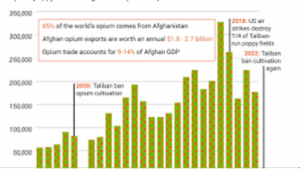
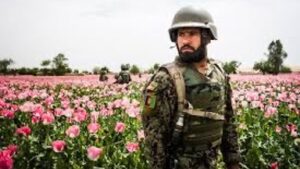
Since the Soviet Afghan War (1979-1989), Afghanistan has become the world’s largest producer of opium, the raw material for heroin. Despite US claims to eradicate drug production, the heroin trade has persisted and even expanded over the decades.

CIA’s Alleged Role 
Multiple investigative reports and whistleblower testimony suggest that the CIA has maintained secret relationships with drug traffickers in Afghanistan. The most cited example is its support for the Mujahideen fighters, who allegedly turned a blind eye or directly profited from heroin trafficking to fund their military efforts against the Soviets.

Operation Mockingbird & Ongoing Allegations 
Historically, critics and some whistleblowers, like Gary Webb, claimed the CIA intentionally allowed or engaged in drug trafficking to fund covert operations, including during the Iran-Contra scandal. Webb’s 1990s reporting linked CIA-supported Contra rebels to cocaine trafficking in California, and reputedly involved drug money helping fund operations in Central America and Afghanistan.

Afghanistan After 2001 
After the US invasion of Afghanistan in 2001, the country once again stabilized its position as the world’s top opium producer. Despite NATO’s anti-drug efforts, reports suggest that elements within the Pentagon, intelligence agencies, and local warlords continued to profit from opium cultivation and heroin trafficking, often with tacit or active support.

US Military and CIA Ties 
Some declassified documents and investigative reports point to the CIA’s continued ties with Afghan warlords, some of whom are deeply involved in heroin trafficking. Evidence indicates that these relationships allowed traffickers to operate with minimal interference, and some officials have alleged that the US tolerated or indirectly benefitted from the opium trade as a stabilizing tool.

Whistleblower Testimonies & Reports 
* Gary Webb’s 1990s reporting claimed that the CIA-funded Contras supported drug trafficking. His work was heavily criticized but remains influential among skeptics.
* Ron Paul, in various speeches, alleged that American military and intelligence support in Afghanistan has helped drug traffickers grow their influence.
* Recent investigative journalism (e.g., by Brown University’s Watson Institute and independent researchers) highlights ongoing concerns about the drug trade’s persistence and possible complicity or actions by US agencies.

Official Denials & Lack of Transparency 
The US government and CIA officially deny any direct involvement in drug trafficking. However, a lack of full transparency and ongoing classified operations keep suspicions alive. Many experts argue that the drug trade in Afghanistan remains, in part, fueled by clandestine relationships that serve strategic or financial interests of certain powerful actors.

“Chasing the Dragon” 
 
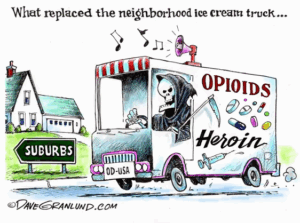
This riveting 42-minute video, produced by the FBI, showcases the experience of young Americans who became addicted to heroin.