
Three Case Studies: Iran, Japan, and the US
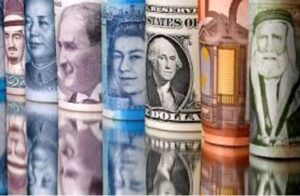
When I first got into the investment newsletter business in 1982, the only thing I knew about currencies was that there was more than just dollars, pesos, and francs. I understood, in a hand-waving way, that they went up and down and that serious people had serious explanations for why. Beyond that, my ignorance was nearly complete.
Four decades later, I know more – but I’m hardly an expert. Marginally knowledgeable is the best I can claim. But currencies are one of those subjects where confidence rises faster than understanding, and I’ve learned to be suspicious of both.
That’s why, when I recently came across an essay that extended my understanding of currencies, I made some notes to include in this issue, as much to double-check what I had learned (what I think I had learned) as the desire to share it with you.
One idea I had learned about currencies from the books I had read was that the value of any currency is entirely dependent on what those that hold and/or trade that currency think about it. If they believe it’s solid, like most of the world has believed about the US dollar since WWII, then it is solid and has the chance to become a global “reserve currency.”
The essay I read made the point that currencies can be seen as “collective judgments about the future of the country that issues that currency.” Not the official story, not the political rhetoric, but what people with money at risk actually believe. Thus, one can view exchange rates as opinion polls – only the respondents don’t get to lie.
Now to the arguments made in the essay, considering three countries and their currencies: Iran, Japan, and the United States.
Iran
The rial has fallen so far that on some exchanges it’s effectively treated as worthless. Inside the country, it still circulates. Outside it, no one wants to touch it. Iran’s official inflation rate is over 40%, which is bad. But inflation alone doesn’t explain why a currency collapses to near zero. What explains it is radical uncertainty – about the regime’s survival, the government’s finances, oil revenues, sanctions, and what the rules will be tomorrow. Currency markets don’t wait around for clarity. When the future looks unstable, they move immediately.
The rial isn’t forecasting Iran’s fate. It’s reporting on confidence – or, rather, the absence of it. If the currency were ever to strengthen meaningfully, it wouldn’t be because of hopeful speeches or policy promises. It would be because markets believed the country had a plausible path out of chaos.
Japan
Japan’s story is quieter but just as revealing. The yen has fallen from roughly 100 to the dollar in 2016 to around 158 today. Japan usually runs lower inflation than the US, so this isn’t about prices spiraling out of control. It’s about long-term arithmetic. Government debt exceeds 200% of GDP. Interest rates are rising. And Japan lacks two advantages the US enjoys: the world’s reserve currency and overwhelming military power.
Japan has managed these risks skillfully for years. But currencies look forward, not backward. A weak yen suggests markets see growing strain in that balancing act – especially if higher rates make an already massive debt harder to service. The fact that Japanese pension funds rely heavily on US equities to meet obligations works beautifully… until it doesn’t.
The United States
Then there’s the United States. When sweeping tariffs were announced with great fanfare, the dollar fell sharply. Markets recalibrated. Volatility was back. What’s interesting is what happened next: The dollar stabilized. Even extraordinary political pressure on the Federal Reserve barely moved it. The market’s message seemed to be: We see this. We’ve already adjusted.
