My Thoughts on the Japanese Economy

As someone who has been in the financial publishing industry for more than 40 years, I understand what a major role economics plays in the world of wealth building and investing. I don’t need to be an expert in the history of economies to recognize how huge an impact inflation, deflation, debt, and fiscal and monetary policies have on my ability to grow a business or see my stock and bond portfolio increase in value.

I also know, from the same experience, how difficult it is for even the best of the experts, analysts who spend their lives studying economic and financial data, to predict economic and financial fluctuations over the long term. That’s what the studies show. It’s also what I know from looking at the long-term track records of the more than 100 analysts that I’ve known on a first-name basis.

I understand that even for the smartest and most diligent financial analysts, there will be years when virtually everything they predict comes true and every financial move they recommend is successful. But eventually, in a year or five years or 10 years, something happens with the economy that they didn’t foresee, and that can lead to losses that are almost catastrophic.

So, the rule I follow is to invest my time and money in economies that are fundamentally healthy, but to hedge my bets by diversifying my holdings so that, if things go south for whatever reason, my total losses in any one financial instrument is never more than one or two percent of my investible net worth.

It’s a very conservative investment philosophy. As Will Rogers said, “I value the return of my capital more than the return on my capital.”

So, how does this relate to my views about investing in Japan?

I have a positive view of the Japanese people, their work ethic, their human and financial values, and their culture generally. And because of that – and because I enjoy spending time in Japan at least once a year – I’ve taken a long position on the Japanese economy.

As for the short- and mid-term prospects of the Japanese economy, I am agnostic. I am an investor of my time and money, but I protect that investment with financial hedges, alternate investments, stop-losses and, most of all, position sizing.

In other words, my approach to investing in Japan includes lots of hedging.

I know enough about Japan’s economy – and its post WWII history – to believe that from a classic, free-market Capitalist perspective, it is problematic. But on a more practical, slightly Austrian-leaning view – where incentives, culture, and long-term capital allocation matter – the Japanese economy feels good and promising.

For decades now, the Japanese government has been struggling with deflation, stagnation, and weak demand with ultra-low interest rates. They have been doing this with aggressive monetary policy and steady fiscal support. And I’d argue that they have succeeded. Asset prices have stabilized. Unemployment rates are low. Consumer savings are high. And the social environment in Japan is strong and cohesive – which is what enabled the Japanese to endure all those years of stagflation.

One of the criticisms I’ve heard about Japan’s economy is that the Japanese people are less entrepreneurial than, say, Americans. They take fewer risks. And because of the low federal interest rates they’ve had for so many years, there is less incentive for efficiency.

When money is essentially free for long periods, it changes behavior. Weak companies survive longer than they should. Banks become cautious instead of opportunistic. Entrepreneurs and investors don’t have the market feedback they would have if interest rates were higher.

But those are essentially the conditions that Japan has been dealing with for 30 years. And from what I’ve seen doing business there for that length of time, the Japanese have enjoyed an extraordinarily high standard of living while avoiding the kind of boom-bust cycles we’ve had in the US and Europe.

Another criticism of the Japanese economy is demographic. Japan is aging faster than almost any developed country, and its population is shrinking. From a purely Keynesian or growth-maximization perspective, that’s a disaster. Fewer workers, less consumption, slower GDP growth.

But when I asked some of the market analysts I know about this, several said the same thing. They said that what matters more than GDP growth for investors is “per capita wealth, productivity, and capital efficiency.”

If that is correct, it’s good news for Japan. Because on those fronts, in many sectors, the numbers are improving. And that’s not an accident. It’s a healthy combination of fiscal policy, pressure from global investors, and the recognition inside Japan that sitting on cash and underperforming isn’t a sustainable long-term strategy.

Another thought I have about the Japanese economy – and this is something that, I admit, is just a hunch, not an informed opinion – is about Japan’s position in the global supply chain.

Japan is not just an exporter of finished goods, it’s a critical supplier of high-end components, precision machinery, and specialized materials. In a world that’s becoming more fragmented – geopolitically and economically – that kind of positioning matters. It gives Japan a kind of quiet leverage that doesn’t always show up in GDP figures.

So, I don’t look at Japan as a place to make big, aggressive bets. That’s not my style, anyway. I look at it as a place to allocate capital carefully, with an emphasis on quality, balance sheets, and long-term positioning.

Just the Facts 

* Japan is the world’s fourth-largest economy, with GDP of roughly $4 trillion–$5 trillion, behind only the United States, China, and Germany. Despite decades of slow growth, it remains one of the world’s richest countries on a per-capita basis.

* Japan has the highest government debt burden in the developed world. Gross public debt is more than 250% of GDP, yet interest rates remain among the lowest in the world because most of that debt is owned domestically.

* Japanese households collectively hold over ¥2,000 trillion (roughly $13 trillion–$14 trillion) in financial assets. Historically, much of that wealth sat in bank deposits earning almost nothing, but more money has begun flowing into stocks through tax-advantaged investment accounts.

* The Japanese stock market, represented by the Nikkei 225, finally surpassed its 1989 bubble-era peak in 2024. It took more than 34 years to recover from one of history’s greatest asset bubbles.

* Japanese companies are sitting on enormous cash reserves. Many large corporations have stronger balance sheets than their American counterparts and collectively hold hundreds of billions of dollars in cash and short-term investments.

* Corporate governance reforms have quietly transformed Japan’s stock market. Companies are increasingly pressured to improve returns on capital, buy back shares, raise dividends, and focus on shareholder value.

* Warren Buffett became one of the most prominent foreign investors in Japan after building large stakes in Japan’s five major trading houses: Mitsubishi Corporation, Mitsui & Co., Itochu Corporation, Sumitomo Corporation, and Marubeni Corporation.

* Japan faces one of the most severe demographic challenges in the world. Its population peaked around 2008 and is shrinking by hundreds of thousands of people annually, creating labor shortages and long-term economic headwinds.

* Foreign investors often overlook that Japan’s stock market is much broader than automobiles and electronics. Despite its aging population, Japan remains a technological powerhouse.

Notes from My Journal

My 2025 predictions on how AI will disrupt the economy felt exaggerated when I made them… now, everything I said seems obvious. Even timid! 

If you had asked me what I thought about AI five years ago, I would have said something like, “I’m curious.” Asked the same question in ‘22 and ‘23, I would have something like, “It’s surprising. It’s developing faster than I thought it would.”

I began writing about AI in early 2024, and by then I was jumping on board with the likes of Elon Musk, who were talking about Moore’s Law and telling us that, whether we knew it or not, the AI Revolution was moving full speed ahead.

Meanwhile, I wrote at least a dozen emails to the various businesses I feel responsible for, urging them to give their full attention to how AI is changing the world by infiltrating itself into virtually every sector of the global economy.

In my most recent blog posts about AI, I said that I believed we were already locked into a massively transformational technological revolution – one that was likely to be at least as disruptive as the Industrial Revolution.

I’ve predicted that within the next five or so years, AI was going to radically transform the foundation of how commerce works in the world, which will have a massively deflationary effect on the value of human labor, leaving as much as 80% of the world’s population unemployed (or, in the best case, underemployed).

I’ve said this a dozen times in conversations with people I know. And whenever I say it, someone – usually someone with better credentials than mine – reminds me that although previous technological revolutions eliminated thousands and even tens of thousands of jobs, those jobs were almost immediately replaced with more and higher paid jobs in the fledgling industries that had been spawned.

And there is no doubt about that. The Industrial Revolution resulted in a massive expansion in national and global GDPs. Railroads created new factories. Factories created new cities. Synthetic drugs and advanced surgeries created the largest industrial complex the world had ever seen.

But I don’t see that happening as a result of the AI Revolution. I don’t see how AI is going to create new industries. I can very clearly see how it will reduce the cost of virtually every product and service in the marketplace – not just make them less expensive but also make them more efficient. But I don’t see that resulting in a massive global depression triggered by hyperinflation. There will certainly be some of that at first. And that is exactly what is going on now. But by 2027, and to a greater extent in the years that follow, the core economic impact of AI will be deflationary, bringing down not only the cost of goods and services, but – more importantly – the value of human labor.

I believe what we will see, starting next year and then continuing for who knows how long, is a major decrease in what workers – from truck drivers to surgeons – can expect to get paid for the work that they do. And that will happen because of a phenomenon that I’ve not heard anyone talk about with respect to AI: the supply and demand ratio for human labor.

Briefly put, what AI is going to do – what it is already doing – is allow unskilled people to perform skilled (even highly skilled) jobs that until now were done by people whose market values were in the highest deciles of annual compensation.

I recently returned home from a two-week business retreat in Nicaragua at Rancho Santana. It was a working retreat for AP’s publishers and marketing directors from the US and abroad. It began with a discussion of how our individual franchises have performed since the last time we met in 2024. (Mostly good news, I’m happy to report.) After that, it was about how we were going to compete successfully in our market over the next several years – and most of that part of the discussion was about artificial intelligence.

How Two Weeks of Non-Stop AI Talk Freaked Me Out

And why you should be freaked out too! 

Last November, at the Legacy Summit in Japan, I told my audience that an economic revolution was bearing down on us – the AI Revolution – and that it was going to be as big as any economic revolution in human history.

The predictions I made that day are coming true. Faster than I expected. Faster than I dared say out loud.

This is no longer a possibility. It is happening. Vast industries and hundreds of thousands of small and large businesses are already in the throes of it. The global distribution of wealth is being rewritten on a week-by-week basis.

Every week, AI’s takeover of the global economy is advancing!
And every week, the disruption it will cause is becoming more difficult to deny. 

In the entertainment industry, alone, the number of new AI products being produced and sold is increasing exponentially. It seems like a new movie, TV show, or chart-breaking song is appearing every week.

I’m working from memory here, but I believe that, late last year, an AI-generated country artist called Breaking Rust hit #1 on the Billboard Country Digital Song Sales chart with a track titled “Walk My Walk.” No human singer. No band. No studio musicians. Just a prompt, an algorithm, and a #1 chart position.

And stories like this keep showing up on my AI radar. There was the AI-cloned Drake and The Weekend duet “Heart on My Sleeve” that briefly got submitted for a Grammy before the rights holders shut it down. There was The Velvet Sundown, an entirely fake AI “band” that built a real Spotify following before listeners caught on. And there was FN Meka, an AI rapper signed by Capitol Records and then dropped a week later when the backlash hit.

I watched a short film last week: Zombie Scavenger. Three and a half minutes long. A robotic cowboy scavenger navigating a sun-bleached wasteland crawling with the undead. The visuals are as good as anything I’ve seen out of a major studio. It was made entirely with AI (primarily a new video model from ByteDance called Seedance 2.0) by a single creator who goes by Mx-Shell. No cameras. No actors. No crew. The Santa Monica Observer called it “AI’s Undead Masterpiece.” Watch it for yourself here.

I’m working from memory here, too, but I believe that Tyler Perry – yes, that Tyler Perry – had been planning an $800 million expansion of his Atlanta film studio. Then he saw what OpenAI’s Sora model could do with video. He paused the entire $800 million project. He told The Hollywood Reporter that “a lot of jobs” in the entertainment industry are going to disappear because of this technology – and that he no longer felt safe building studio capacity that AI might make unnecessary.

Val Kilmer lost his voice to throat cancer. For the Top Gun sequel, a UK company called Sonantic rebuilt it from old recordings using AI. He acted on screen with his own voice – a voice he could no longer physically produce.

Stories from My Own Little Circle of AI Brainiacs 

In a recent issue, I told you about a young man I met a few months ago at the Cigar Club. He said his cousin had just sold two 30-second TV commercials – produced entirely by AI – to a major car company… for $50,000 each. The kind of commercials that, up until a minute ago, were selling for at least 10 times that amount. And he did the whole thing without a film crew, without actors, without a production studio. Total dollars in: around $10,000.

I also told you about a short video I was producing for my botanical garden. I had set aside $15,000 to pay for it, but I got it done with AI for $2,500 – and, had I bargained, could have had it for less.

AM, a friend of mine who works as an independent life-and-health insurance consultant, told me he used to spend several hours a day analyzing prospective clients’ data and drafting reports indicating how much money he could save them. “I fed Claude all my past data and the proposals I made from it,” he said. “Now Claude does the same process – more thoroughly than I did – and double-checks the final numbers. I get a better outcome in about 10% of the time I used to spend. That’s big.”

PG, an investment analyst I sometimes work with, prides himself on answering every letter and email from his clients. “I always liked doing it because it helped me understand what they wanted,” he said. “But as the volume grew, it was eating up an awful lot of my time. I asked my AI if it could help. It told me to give it all my past correspondence, then used that to design templates that answer 80% of the questions I get perfectly. Now I just spot-check a few to stay close to the market. I used to spend an hour a day on this. Now I spend less than an hour a week.”

Real estate agents I know in South Florida are running their listing descriptions through AI. Twenty-minute jobs are now 90 seconds. One agent told me she has tripled her listings without hiring a single new assistant.

Doctors at my own primary-care practice are dictating patient notes to an AI scribe that writes them up in real time. My internist told me last visit that he gets home for dinner an hour earlier because of it. Multiply that across the medical profession.

Students (high school, college, graduate) are using AI not only to write papers, but to tutor themselves in subjects their teachers don’t have time for. One of my nephews taught himself the basics of computer programming last summer using a free AI tutor. He had no human help.

These are the everyday examples. The kind that don’t surprise anyone anymore.

Some of the Conclusions Financial Experts Are Drawing 

When you’re working from anecdotes, the conclusions you draw could be wrong. So, I asked Nigel, my genius AI British butler, to find studies to back up the stories. He found back-up for the following in five minutes. I spent another 15 minutes checking the sources for nonsense. Total time: under 20 minutes.

* Commercial illustration and graphic design. The canary in the coal mine. Already largely gone. Stock-photo houses, brochure illustrators, ad-layout designers, package designers deflated by roughly 70% to 90% in the last 18 months. The work hasn’t disappeared. The people doing it have.

* Paralegal and junior-associate work in law. Document review, contract drafting, case-law summaries – done by AI in minutes, for pennies. I know of two large firms that have quietly stopped hiring first-year associates. Not because they don’t want them. Because they don’t need them.

* Radiology and diagnostic imaging. AI now reads X-rays, MRIs, and CT scans more accurately than most human radiologists – in seconds rather than hours. The radiologists I know don’t deny this. They argue that a human will always need to “sign off.” But signatures don’t pay six-figure salaries.

* Customer service and call centers. Already 30% to 50% gone. By this time next year, I expect closer to 80%. The voice that resolves your billing dispute is, increasingly often, not a person.

* Translation, transcription, and basic commercial copywriting. Routine translation is, for practical purposes, a solved problem. So is transcription. The first draft of nearly any short form copy, product descriptions, email blasts, social posts, can be produced in seconds for pennies, then polished by a human in minutes.

* Financial analysis and accounting. Bookkeeping, audit support, ratio analysis, the production of standard financial reports, AI does it cheaper and faster. I’ve read dozens of accounts of small-business owners running their entire bookkeeping through AI tools that read receipts, categorize expenses, and flag deductions automatically. Solo operators are reportedly saving five to 10 hours a month. Most of a workday.

The 80/20 Conundrum 

I’ve been talking to about a dozen very successful young entrepreneurs and AI experts who visit my Cigar Club on Wednesdays and Fridays. We invited three of them to speak to us at our business retreat in Nicaragua, and one of them put a name to what I’ve been thinking. He called it The 80/20 Conundrum.

You’ve heard of the “80/20 Rule” or “Pareto Principle” – the observation by early 20th century Italian economist Vilfredo Pareto that, in most endeavors involving groups of people, labor and economic outcomes tend to resolve themselves into 80/20 distributions.

Eighty percent of a company’s good ideas come from 20% of its employees. Eighty percent of its revenue comes from 20% of its customers. The pattern repeats everywhere.

When I first wrote about the AI Revolution, I assumed the redistribution it produces would follow Pareto’s classic ratio. That 20% of the workforce – the ones who began adapting immediately – would end up on the winning side of the new economy.

I now think I was being optimistic.

What I now believe, based on everything I saw and heard during our two-week retreat, is that the redistribution is going to be steeper than anything Pareto modeled. Closer to 1% on the right side of economic history, and 99% on the wrong side.

Of that 1%, an even smaller fraction will own their AI-run businesses outright. The rest of the 1% (call them the viceroys) will be the people whose knowledge and judgment the owners cannot do without. They will be the ones the owners hire, listen to, and pay very well.

The 99% will be left to fend for themselves. Some will lose their jobs and incomes in the next two years. Some will last longer. But none will have a meaningful say in their own financial future, because that future will be controlled by a coalition of governments and AI owners.

I am aware that this sounds extreme. I am aware that 99/1 is a more alarming ratio than most people can sit with comfortably. I am also aware, after two weeks of close listening, that I am not the only one in my industry saying it.

What to Do to Protect Yourself Now – While You Still Have Time! 

There are six things you can do. None of them hard. None of them expensive. But all of them require that you start now.

1. Use AI every day. Not occasionally. Daily. The single most important thing you can do this year is develop fluency through repetition. Pick one tool – ChatGPT, Claude, Gemini – and use it for 30 to 60 minutes a day, every day, for the next six months. I don’t care what you use it for. Email. Recipes. Vacation planning. Letters to your children. The point is to build the reflex of reaching for AI before you reach for anything else.

2. Learn to write a good prompt. The difference between mediocre AI output and extraordinary AI output is almost never the AI. It is the quality of the question put to it. There are several short, free books on this. Read two of them.

3. Rebuild one piece of your own work around AI – from the ground up. Not as an addition to what you already do. As a replacement. One report you write. One process you supervise. One product you sell. Treat it as a small experiment. See how much faster, cheaper, and better the rebuilt version is.

4. Develop the skill of judgment. AI will produce good output, mediocre output, and dangerously wrong output – sometimes in the same paragraph. The viceroys of the new economy will be the people who can read AI output and instantly know which is which. This skill cannot be developed by anyone who has not already mastered the underlying domain. So deepen the skill you already have. Then bolt AI onto it.

5. Build something – anything – that is yours. A small business. A side project. A book. A piece of software. A consulting practice. Something where you, not your employer, own the upside. The viceroys of the new economy will not be the people who clung hardest to their corporate jobs. They will be the people who used AI to launch something on the side, and then watched their corporate jobs become unnecessary.

6. Surround yourself with people who already get it. Find one or two friends, colleagues, or younger relatives who are deep into this technology and spend time with them. The young entrepreneurs who visit my Cigar Club on Wednesdays and Fridays have done more for my own AI education in six months than any book or course.

There are times when gambling can be fun. 
This isn’t one of them! 

Nothing I have said here is based on a rigorous, peer-reviewed investigation of what AI is doing to the world economy. It’s my gut feeling. Backed by everything I’ve seen and everyone I’ve talked to over the last 12 months – but still, a gut feeling.

I could be wrong.

If I’m wrong, what does it cost you? You will have spent a few hundred hours becoming fluent in a technology that – even on its slowest possible adoption curve – is going to be a fixture of every white-collar job for the rest of your working life.

If I’m right, you will have placed yourself in the 1% that owns its own future.

The cost-benefit here is so lopsided that I have a hard time understanding why any thinking person would ignore it.

Just how big is this going to be?

When most people picture the AI Revolution, they picture a few of the obvious industries getting hit. Hollywood. Journalism. Software. Maybe customer service. They picture the disruption as bad, but as contained.

It is not going to be contained.

The industries that are most exposed to AI’s deflationary force represent a staggering share of the world economy. Tens of millions of jobs. Careers and businesses that may not exist in their current form five years from now.

Two of the industries that are most vulnerable to a deflationary implosion are information publishing and entertainment. Combined, those two account for annual global revenues of $3 trillion to $4 trillion.

But many other professions and industries are equally exposed. For example:

* Transportation – $7 trillion to $10 trillion
* Communication and telecom – roughly $2.5 trillion
* Legal and engineering services – roughly $3 trillion

And that’s to say nothing of the Military and Health Industrial Complexes.

The Military Industrial Complex (President Eisenhower’s term) has long been a target of criticism among fiscal conservatives in every country. And with good reason. Its annual spend is between $2.5 trillion and $5 trillion. (US spending accounts for about a third of that.)

And when a market sector is that big, there are going to be all sorts of stories about political corruption.

But it’s nowhere near as big as the Health Industrial Complex. Take a look at these yearly global revenues:

Hospitals & Healthcare Providers – ~$5 to $7 trillion
Pharmaceuticals – ~$1.7 to $2 trillion
Medical Devices – ~$600 to $800 billion
Health Insurance / Managed Care – ~$2 to $3 trillion
Biotechnology – ~$500 to $700 billion
Diagnostics & Lab Testing – ~$150 to $250 billion
Digital Health / Health IT – ~$300 to $500 billion

In total, that’s $10 to $14 trillion a year. Nearly 15% of the world’s total GDP, and closer to 20% for US citizens.

That, by itself, should give anyone pause. When the AI Revolution finishes working its way through these sectors, what’s left will not look like the economy we grew up in.

Are We Looking at a Potential Economic Crisis?

BS, a reader and friend, asked my opinion of something hedge fund manager Paul Tudor Jones said recently in an interview with Patrick O’Shaugnessy. Jones pointed out that the US is more dependent on equity prices than ever, with the stock market cap currently standing at 252% of GDP – a significant increase from the 65% in 1929 and 170% in 2000. And he suggested that a 35% correction could trigger an economic crisis.

Here’s what I think…

Jones is talking about what is called the “Buffet indicator” – the total stock market value divided by GDP.

And he’s right. At ~250%, it’s historically very high. But critics of this metric would argue that GDP is domestic, but the market cap includes global earnings. And since many large US companies earn a large share of their profits overseas, this needs to be factored in. Another factor is that many of today’s major corporations are high-tech, and they can grow faster than bread and butter companies.

So yes, 250% is, by simplistic historical standards, very high. But it’s not apples-to-apples with 65% in 1929.

When the stock market takes a dip, corporate CEOs slow down hiring and other expenditures, credit conditions tighten, and consumers pull back on spending. That, in theory at least, has a stabilizing effect on the market.

I did some quick AI research and found that we have already had three drops that were close to 35%.

* 2000–2002: ~50% Nasdaq decline, recession mild
* 2008–2009: ~55% decline, but that was a banking crisis, not just equities
* 2020: ~35% drop, economy snapped back quickly

The key distinction, my research suggests, is a matter of “cause and effect.”

If a stock market drop is caused by tightening liquidity or sentiment, it’s going to be painful but will likely be survivable. A drop tied to banking system stress or credit collapse, though, is inarguably dangerous.

The way things have been going since Nixon ended the gold standard is that the Fed is always trying to backstop the stock market through fiscal measures that release liquidity to create some stability. But that stability is temporary – and then the cycle repeats itself and US debt becomes greater and greater. So logic dictates that at some point we could have an economic collapse.

Bottom line: Jones is right in saying that equity valuations are historically high, and he’s probably also right in that the economy is more sensitive to asset prices than before. But to say that the leap to 35% will automatically trigger “systemic economic damage” may be overly simplified.

I hate to say it, but what all of this means to me is that neither Jones nor anyone else can know for sure.

HL Mencken on the US Dollar and the Myth of America’s Currency

“The chief value of money lies in the fact that one lives in a world in which it is overestimated.”
– HL Mencken

If you’ve never studied economics – or have but rely on the NYT for your political, social, and/or economic opinions – you should read the essay I’ve linked to below.

It’s an entertaining explanation of what motivates almost everything our politicians promise, but fail, to do. It points out the fundamental reason why Trump is doing what he’s doing now – including waging war and collecting tariffs. It’s also the reason why AOC and Mamdani promised to “tax the rich,” and why some of NYC’s largest employers are leaving the city. And it’s a refreshing reminder of the discerning political and social insights of HL Mencken, who was perhaps the shrewdest critic of American values and habits since Mark Twain.

It was written by Garrett Baldwin, one of my favorites of Agora’s many economic and financial analysts, which makes the learning pleasing, if not downright fun.

In this essay, which challenged me to reconsider some of the political perches upon which I recently settled, Baldwin argues that the US (and pretty much the entire developed world) is barely surviving on – as he puts it – “the shared agreement that money means what we say it means.” And that is because, as Mencken said in Notes on Democracy(1926), “The average man does not want to be free. He simply wants to be safe.”

You can read it here.

Where the Heck Have I Been?

Notes From My Journal

If you feel like I’ve neglected you recently, you are not wrong. I’ve been very busy. In fact, last week could well have been the most intense working week I’ve had in years. Perhaps decades!

And that’s not because from Monday through Saturday I woke at 5:30 am, began my working day an hour later, and worked until 11:30 pm, with only one 90-minute break each day to exercise. No. I think the reason the week was so intense (and exhausting) was because – for a large part of that time – I was “working” and in front of an audience and/or camera. And I was playing the role of Michael Masterson, the sage and successful entrepreneur and wealth builder who was spearheading the launch of a brand-new business: DIY-Wealth.

Three of those mornings, I was speaking live to Japanese investors and businesspeople who were seeking help in growing their businesses by following some of the rules I spelled out in Ready, Fire, Aim and Automatic Wealth, both of which were bestsellers in the Japanese business and investing categories.

I am normally confident about speaking to people on these topics. But these were “hotseat” conversations in which they tell me about some problem or challenge they are facing, and I give them on-the-spot, individual advice. I must not only supply a point-by-point plan for resolving their issues, I must also explain it in a way that is universal – i.e., it draws on problems and challenges that many if not most people have in building businesses or accumulating wealth. And to top it off, I know little to nothing about these people or their issues when we begin. Plus, each conversation is limited to 15 or 20 minutes. Which means I have only so many minutes to ask them for details so I can provide them with ideas that make sense.

Don’t get me wrong. I’m not complaining. Of all the things I do in my business, I like conversations like these – whether they are with strangers or employees or friends – as much as or more than anything else I do in my career. Still, it’s exhausting. Two hours of it takes a day’s worth of energy.

After that, there were interviews with the Japanese media – social media influencers and mainstream journalists as well.

All that got me to lunch, after which the entire schedule changed. We were no longer providing content and advertising for our Japanese businesses, we were now creating content to launch DIY-Wealth in the US and the rest of the English-speaking world.

The afternoons consisted of brainstorming sessions, planning meetings, and video and audio content production, which would be edited and then used, along with live promotional activities, in launching the business over the next several weeks.

DIY-Wealth is going to be a membership-based research and teaching organization focused on programs, courses, and digital products on entrepreneurship, business profitability, personal finance, investing, time management, health, productivity, and living with purpose and satisfaction.

That sounds like a lot, now that I say it. But it is tied together and streamlined by being filtered through a narrow funnel: personal experience – primarily mine, but also that of some of the most successful moneymakers I know.

Perhaps the biggest difference between DIY-Wealth and similar businesses I’ve developed in the past is that DIY-Wealth is going to have to reinterpret all the seemingly universal and evergreen truths about increasing income and acquiring wealth – the secrets that I and the rest of our team discovered over the years through trial and error – in the brand-new economic, industrial, and social environment of artificial intelligence.

We will be starting this adventure on the eve of what may very well turn out to be the largest global economic transition since the Industrial Revolution was born nearly 200 years ago. I believe we – and by we, I mean the entire population of the world – are embarking on a voyage into a technological future that will be everything that all the great futurists and science fiction writers once imagined it would be. And more.

And I believe this is going to happen rapidly – starting soon. Like tomorrow!

The Way Digital Technology Blew Up My World 

I don’t know what historians will one day decide, but the digital economy for me began in the mid 1990s, when some of our younger executives began talking about how our industry – the investment newsletter business – was going to change once the World Wide Web was fully spun. BB (my partner) and I had only a rudimentary understanding of what all the commotion was about. But we intuited that if we wanted our company to survive – if we wanted to continue to make money in that industry – we had to figure out how this much ballyhooed prediction of a brave, new information age could happen.

As the mid-90s turned into the late-90s, we encouraged our publishers to keep up with the changes, and most of them did. Some of them believed that our traditional way of selling our newsletters – by renting addresses from other direct response publishers and mailing sales pitches – was on its way out, and an entirely different marketing model based on advertising our products and services on websites would soon become ubiquitous. There was even a bestselling book about it. I can’t remember the title, but I remember the thesis: that our form of selling, which the author called “push marketing,” was going to be replaced by a more gentle and less intrusive method, which the author called “pull marketing.”

Some of our publishers moved their business to that model. But though BB and I had serious doubts it would work, he began writing and publishing what was then one of the first free online digital newsletters (The Daily Reckoning), and I began writing my own free online daily (Early to Rise). By 1992, we were glad we did, because the circulation of each of our newsletters had grown immensely – to about a million subscribers each. More importantly, we gradually figured out how to monetize those “free” names. It became what for two decades was called “The Agora Method,” the standard marketing model for hundreds (if not thousands) of digital publishing companies. And it is still one of the primary methods of selling information online today.

We weren’t the only people to figure this out. Across the world, countless companies that sold information were doing the same thing. And the effect was enormous. In fact, digital direct marketing was a major factor in the rise of global GDP, from roughly $23 trillion in 1990 to over $105 trillion today.

The Principles of Wealth – a Work in Progress 

[Note: This is the Introduction to a book I wrote and then set aside many years ago. I titled it “The Principles of Wealth” because I wanted it to be – well, a little bit lofty and maybe even pretentious. I’m now back to revising it, and I’m going to be publishing chapters of it serially so I can (with your help) get some feedback that will help me get it ready for print.]

A Wealth Seeker’s First Conversation About Money
Step One: A Definition of Wealth 

One can’t have a profitable conversation about wealth without agreeing upon a definition of the word. And that’s a more difficult task than it might seem. I did a brief scan of several of my Stone Age paper-bound dictionaries and found definitions that were redundant (e.g., “material prosperity”) and others that were circular (e.g., “the state of being rich”), but nothing of use.

Let’s consider two common misunderstandings about wealth:

Many people equate wealth with the accoutrements of wealth – a yacht, a Rolex watch, a million-dollar house. But if the owner of such things doesn’t own them outright, they are false signs. In fact, there are millions of people – probably tens of millions of people – in the US alone that have huge houses, big boats, and treasure chests of bling who are not wealthy. They may, in fact, be poor. Or broke. Or hopelessly in debt.

People also equate wealth with income – thinking that having a high income makes one wealthy. But every major city in the industrialized world is crowded with high-income earners that have no wealth and little likelihood of ever acquiring it.

I’ve been thinking about a definition since I started writing this book about 10 years ago. And although I haven’t found one that is perfect, I have come up with one that I like because it’s simple, useful, adaptable, and easy to remember:

Wealth is having more of something valuable than you currently need.

If you accept this pared-down definition, you will see that there are many forms of wealth.

There is wealth of knowledge, wealth of experience, wealth of friendship, wealth of spirit, wealth of optimism, wealth of patience, wealth of hope, and wealth of love – to name a few.

All of them, most people would agree, are valuable – even if some aren’t quite things.

So, having more than you currently need of something that has value – that’s one component of wealth.

But having more than you currently need means that these valuable things must also be things that can be stored.

You might say, for example, that you can be rich in happiness in the sense of having an abundance of it. But it would be difficult to argue that you could store a portion of that abundant happiness for a later time. Happiness is ephemeral. It comes. It goes.

Exploring the various forms of wealth is a discussion well worth having. It could easily take up a book, or a library of books. But my aim here is to focus on material wealth – and to consider the possibility that there are truths about material wealth and acquiring it that are universal.

Let’s begin with a discussion of what I think of as “the first principles of wealth” – the philosophical, ethical, and social considerations.

[Note: That’s the end of the Introduction to “The Principles of Wealth.” Please write with any questions, comments, or recommendations you may have.]

How Currencies Can Predict the Economic Future of Countries

Three Case Studies: Iran, Japan, and the US 

When I first got into the investment newsletter business in 1982, the only thing I knew about currencies was that there was more than just dollars, pesos, and francs. I understood, in a hand-waving way, that they went up and down and that serious people had serious explanations for why. Beyond that, my ignorance was nearly complete.

Four decades later, I know more – but I’m hardly an expert. Marginally knowledgeable is the best I can claim. But currencies are one of those subjects where confidence rises faster than understanding, and I’ve learned to be suspicious of both.

That’s why, when I recently came across an essay that extended my understanding of currencies, I made some notes to include in this issue, as much to double-check what I had learned (what I think I had learned) as the desire to share it with you.

One idea I had learned about currencies from the books I had read was that the value of any currency is entirely dependent on what those that hold and/or trade that currency think about it. If they believe it’s solid, like most of the world has believed about the US dollar since WWII, then it is solid and has the chance to become a global “reserve currency.”

The essay I read made the point that currencies can be seen as “collective judgments about the future of the country that issues that currency.” Not the official story, not the political rhetoric, but what people with money at risk actually believe. Thus, one can view exchange rates as opinion polls – only the respondents don’t get to lie.

Now to the arguments made in the essay, considering three countries and their currencies: Iran, Japan, and the United States.

Iran 

The rial has fallen so far that on some exchanges it’s effectively treated as worthless. Inside the country, it still circulates. Outside it, no one wants to touch it. Iran’s official inflation rate is over 40%, which is bad. But inflation alone doesn’t explain why a currency collapses to near zero. What explains it is radical uncertainty – about the regime’s survival, the government’s finances, oil revenues, sanctions, and what the rules will be tomorrow. Currency markets don’t wait around for clarity. When the future looks unstable, they move immediately.

The rial isn’t forecasting Iran’s fate. It’s reporting on confidence – or, rather, the absence of it. If the currency were ever to strengthen meaningfully, it wouldn’t be because of hopeful speeches or policy promises. It would be because markets believed the country had a plausible path out of chaos.

Japan 

Japan’s story is quieter but just as revealing. The yen has fallen from roughly 100 to the dollar in 2016 to around 158 today. Japan usually runs lower inflation than the US, so this isn’t about prices spiraling out of control. It’s about long-term arithmetic. Government debt exceeds 200% of GDP. Interest rates are rising. And Japan lacks two advantages the US enjoys: the world’s reserve currency and overwhelming military power.

Japan has managed these risks skillfully for years. But currencies look forward, not backward. A weak yen suggests markets see growing strain in that balancing act – especially if higher rates make an already massive debt harder to service. The fact that Japanese pension funds rely heavily on US equities to meet obligations works beautifully… until it doesn’t.

The United States 

Then there’s the United States. When sweeping tariffs were announced with great fanfare, the dollar fell sharply. Markets recalibrated. Volatility was back. What’s interesting is what happened next: The dollar stabilized. Even extraordinary political pressure on the Federal Reserve barely moved it. The market’s message seemed to be: We see this. We’ve already adjusted.

The Truth About the Much-Touted Gender Pay Gap

Just the Facts 

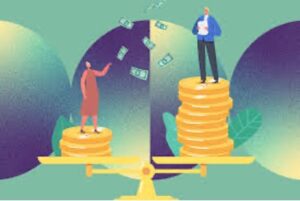
You have no doubt heard at least a dozen times that there is a “gender pay gap” in the US – i.e., that women make only about 80% (79% to 83%) of what men make, and that is evidence of bias and discrimination.

Well, it’s not true. When researchers account for career field, hours, and seniority – effectively comparing like with like – the apparent gap shrinks dramatically. Some studies say it
narrows to less than 10 cents. Some say 6 cents. Some say a penny. And for very good reasons.

For one thing, most of the so-called gap comes from choices and work patterns. Men are overrepresented in industrial jobs, heavy labor, and dangerous jobs. Women are overrepresented in teaching, nursing, and other jobs where workers generally receive lower wages.

Other factors include hours worked and seniority. Women are more likely to work part-time or take career breaks for caregiving. In fact, when studies compare full-time workers with similar hours, some data show the earnings ratio reverses!

Jobs and Professions Where Women Earn More Than Men 

A few examples:

* Modeling. Among top-earning fashion models, female models have historically earned more than male models.

* Creative Roles. Some occupational data show that in specific creative roles like producers and directors, women’s median earnings exceed men’s. One analysis reported women earning about 128% of what men make in these roles.

* Career Counselors. In the same occupational dataset, women’s pay in this field slightly exceeded men’s, reported as roughly 106%.

* Some Clerical/Administrative Roles. According to some wage surveys and Bureau of Labor Statistics breakdowns, categories like billing and posting clerks, reservation agents, and receptionists sometimes show women earning more per hour than men – though these tend to be lower-paying roles overall.

For a quick overview of the data, watch this video from Prager U. Economist Christina Hoff Summers explains the phony calculations and why they never made any sense.

And if you are up for it, here are some studies on the gender pay gap that you might want to check out:

* Blau, Francine D. & Lawrence M. Kahn, The Gender Wage Gap: Extent, Trends, and Explanations, National Bureau of Economic Research (NBER Working Paper No. 21913, updated versions through the 2010s), a foundational labor-economics review – Finds that most of the observed wage gap is explained by occupation, experience, hours worked, and labor-force attachment.

* Goldin, Claudia, A Grand Gender Convergence: Its Last Chapter, American Economic Review, Vol. 104, No. 4 (2014) – Shows that remaining wage gaps are concentrated in occupations that reward long hours, inflexible schedules, and geographic mobility, rather than unequal pay for equal work.

* US Department of Labor, An Analysis of the Gender Wage Gap (2014) – Finds that the majority of the raw wage gap is attributable to differences in occupation, industry, hours worked, and work experience.

* Payscale, Gender Pay Gap Report (annual editions, esp. 2016–2023) – Reports a large “uncontrolled” gap but shows that after controlling for job title, location, education, experience, and hours, women earn roughly 98 to 100 cents per dollar of men

* CONSAD Research Corporation, An Analysis of Reasons for the Disparity in Wages Between Men and Women (commissioned by the US Dept. of Labor, 2009) – Concludes that available data do not support claims of systemic pay discrimination for equal work; observed gaps reflect measurable differences in work patterns and career choices.

Is There Really a Difference Between Socialism & Communism?

It’s a question that comes up almost every time one gets into a discussion about the virtues of “Socialism.” Libertarians, Free Market advocates, and others who understand economics and know the history of Communism in the 20th century (like yours truly) often take the position that there is no difference. And if one wants to push the argument (that they are the same), one could say, correctly, that Karl Marx used the terms interchangeably.

But in looking at the history of this debate since Marx, one has to concede that three useful (two lucid, one somewhat fuzzy) distinctions have emerged:

1. In terms of property rights, Socialism advocates for the collective ownership of major industries, but individuals can own personal property. Communism advocates for complete communal ownership. No private property at all.

2. In terms of wealth distribution, Socialism advocates for the redistribution of wealth by government ownership and/or management of all industries involved in “the means of production” and government control over all social, legal, and bureaucratic activates that affect “quality of living,” including housing, transportation, education, and health care.

3. In terms of achieving political change, Communism explicitly supports the establishment of a central government through violent revolution, whereas Socialism (or rather Socialists) often advocates change through political and legal means and social activism, which can include violent protest.

Just the Facts 

The Idea of Communism
Communism is an economic and political concept that was more-or-less invented by Karl Marx and Friedrich Engels, who made the case that the world would be a better place for everyone if class structures, and particularly economic structures, were eliminated.

The Reality of Communism
In the 20th century, it became a system of state power following revolutions in Russia, China, Cuba, and several African states. In every case, Communist governments centralized economic, legal, political, military, and policing institutions. They then proceeded to eliminate personal liberties, including the freedom of speech and other forms of individual expression (e.g., art, music, and theater).

What About Those Nordic States?

It is often claimed that the Nordic countries are Socialist. But as their own leaders have repeatedly explained, they operate largely Free Market economies, with strong protections for private property and privately owned industries. In Denmark and Sweden, for example, the vast majority of businesses – including banks, manufacturers, retailers, and exporters – are privately owned, not state run. Government ownership is limited and far smaller than in classical Socialist systems.

Sweden’s corporate tax is 20.6%, and Denmark’s is 22%. That’s right in the middle of the US corporate tax rate, which is 21%.

Capital gains and inheritance taxes in Denmark are moderate – lower in most cases than they are in the US. And Sweden abolished its wealth tax (in 2007) and inheritance tax (in 2005).

Meanwhile, these countries provide good social services – in some (but just some) cases, providing more coverage than the US provides. And they have done that without racking up trillions of dollars of debt!

How do they do that?

This is another thing that would make people who claim Nordic countries are Socialist gag if they knew it. The tax systems in Sweden and Denmark work not because they are super-progressive (i.e., super-high taxes for rich people), but because their tax systems are broadly based. Their welfare programs are funded through flat or mildly progressive income taxes and high consumption taxes (VAT around 25%).

Translation: Middle- and working-class citizens – not just the rich – pay a substantial share of the overall taxes, unlike highly progressive tax models often associated with Socialism.