
Notes From My Journal
If you feel like I’ve neglected you recently, you are not wrong. I’ve been very busy. In fact, last week could well have been the most intense working week I’ve had in years. Perhaps decades!
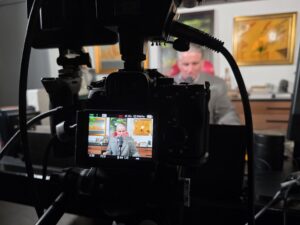
And that’s not because from Monday through Saturday I woke at 5:30 am, began my working day an hour later, and worked until 11:30 pm, with only one 90-minute break each day to exercise. No. I think the reason the week was so intense (and exhausting) was because – for a large part of that time – I was “working” and in front of an audience and/or camera. And I was playing the role of Michael Masterson, the sage and successful entrepreneur and wealth builder who was spearheading the launch of a brand-new business: DIY-Wealth.
Three of those mornings, I was speaking live to Japanese investors and businesspeople who were seeking help in growing their businesses by following some of the rules I spelled out in Ready, Fire, Aim and Automatic Wealth, both of which were bestsellers in the Japanese business and investing categories.
I am normally confident about speaking to people on these topics. But these were “hotseat” conversations in which they tell me about some problem or challenge they are facing, and I give them on-the-spot, individual advice. I must not only supply a point-by-point plan for resolving their issues, I must also explain it in a way that is universal – i.e., it draws on problems and challenges that many if not most people have in building businesses or accumulating wealth. And to top it off, I know little to nothing about these people or their issues when we begin. Plus, each conversation is limited to 15 or 20 minutes. Which means I have only so many minutes to ask them for details so I can provide them with ideas that make sense.
Don’t get me wrong. I’m not complaining. Of all the things I do in my business, I like conversations like these – whether they are with strangers or employees or friends – as much as or more than anything else I do in my career. Still, it’s exhausting. Two hours of it takes a day’s worth of energy.
After that, there were interviews with the Japanese media – social media influencers and mainstream journalists as well.
All that got me to lunch, after which the entire schedule changed. We were no longer providing content and advertising for our Japanese businesses, we were now creating content to launch DIY-Wealth in the US and the rest of the English-speaking world.
The afternoons consisted of brainstorming sessions, planning meetings, and video and audio content production, which would be edited and then used, along with live promotional activities, in launching the business over the next several weeks.
DIY-Wealth is going to be a membership-based research and teaching organization focused on programs, courses, and digital products on entrepreneurship, business profitability, personal finance, investing, time management, health, productivity, and living with purpose and satisfaction.
That sounds like a lot, now that I say it. But it is tied together and streamlined by being filtered through a narrow funnel: personal experience – primarily mine, but also that of some of the most successful moneymakers I know.
Perhaps the biggest difference between DIY-Wealth and similar businesses I’ve developed in the past is that DIY-Wealth is going to have to reinterpret all the seemingly universal and evergreen truths about increasing income and acquiring wealth – the secrets that I and the rest of our team discovered over the years through trial and error – in the brand-new economic, industrial, and social environment of artificial intelligence.
We will be starting this adventure on the eve of what may very well turn out to be the largest global economic transition since the Industrial Revolution was born nearly 200 years ago. I believe we – and by we, I mean the entire population of the world – are embarking on a voyage into a technological future that will be everything that all the great futurists and science fiction writers once imagined it would be. And more.
And I believe this is going to happen rapidly – starting soon. Like tomorrow!
The Way Digital Technology Blew Up My World
I don’t know what historians will one day decide, but the digital economy for me began in the mid 1990s, when some of our younger executives began talking about how our industry – the investment newsletter business – was going to change once the World Wide Web was fully spun. BB (my partner) and I had only a rudimentary understanding of what all the commotion was about. But we intuited that if we wanted our company to survive – if we wanted to continue to make money in that industry – we had to figure out how this much ballyhooed prediction of a brave, new information age could happen.
As the mid-90s turned into the late-90s, we encouraged our publishers to keep up with the changes, and most of them did. Some of them believed that our traditional way of selling our newsletters – by renting addresses from other direct response publishers and mailing sales pitches – was on its way out, and an entirely different marketing model based on advertising our products and services on websites would soon become ubiquitous. There was even a bestselling book about it. I can’t remember the title, but I remember the thesis: that our form of selling, which the author called “push marketing,” was going to be replaced by a more gentle and less intrusive method, which the author called “pull marketing.”
Some of our publishers moved their business to that model. But though BB and I had serious doubts it would work, he began writing and publishing what was then one of the first free online digital newsletters (The Daily Reckoning), and I began writing my own free online daily (Early to Rise). By 1992, we were glad we did, because the circulation of each of our newsletters had grown immensely – to about a million subscribers each. More importantly, we gradually figured out how to monetize those “free” names. It became what for two decades was called “The Agora Method,” the standard marketing model for hundreds (if not thousands) of digital publishing companies. And it is still one of the primary methods of selling information online today.
We weren’t the only people to figure this out. Across the world, countless companies that sold information were doing the same thing. And the effect was enormous. In fact, digital direct marketing was a major factor in the rise of global GDP, from roughly $23 trillion in 1990 to over $105 trillion today.
