
Published: May 2021
Pages: 283
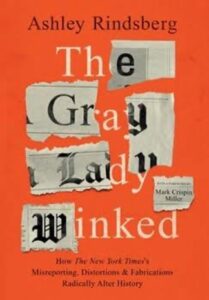
The Gray Lady Winked by Ashley Rindsberg was a Mules book of the month. Like so many of the Mules’ selections, this is one I would not have otherwise read, but was glad I did.
Summary: All news channels make mistakes, including The New York Times. But in The Gray Lady Winked, Rindsberg argues that it is not merely occasionally wrong. It is constantly wrong, and has been on the “wrong side” of major political events for almost 100 years. Furthermore, he argues, the paper has gotten it wrong because it is systematically influenced by assumptions, ideology, and access to power.
What I Liked About It: It confirmed my disappointment in the paper since I became a responsible adult and discovered the value of critical thinking.
What Surprised and Disappointed Me: I had convinced myself that my original admiration for and trust in the NYT was well-founded, and that the Leftist, pro-Communist, and antisemitic perspective it has had for the last 10 or 15 years was a recent phenomenon. But Rindsberg makes a very compelling argument that it has had that perspective since it was founded.
Here are 10 prominent examples:
1. Soviet Union Famine (1930s – Ukraine / Holodomor)
NYT correspondent Walter Duranty downplayed or denied mass starvation – famously writing that “there is no actual starvation” – even though millions were dying, helping obscure one of the 20th century’s worst atrocities.
2. Hitler and Nazi Germany (1930s)
Early NYT coverage minimized Nazi persecution of Jews, often burying reports of anti-Jewish violence or softening their tone, understating the urgency and scale of the threat.
3. Holocaust Coverage Placement (1940s)
The NYT frequently placed Holocaust reports away from the front page and folded them into general war coverage, failing to convey the scale and singular nature of the genocide as it unfolded.
4. Stalin Show Trials (1936–1938)
NYT reporting treated forced confessions as credible and showed little skepticism toward Soviet claims, lending legitimacy to what were later exposed as propaganda-driven trials.
5. Castro’s Cuba (1950s)
The NYT portrayed Fidel Castro as a reformer rather than a future authoritarian, contributing to a misleadingly favorable image before he consolidated power.
6. Vietnam War – Tet Offensive (1968)
NYT coverage emphasized US vulnerability and psychological defeat, shaping the perception that the war was being lost despite heavy losses by North Vietnam.
7. Soviet Downing of Korean Air Lines Flight 007 (1983)
The NYT initially gave greater weight to Soviet explanations and treated US claims with skepticism, though later evidence showed the shootdown was deliberate.
8. Iraq War – Weapons of Mass Destruction (2002–2003)
NYT reporting – especially by Judith Miller – supported claims about Iraqi WMDs, helping build the public case for war on intelligence later discredited and internally criticized.
9. 9/11 and Pre-Attack Signals
The paper underemphasized warning signs and the rise of extremist networks prior to 9/11, reflecting institutional blind spots that affected coverage priorities.
10. Trump–Russia Collusion Narrative (2016–2019)
The NYT devoted extensive coverage to alleged coordination between Donald Trump and Russia, often conveying strong confidence, even though the Mueller investigation did not establish a criminal conspiracy.
