When Is a Hate Crime Not a Hate Crime? 

A reader writes:

I know you are in Nicaragua so you may not have seen the story of a man shooting and killing 8 people at 3 Asian massage parlors in Atlanta.

It’s been a highlight of the news for days.

The media is trying to determine if it’s a hate crime against Asians. But if the women working at these parlors were Russian or Polish, he would have killed them anyway!

It’s unbelievable.

Yes, I saw it…

We now have a formula to use to determine if a mass shooting is a hate crime… If two-thirds of the victims are of one race, that’s what it is – and that’s what the media pounce on.

In this case, it’s pretty clear that race hatred wasn’t the reason for the attack. The shooter was apparently a regular customer of those massage parlors. He said he blamed them for his sex addiction.

So far, he’s denied he was motivated by race.

But the mainstream press has decided thus us an example of anti-Asian hate, even though the killing was demonstrably indiscriminate. I mentioned this fact to an acquaintance of mine that was bemoaning this news as more evidence of America’s systemic racism. She said, “Well, if he didn’t hate Asians, why did he target Asian massage parlors?” I explained that in the US, “Asian” massage parlors are where the action happens. “They didn’t say that in the NYT,” she said. “Exactly,” I said.

There’s no doubt that Asians are victims of discrimination in America… hugely so. It is even practiced by the likes of Harvard and Mayor DeBlasio – both upset that when college admission policies are neutral, the entering students are disproportionately Asian. No surprise there, of course. Asians are the most successful race in the US, Europe, and just about everywhere else they migrate to. With good reason. (I wrote about it here and here.)

The Sunsets!

I came here intending to stay two or three weeks. It looks like I’ll be staying five.

One reason, which I’ve been thinking about, is an effect of the COVID lockdown. I now know, beyond a shadow of a doubt, that I can do my work from anywhere.

Another reason is the sunsets.

In Florida, K and I live across the street from the Atlantic Ocean. And so, we have the privilege of waking up with the sun. Here in Nicaragua, our house overlooks the Pacific Ocean. And so, we get to enjoy the sunsets.

When we get back to the States, I’m going to post a photo-history of our sunsets here. But there is a hint in this photo that shows one thing I prefer about the sunsets.

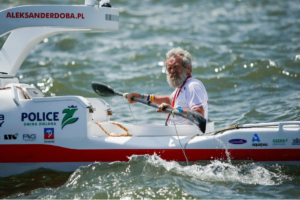
Kevin K, with whom I climbed Mt. Kilimanjaro in February 2010, sent me an obit from the NYT for Aleksander Doba, a man who kayaked across the Atlantic three times – twice in his 60s and then again when he was 70. According to the obit, he sustained himself on his third trip by eating his wife’s “fortifying” plum jam. This year, he challenged himself to climb Mt. Kilimanjaro. He arrived in Tanzania last month. On the morning of February 22, he reached the summit, with two guides. After taking in the view, he sat on a rock to rest. And then he died. “He said he didn’t want to die in his bed,” his son said. “From what we gather, he was euphoric to reach the summit. Then he sat down and fell asleep.”

“We’re all the heroes of our own stories.” – George R.R. Martin

I’ve mentioned before (January 25) that I’m doing this StoryWorth thing – writing anecdotes about my life to include in a family-tree book I’ve been working on for years.

I like the service, because you get a prompt once a week on a different topic. If the prompt doesn’t inspire you, you can write something else.

Here’s a recent piece I sent in. (It has a moral. I’m sure you can figure it out for yourself.)


A Lesson I Learned in High School 

One of the most important lessons I learned in high school was taught to me by Mr. Ringwald, my Spanish 101 teacher.

The first day of class, calling the roll, he came to my name and asked me to stand up.

“I’ve heard about you,” he said.

I made some wiseass crack. The class laughed. (My reward.)

“I guess what I heard was true.”

I shrugged. He went on with the roll call. I sat down.

He stopped speaking and scowled at me.

“Did I ask you to sit down?”

“Duh. No.”

“Well then stand up, please.”

I did. The class laughed. I smirked, pretending I was still in charge.

He noticed the smirk.

“And while you are at it, put your hands on your head. I want to be sure that I know where they are at all times.”

The class laughed. I reluctantly complied.

He finished the roll call. Then he asked the class to open their textbooks.

I sat down and opened my book.

“Did I ask you to sit down, Mr. Ford?”

“Duh. No.”

“Well then, resume your position.”

More laughter. Reluctant compliance.

I stood there like that, feeling like an idiot with my hands on my head, until the end of the class.

At the bell, as I was leaving, Mr. Ringwald stopped me to say, “By the way, Mr. Ford… you can rest assured that I will let you know, sometime in the future, when you can sit down again like a civilized young student.”

He meant it.

For the next three or four weeks, I spent every class standing in that humiliating position.

And then one day, sensing my breaking was completed, he allowed me to sit. I never made another crack in his class. And I even learned a little Spanish.

The Question of Tax Increases

When people say they are in favor of increasing taxes, what they generally mean is that they favor increasing taxes on “others” that make more or have more than they do. Recently, I challenged a friend who told me he was in favor of doubling the maximum income-tax bracket to 80% to help solve problems with economic inequality, global climate change, etc.

I asked him if he’d be willing to pay twice the income tax he’s paying now.

“That wouldn’t be fair,” he said. “I work hard for my money. The increased tax should be on the 1%. They can easily afford it, and they should be paying their fair share.”

What about extending it to the 2%?

He didn’t like that. You see, he makes about $400,000 a year, which puts him in the 2%. Why should he – a mere 2 percenter – have to dig deeper in his pockets when there are thousands of 1 percenters to go after?

When I was young and poor and dumb, I was all about making the greedy rich pay for all the social programs I was positive our country needed. Back then, most college students (like me) got their economic views from their sociology teachers.

Here you can see college students struggling with this same issue…

The “For the People Act”

After Daniel Ortega was elected as President of Nicaragua, legally in 2006, the Sandinista party went to work modifying election laws to secure its preeminent position in government and improve its chances for reelection. In 2016, he was reelected, along with his wife as Vice President.

After anti-government protests led to violence and crackdowns in early 2018, other legal controls were put into place to ensure the continued electoral hegemony of the party.

This is a very good thing in the view of Nicaraguans that trust and support the Sandinistas. If you ask them why, they’ll tell you that the Sandinistas are “the party of the people.”

On March 3, Democrats in the US House of Representatives passed the first Congressional Resolution of the Biden Administration. The Bill, H.R. 1, is called the “For the People Act of 2021.”

If passed by the Senate, the “For the People Act” would radically change the way federal elections take place, in a way that most Republican leaders and conservative commentators believe will solidify the current Democratic control of not just the House and the Senate, but also the Executive Office.

Judge for yourself…

“The difference between a democracy and a dictatorship is that in a democracy you vote first and take orders later; in a dictatorship you don’t have to waste your time voting.” – Charles Bukowski

Power to the People? 

Some of the key provisions of H.R. 1:

* Gives the federal government authority to administer elections. 

Although the US Constitution gives states the authority to run their elections as they see fit, H.R. 1 states, “Congress finds that it has broad authority to regulate the time, place, and manner of congressional elections under the Elections Clause of the Constitution, Article I, section 4.”

* Mandates automatic voter registration (AVR) in all 50 states. (19 states currently have AVR.) 

Any person that has given information to designated government agencies, such as the Department of Motor Vehicles, a public university, or a social service agency, would be automatically registered.

* Mandates no-fault absentee ballots. 

This provision would do away with witness signature or notarization requirements for absentee ballots. Additionally, it would force states to accept absentee ballots received up to 10 days after election day.

* Prevents election officials from removing ineligible voters from registries or confirming the eligibility and qualifications of voters. 

The bill would make it illegal to verify the address of registered voters, cross-check voter registration lists to find individuals registered in multiple states, or remove registrants, no matter how much time has elapsed.

* Restores the Voting Rights Act. 

This provision would require states to obtain approval from the federal government before implementing any voting rules changes. It would also criminalize “hindering, interfering, or preventing” anyone from registering or voting.

* Bans state voter ID laws. 

This would force states to allow individuals to vote without an ID. They could merely sign a statement in which they claim they are who they say they are.

* Requires registration for those under 18 and allows same-day voter registration. 

Included is a clause that requires same-day voter registration to be implemented in time for the upcoming elections in 2022.

* Prohibits the publication of “misleading information” about elections. 

The bill makes it a federal crime to “communicate or cause to be communicated information” that is knowingly false and designed to discourage voting, carrying with it a sentence of up to five years.

* Mandates early voting and legalizes nationwide vote-by-mail. 

This provision requires states to provide for absentee vote-by-mail in elections for federal offices. They “may not require an individual to provide any form of identification as a condition of obtaining an absentee ballot.”

* Requires states to accept ballots 10 days after election day. 

The bill requires states to accept any mailed ballots postmarked before or on election day if they arrive within 10 days of the election. It allows states to expand that deadline.

* Requires “Campus Vote Coordinators” at higher institutes of learning. 

The bill would require colleges and universities to hire an official whose responsibility would be to inform students about elections and encourage voter registration. It would incentivize voter registration by giving grants to institutions that have a high registration rate.

* Mandates that states must make absentee voter boxes and curbside voting available for any election for federal office. 

The secured and clearly labeled drop boxes would be “available to all voters on a non-discriminatory basis” and “during all hours of the day.”

* Makes changes to oversight of campaign contributions. 

The bill mandates new restrictions for corporate participation in elections. It further suggests that “the Constitution should be amended so that Congress and the States may regulate and set limits on the raising and spending of money.”

* Makes changes to the composition of the FEC. 

The bill would decrease the number of the Federal Elections Commission (FEC) members from six to five. Four members can be associated with a particular political party, making the fifth member “independent.”

* Changes “conflicts of interest” rules for the president and vice president. 

H.R. 1 would require the president and vice president to divest all financial interests that could pose a conflict of interest for them, their families, or anyone with whom they are negotiating or who is seeking employment in their administration. It would also require presidential candidates to provide their tax returns.


New Words

I read something yesterday about how new words make their way from the fringes to mainstream usage, and then finally into dictionaries. For example, in 2020, the Merriam-Webster dictionary added hundreds of neologisms to its store of defined words, including crowdfunding, cancel culture, and wet market.

I wondered: What words came into the common vernacular in 1950, the year I was born? I did a quick search, and found many. Most of them made sense to me, considering how I imagined the US to be then. But some surprised me. I would have guessed that they were first recorded either before or after 1950.

For example:

  1. action figure – I would have guessed “after.”
  2. antimatter – I would have guessed “before.”
  3. ballistic missile – I would have guessed “after.”
  4. BLT – I would have guessed “before.”
  5. brainwashing – I would have guessed “before.”
  6. cardiac arrest – I would have guessed “before.”
  7. carpal tunnel syndrome – I would have guessed “after.”
  8. deep fat fryer – I had no idea.

“It’s easier to build strong children than to repair broken men.” – Frederick Douglass

 Proud Dad Moments 

 In a recent issue of his “Postcards From the Fringe” blog, Tom Dyson told this little “Proud Dad Moments” story…

Our eldest child, Dusty (13), takes after me in a lot of ways.

He’s started reading investment newsletters. He’s investing his pocket money in gold, silver, and shipping stocks. He’s hooked on the High Ground series of books by Doug Casey and John Hunt.

We’ve started having wonderful conversations about economics and markets. Last night, he asked me who Gordon Gekko is. (Gekko is the titan in the 1987 movie Wall Street.)

But there’s one thing Dusty does that makes me prouder than any of the things above…

He pays attention to other people.

For example, we go skiing at the Grand Targhee Resort every day. We see the same men and women operating the chair lifts each time.

Dusty has become so friendly with them that we overheard one of them talking to his colleague about Dusty, unaware we were nearby.

“He’s the nicest kid,” he said. “He always thanks us and makes conversation with us.”

We asked Dusty what he talked to them about. He just shrugged and said, “I don’t know. I ask them for snowboarding tips… and what kind of music they like… and how much money they get paid.”

I wrote to Tom, saying that I’ve had somewhat the same good experiences with my boys.

When my boys were very young, I said to Tom, I wanted them to be great at everything they did – school, sports, whatever. As they entered their teens, my “wants” for them narrowed. I wanted them to be eager readers, able thinkers, and competent writers. I wanted them also to be likeable and mannerly. And I wanted them to be respectful of their parents and those to whom we trusted their education.

When they became young adults, in their 20s, all those wants in me subsided – probably because they had acquired those skills.

But then another want arose in me. I found myself wanting them to mature into independent adults. I wanted them to be financially independent – earning their own money and paying their own bills. And I wanted them to become emotionally independent – able to stay mentally strong, regardless of the troubles they would experience in the future.

By the time they were in their 30s I had added two more wants to my list.

I, of course, wanted them to be thoughtful – and by thoughtful, I mean having the ability to think independently, as opposed to being satisfied with the conventional ideas/opinions that are manufactured for consumption by the mainstream media.

But the other want wasn’t so obvious. I hadn’t considered it a want because I had never consciously identified it as a goal for them. But after seeing the way they behaved as adults, seeing the care and consideration they gave to others, and especially others that had nothing beneficial to give to them, I realized that what I had always wanted, however unwittingly, was to see them grow up to be kind.

I’ll never read all the books I want to read. I won’t even come close.

I group these books in four levels of priority. First is a list I keep of titles recommended by   good friends and respected colleagues. Next are literary prize winners (especially the National Book Award and the Booker Prize) and titles strongly recommended by my favorite critics. Third is a list of “best” lists: the best novels, scientific and business books, essays, short stories, and poems. And finally, there are the thousands of books I have impulsively purchased over the years for all sorts of reasons.

The books in this last group do not have the advantage of being included on any of my lists, but they do compete for my attention. In virtually every room of every one of the dozens of rooms that I walk through almost daily, hundreds of titles call out to me as I pass them, like sirens to Odysseus.

Looking for a book to read on my trip to Nicaragua, I decided to choose one from this group. Standing inside the book-lined walls of K’s office in the Delray Beach house, I closed my eyes and pulled out two thinnish volumes.

The first was Blue River, a novel by Ethan Canin, an author I remember having read before (short stories, I think) and admired. I’d wanted to read something else by him.

The second volume, a bit thinner than Blue River, was titled Peacocks and Commas: The Best of the Spectator Competitions.

 I loved the title – though I had no idea what it meant. As to the subtitle, I was familiar with The Spectator, a weekly British magazine on politics, culture, and current affairs. (There were always copies in the lobby of Pickering & Chatto, a boutique publishing company we acquired years ago.) I remembered it as smartly conservative, but with a sense of humor.

I opened the book and looked inside. It appeared to be a collection of small literary bits. That was promising. But I was puzzled by the author: Joanna Lumley. I recognized her photo on the back of the book jacket. She was an actress. I’d seen her in maybe half a dozen movies. So what was she doing as the author of a book like this?

The inside flap of the jacket said: “Joanna Lumley was born in Kashmir in 1946 and educated in Malaysia and Suffix. After three years of pretending to be a model, she turned to films, television, and, a little later, theater. At the moment she is being a writer as well as an actress. She has one son and a washing machine.”

I liked it!

I did a quick calculation and figured I could read both Blue River and Peacocks and Commas in about six hours.

Perfect! It takes about seven hours, door to door, from our home in Delray Beach to our house in Rancho Santana. I’d spend my travel time enjoying these two books.