I’m doing a final revision of my fourth book of poetry…

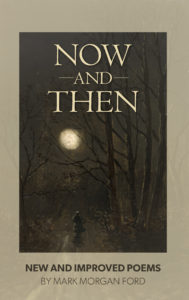
I’m doing a final revision of my fourth book of poetry. It’s called Now and Then: New and Improved Poems.

I am happy with the title. Is it snarky? I’m not sure. Right now, I like it.

This is probably the 30th revision. For me, poetry is 90% revision. That’s literally true. I checked this last draft against the first. Only 10% of the original words remain.

Some of these poems, as the title suggests, have been published previously. Normally, one doesn’t change a previously published poem. But I did. Over and over again. What’s happened is that some of the poems I no longer recognize as mine. I don’t remember the plots. I don’t recognize the characters.

But that just makes it easier to critique them. They have come from elsewhere. They are newly formed into something apart from me. And that makes the consumption of them more satisfying.

Like the following poem… I am sure my interlocutor was once a real person. I don’t recognize her anymore, but I like the person she became.


The Tiki hut went up today at Paradise Palms. It’s going to serve as a rest area and wet bar for visitors to our gardens when we open later this year.

Structures like these have been built by the Seminole Indians in Florida since the 16th century – simple shelters that could easily be put up and taken down as the tribes were forced (first by the Spanish colonists and later by the US government) to move from place to place. They called them “Chickees,” their word for “house.” At some point, people began to refer to them as Tiki huts, because they look so much like the thatch-roofed open-sided structures found all over the South Pacific. (“Tiki,” in Polynesian mythology, was the first man created by the gods. Every traditional Tiki hut houses the spirit of one of the gods, usually in the form of a wood or stone sculpture or carving.)

I was eager to meet the crew boss after we settled on the installation date. I had never met a Seminole Indian before. As it turned out, he was not a native Indian. Nor was he a he. The crew boss was a 30-something white woman. And the crew was from Central America.

Notwithstanding the cultural misappropriation, the structure was built quickly and solidly. And after we get a deck on the ground and a bar and some tables and chairs on top of it, we’ll be open for business, if only for ourselves.

Happy New Year!

Here are ten of my favorite New Year quotations that might inspire you:

  1. I like the dreams of the future better than the history of the past.” Thomas Jefferson
  2. “Tomorrow, is the first blank page of a 365 page book. Write a good one.” ― Brad Paisley
  3. “Be at war with your vices, at peace with your neighbors, and let every new year find you a better man.” ― Benjamin Franklin
  4. “The object of a New Year is not that we should have a new year. It is that we should have a new soul and a new nose; new feet, a new backbone, new ears, and new eyes. Unless a particular man made New Year resolutions, he would make no resolutions. Unless a man starts afresh about things, he will certainly do nothing effective.” ― G.K. Chesterton, A Chesterton calendar
  5. “For last year’s words belong to last year’s language, and next year’s words await another voice. And to make an end is to make a beginning.” (Little Gidding)” ― T.S. Eliot
  6. “In the New Year, never forget to thank to your past years because they enabled you to reach today. Without the stairs of the past, you cannot arrive at the future!” — Mehmet Murat ildan
  7. “You are never too old to set another goal or to dream a new dream.” CS Lewi
  8. “And now let us believe in a long year that is given to us, new, untouched, full of things that have never been, full of work that has never been done, full of tasks, claims, and demands; and let us see that we learn to take it without letting fall too much of what it has to bestow upon those who demand of it necessary, serious, and great things.” ― Rainer Maria Rilke, Letters of Rainer Maria Rilke, 1892-1910
  9. “Life’s not about expecting, hoping and wishing, it’s about doing, being and becoming.” — Mike Dooley
  10. “Don’t wait for the perfect time to put your goals into action. There is never a better time than right now.” — Michael Masterson

I meant to recommend a new holiday-themed movie for you this week – but when I looked at what has come out this year, I couldn’t find anything promising.

And so, I made a list of my 10 all-time favorites… and realized that all but two of them were produced in the 1930s and 1940s. The most recent one, White Christmas, made its debut 56 years ago! (I’m going to get the grandkids to watch a few of them.)

If you’re interested in a nostalgic bit of Yuletide storytelling, I’ve put them in order of my preference, backed up with a bit of research that Amaru did on what the critics had to say about them.
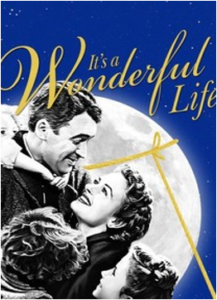
 

It’s a Wonderful Life (1936)

Directed by Frank Capra

Starring James Stewart and Donna Reed

From Empire: “Although peppered with colourful, sharply drawn characters, this is Stewart’s movie, instantly loveable as a small town dreamer who sacrifices everything for others. His journey to despair and back warms the cockles like little else.”

From The Guardian: “The film is gripping enough simply with the telling of George’s life story. A genuine American classic.”
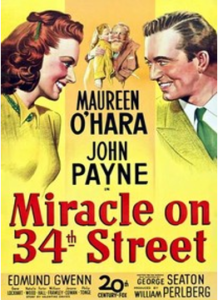


Miracle on 34th Street (1947)

Directed by George Seaton

Starring Maureen O’Hara, John Payne, Edmund Gwenn, and Natalie Wood

From BBC: “A clever and deeply original story that remains true and confident in direction while delivering considerable charm all the while.”

From The New York Times: “[Let us] heartily proclaim that it is the freshest little picture in a long time, and maybe even the best comedy of this year.”
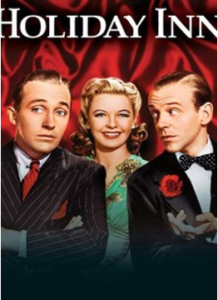


Holiday Inn (1942)

Directed by Mark Sandrich

Starring Bing Crosby, Fred Astaire, and Marjorie Reynolds

From Emanuel Levy: “One of Bing Crosby and Fred Astaire’s most enjoyable and most commercially popular musicals, featuring Irving Berlin’s iconic, Oscar-winning ballad, White Christmas.”

From Time Magazine: “Crosby’s easy, casual banter is just the right foil for Astaire’s precision acrobatics, his wry, offbeat humor.”
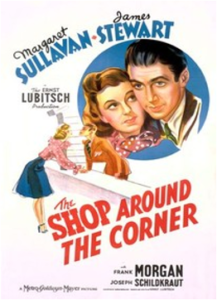


The Shop Around the Corner (1940)

Directed by Ernst Lubitsch

Starring Margaret Sullavan and James Stewart

From Emanuel Levy: “My favorite Christmas film, this deliciously delicate, multi-nuanced romantic comedy is one of Lubitsch’s very best films, flawlessly acted by Jimmy Stewart at his peak, the sublime Margaret Sullavan, and the rest of the large ensemble.”

From The Guardian: “Lubitsch demonstrates that romantic comedies, like popcorn, can be enjoyed salty as well as sweet.”
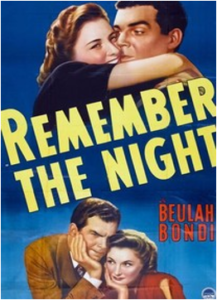


Remember the Night (1940)

Directed by Mitchell Leisen

Starring Barbara Stanwyck and Fred MacMurray

From TV Guide: “You’d have to be a grump not to like this funny, sentimental blend of pathos, drama, and zaniness.”

From The New York Times: “Perhaps this is a bit too early in the season to be talking of the best pictures of 1940; it is not too early to say that Paramount’s nomination is worth considering.”
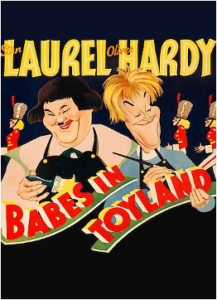


Babes in Toyland (1934)

Directed by Gus Meins and Charley Rogers

Starring Stan Laurel, Oliver Hardy, and Charlotte Henry

From The New York Times: “The film is an authentic children’s entertainment and quite the merriest of its kind that Hollywood has turned loose on the nation’s screens in a long time.”

From The Chicago Tribune: “It’s been many a long day since I’ve had so much pure (and I MEAN pure!) fun as I had watching this picture.”
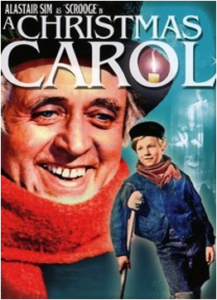


A Christmas Carol (1951)

Directed by Brian Desmond Hurst

Starring Alastair Sim, Mervyn Johns, and Michael Hordern

From The New York Times: “What we have in this rendition of Dickens’ sometimes misunderstood Carol is an accurate comprehension of the agony of a shabby soul.”

From Entertainment Weekly: “Other Christmas Carols need not apply.”
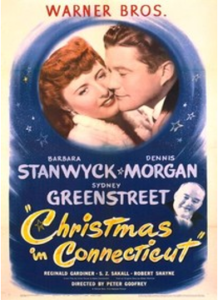


Christmas in Connecticut (1945)

Directed by Peter Godfrey

Starring Barbara Stanwyck, Dennis Morgan, and Sydney Greenstreet

From Combustible Celluloid: “Barbara Stanwyck uses every acting muscle in her body to redeem this silly holiday romance.”

From Chicago Reader: “Frolicsome in an artificially hearty sort of way.”
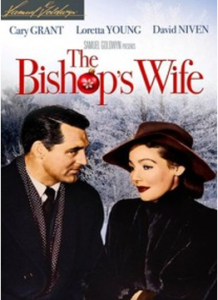


The Bishop’s Wife (1948)

Directed by Henry Koster

Starring Cary Grant, Loretta Young, and David Niven

From The New York Times: “Whatever you make of the minor miracles performed along the way, there’s no trouble believing that Cary would fall for Loretta or that anybody would fall for Cary.”

From TV Guide: “A warm, sentimental comedy-fantasy.”
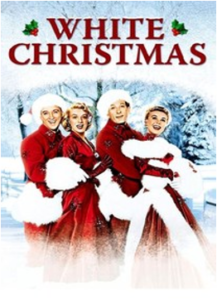


White Christmas (1954)

Directed by Michael Curtiz

Starring Bing Crosby and Danny Kaye

From TV Guide: “Though it’s not as satisfying as it might have been, it still boasts great stars and catchy songs in addition to a love story, and is a perennial holiday favorite.”

From Times (UK): “White Christmas is the cinema equivalent of an inappropriate festive snog under the mistletoe – you know you probably shouldn’t enjoy it but you just can’t help yourself.”

Oh… and here are two we discovered that I’d never seen. (I’ll be watching them by myself.)
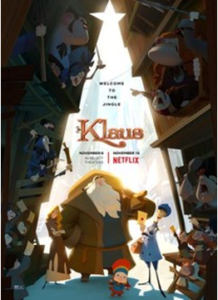


Klaus (2019)

Directed by Sergio Pablos

Starring Jason Schwartzman (voice) and J.K. Simmons (voice)

From New York Magazine/Vulture: “It’s awkward and weird, and yet all that awkwardness and weirdness give it personality and charm and a freewheeling, nonsensical quality that feels refreshing.”

From The Guardian: “An old-school, PG-rated animation, encompassing some digital wizardry, but generally clinging to a nostalgic, hand-drawn look, with a late-blooming Christmas theme.”



Joyeux Noel (2006)

Directed by Christian Carion

Starring Diane Kruger as Anna Sörensen and Daniel Brühl

From Globe and Mail: “Unfolding slowly, then building in momentum like the hymns themselves, this entire sequence is tremendously affecting.”

From Time Out: “It’s a respectful, sobering tribute to the flickering of humanitarian spirit amid the darkest days of conflict and, as such, surely a Christmas film for the ages.”

Christmas Eve

It’s been our tradition to have an extended family holiday dinner on Christmas Eve at a local fish restaurant. This year, because of COVID, we’re having it at home. To make it special, though, K hired a “celebrity” chef to cook the meal. The boys researched her appearances on several TV shows, and reported that she played the villain role in most of them. Apparently, she has lots of tats and a buzz cut. K says she’s actually very nice, but we’ve decided to be on our best behavior, just in case.

“When I let go of what I am, I become what I might be.” – Lao Tzu


Another Year of Letting Go

2020 was – for me – a year of letting go. Some things happily. Some not. Some voluntarily. Some not.

Today, I’d like to talk about one group of them: businesses and business relationships.


Partner Buyouts 

I reluctantly said goodbye to two very profitable businesses. One in Switzerland and one in Brazil. Both were direct response publishing companies – essentially knockoffs of businesses that my partners and I have developed in the States.

Our earlier efforts at globalizing our business involved replicating our US models in other countries entirely on our own. The publishers, writers, and marketers that worked for these companies were our employees. That approach had mixed results.

In Switzerland and in Brazil, we found successful local businesspeople that had ongoing businesses in the direct marketing space. We formed partnerships with them to convert their smallish B2B businesses into larger consumer publishing businesses like our own.

In the beginning, we provided the capital, the cash flow, the business model, the products, the training, the advertising campaigns, and the operational and logistical support. They provided the local leadership and hired the local employees.

Despite the unequal contributions, we gave our partners 50% of the biz. We felt that if sales grew, their share of the contributions would increase. And that’s what happened. Revenues (and profits) grew fantastically. We felt brilliant.

However, great success often creates unexpected problems. In the case of these two businesses, they were the same: After five or six years of learning our business, our partners decided they didn’t need us anymore. They told us they wanted to buy us out!

This did not please us. Our idea, in starting these businesses, was never to cash out big-time one day. Our objective had always been to build a large, global, stable company that would last for at least 100 years.

We tried to dissuade them, but they were insistent. We could have, in theory, refused their offer. But that would have led us both into an unhappy business marriage. So, we negotiated a fair price and arranged for the divorce.

Lesson learned: In the future, I suspect we won’t be making any more 50/50 deals in situations like this (where we are providing most of the value at the beginning). We can still be generous to our partners – and we will. But we will want to prevent something like this from happening again.


Going Public 

Two companies I’ve had an interest in since their inception made a deal to go public this year.

Again, this wasn’t a move I wanted. I’ve had a bit of experience with converting from private to public, and I didn’t like the public experience. Lots of extra paper work. Lots of formalities that are more necessary than fun.

But the real problem with having a public company is that its purpose changes. It’s no longer about building a bigger and better company for the long-term. When you have public shareholders, the pressure becomes all about increasing the share price. And that leads to decisions you might not make if the biz were private.

Plus, as I said to them back then, “What will you get from it (going public) besides a bunch of cash? You don’t need more money. You make enough as it is.”

Our partners in this case are younger than we are. They grew up in a different time. They have a different perspective about the long-term benefits of having a successful business. Going public at a multiple of 10 to 15 times earnings seemed like a “no brainer” to them.

If and when this is finalized, the payout will be very substantial. All the current shareholders will enjoy a big payday. But there’s also something sad about saying goodbye to a business that you’ve taken pride in for so many years.

The takeaway: Understand your partners’ long-term objectives. If they are about cashing out, don’t get emotionally attached to the business from the get-go.


The Yearly Clean-Up 

My partners and I also said goodbye to three or four smallish companies this year by closing them. After several years of struggling and several million dollars in capital calls, we decided to pull the plug.

I don’t doubt our decisions. For different reasons, each of these companies had proven to us that they didn’t have a formula for growing long-term profits. Over the past 30 years, we’ve learned that, in most cases, when a new business can’t achieve profitability by the end of year two, chances are it never will. The wise solution? Take your ego lumps, close it down, and walk away.

This was not an unusual year in this regard. Every year, my partners and I have closed a few of our businesses. Expecting that, we try to start more businesses than we will likely close. And that strategy has worked. It’s one of the reasons we’ve been able to continue to grow.

Still, there is always a little sadness in closing a start-up you once had so much faith in. It’s like euthanizing a beloved pet that has a terminal disease.


Putting on the Mute Button 

And finally, I said a sort of goodbye to a business relationship that I once very much enjoyed. I did not sell my shares. I am still the largest shareholder. But I decided to stop being actively involved because I was driving everyone crazy – trying to push growth at a rate my partners were clearly uncomfortable with.

I normally don’t mind irritating my partners and key executives in this way, because I always consider my role to be the speck of sand that irritates the oyster. But it was getting bad for everyone, so I pulled away. I’m sad about that, too, but I’m mostly worried. I was first worried that the business would collapse without me. That didn’t happen. So now I’m worried that it will thrive!


The Starting Up 

Except for the letting go of life itself, each year brings with it an infinity of potential starts. I don’t think a week has passed in the last 40 years when I didn’t spend at least a few moments contemplating a new business or project. And I enjoy that.

When I was in the middle of my career, most of those ideas were business concepts, of which I set a fair number in motion. These days, apart from my main business, I rarely start a new business on my own. The ones I have are almost too much to handle. Plus, I’ve promised the family: no more new ventures!

Even so, I am regularly exposed to new business opportunities that are sometimes hard to resist. I’ve pawned off most of these opportunities on my three boys. Each one has his area of expertise. And each one is doing a better job than I could at this stage. It’s actually a lot of fun to see them work. And a great relief to be able to say to someone that wants to pitch me on a business or investment: “Speak to my son.”


Conclusion 

Growing entrepreneurial businesses is always a process of birthing, protecting, nurturing, and then, sometimes, letting go.

Nature tells us that we cannot hold on to anything forever – and that, sometimes, however hard we want to hold on, we must let go. As Jack Kornfield says, “To let go does not mean to get rid of. To let go means to let be. When we let be with compassion, things come and go on their own.”

Love!

K and I were awakened this morning by a ferocious assault by a small herd of galloping, thumping, tumbling, and shrieking creatures that, after my head cleared, I recognized as our grandchildren.

Oh yes, and then Oro, the Golden Retriever child-replacement of our youngest son and wife, jumped on the bed, too.

My preferred attitude in the early morning is apprehension. My usual mood is grumpy. It usually takes 15 minutes and a large cup of java to bring me to a civilized mood. But this break-of-dawn pummeling of love is too much fun to resist.

Let’s talk about…

The Things That Make Life Meaningful 

“Gratitude is not only the greatest of virtues, but the parent of all the others.”  – Cicero


Typically, we take our biggest blessings – our health, our freedom, our friendships, and the miracle of our very existence – for granted. Ironically, gratefulness for those blessings arrives only in their absence.

Many self-improvement gurus recommend taking some time out every day to acknowledge these benefits. I have done that. I drew up a list of about a dozen really important things that I should be grateful for, starting with my existence and then followed by my mental health, my physical health, my marriage, my children, my extended family, my career, etc.

For years, I read this list out loud first thing every morning, trying to will myself into a state of gratitude. It rarely happened.

The problem, I think, is that these very important things are so abstract. My rational brain recognizes their importance, but my limbic brain is busy wanting to get on with my life.

Recently, I’ve found a better way. I extended the list beyond the important things to the less-important things, including some that are downright trivial. And then, rather than starting at the top – with the most important things – I start at the bottom.


For example:


The Preciousness of Little Things 


  1. Waking up next to someone I feel lucky to be living with, even if she’s upset with me and giving me the silent treatment.
  2. Stepping out on the bedroom porch and looking at the ocean.
  3. My morning shower: that luxurious blanket of hot water that gently eradicates the aches and pains of yesterday’s exercise and loosens up my neck and shoulders.
  4. A favorite article of clothing I “gift” myself with each day: a well-worn pair of jeans; a comfortable pair of shoes; a watch or bracelet.
  5. That first cup of black coffee and a slice of bread and peanut butter.
  6. The 15 minutes I spend each morning looking over my schedule and daily agenda and imagining how much I’m going to enjoy getting my work done.
  7. Having the option to spend the next hour or two focusing on work that really matters to me.
  8. Paying happy attention to any of the 100+ works of art that line every wall and alcove.
  9. Listening to a good book on my way to work.
  10. The hour I spend playing Brazilian Jiu Jitsu from 11 to 12 each day.
  11. After lunch, my first cigar. Usually a Padron Aniversario.

Etc. etc.


Those are the quotidian pleasures. There are also many occasional ones, such as…

* Solving The New York Times crossword on Sundays.

* Friday afternoon “xtreme” bocce ball games with friends at Veteran’s Park next to the Intracoastal.

* Friday nights with friends at my Cigar Club, a warehouse I converted into a “man cave” several years ago. The happiest nights are when, after boring ourselves silly for an hour or two, our spouses drop in to liven things up.

* Giving tours of Paradise Palms, the botanical garden I’ve been building in West Delray Beach these past several years.

* Hanging out with the extended family every Sunday.

Etc. etc.

I’ve found that it’s easier for me to be thankful for the small things in the morning and then move on to the bigger things as the day ages.


The Homework Assignment That Will Change Your Life 

Today, make a list of at least a dozen smallish things you enjoy. Ignore the “important” things that you feel you should be thankful for. Focus on the smaller things that you actually enjoy.

Then, starting tomorrow, spend your “gratitude” time thinking about how much you enjoy these small gifts. Keep at it for a few weeks and you will find that you will become grateful, too, for the bigger things – eventually even the amazing and blessed fact of your existence!

I’m on cloud nine today…

I’m on cloud nine today.

As you know, I got the COVID bug about 5 months ago. Since then, I’ve tested negative for the virus twice and positive for antibodies twice.

On our way to the Miami airport to fly to Nicaragua for the Thanksgiving holiday, K and I took the antibody test again.

She tested positive, but I tested negative!

I was hugely disappointed because K had made it clear that if I did not have antibodies I could not train in Brazilian Jiu Jitsu. (If you have to pick an activity most likely to pass along a virus, it would be Brazilian Jiu Jitsu, a form of wrestling generally done in a closed environment, with lots of sweating and close contact.)

I normally wrestle six days a week. And it is the single thing I most look forward to in the morning, because it feels – to me – like playing. So the thought of giving it up for the second time since getting the virus was downright depressing.

Plus, it meant that the immune effect of having the virus would have lasted, with me at least, for less than 5 months.

But in doing my research, I’d read (several times) that COVID-19 antibody tests have a fairly high percentage of false negative results. So I took another test last week, and this morning I got the results. I am positive!

I asked Amaru to scare up the latest on the reliability of these antibody tests. This is what he found:

“According to the CDC, there’s still a lot of uncertainty regarding these tests. They point out that ‘every test returns some false positive and false negative results.’ And while getting a positive result indicates that you’ve been exposed to the virus in the past, it’s unknown whether it also means a lack of contagiousness or lasting immunity. In addition, they say, a single antibody test is ‘not likely to be sufficiently accurate to make an informed decision regarding whether or not an individual has a prior infection or truly has presence of antibodies.’ They suggest that an additional test would increase overall accuracy.”

Suggestion…

If you enjoy film, fiction, and casual philosophical conversations, I have a suggestion for you and some of your like-minded friends. (This is something I did recently with The Mules, my book club.)

First: Read Julio Cortázar’s short story, “Blow-Up.” (30 minutes)

Second: Watch Michelangelo Antonioni’s film, Blow-Up. (90 minutes)

Third: Watch Francis Ford Coppola’s film, The Conversation. (90 minutes)

Antonioni’s film is based on the  Cortázar short story. The Conversation is a clever adaptation of the Antonioni film.

Fourth: Discuss.

* What the heck is the short story about, anyway?

* How did Antonioni’s film adhere to and depart from Cortázar’s story?

* How is Coppola’s version like Cortázar’s story and how is it like Antonioni’s film?

* Blow-Up, the short story, is about direct observation; Blow-Up, the movie, is about photography; The Conversation is about audio recording. What is the common theme?

* Which did you like better, and why?