
Good news for art lovers… but only if you live in France. French museum directors have banded together and are revolting against the country’s COVID guidelines. Read the story here.
Self-Reliance
By Ralph Waldo Emerson
52 pages
First published in 1841
Something about the word bothered me. If a writer was described as a “transcendentalist,” I didn’t want to read him. (Talk about prejudice. I didn’t even know what the term meant.) So when Emerson’s famous essay, Self-Reliance, was assigned as supplementary reading in my Emily Dickinson class, I crossed it off my list.
I had a free morning at the Swamp House last Sunday, and so, when I noticed an old copy of Self-Reliance (perhaps the one I never read in college) tucked among much larger books, I sat down on the dock as the mist was lifting off the lake and read it.
I’m glad I did. In fact, I feel foolish for having avoided it all these years.
The essay has two major themes. The first is the one that most people talk about: Emerson’s contention that community is a distraction to self-growth. He advocates self-imposed isolation to allow more time for “reflecting on one’s self.”
What’s wrong with that is apparent to anyone that has spent a lifetime thinking. It’s also apparent to neurobiologists that understand the brain’s vital need for connection and community to stay healthy.
This idea seemed to me to be the brainchild of a young man, a writer that should have waited a few more decades before tackling the topic. In fact, Emerson was 58 when he wrote Self-Reliance.
The second major theme in the essay I very much like: Emerson’s belief in the importance of developing an independent mind. Thinking what you get from history books or editorial opinions is not serious thinking, he argues. In fact, the only possible way to think independently is to be a nonconformist. You should do what you think is right and (very important) is true based on your own experience, he says, no matter what others think or even what the community dictates you do.
If you think and act independently, Emerson warns, you will feel the scorn of “the cultivated classes.” That may be unpleasant, he says, but it is relatively easy to ignore. The outrage of the masses, though, is difficult to endure. “Only the unusually independent person can stand firmly against the rancor of the whole of society.”
Allowing yourself to be swayed by community opinion is a great mistake, he says. It will leave you with a head full of opinions that you haven’t seriously examined – thoughtless prejudices crowding out your ability to discover what is true.
“Envy is ignorance,” says Emerson. And “imitation is suicide.”
In the Orwellian world we have drifted into, Self-Reliance is more relevant than ever.
Critical Reviews
* “The reader may find no better writer than Emerson to help make the leap into self-reliant freedom. It is difficult to read Self-Reliance simply as an historical work, because you are easily pulled into Emerson’s orbit of pure responsibility and self-awareness, a world in which there are no excuses, only opportunities for greatness.” (Tom Butler-Bowdon)
* “Emerson’s aphorisms are forceful, his cadences dizzying, his appeal to individual will seductive.” (Jenny Odell in The Paris Review)
Interesting Facts
* Self-Reliance is the source of one of Emerson’s most famous quotations: “A foolish consistency is the hobgoblin of little minds.” It is a truncated version of this longer excerpt from the essay: “A foolish consistency is the hobgoblin of little minds, adored by little statesmen and philosophers and divines. With consistency a great soul has simply nothing to do. He may as well concern himself with his shadow on the wall.”
* The hobgoblin quote has shown up several times in the movies. It was a running joke in the 1998 film Next Stop Wonderland, and was used in 1989’s Dream a Little Dream in reference to a group of teenagers. It was also in an episode of the television show The Mentalist.
Nick Cave Prevails
On December 7, I commented about this: a fight between an art museum that allowed some “artist” (Nick Cave) to paint the words TRUTH BE TOLD on one of their walls, and the local community that objected to it.
The good news is that the artist and the museum won in court based on first amendment rights. The bad news is that some people consider this sort of crap worthy of being called art. The other good news is that Cave’s “piece” will be there for a limited time. The other bad news is that the museum could come up with something worse next time!
You can read the full story here.
The Price of Privilege
By Madeline Levine
224 pages
Published in 2006 by Harper Collins
The Price of Privilege is two books in one. It’s a critique of how some affluent parents in America today handicap their children’s chances of living good and healthy lives by consciously or unconsciously transmitting the wrong values. It’s also a primer for new parents that want to improve their children’s chances of living happy and fulfilled lives through love and discipline.
The first several chapters are devoted to arguing that the problem with spoiled little rich kids isn’t trivial. These are children that are likely to develop low self-esteem; suffer anxiety and depression; are less likely to become accomplished, autonomous adults; and are, in some cases, prone to drug addiction, self-abuse, and even suicide.
This may be true, but I found myself thinking, “Yes, but why should I care?”
The rest of the book is more pragmatic. Levine delves into the common mistakes that affluent parents make and how they can be avoided by substituting actions that will have more positive effects.
For example, she talks about what she calls “maladaptive perfectionism,” which she defines as an intense need to avoid failure and appear flawless. This, she says, comes from parents that want the outside world to see them, and their family, as flawless.
She does not suggest that parents refrain from setting standards. “High expectations are found to promote achievement and competency in children,” she says. “[But] it is when a parent’s love is experienced as conditional on achievement that children are at risk for serious emotional problems.”
Levine on Materialism: She sees an emphasis on materialism as a major issue in terms of the development of bad ideas, habits, and behaviors. She makes the point that although affluence provides some significant benefits, such as good private schools, tutors, extra-curricular coaching, and family trips abroad, the abundance of such benefits can have the adverse effect of limiting the educational and developmental experiences that the child would otherwise have on his own.
Levine on Permissive Parenting: Parents should not feel guilty about monitoring the behavior of their children. They should set clear but fair rules and then be consistent in applying them.
Levine on Educational Success: Parents should encourage curiosity, creativity, individual thinking, and intellectual courage, rather than simply grades.
Levine on Solving Problems: Parents should resist the urge to rush in and solve their children’s problems, whether they be at home, at school, or on the playground. Instead, they should talk about possible solutions, and from there teach their children the skills they need to put those solutions into action.
Levine on Behavior Management: Self-control, including anger management, frustration tolerance, and the ability to delay gratification, are learnable skills, not immutable traits. Parents should work on teaching their children these skills at a very young age.
The Price of Privilege is not a book that felt important to me, like The Coddling of the American Mind. But I would recommend it to new parents – or new grandparents, for that matter.
Critical Reviews
* “[Madeline Levine] offers solid, proactive strategies for becoming a more connected, relaxed parent.” (Chicago Tribune)
* “This book has resonated in affluent communities all over the country. [Levine is] clearly on to something.” (Atlanta Journal-Constitution)
* “Alas, [Levine] may be preaching to the choir. Those who need her most may be too busy shopping to pick up such a dire-looking volume. Still, school guidance counselors should be happy to have this clear, sensitive volume on their bookshelves.” (Publishers Weekly)
A Moveable Feast
By Ernest Hemingway
1st ed. published in 1964 by Charles Scribner’s Sons
2nd “Restored” ed. published in 2009 by Seán Hemingway
223 pages (1964); 256 pages (2009)
This was the second time I read A Moveable Feast. Well, I didn’t read it this time, I listened to it. And I’m glad I did.
As my brother Andrew once told me, one can argue that Ernest Hemingway was one of the two most important prose stylists in English of the 20th century. (I don’t remember who he said the other one was.) Listening to this memoir of his years as a struggling journalist/ writer in Paris during the 1920s made me a believer. You really cannot appreciate how powerful and poetic Hemingway’s language is until you hear it read aloud.
If you are at all interested in the luminaries of literature during this time period, this book is what it claims to be: a literary feast of the most colorful characters of the Lost Generation. Here you will be introduced to the wit and eccentricities of F. Scott and Zelda Fitzgerald, Ford Madox Ford, James Joyce, Wyndham Lewis, Ezra Pound, and Gertrude Stein, along with artists like Jules Pascin, and Sylvia Beach, the proprietor of the legendary Shakespeare & Company bookstore.
Hemingway died in 1961, before the book was published, leaving some question as to whether he had finished it. It was published posthumously in 1964 by Hemingway’s fourth wife and widow, Mary, based upon his original manuscripts and notes. But a second edition was published in 2009 by his grandson Seán Hemingway, who felt that Mary’s edition had been incorrectly altered to suit her version of his life at that time.
There is ongoing controversy in literary circles over which edition – if either – can be considered the book Hemingway intended.
Critical Reviews for the 1964 Edition
* “Here is Hemingway at his best. No one has ever written about Paris in the 1920s as well as Hemingway.” (Charles Poore in The New York Times)
* “The reader of… A Moveable Feast, who, of course already knows a lot about Hemingway, quickly suspects that whatever may have been the original facts behind Hemingway’s ruptures with Gertrude Stein, F. Scott Fitzgerald, Ford Madox Ford, and Hadley Richardson (the first Mrs. Hemingway), he will never get them here. The book is too splendidly, too artfully written; the chapters are sketches and anecdotes often as fine in their texture as Hemingway’s famous stories; the dialogue is too witty; and the real plot of the book – a young writer’s struggles… – has been used up in so many novels and plays that Hemingway was smart to try this as memoir.” (Alfred Kazin in The Atlantic)
Critical Reviews for the 2009 “Restored” Edition
* “Each chapter is short and vignette-like, comical, bitchy, and warm. They are best read a few at a time, so as to get into the flow of Hemingway’s surprising sentences, but not to be overwhelmed by the high concentration of egos gathered together on one page.” (Charlotte Newman in The Guardian)
* “A Moveable Feast serves the purpose of a double nostalgia: our own as we contemplate a Left Bank that has since become a banal tourist enclave in Paris… and Hemingway’s at the end of his distraught days, as he saw again the ‘City of Light’ with his remaining life still ahead of him rather than so far behind.” (Christopher Hitchens in the Atlantic)
Interesting Facts
* Hemingway’s working title for the book was The Paris Sketches. A Moveable Feast was suggested to Mary by his friend/ biographer A.E. Hotchner, who remembered him saying: “If you are lucky enough to have lived in Paris as a young man, then wherever you go for the rest of your life, it stays with you, for Paris is a moveable feast.”
* Following the November 2015 terrorist attacks in Paris that killed 130 people, the city’s worst loss of life since WWII, A Moveable Feast was a surprise bestseller in France. When translated back into English, the book’s title in French – Paris Est Une Fête – is “Paris Is a Celebration.” In the context of the attacks, it became a symbol of defiance.
The Spy Who Came In From the Cold
By John le Carré
256 pages
Published January 1, 1963 by Coward-McCann
This was the Mules’ January book selection. As I’m writing this, we haven’t yet met, so I can’t report on the members’ opinions, but I suspect they will be positive.
About a year after the Berlin Wall was erected, Leamas, a British agent, at the end of a long and difficult career where he has seen all of his operatives killed by the Communists, is sent to East Germany to bring down Hans Dietr Mundt, an important East German intelligence officer, by posing as a defector and “divulging” false information insinuating that Mundt is a traitor to the East Germans.
Of course, few things go as planned. Especially in this genre of fiction. There are surprises in store – for Leamus and for the reader – almost every other page, including a fateful love affair, the continual appearance of entertaining secondary characters, and lots of twists and turns in the action, topped off by one major surprise at the end.
As a spy novel, The Spy Who Came In From the Cold was fully satisfying. Two things, however, make it better than genre fiction.
At one level, it is a critique of the Cold War and the questionable tactics Western governments used in competing with the Russians.
At another level, it is a critique of ideological thinking per se – and how it lends itself to all sorts of useless and destructive actions that could not and did not make any sense in the light of reason.
In fact, some of the most enjoyable parts of the book, for me, were a series of conversations between Leamas and Fiedler, an East German spy, on their respective life views and career motivations.
The novel received critical acclaim at the time of its publication and became an international bestseller. It was selected as one of the 100 All-Time Best Novels by Time magazine.
From J.B. Priestly: “Superbly constructed, with an atmosphere of chilly hell.”
From The Guardian: “Le Carré handles the unspooling web of narrative and motive with exemplary poise.”
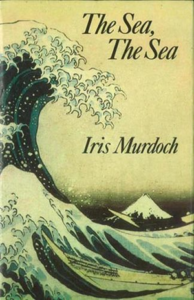
The Sea, The Sea
By Iris Murdoch
528 pages
Published in 1978 by Penguin Classics
After a successful but sometimes scandalous career as a playwright and director, Charles Arrowby retires from the hubbub of London to what he expects will be some years of tranquil solitude. His plan is to write a memoir about a love affair he had with his mentor, and to enjoy an occasional tryst with an actress he has been having sex with, off and on, for many years.
His plans are altered by the appearance of a middle-aged woman whom he has not seen since his adolescence. She was his first lover, and he remembers her as beautiful and slender. She’s now stout and very ordinary looking, but the spark is still there and he sets about trying to seduce her.
The first hundred pages of the book give the reader hope that the rest of the book will be a pleasant story of rekindled love. I’m just now getting further along than that and can tell that it’s going to be a very different kind of story. Other characters – mostly former lovers – are coming and going, and most of them don’t have good feelings towards Arrowby.
A great deal of the action is interior (his impressions in the memoir) and show him to be a somewhat selfish and superficial individual, despite whatever accomplishments he has had in theater.
This is a very modern novel in the sense that the protagonist is a somewhat ordinary man with many ordinary vanities and vices that leave him, like Willy Loman in Death of a Salesman, unable to carve out any real meaning from his life.
Murdoch’s language is rich, and her dialog and descriptions are filled with allusions to myth and magic. Arrowby’s confrontation with love and forgiveness makes this one of Murdoch’s most moving and powerful novels.
From Dwight Garner, The New York Times: “Profound and delicious for many reasons… a multilayered working out of [Murdoch’s] feelings about the intensity of romantic experience.”
From Sophia Martelli, The Guardian: “Murdoch’s subtly, blackly humorous digs at human vanity and self-delusion periodically build into waves of hilarity, and Arrowby is a brilliant creation: a deeply textured, intriguing yet unreliable narrator, and one of the finest character studies of the 20th century.”
From Time: “The author renders her immorality play with painstaking attention to atmosphere: the changing hues of the waves, the slippery amber rocks, the strangely damp house are all made palpable. The old scandals are shrewdly reexamined, and Murdoch’s style is as saline as the sea below.”
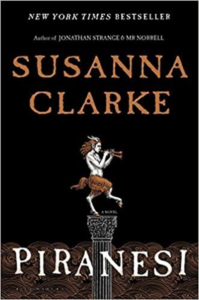
Piranesi
By Susanna Clarke
272 pages
Published September 15, 2020 by Bloomsbury Publishing
I was surprised by how much I liked Piranesi, considering that it is a genre book, fantasy fiction, which I rarely read and even more rarely enjoy. But this one worked. On several levels.
First and most importantly, it has a very simple plot that is based on a simple question: What is Piranesi, the protagonist, doing in this strange place and why? The author, Susanna Clarke, dishes out hints, but sparsely. And there is no great moment of anagnorisis. Not even a denouement, so to speak. And yet, it’s a page turner.
Its themes are expressed as existential and ontological questions that are not so much posed as suggested. And the answers, if you can call them answers, are ambiguous.
But neither the thinness of plot nor the vagueness of thought diminished my enjoyment of the book. I’m trying to figure out why that is.
One reason is the language. The diction is poetic without ornamentation – a kind of restrained prose that makes the many visual descriptions of the castle and its labyrinth come to life. There is a pleasure in reading them that equals what you might get from a James Cameron movie or a Hieronymus Bosch painting.
Several of our book club members had “trouble getting into the first few chapters.” I didn’t experience that – but with the book’s emphasis on prose and imagery, I can understand why they might have. But everyone that persevered (all but one) rated it one of our best books of the year.
From New York Magazine: “Piranesi Will Wreck You: The novel establishes Susanna Clarke as one of our greatest living writers.”
From BookPage: “Almost impossible to put down… lavishly descriptive, charming, heartbreaking, and imbued with a magic that will be familiar to Clarke’s devoted readers, Piranesi will satisfy lovers of Jonathan Strange and win her many new fans.”
From Time Magazine: “Nobody writes about magic the way Clarke does…. She writes about magic as if she’s actually worked it.”
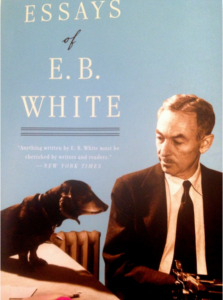
Essays of E.B. White
384 pages
Published 1977 by Harper Perennial/Modern Classics
It was the third book in a small stack of old books that sat on the corner of my writing desk. I have three writing surfaces: This desk here at the beach house. A small, round table under a gazebo overlooking the Pacific Ocean in our home in Nicaragua. And a bar top at my Cigar Club in Delray Beach.
Each has a similar stack of books on it – books pulled from the shelves in the past several weeks, spurred by something I’d read or heard, waiting till I had time to read them.
This book, Essays of E.B. White, seemed the perfect elixir for the stress I was feeling. I knew White as the co-author of the classic Elements of Style, which I’ve read at least a dozen times, and I knew he wrote essays for The New Yorker, back in its glory days. I had no idea he was also the author of Charlotte’s Webb and Stuart Little.
Since my time was limited, I read only a half-dozen of the essays, but they were all Malted-Milk-Balls fun to read.
I think my favorite essay (so far) is “Death of a Pig,” White’s account of his efforts to save a sick pig that he’d bought and raised to be butchered. Here’s an excerpt:
“The scheme of buying a spring pig in blossomtime, feeding it through the summer and fall, and butchering it when the solid cold weather arrives, is a familiar scheme to me and follows an antique pattern. It is a tragedy enacted on most farms with perfect fidelity to the original script. The murder, being premeditated, is in the first degree but is quick and skillful, and smoked bacon and ham provide a ceremonial ending whose fitness is seldom questioned.”
And here’s an excerpt from “The World of Tomorrow,” on the 1939 New York World’s Fair:
“The truth is my ethmoid sinuses broke down on the eve of Fair Day, and this meant I had to visit the Fair carrying a box of Kleenex concealed in a copy of the Herald Tribune. When you can’t breathe through your nose, Tomorrow seems strangely like the day before yesterday.”
And here’s one from “Some Remarks on Humor” (written as part of a preface to A Subtreasury of American Humor):
“Analysts have had their go at humor, and I have read some of this interpretive literature, but without being greatly instructed. Humor can be dissected, as a frog can, but the thing dies in the process and the innards are discouraging to any but the pure scientific mind.”
Interesting Fact: Before his death in 1985, E.B. White suffered from Alzheimer’s disease, and his son, Joel, would read his books back to him. Since he couldn’t remember writing some of them, he would sometimes criticize the writing, saying it wasn’t good enough. If he liked what he heard, he’d ask Joel who wrote the book. Upon hearing that he was the author, he’d reply with, “Well, not bad.”
From The Washington Post: “Some of the finest examples of contemporary, genuinely American prose. White’s style incorporates eloquence without affection, profundity without pomposity, and wit without frivolity or hostility. Like his predecessors Thoreau and Twain, White’s creative, humane, and graceful perceptions are an education for the sensibilities.”
From San Francisco Examiner: “The abiding spirit of these essays is humane, compassionate, traditionalistic. No matter what his subject, White always keeps his eye on the long view and the larger perspective. There are times when I feel his work is as much a national resource as the Liberty Bell, a call to the best and noblest in us.”

Blow-Up: And Other Stories
By Julio Cortázar
288 Pages
Published 1985 by Pantheon Books
Interesting Fact: In addition to his stories, poetry, and novels, Cortázar published a graphic novel in 1975 titled Fantomas vs. The Multinational Vampires.
From Saturday Review: “Cortázar displays throughout his stories the ability to elevate them above the condition of those gimmicky tales which depend for effect solely on a twist ending. His genius here lies in the knack for constructing striking, artistically ‘right’ subordinate circumstances out of which his fantastic and metaphysical whimsies appear normally to spring.”
From Time Magazine: “[Cortázar] is a unique storyteller. He can induce the kind of chilling unease that strikes like a sound in the night.”