
Today, I look at “equal rights” in this country and make the argument that some forms of discrimination cannot – or should not – be protected under the law.
This essay and others are available for syndication.
Contact Us for more information.
Confessions of a Not-Naturally Early Riser

I’ve been working late these past several weeks – into the wee hours after midnight. That’s not good, because my best hours are in the morning when I have more energy and a clear head. What is good is that I’m not sleeping late, which is what I would have done in the past. I’m getting up at 5:30 regardless, which gives me the time I need to get some important work done before my quotidian business demands kick in.
To compensate for the lost hours of sleep, I take two half-hour naps during the day. It’s surprising and encouraging to discover that this seems to work.
When I am sleep-deprived, as they say, I have a strong urge to tell my trainers and grappling companions that I’m injured and must postpone exercise until the following day. But these guys know me too well to believe me. “We will start out easy and work up a little sweat,” they say, “then see how we feel.”
After 10 minutes of riding the Airdyne and five minutes of calisthenics, my physical and mental ennui evaporates and I feel – quite miraculously – okay. I then agree to put on a 40-pound weighted vest (to match the 40 pounds of body weight I’ve lost in the last 6 months) and get to the training, which is always some version of brutality… but the sort that leaves you feeling good when you’ve survived.
Today, when I was on the bike, my trainer was listening to some YouTube news channel featuring a young black woman complaining about how she felt victimized by White Privilege, and especially by “Old White Rich Men.” Which left me wondering, “Is she talking about me?”
An Open Letter to Outraged Victims of Discrimination
Part 1: Let’s Sort Out the Truths and the Myths of Social Injustice
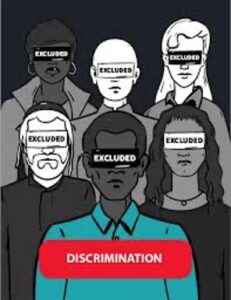
Did you know that being tall gives you a measurable advantage in life? Tall people are hired and promoted at a higher rate than people of average height because they are perceived as being smarter than average-height people with similar IQs. And if that were not advantage enough, they are often perceived to be more reliable, credible, and confident. (See box below.)
If you are shorter than average, it’s even worse. Studies have shown that short people are perceived as less intelligent, less credible, and less confident than people with similar qualities and capabilities that are of average height.
And here’s a shocker: Did you know that people who are unwashed, shabbily dressed, obese, and malodorous are less likely to get jobs, receive promotions, and even be invited to office parties than clean, well dressed, pleasant-smelling people with average BMIs?
It’s true. And social scientists have discovered the reason for it. It’s because they are unwashed, shabbily dressed, malodorous, and obese!
Some Facts from Nigel
1. Height Premium on Earnings
A large body of research shows that taller individuals, on average, hold higher-status jobs and earn more than shorter workers. This effect appears consistently across countries and over time.
2. Income Gains per Unit of Height
Some studies estimate that each additional centimeter of adult height is associated with a measurable increase in annual income, even after controlling for factors like gender, age, and education. For example, research suggests an approximate 1.3% income increase per additional centimeter of height.
3. Height and Education/Status
Analyses of large population samples find a strong positive correlation between taller stature and higher levels of education and professional job class. One standard deviation increase in height (about ~6 cm) is linked to higher odds of attaining degrees and working in skilled or professional roles – often leading to higher earnings.
4. Associated Cognitive and Development Factors
Research shows that taller children score higher on cognitive tests from an early age and are more likely to enter higher-paid occupations as adults. This suggests that height differences partly reflect earlier developmental and health advantages that carry forward into socioeconomic success.
Yes, My Little One. Life Is Unfair.
Okay. I’m having a bit of fun with this. But I’m doing it to make what I think is a very important (however obvious) point: There are such things as physical and social handicaps – personal characteristics that pose obstacles to those that have them. Some of these characteristics are what politically correct public personalities call “immutable,” meaning they are impossible to change. Other physical and social handicaps can be changed. Obesity, body odor, and bad manners are three examples. There are, of course, many more.
In days of yore, when I was young, open-minded people who believed in equal rights saw a clear-cut distinction between prejudices against handicaps that were immutable and those that were mutable.
We were, therefore, sympathetic to people who were discriminated against because of such things as their skin color, sex, or height. But we had no sympathy for people that felt cheated in life because of any mutable “handicaps” they chose to have.
How Did All This Happen?
You could track much of the history of the US and other developed countries in the last 200+ years through the lens of changing public sentiments about this binary. Once a society accepts the notion that all men are created equal (and, thus, have equal rights), then no man or group of men should be advantaged or disadvantaged legally because of any immutable personal characteristics.
The abolition of Jim Crow laws, certain Supreme Court decisions (Brown vs. Board of Education), and the Equal Rights Amendment protected Americans from being discriminated against because of their skin color or their sex. The Americans with Disabilities Act of 1990 ensured equal treatment under the law for people with physical handicaps.
As for people with mutable characteristics, the general view was that they should not be protected if they infringed on peace and prosperity, law and order, and the general good of society and its fundamental Judeo-Christian values.
An Important (but Largely Overlooked) Exception
There was one notable exception, and it took place when the ink was still drying on the Constitution. I’m thinking, of course, of the First Amendment, which, among other prohibitions, proscribed legal discrimination against citizens based on their choice of religion. And one’s religion, in the US, is a characteristic one is permitted to abandon or change. That was, after all, one of the primary reasons for the American Revolution and is still universally viewed as a righteous protection and one that should be preserved.
It might surprise you (it did me) to know that “gay rights” – i.e., the right of homosexuals to be treated equally under the law – have never been concretely and specifically protected. But the concept is generally adhered to in federal and state laws, the most important of which have occurred very recently, beginning with the ruling on same-sex marriage in 2015.
What we’ve had since then in the US and other Western democracies is a concerted effort to give equal legal protection to other “groups” – beginning with people with gender dysphoria and extending to any and every sort of sexual preference, including those who “identify” as “Furries” (animals).
Thanks to the First Amendment, there was a legal method to this madness – a precedent for protecting mutable characteristics. And yet, oddly, in retrospect, those who so strongly advocated for gay rights over the last 50 years and trans rights and other LGBTQ+ rights over the last 15 years, have done so not by arguing that some mutable characteristics should be protected, but rather that these sexual preferences and psychological dispositions were worthy of protection because they were actually immutable – i.e., already formed at birth and impossible to change.
(I’m not thinking here about the contention that a transwoman is a real woman. That idea, as brightly as it burned for 10 years, has been finally, and I hope permanently, extinguished by a happy surge of common sense.)
Here’s How We Can Fix It
In my mind, this gets us back to the important distinction between mutable and immutable personal characteristics.
My thesis that people with immutable characteristics such as sex and skin color are correctly provided with legal protection against discrimination in the US and in all other developed Western Democracies. But in saying that, we must also acknowledge that there is a constitutionally defined protection for one very mutable characteristic: one’s choice of religion.
And if that is the case, it seems reasonable to believe that the US and other countries can provide legal protection against discrimination to people with other mutable characteristics. In fact, most of the groups I’m thinking of already have such protections in the form of human rights, which were established by the Bill of Rights and have been strengthened in dozens of Supreme Court rulings since then.
What we should not do is accept as justification for special protection either of two absurd arguments that have been part of the discussion in the past 10 years: That (1) people have the right to choose any personal identity they want, including those that are immutable, or (2) the rest of us are required to accept their chosen identities, just because the individuals who claim them might feel emotionally injured if we don’t.
I promised myself I’d keep my essays down to about 1,200 words from now on, so I’m going to stop here. But this is only Part 1. In the second half of this essay, I’m going to argue a point that many will find more difficult to accept: that even if discrimination against skin color or sex (or any other immutable characteristic) exists at a sub-legal level in a business or social group or any other environment where individuals compete against one another for recognition and advancement, there is little or nothing to be gained by trying to “fix it.” The smart move is to ignore it and, nevertheless, succeed.
The Truth About the Much-Touted Gender Pay Gap

Just the Facts
You have no doubt heard at least a dozen times that there is a “gender pay gap” in the US – i.e., that women make only about 80% (79% to 83%) of what men make, and that is evidence of bias and discrimination.
Well, it’s not true. When researchers account for career field, hours, and seniority – effectively comparing like with like – the apparent gap shrinks dramatically. Some studies say it
narrows to less than 10 cents. Some say 6 cents. Some say a penny. And for very good reasons.
For one thing, most of the so-called gap comes from choices and work patterns. Men are overrepresented in industrial jobs, heavy labor, and dangerous jobs. Women are overrepresented in teaching, nursing, and other jobs where workers generally receive lower wages.
Other factors include hours worked and seniority. Women are more likely to work part-time or take career breaks for caregiving. In fact, when studies compare full-time workers with similar hours, some data show the earnings ratio reverses!
Jobs and Professions Where Women Earn More Than Men


A few examples:
* Modeling. Among top-earning fashion models, female models have historically earned more than male models.
* Creative Roles. Some occupational data show that in specific creative roles like producers and directors, women’s median earnings exceed men’s. One analysis reported women earning about 128% of what men make in these roles.
* Career Counselors. In the same occupational dataset, women’s pay in this field slightly exceeded men’s, reported as roughly 106%.
* Some Clerical/Administrative Roles. According to some wage surveys and Bureau of Labor Statistics breakdowns, categories like billing and posting clerks, reservation agents, and receptionists sometimes show women earning more per hour than men – though these tend to be lower-paying roles overall.
For a quick overview of the data, watch this video from Prager U. Economist Christina Hoff Summers explains the phony calculations and why they never made any sense.
And if you are up for it, here are some studies on the gender pay gap that you might want to check out:
* Blau, Francine D. & Lawrence M. Kahn, The Gender Wage Gap: Extent, Trends, and Explanations, National Bureau of Economic Research (NBER Working Paper No. 21913, updated versions through the 2010s), a foundational labor-economics review – Finds that most of the observed wage gap is explained by occupation, experience, hours worked, and labor-force attachment.
* Goldin, Claudia, A Grand Gender Convergence: Its Last Chapter, American Economic Review, Vol. 104, No. 4 (2014) – Shows that remaining wage gaps are concentrated in occupations that reward long hours, inflexible schedules, and geographic mobility, rather than unequal pay for equal work.
* US Department of Labor, An Analysis of the Gender Wage Gap (2014) – Finds that the majority of the raw wage gap is attributable to differences in occupation, industry, hours worked, and work experience.
* Payscale, Gender Pay Gap Report (annual editions, esp. 2016–2023) – Reports a large “uncontrolled” gap but shows that after controlling for job title, location, education, experience, and hours, women earn roughly 98 to 100 cents per dollar of men
* CONSAD Research Corporation, An Analysis of Reasons for the Disparity in Wages Between Men and Women (commissioned by the US Dept. of Labor, 2009) – Concludes that available data do not support claims of systemic pay discrimination for equal work; observed gaps reflect measurable differences in work patterns and career choices.
No Borders, Full House
No parents. No buses. No fear.
Another quality of Japanese culture that I admire.