
I’ve been thinking… and I’ve come up with two things that I’d like to run by you. One is an idea about a rating system for the books and movies I review in this blog. The other one, the more important one, is about the future – or non-future – of mainstream media. (Anyone paying attention saw this coming.)
What Does Literary Fiction Have to Do with Figure Skating?


I just read The Last Painting of Sara de Vos by Dominic Smith, this month’s selection for the Mules (my book club). Smith is impressively adept at constructing sentences and in selecting le mot juste. In those regards, he merits A+. But good fiction is more than wordsmithing. It’s about creating stories that not only arrest our attention, capture our imagination, and somehow expand our minds and hearts, but do so in a way that is beautiful.
So how do I rate this book?
Aristotle wrote the foundational treatise on literary criticism with the Poetics, where he defines the essential elements that make a piece of literature work. Though his focus was on drama (tragedy, in particular), I’ve always found it very useful in helping me understand what I like and don’t like about the plays, movies, and other visual media I consume, as well as the books I read.
It is less than perfect, however, in helping me explain how much or how little I like them – which means that I’ve had to come up with my own way to evaluate the recommendations I make on this blog.
I came up with a system that I had great hope for at first – a rating based on the work’s “horizontality” and “verticality.”
Horizontality was about how well it created its fictional world (a time, a place, and a culture).
Verticality was about how well it portrayed – through plot, characterization, and dialog – a deep sense of what a human being is and is capable of being.
These analytical tools have not only been helpful to me in writing my recommendations, they have been helpful during book discussions at our Mules meetings, giving us terms we can use to better communicate our ideas and feelings.
Which gets me back to where I started…
How do I rate The Last Painting of Sara de Vos?
After finishing the book, I had two seemingly incompatible feelings about it.
On the one hand, I was much impressed by the author’s skill as a wordsmith. On the other hand, I felt that the story itself, while good, was not great. And that the way it was told – including the action, the plot, the characterization, and the theme – was handsome, but not beautiful.
So as a reader who very much appreciates the poetic aspects of literary fiction (the diction, the syntax, the metrics, etc.), I would have rated the book very highly. But in terms of my experience of the novel as a whole – the overall aesthetics – I would have rated it good, but not great.
The problem stuck in my craw, and I went to bed without a solution. But today, I had an idea – a very simple rating system that has been used successfully for decades. I’m talking about the way they rate ice skating performances at the Olympics. Competitors get two grades: one for technicality and another for beauty.
So now I’m thinking that it might be helpful to introduce this idea to the Mules: that in addition to the other frames of reference we can use to critique the literary fiction we read, we can provide two additional numeric ratings, one for technical and another for aesthetic virtuosity.
I’m thinking this could work.
Let me know what you think.
Is Mainstream Media Terminally Ill?
Or Has It Already Become the Walking Dead?

Mainstream media has been in a downward slide that began soon after Trump’s first term in office (2016), and the numbers have been getting worse with every passing year.
* Industry tracking shows US traditional pay TV subscriptions roughly halved over the last 11 years.
* Pew’s analysis shows cable news saw “meaningful declines” in key periods since 2016, with the steepest drops happening in CNN and MSNBC.
* Trade coverage ratings showed the same thing, with especially deep declines for MSNBC and CNN in key demographics in 2025.
* The Wall Street Journal reported CNN’s prime-time audience dropped 74% since its 2020 high, alongside layoffs and a digital pivot – useful to argue that whatever the Trump-era “attention boom” was, it did not translate into durable linear-TV strength.
* And the S&P Global Market Intelligence says only about half of US homes are expected to have pay TV by end of 2025. That’s down almost 90% since 2010.
The same thing has been going on with mainstream newspapers. A US Congressional Research Service report notes print advertising revenue for newspapers fell 92% from 2000 to 2023 (to about $6B in 2023), and total inflation-adjusted industry revenues fell about 80% from the 2000 peak. While that’s longer-run, it’s a strong backdrop for “demise” framing.
Meanwhile…
There has been an equally astounding rate of growth among the alternative media – bloggers, podcasters, and digital journalists and analysts, to whom the American public has turned for their daily consumption of political, social, economic, and even financial news and analysis.
* YouTube – while not exclusive to podcasts – reports over one billion monthly viewers for podcast content, underscoring how alternative audio/video journalism is reaching massive audiences beyond traditional platforms.
* Megyn Kelly’s independent media venture, The Megyn Kelly Show on YouTube, drew 116.8 million views in July 2023, surpassing major broadcasters like NBC and CBS during the same period. Her channel now has over 4 million subscribers and ranks among the top podcasts in the US.
* Piers Morgan Uncensored, launched outside traditional TV in 2022 and fully on YouTube in 2024, has reached 4 million YouTube subscribers with over 1 billion views since inception, showing how digital talk/news formats scale massively online.
* Substack reached 5 million paid subscriptions as of March 2025, up from about 3 million the year before. Today, Substack supports over 50,000 paid creators, with top earners collectively generating over $40 million annually.
What Happened?
It seems to me that there are four reasons for this.
First, Trump’s election in 2016 divided the country into two roughly equal-sized political groups: those that loved Trump (MAGA) and those that hated him (people with Trump Derangement Syndrome). Fox News was the only news channel that supported some of Trump’s policies (though not all of them), but the rest of mainstream TV took opposition to everything he said or did.
That created hundreds – even thousands – of opportunities for anyone with ambition and a social media account to develop an online presence by being forcefully with Trump or against him.
Second, as some of these social media producers developed large, even massive, followings, money started inserting itself into the equation, which made the idea of making good money from the basement or in a bar feel like a realistic way to grow wealth.
Third, social media algorithms developed the ability to shape the political and social opinions of millions of people, which prompted social media developers to make the technology of the algorithms increasingly more profitable. And that led to the development of digital tribal groups whose inclinations and prejudices were being amplified every day through the manipulation of these algorithms.
And fourth, with the availability of hard-core news and views on every political, social, and cultural topic ubiquitous, mainstream media began to feel – for most Americans on either side of the aisle – stale, dubious, and inauthentic.
That takes us where we are today, with practically 90% of the news and views being consumed by Americans being provided by independent journalists.
And some of them are changing the world.
Take Nick Shirley, the 23-year-old vlogger who, on December 26, posted a 42-minute video in which he approaches day care centers in Minneapolis and attempts to get information about what they do, only to discover that the centers are devoid of caretakers and children. In his initial report, he identifies over a million dollars in day care fraud. Within seven days, with the help of dozens of other citizen reporters who rushed in after him, the total estimated fraud was believed to be between $9 billion and $19 billion.
And then last week, citizen journalists traveled to LA, Chicago, San Francisco, and New York, only to discover that the Minneapolis day care scheme was well entrenched in all these cities, as well as other kinds of fraud related to elder care and various government boondoggles.
This turns out to be the biggest scam on US taxpayers in US history. And it was uncovered by the courageous work of a single, independent, digital journalist. The mainstream media knew about it for years, but decided it was not a story they wanted to tell.
I can’t see mainstream media coming back from this, do you? The heart may still be beating feebly, but the brain has long been dead.
Just the Facts: About Renewable Energy
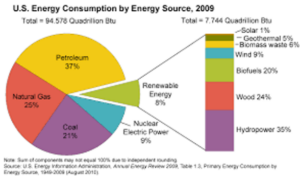
In case you think renewable energy is doomed to suffer the same fate as mainstream media, consider this:
* Renewable energy generated more electricity than coal in the first half of 2025 – a historic first.
* Even if no country can quite take America’s place, China will at least flood the global market with cheap green technologies, helping to stave off the worst of the climate crisis.
From Jan. 2 Predictions
From KK re my comments about cybersecurity and AI in the Jan. 2 “Predictions” issue:
“Thanks for bringing up cybersecurity in the blog. I’ve made it my top political issue, moving it ahead of the debt and the environment. The steady stream of reports of data breaches, leaks, ransomware attacks, digital extortion cases, and state-sponsored attacks have led to ‘breach fatigue.’ Today, more than ever, we need to be vigilant!
“And just for the record, AI – or as I call it, machine intelligence – is not humanity’s friend, it’s our competitor!”
My Response: Well put!
An increasingly large percentage of the posts I see these days are deep fakes… even those supposedly coming from national figures. Right now, it’s pretty easy to detect them. It will be more difficult in the future.
Another increasingly large percentage of the posts I see are made by actual humans reading from AI scripts. These, too, are easy to detect – at least for me as a writer who has dabbled with AI.
It’s hard to say what will become of all this in 10 or 15 years. In the meantime, there is going to be a surge of digital deception, disinformation, and outright fraud and scamming going on that will victimize millions of people.
Having pest problems?

No need for a pest control service if you have a well-trained dog!
(Since you asked: The breed is Patterdale Terrier.)