Where the Heck Have I Been?

Notes From My Journal
If you feel like I’ve neglected you recently, you are not wrong. I’ve been very busy. In fact, last week could well have been the most intense working week I’ve had in years. Perhaps decades!

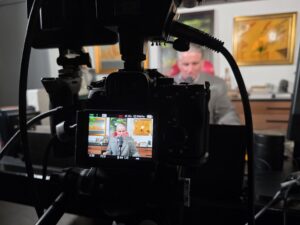
And that’s not because from Monday through Saturday I woke at 5:30 am, began my working day an hour later, and worked until 11:30 pm, with only one 90-minute break each day to exercise. No. I think the reason the week was so intense (and exhausting) was because – for a large part of that time – I was “working” and in front of an audience and/or camera. And I was playing the role of Michael Masterson, the sage and successful entrepreneur and wealth builder who was spearheading the launch of a brand-new business: DIY-Wealth.

Three of those mornings, I was speaking live to Japanese investors and businesspeople who were seeking help in growing their businesses by following some of the rules I spelled out in Ready, Fire, Aim and Automatic Wealth, both of which were bestsellers in the Japanese business and investing categories.

I am normally confident about speaking to people on these topics. But these were “hotseat” conversations in which they tell me about some problem or challenge they are facing, and I give them on-the-spot, individual advice. I must not only supply a point-by-point plan for resolving their issues, I must also explain it in a way that is universal – i.e., it draws on problems and challenges that many if not most people have in building businesses or accumulating wealth. And to top it off, I know little to nothing about these people or their issues when we begin. Plus, each conversation is limited to 15 or 20 minutes. Which means I have only so many minutes to ask them for details so I can provide them with ideas that make sense.

Don’t get me wrong. I’m not complaining. Of all the things I do in my business, I like conversations like these – whether they are with strangers or employees or friends – as much as or more than anything else I do in my career. Still, it’s exhausting. Two hours of it takes a day’s worth of energy.

After that, there were interviews with the Japanese media – social media influencers and mainstream journalists as well.

All that got me to lunch, after which the entire schedule changed. We were no longer providing content and advertising for our Japanese businesses, we were now creating content to launch DIY-Wealth in the US and the rest of the English-speaking world.

The afternoons consisted of brainstorming sessions, planning meetings, and video and audio content production, which would be edited and then used, along with live promotional activities, in launching the business over the next several weeks.

DIY-Wealth is going to be a membership-based research and teaching organization focused on programs, courses, and digital products on entrepreneurship, business profitability, personal finance, investing, time management, health, productivity, and living with purpose and satisfaction.

That sounds like a lot, now that I say it. But it is tied together and streamlined by being filtered through a narrow funnel: personal experience – primarily mine, but also that of some of the most successful moneymakers I know.

Perhaps the biggest difference between DIY-Wealth and similar businesses I’ve developed in the past is that DIY-Wealth is going to have to reinterpret all the seemingly universal and evergreen truths about increasing income and acquiring wealth – the secrets that I and the rest of our team discovered over the years through trial and error – in the brand-new economic, industrial, and social environment of artificial intelligence.

We will be starting this adventure on the eve of what may very well turn out to be the largest global economic transition since the Industrial Revolution was born nearly 200 years ago. I believe we – and by we, I mean the entire population of the world – are embarking on a voyage into a technological future that will be everything that all the great futurists and science fiction writers once imagined it would be. And more.

And I believe this is going to happen rapidly – starting soon. Like tomorrow!

The Way Digital Technology Blew Up My World 

I don’t know what historians will one day decide, but the digital economy for me began in the mid 1990s, when some of our younger executives began talking about how our industry – the investment newsletter business – was going to change once the World Wide Web was fully spun. BB (my partner) and I had only a rudimentary understanding of what all the commotion was about. But we intuited that if we wanted our company to survive – if we wanted to continue to make money in that industry – we had to figure out how this much ballyhooed prediction of a brave, new information age could happen.

As the mid-90s turned into the late-90s, we encouraged our publishers to keep up with the changes, and most of them did. Some of them believed that our traditional way of selling our newsletters – by renting addresses from other direct response publishers and mailing sales pitches – was on its way out, and an entirely different marketing model based on advertising our products and services on websites would soon become ubiquitous. There was even a bestselling book about it. I can’t remember the title, but I remember the thesis: that our form of selling, which the author called “push marketing,” was going to be replaced by a more gentle and less intrusive method, which the author called “pull marketing.”

Some of our publishers moved their business to that model. But though BB and I had serious doubts it would work, he began writing and publishing what was then one of the first free online digital newsletters (The Daily Reckoning), and I began writing my own free online daily (Early to Rise). By 1992, we were glad we did, because the circulation of each of our newsletters had grown immensely – to about a million subscribers each. More importantly, we gradually figured out how to monetize those “free” names. It became what for two decades was called “The Agora Method,” the standard marketing model for hundreds (if not thousands) of digital publishing companies. And it is still one of the primary methods of selling information online today.

We weren’t the only people to figure this out. Across the world, countless companies that sold information were doing the same thing. And the effect was enormous. In fact, digital direct marketing was a major factor in the rise of global GDP, from roughly $23 trillion in 1990 to over $105 trillion today.


Why I Don’t Trust Statins  And Why You Shouldn’t Either 

For years, I’ve been writing about how uneasy I feel about my doctor’s recommendation that I take statin drugs. As you probably know, I’ve been in the alternative health publishing business since the early 1980s, so I’m very much aware of how unpopular statins are with doctors and scientists who are, like me, suspicious of many of the established protocols favored by mainstream medicine. And the doubts we have are not based on some vague preference for “natural” remedies, but on hundreds and hundreds of published scientific studies that refute or cast doubt on many of the “facts” that mainstream medicine holds to be true.

Statins are promoted to the public as drugs that prevent heart disease and extend life. Most patients come away believing that if they take a statin, lower their cholesterol, and follow instructions, they will live longer.

That promise dissolves when you look carefully at the data. Statins reliably improve bloodwork numbers, especially LDL cholesterol. They do what they are designed to do in that narrow sense. What they do not reliably do for people using them for primary prevention is extend life in any meaningful way. In many large trials, the average life extension amounts to days, sometimes a few weeks, and rarely more.

Did you get that? Those are the facts. (I checked with Nigel, and he is predisposed to mainstream medicine!) Isn’t it insane?

So, you must be thinking, “If that’s so, then why did my doctor write me a prescription for statins? And why do thousands of doctors write prescriptions for millions of Americans to do the same?”

The answer is logical and depressingly obvious once you hear it. Doctors recommend statins because they would be foolish to do otherwise. They operate within professional protocols that opine on “best practices” for treating health issues. Those protocols come from the American Heart Association, the AMA, the CDC, and similar bodies. And once a protocol becomes the standard of care, deviating from it carries legal and professional risk. So even when a doctor knows that they don’t prolong life and do cause adverse side effects, so long as those side effects are not crippling or life-threatening, it would be stupid for them NOT to recommend them.

And why do those major public agencies recommend statins? There are several reasons that all have the same root cause: They rely heavily on population-level statistics and relative risk reductions. A 25% relative reduction sounds impressive. A 2% absolute reduction does not. A recent study comparing American and Japanese patients made this gap visible. When people were shown what statins deliver in absolute terms, most concluded the benefit was not worth the commitment.

But patients are routinely NOT given that information. If they were told that the statins would – at best – extend their life by a week or two while causing all sorts of undesirable side effects, most of them would say, “No, thanks, Doc. I think I’m okay going with alternative solutions, like losing weight and stopping my smoking, etc.”

But the size of the worldwide statin market is between $14 billion and $17 billion annually. And if 80% of all those given this information decided not to take statins, Big Pharma would suffer bigly.

In Short…

Statins do what they are designed to do – lower LDL cholesterol. But that does not reliably translate into meaningful life extension for healthy people. When you look at absolute benefit numbers, the effects are small. In many cases, hundreds of people have to be treated for years to prevent a single event or death. Meanwhile, reports of muscle complaints, metabolic changes, and other side effects are not trivial. For people without existing cardiovascular disease, the decision to take a statin deserves honest, absolute-risk conversation, not marketing spin.

Just the Facts 

Statins Lower Cholesterol but Do Very Little to Prolong Life in Healthy People
* In large-pooled trial data for primary prevention (people without known heart disease), statins showed only very small or non-statistically significant reductions in mortality. Absolute mortality benefits are tiny (about 0.1–0.4% absolute difference). Meaning hundreds of people must be treated for years to prevent one death.

* In low-risk individuals (e.g., <10–20% 10-year cardiovascular risk), statins do not significantly reduce all-cause mortality. Some meta-analyses found relative risk close to neutral (RR ≈ 0.99) for serious illness overall.

All-cause mortality in low-risk groups generally shows no statistically significant reduction or a reduction on the order of <0.5% over years of treatment.

* A recent evaluation found that statins might prevent one major adverse cardiovascular event per 100 people treated for 2.5 years, but no clear mortality benefit in adults without existing disease.

The Takeaway: The drugs reliably lower LDL (“bad” cholesterol), but that does not translate into longer life for people without existing cardiovascular disease.

(Source: Systematic reviews of primary prevention trials)

Cholesterol Counts Are Poor Predictors of Longevity in Healthy Populations
* LDL cholesterol reduction is the primary biochemical effect of statins, and guidelines focus on lowering LDL levels. However, clinical outcomes do not always mirror surrogate marker improvements.

* Lowering LDL does not necessarily produce meaningful longevity benefits in people without pre-existing disease. In large primary prevention groups, lowering LDL often changes numbers without clinically significant increases in lifespan.

* Some older cholesterol-raising drugs (e.g., niacin) improve HDL but do not reduce all-cause mortality or heart attacks, underscoring the fact that modifying surrogate lipid markers doesn’t always change real outcomes.

The Takeaway: Cholesterol metrics are useful in research but are not reliable standalone predictors of longevity, especially among healthy middle-aged people.

(Source: Large clinical trial biomarker data)

Statins Can Cause Significant Side Effects
Muscle symptoms: Statins are associated with a range of muscle-related complaints (myalgia, cramps, weakness). And while large trials sometimes underreport them, real-world analyses and observational data show these effects occur meaningfully among patients.

Myopathy and rare serious muscle damage (rhabdomyolysis): These are uncommon but recognized potential effects, increasing with higher doses.

Diabetes risk: Statin therapy has been associated with an elevated risk of new-onset diabetes mellitus in some analyses.

Moreover: Adverse event rates vary, and large meta-analyses sometimes find little difference between statins and placebo for specific symptoms. But the reality of side effects remains clinically relevant, particularly in patients who do not clearly benefit.

(Source: Pharmacovigilance data and observational cohorts)

Putting the Numbers into Context
If you treated 100 people without cardiovascular disease with a statin for 5–7 years:
*~1 person might avoid a major cardiovascular event.
* Most will experience no clear improvement in lifespan.
* A non-trivial percentage (5–20%) might report muscle complaints.
* A small subset may develop impaired glucose metabolism.
* A very small number could face serious adverse effects.

Summary
* Statins reliably lower LDL cholesterol, but cholesterol levels are an imperfect surrogate for lifespan. Improvements in lipid numbers do not necessarily translate into meaningful longevity benefits in healthy populations.

* Randomized evidence shows minimal mortality advantage in primary prevention, especially for low-risk individuals.

* Statin side effects – especially muscle symptoms and metabolic changes – are real and can be significant for many patients, even if some large trials underreport them.

By a happy coincidence, I received this video link last week from regular contributor Joe Seta about Peter Atia, a doctor/ internet guru who initially impressed me with his vlogs and blog posts. Watch it to get a very credible explanation of how Atia was wrong about statin drugs and a suggestion as to why.

This Nicaraguan Surf Resort Is the Family Getaway of the Year 

Rancho Santana got another good write-up last week. This time, it was from a publication called Coastal Living, which features residential and vacation spots around the world. Here is what they said:

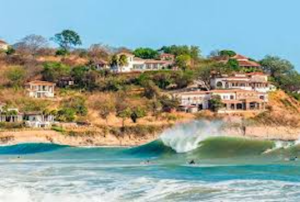
Some vacations feel like the adventure is built right in. That’s certainly the case with Rancho Santana, a sprawling, 2,700-acre resort with five separate beaches on Nicaragua’s Emerald Coast, the country’s southwestern shore on the Pacific Ocean. First up is the ride to the property: about a two-hour drive from the capital city Managua’s airport. The Ranch (as it’s lovingly called) arranges door-to-door transportation for guests, so all that remains is taking in the scenery until the big reveal: enormous views of the Pacific with crashing waves, stunning cliffs, and rose-colored sand. Now it’s time for adventure of every kind, and a great mix for families, as well: world-class surf, hiking trails, a turtle sanctuary, and a treetop spa and yoga center, plus farm-to-table cuisine sourced from the property’s working farm. With those five beaches to choose from – each with its own personality of rugged waves and soft sand – even teens can’t claim they’re bored. Accommodations range from family-friendly casitas and ocean-view homes to standard rooms in the cozy inn with breakfast included (and an all-inclusive option). Adventurers seeking an off-the-radar gem: Here’s your next great vacation. Rates start at $320.

Why I Do What I Do

Readers Write: 

“Love the way you write. Thanks for imparting a bit of your knowledge to me.” – KDW


Postscript: Symbols & Secrets That the Coen Brothers Keep Slipping Into Their Movies 

I recently watched a short film by Ariel Avissar compiling circular imagery in Coen Brothers movies from 1987 to 2018. It revealed something important about how great creators think. As you will see, Avissar illustrates how the Coens use circles frequently in their films. Bowling balls. Steering wheels. Plates. Camera movements. Even framing devices. I never noticed that. I presume it was intentional. In any case, I’m going to be looking for it when I watch their post-2018 movies.

Okay, Mother Nature, Enough Is Enough! 

This cold snap on the eastern seaboard of the US is not a snap, it’s practically a season. It’s been going on for a month. It is also not just on the eastern seaboard. It starts higher than that and ends lower. It’s also wider.

I’ve just returned from a work trip to Nicaragua, where, for the entire three weeks I was there, the “snap” brought average temperatures down by at least 10 degrees. But at this time of the year, temperatures usually fluctuate in the 80s and 90s – which meant the weather was still near-perfect at Rancho Santana throughout my entire stay.

I was, however, worried about the effect the near-freezing nights in South Florida would have on the thousands of plants and trees in Paradise Palms, our botanical garden. I’ve put so much time and money into the garden over the years that its value, at least to me, is greater than the value of my beachfront home.

It’s amusing to realize that I’ve spent most of my life never giving a second thought to the weather. As a child, I yearned for it to snow enough to close my school. As an adult, I occasionally wondered about how the lack of snow would affect my skiing. And there was always the occasional hurricane to be faced in Florida. But those were rare events and could be insured against. You can’t insure yourself against damage to very rare and valuable trees that could be chilled to death.

Since returning, I’ve been wearing a jacket every day and even a jacket and sweater while walking the dog at night. Today, I’m wearing a tee shirt. It’s a bit cold for a tee shirt, but I’m doing what I can to signal to Mother Nature that enough is enough.

Speaking of cold (cough, cough), I was following all the craziness surrounding the ICE protests in Minnesota. And although I think the deaths of the two protesters were not murders, I do think that they might have been avoided if Trump and his team had listened to my advice… which is the main subject of today’s issue.

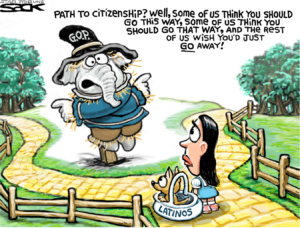
An Open Letter to President Donald J. Trump 

Mr. President, This Is Your Moment to Shine. 
Fix Our Broken Immigration System! 

Immigrants crossing the Rio Grande into El Paso, Texas
 
I’ve read two e-magazine articles in the past six or seven days on a “downside” of President Trump’s success in stemming the flow of illegal immigrants through the southern border by simply closing it.
 
The downside, according to the reports, is diminished agricultural production and construction projects and a dearth of workers in all sorts of service industries, from hotel housekeepers to farm and construction laborers, carpenters and landscapers, nursing and elder-care aides, babysitters and nannies.
 
This surprised some supporters of Trump’s border policy who had expected that for every illegal immigrant who was taken out of the US labor market, two able-bodied, native-born citizens would be there to take on the work.
 
That didn’t happen.
 
Ordinarily, foreign-born workers make up a significant portion of the labor pool in at least a half-dozen economic sectors, and it has always been true that a significant percentage of those foreign-born workers were working without proper documentation.
 
Stemming the Flow 
 
Biden’s open-border policy was an unmitigated disaster from almost every point of view. Inflation went up, wages didn’t follow, crime rose in every sector but white-collar crime. At least that’s what we thought until the Somali multibillion-dollar rip-off of state and federal taxes was exposed. The biggest expense, however, was the cost of providing social services to more than 10 million uneducated, destitute, and in some cases corrupt and criminal migrants who were welcomed into the border states and then transported by federal trains and planes to targeted cities all over the States. The ostensible aim was to allow for an orderly integration of those immigrants. The real reason was to reshape the electoral demographics of the country by beefing up the population of immigrants/Democratic voters in key voting battlegrounds. 
 
Although the mainstream media did an amazingly good job of completely ignoring the largest shift in US demographics in more than 100 years, the conservative media was putting equal time into exposing what was happening and reporting on any and all crimes and misdemeanors committed by immigrants after they were not just allowed to enter the country illegally, but were then assisted in getting relocated with transportation, housing, and a full range of social services for free.
 
Gradually, the disturbing news stories about rising crime and the tens of billions of dollars the government spent during those four years reached the awareness of non-partisan voters and “undecided” voters – and poll after poll revealed that most Americans were increasingly opposed to what the Biden administration was doing. That’s why, at the beginning of 2025, the mainstream news and open-border advocates dropped the argument they had been making – that the US is a nation built by immigrants – and switched to claiming that shutting down the border was an extremely complex and cumbersome project that would take years and many billions of dollars to accomplish. 
 
But then, when Trump took office in January of this year, he shut it down completely in less than a month.
 
What I found interesting about that was not that Trump did it so quickly, but that the mainstream media and the Democrats didn’t have anything to say about it for the first few weeks. It was almost as if they were never in favor of bringing millions of undocumented immigrants into the US, and that their opposition to Trump’s border policies was more about hating Trump than it was about loving immigrants. 
 
I wonder how long those weeks of stillness would have lasted. Perhaps long enough for both sides of the aisle to pass a common-sense border policy? But then ICE happened, and here we are.
 
Trump has never listened to my sage advice on matters of foreign and domestic policy. In fact, he hasn’t even asked for my advice, even though he keeps emailing me to say what a great American he thinks I am.
 
If he asked me now, here’s what I would tell him… 
 
My Unsolicited Advice 
 
Mr. President: Your accomplishment in closing the border so completely and so quickly is a triumph that nobody can deny. And although I understand how and why you appointed ICE to reverse Biden’s ballot-stuffing scheme, it’s equally hard to deny that it has resulted in several unintended consequences that have not just lowered your approval ratings among moderate voters, but have allowed the mainstream media to divert the public’s attention from matters that are more important and more urgent.
 
For one thing, nobody is paying attention to the massive nationwide scam that has robbed as much as $20 billion from the pocketbooks of American taxpayers. This story was and should be the story of the year, because it unmasked the corruption in Minneapolis and other cities that has been largely engineered by the Democrats for more than 50 years.
 
I know your instinct is to keep pushing forward with using ICE to clear the jails in sanctuary cities of the criminals – mostly violent criminals – that are being protected from deportation by governors and mayors who have made careers of opposing everything you say and do. But if you can put that effort on hold for a few months, you will have an opportunity to accomplish something that no other president has been able to accomplish in the last 50+ years.
 
I’m talking about putting together bipartisan support for a common-sense border policy that I believe the entire country – even voters, politicians, and media people with severe TDS – will approve of.
 
The policy itself isn’t complicated, as I’ll explain in a moment. The big problem is getting bipartisan support for it. And the good news is that you are in the rare position – even with all the hatred and divisiveness in America right now– to get it done.
 
And that is because we know from the history of politics since the early 1970s that almost every major political change did not happen with the presidents that were thought to be aligned with those changes. On the contrary, they almost always happened because of the actions taken by a president representing the other side.
 
Consider the reforms that reshaped American life over the last half-century. Overwhelming civil-rights legislation was passed under President Lyndon B. Johnson, a Texan conservative who nonetheless marshaled his own caucus to do something many in his party opposed. President Richard Nixon, to the astonishment of many, opened diplomatic relations with China. President Bill Clinton, a Democrat, signed welfare reform that alienated many liberal activists. These presidents acted not because the issues were simple – they weren’t – but because the political conditions allowed solutions that transcended the usual partisan gridlock.
 
Immigration has never received that kind of treatment. The familiar talking points have persisted not because they were right, but because they served political ends. Republicans warned that large numbers of low-skill immigrants would depress wages for native workers. Democrats focused on the sentimental narrative that the country was built by immigrants, a phrase that, while true in certain historical contexts, is a poor guide for 21st-century policy. By focusing on generalized slogans, both sides avoided grappling with the actual economics of labor supply and demand.
 
The economic reality that Washington refused to confront for decades is quite simple. American industries have long depended on immigrant labor in sectors where native-born workers are scarce. Men fill jobs in agriculture, construction, warehouses, and food processing plants, while women are disproportionately represented in domestic work, childcare, and elder care. These jobs are essential to the functioning of many communities, but they are also physically demanding, often seasonal, and not attractive to most Americans seeking upward mobility. The data back this up. Persistent labor shortages in precisely these sectors are repeatedly documented in federal workforce reports, especially in construction and agriculture, where vacancy rates consistently outpace the national average.
 
Because we never built a large-scale, enforceable system of temporary work visas tied to real labor demand, immigrants have often entered unlawfully and remained here in legal limbo. They came with an intent to work, and many did so quietly and productively. But without a lawful mechanism to govern their entry and departure, they lived under perpetual fear of detection, deportation, or permanent separation from their families. That created a shadow workforce, unmonitored and outside the protections of law, and laid the groundwork for exploitation and public resentment. This wasn’t chaos because of unwilling workers. It was the predictable outcome of a labor market without legal pathways.
 
This gets us back to where we began. During the first two years of Biden’s term of office, 7.8 million illegal migrants were stopped at the border, given a “report yourself voluntarily sometime in the future,” and then released into the United States. In addition, roughly 1.5 million “got-aways” seen by surveillance were never apprehended. 
 
That’s a total of 9.3 million illegal immigrants let into the country. By 2023, independent research estimated the unauthorized immigrant population at approximately 14 million, the highest in US history. And that figure, too, does not include the got-aways. 
 
Your announced goals began to slow illegal immigration the day after you were elected, and by the time you took office 13 months ago, illegal immigration was already slowing to a crawl. Last month, the Census Bureau and independent demographers reported the first net negative international migration in decades – meaning more people were leaving the country than entering it. Dept. of Homeland Security figures show that in a single year more than 2.5 million unauthorized immigrants departed the United States, including approximately 1.9 million voluntary self-deportations and more than 600,000 formal removals.
 
What if you announced tomorrow that you were forming an advisory board of Republicans and Democrats to come up with an immigration policy that made common sense by not just allowing but encouraging and assisting half a million or more immigrants to come into the country to help American businesses do the jobs they are meant to do?
 
You could do that because all the people with TDS who have been opposing you would be forced to agree with it. 
 
The outlines of a sensible system are not complicated or fuzzy. They are clearly visible to anyone who understands the facts about immigration and wants the US to have a program that will benefit everyone involved – our industries, our workers, our government, and even the millions of immigrants who would love nothing better than to spend time in the US, doing work that they are happy to do.
 
What would a common-sense border policy look like?
 
1. You would implement a large, enforceable, and temporary work visa program. A program that matches labor demand in specific industries with labor supply from abroad. These visas should be time-limited – typically three to nine months, depending on the job – digitally tracked, and tied to clear exit requirements. A system like this would give employers confidence that they can find the workers they need, give workers legal protections, and reduce the incentives for illegal entry.
 
2. At the same time, you would expand your plans for increasing legal immigration for skilled workers – doctors, engineers, researchers, and entrepreneurs – through a merit-based track. A large body of economic research shows that high-skill immigrants contribute disproportionately to innovation, productivity growth, and fiscal health. Countries that attract global talent tend to outgrow those that don’t. Strengthening this pathway is not ideological, it’s strategic.
 
3. You would make it clear that you want the new policy to deal humanely and efficiently with the existing unauthorized population. 
 
This is something you have already begun doing. Look at the numbers: According to most of the sources I found, your “self-deportation” idea has worked amazingly well, with 1.9 million voluntary self-deportations since you announced it.
 
That is an amazing number. And you did it not only by offering self-deportees a ticket back home and a thousand dollars. They went home because the prospect of getting caught and being sent back was unattractive. And because part of the deal was that if they did self-deport, they would be able to apply for legal immigration status as soon as they got home.
 
The cost of that program was much less than the cost of forceful deportation. Formal removals often cost governments more than $17,000 per individual, whereas modest incentives to leave voluntarily cost a fraction of that. 
 
Imagine if you raised the ante to $2,000. Or $3,000. Or even $5,000! It’s quite conceivable that we would see 5 million or even 10 million foreign-born nationals who are living in the US now take the option and return home.
 
Americans, at their core, think practically about issues like these. When asked whether they are willing to financially support or house illegal migrants in their own homes, many answer no. That reaction isn’t rooted in cruelty, but in a common-sense understanding of order, community, and personal responsibility. A legal system of immigration that respects sovereignty, enforces rules, and matches labor needs to economic demand is more likely to earn lasting public support than one that keeps borders porous and policies vague.
 
I’m not a psychologist, Mr. Trump, but I do remember you saying that your greatest wish was to be remembered as “the most loved” US president of all time.
 
That’s a high hurdle – especially considering the amount of irrational hatred half the country has for you. But minds can change. Especially when conditions change for the better. You’ve secured your legacy as perhaps the most anti-war president we’ve ever had. And you are on your way to cleaning up the multitrillion-dollar scams that have plagued our government for decades. 
 
Getting a bipartisan immigration-reform policy passed would be another monumental achievement that nobody will be able to deny. 
 
You have already accomplished something your political opponents said was impossible – restoring control of the border. Now comes the next challenge: turning that control into a constructive, lawful system that works for Americans, for workers, and for the nation’s future.
 
You can do it!
 
At this moment in history, only you can do it. It can be another great part of your legacy – another part of the challenge you gave yourself: to make American great again!

Sources

* US Customs and Border Protection, Monthly Operational Reports, 2025
* US Bureau of Labor Statistics, Occupational Outlook Handbook and Job Vacancy Surveys (2025)
* US Senate Homeland Security and Governmental Affairs Committee Reports on Border Security (2024)
* Pew Research Center, Estimates of Unauthorized Immigrant Population (2023)
* US Census Bureau, Population Estimates and International Migration (2025)
* US Department of Homeland Security Annual Enforcement Report (2025)
* US Immigration and Customs Enforcement Cost-of-Removal Data (2025)
* US Dept. of Justice Press Releases on Fraud Prosecutions Including Feeding Our Future Cases (2024)


Just the Facts 

Border Crossings and Encounters 
Federal records show border encounters have collapsed from crisis levels in the early 2020s to numbers unseen in decades, creating the conditions for law-based reform.

2021-2024
* Border encounters: ~7.8 million
* “Got-aways” (not apprehended): ~1.5 million
* Estimated net increase: 3.5–5 million
* Total unauthorized population (2023): ~14 million

2025-Jan. 2026 
In 2025, Border Patrol recorded ~238,000 border crossings, lowest since 1970. And last month, federal records recorded zero illegal border crossings.

Self-Deportation and Enforcement Costs (2025)
Financial incentives for lawful departures are significantly cheaper than detention and forced removal, suggesting a fiscally pragmatic policy tool.

* Voluntary departures: ~1.9 million
* Enforcement removals: ~600,000
* Cost per formal removal: ~$17,000+ per person
* Cost per voluntary departure program exit: ~$1,000–$2,000

Share of Workers Who Are Foreign-Born (2024)
Agriculture: 44%
Construction: 30%
Landscaping: 46%
Housekeeping: 38%
Meat Processing: 37%
Childcare: 22%

Research from the National Academies of Sciences (2017) found that immigration has small overall wage effects, but can have negative wage impacts for native-born workers without high school diplomas.

Fiscal Impact on States and Cities 
New York City alone projected spending over $12 billion between 2022 and 2025 on migrant housing, healthcare, and related services. Chicago and Denver reported similarly significant unplanned expenditures.

Why I Do What I Do 

Readers Write:

From PP: “I’ve read and reread several of your books. I have digital notes from all of them. I regularly find myself going back to one of your concepts or ideas…. I don’t think I’ve gotten as much value from any other business thinker as I have from you (Alex Hormozi coming in a close second lately). So I just wanted to say thank you for all the knowledge you shared over the years.”


About the Wedding at Rancho Santana in the Feb. 5 issue 

From AS: “Rancho Santana is an unbelievable place just to vacation, but what an amazing destination wedding venue it is! Your article certainly was blatant advertising, but unlike most advertising, it was somewhere between truth and underselling.”

From KM: “The wedding at Rancho Santana sounded incredible! It also gave me a clearer sense of the gap between my image and the reality of South American countries.”

Oh my God how I do hate species & varieties

I found this in Letters of Note. I love it. Shaun Usher presents us with a number of clips from letters that Charles Darwin wrote when he was on his various tours around the world. It turns out he wasn’t just a science and nature lover, he was also a hater… of science and nature and nearly everything else!

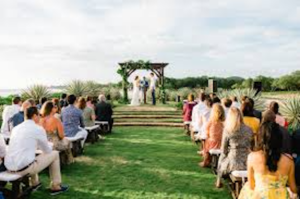
My First Wedding at Rancho Santana

We’ve been having weddings at Rancho Santana for many years.

We offer three venues for a “boda” (as they call it in Spanish).

One begins with a traditional ceremony in our beautiful, interdenominational chapel, followed by a formal dinner in a private room that can accommodate up to 150 people.

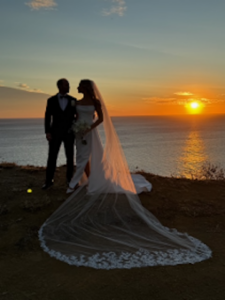
Another takes place at what we old-timers call the “Casa Club,” featuring an informal menu of scrumptious salads, tasty tapas, and oven-baked pizza, overlooking a tree-lined cove and a picture-postcard view of the sun setting on the horizon.

A third option takes advantage of the prime location of our small hotel and principal restaurant, with an elevated platform of grass and stone that stretches out into the ocean like the nose of a ship, giving amazing views of the beach and rugged coastline running north.

You can check out the details for all of them here.

I meant to ask Luke, the CEO, how many weddings his events team is booking these days. I’m guessing it’s about two dozen a year at the current rate. But word is spreading fast. I have little doubt that – barring some pan-Nicaragua tourism blunder – we’ll be booking at least one wedding a week before the end of this year.

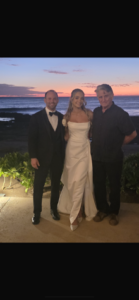
Last week, Rancho Santana was the venue for a very special wedding for me. It was the first one I ever attended.

How I Got Invited 
 
How I know MA, the groom, is, to the best of my memory, a happy coincidence. 
 
About a year ago, Paulo, one of my trainers, introduced me to him as one of his clients that was somehow in the sports fitness and therapy business. I think the meeting was about stem-cell therapy for my shoulder. Either that or it was about setting up a program for getting monthly IV supplementation of various vitamins and other nutrients. Maybe it was for both.
 
Never mind. 
 
MA is a young guy. I think he’s 38. He’s smart. Successful. And likeable. We became fast friends because of the many things we have in common: We had both started businesses and were still very much interested in the art and science of growing a profitable business. We were both practitioners of Brazilian Jiu-Jitsu. And we had a dozen mutual friends – either through mixed martial arts or through business.
 
Since that first meet-up, we trained a few times and spent a few evenings with friends, smoking cigars and talking about just about everything. One evening, we got on the subject of doing business overseas. I mentioned Nicaragua. He told me that he’d been there and was planning to have his wedding there.
 
Where? I asked.
 
“A place called Rancho Santana,” he said. “Have you ever heard of it?”
 
“Yeah,” I said. 
 
And that’s how I got invited. 
 
Here’s What Happened When I Got There 
 
I expected to feel a bit uncomfortable at the wedding since the only person I knew that would be there was MA. I’ve never been a big fan of weddings anyway, so I figured I’d show my face out of courtesy to him and then do an Irish exit as soon as it was possible.
 
But at the welcome party (which took place at La Taqueria, our tapas restaurant), I met his fiancé, who was sweet and beautiful, her family, who were warm and welcoming, and his friends, who were, without exception, smart, interesting, and friendly. 
 
So I stayed.

The guests were very complimentary of the resort, its restaurants and other amenities, and the friendliness of the staff. And, of course, they were blown away by the natural beauty of our seaside paradise. (I don’t know how many times I heard people say, “I can’t believe this place exists!”)

Our latest attempt to get people here to see what we have to offer was to invite a bunch of wedding planners down to give them an idea of what the experience would be like for their clients – and it went very well.

Here is a report from one of them.

This is beginning to sound like an advertisement for Rancho Santana. And I suppose it is. But it’s authentic and in no way hyperbolic.

If you or someone you know is looking for a unique and uniquely beautiful venue for a destination wedding, you should come down and check it out!

Just the Facts: 
Central American Countries Rated for Safety

From the Worldpackers website: “For some reason, Nicaragua seems to get an especially bad reputation in terms of safety, but it’s actually one of the safest Central American countries. And where else in the world can you go volcano boarding?”

Take a look…

* Guatemala: Experiences significant crime, with some cities ranking high on safety indices for danger, though tourist areas are generally safer. I have been to Guatemala several times in recent years and had no trouble, nor did I feel unsafe in the capital city.

* El Salvador: El Salvador has been considered the most dangerous of the Central American countries. But since the recent government crackdowns, including record-high incarcerations of gang members, the rates of homicides, other violent crimes, and burglaries have plummeted. When I was last in El Salvador, about a dozen years ago, my business partner and I had to hire an armed guard to accompany us to meetings and restaurants. Today, a colleague tells me the capital feels like Paris 100 years ago.

* Honduras: Historically high homicide rates, particularly driven by gangs (MS-13 and Barrio 18). Of all the Central American countries, Honduras was the one where I felt the least safe.

* Panama: Generally safe for visitors, with caution needed in some city areas. The Darién Gap is a dangerous exception.

* Costa Rica: Often cited as the safest, with strong tourist infrastructure, though petty crime and some violent crime increase caution levels.

* Nicaragua: I’ve been to Costa Rica several times, and although I would agree that it is generally very safe for tourists, I feel safer in Nicaragua. Recorded crime rates are actually lower than in Costa Rica.

If You Go to Nicaragua 

This is what you’ll see…

Colonial Cities & Culture

* Granada: A beautifully preserved colonial city on Lake Nicaragua, known for its colorful buildings, cobblestone streets, cathedrals, and vibrant atmosphere.
* León: Rich in history and revolutionary spirit, famous for its stunning León Cathedral (Central America’s largest), lively student scene, and proximity to volcano activities.

Volcanoes & Nature

* Ometepe Island: A unique island in Lake Nicaragua formed by two volcanoes (Concepción and Maderas), offering hiking, kayaking, and rich biodiversity.
* Masaya Volcano National Park: See an active volcano crater with glowing lava at night.
* Laguna de Apoyo: A stunning, deep-blue volcanic crater lake perfect for swimming, kayaking, and relaxing.

Beaches & Surfing

* San Juan del Sur: A popular, bustling surf town with beautiful surrounding beaches and a lively party scene.
* Popoyo & Tola Area: Known for excellent, less-crowded surf breaks for all levels, quieter vibes, and stunning sunsets. This is where Rancho Santana is located.
* Las Peñitas: A nearby beach. Great for sunsets and turtle releases.
* Corn Islands: Remote, laid-back islands with turquoise waters, excellent diving/snorkeling, and a distinct Caribbean culture.