This essay and others are available for syndication.
Contact Us for more information.

Where the Heck Have I Been?

Notes From My Journal

If you feel like I’ve neglected you recently, you are not wrong. I’ve been very busy. In fact, last week could well have been the most intense working week I’ve had in years. Perhaps decades!

And that’s not because from Monday through Saturday I woke at 5:30 am, began my working day an hour later, and worked until 11:30 pm, with only one 90-minute break each day to exercise. No. I think the reason the week was so intense (and exhausting) was because – for a large part of that time – I was “working” and in front of an audience and/or camera. And I was playing the role of Michael Masterson, the sage and successful entrepreneur and wealth builder who was spearheading the launch of a brand-new business: DIY-Wealth.

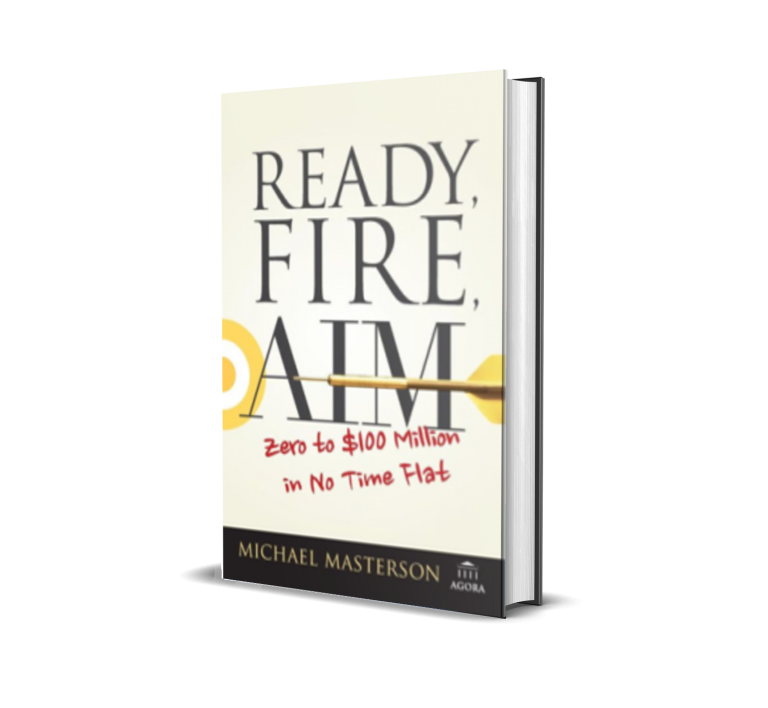
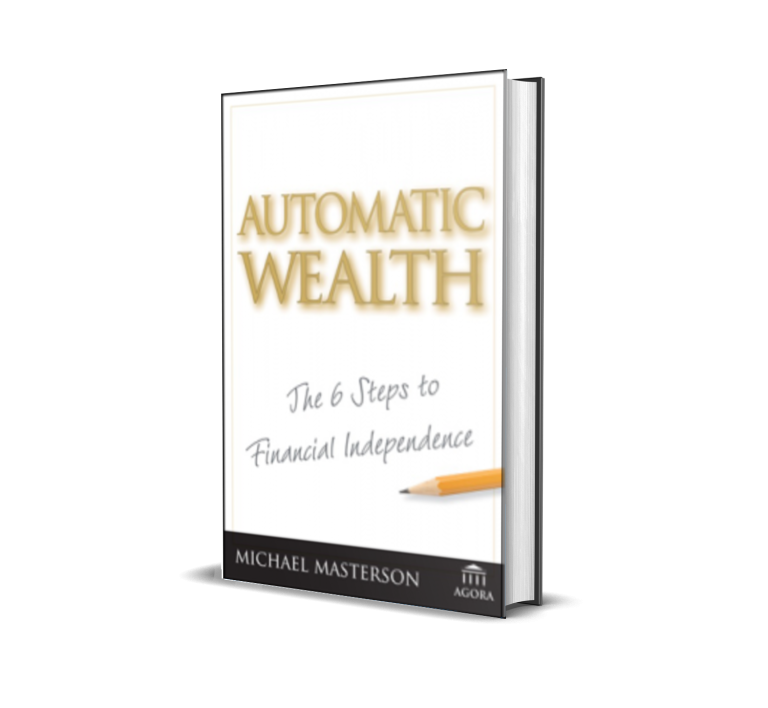
Three of those mornings, I was speaking live to Japanese investors and businesspeople who were seeking help in growing their businesses by following some of the rules I spelled out in Ready, Fire, Aim and Automatic Wealth, both of which were bestsellers in the Japanese business and investing categories.

I am normally confident about speaking to people on these topics. But these were “hotseat” conversations in which they tell me about some problem or challenge they are facing, and I give them on-the-spot, individual advice. I must not only supply a point-by-point plan for resolving their issues, I must also explain it in a way that is universal – i.e., it draws on problems and challenges that many if not most people have in building businesses or accumulating wealth. And to top it off, I know little to nothing about these people or their issues when we begin. Plus, each conversation is limited to 15 or 20 minutes. Which means I have only so many minutes to ask them for details so I can provide them with ideas that make sense.

Don’t get me wrong. I’m not complaining. Of all the things I do in my business, I like conversations like these – whether they are with strangers or employees or friends – as much as or more than anything else I do in my career. Still, it’s exhausting. Two hours of it takes a day’s worth of energy.

After that, there were interviews with the Japanese media – social media influencers and mainstream journalists as well.

All that got me to lunch, after which the entire schedule changed. We were no longer providing content and advertising for our Japanese businesses, we were now creating content to launch DIY-Wealth in the US and the rest of the English-speaking world.

The afternoons consisted of brainstorming sessions, planning meetings, and video and audio content production, which would be edited and then used, along with live promotional activities, in launching the business over the next several weeks.

DIY-Wealth is going to be a membership-based research and teaching organization focused on programs, courses, and digital products on entrepreneurship, business profitability, personal finance, investing, time management, health, productivity, and living with purpose and satisfaction.

That sounds like a lot, now that I say it. But it is tied together and streamlined by being filtered through a narrow funnel: personal experience – primarily mine, but also that of some of the most successful moneymakers I know.

Perhaps the biggest difference between DIY-Wealth and similar businesses I’ve developed in the past is that DIY-Wealth is going to have to reinterpret all the seemingly universal and evergreen truths about increasing income and acquiring wealth – the secrets that I and the rest of our team discovered over the years through trial and error – in the brand-new economic, industrial, and social environment of artificial intelligence.

We will be starting this adventure on the eve of what may very well turn out to be the largest global economic transition since the Industrial Revolution was born nearly 200 years ago. I believe we – and by we, I mean the entire population of the world – are embarking on a voyage into a technological future that will be everything that all the great futurists and science fiction writers once imagined it would be. And more.

And I believe this is going to happen rapidly – starting soon. Like tomorrow!

The Way Digital Technology Blew Up My World 

I don’t know what historians will one day decide, but the digital economy for me began in the mid 1990s, when some of our younger executives began talking about how our industry – the investment newsletter business – was going to change once the World Wide Web was fully spun. BB (my partner) and I had only a rudimentary understanding of what all the commotion was about. But we intuited that if we wanted our company to survive – if we wanted to continue to make money in that industry – we had to figure out how this much ballyhooed prediction of a brave, new information age could happen.

As the mid-90s turned into the late-90s, we encouraged our publishers to keep up with the changes, and most of them did. Some of them believed that our traditional way of selling our newsletters – by renting addresses from other direct response publishers and mailing sales pitches – was on its way out, and an entirely different marketing model based on advertising our products and services on websites would soon become ubiquitous. There was even a bestselling book about it. I can’t remember the title, but I remember the thesis: that our form of selling, which the author called “push marketing,” was going to be replaced by a more gentle and less intrusive method, which the author called “pull marketing.”

Some of our publishers moved their business to that model. But though BB and I had serious doubts it would work, he began writing and publishing what was then one of the first free online digital newsletters (The Daily Reckoning), and I began writing my own free online daily (Early to Rise). By 1992, we were glad we did, because the circulation of each of our newsletters had grown immensely – to about a million subscribers each. More importantly, we gradually figured out how to monetize those “free” names. It became what for two decades was called “The Agora Method,” the standard marketing model for hundreds (if not thousands) of digital publishing companies. And it is still one of the primary methods of selling information online today.

We weren’t the only people to figure this out. Across the world, countless companies that sold information were doing the same thing. And the effect was enormous. In fact, digital direct marketing was a major factor in the rise of global GDP, from roughly $23 trillion in 1990 to over $105 trillion today.

Why I Don’t Trust Statins  And Why You Shouldn’t Either 

For years, I’ve been writing about how uneasy I feel about my doctor’s recommendation that I take statin drugs. As you probably know, I’ve been in the alternative health publishing business since the early 1980s, so I’m very much aware of how unpopular statins are with doctors and scientists who are, like me, suspicious of many of the established protocols favored by mainstream medicine. And the doubts we have are not based on some vague preference for “natural” remedies, but on hundreds and hundreds of published scientific studies that refute or cast doubt on many of the “facts” that mainstream medicine holds to be true.

Statins are promoted to the public as drugs that prevent heart disease and extend life. Most patients come away believing that if they take a statin, lower their cholesterol, and follow instructions, they will live longer.

That promise dissolves when you look carefully at the data. Statins reliably improve bloodwork numbers, especially LDL cholesterol. They do what they are designed to do in that narrow sense. What they do not reliably do for people using them for primary prevention is extend life in any meaningful way. In many large trials, the average life extension amounts to days, sometimes a few weeks, and rarely more.

Did you get that? Those are the facts. (I checked with Nigel, and he is predisposed to mainstream medicine!) Isn’t it insane?

So, you must be thinking, “If that’s so, then why did my doctor write me a prescription for statins? And why do thousands of doctors write prescriptions for millions of Americans to do the same?”

The answer is logical and depressingly obvious once you hear it. Doctors recommend statins because they would be foolish to do otherwise. They operate within professional protocols that opine on “best practices” for treating health issues. Those protocols come from the American Heart Association, the AMA, the CDC, and similar bodies. And once a protocol becomes the standard of care, deviating from it carries legal and professional risk. So even when a doctor knows that they don’t prolong life and do cause adverse side effects, so long as those side effects are not crippling or life-threatening, it would be stupid for them NOT to recommend them.

And why do those major public agencies recommend statins? There are several reasons that all have the same root cause: They rely heavily on population-level statistics and relative risk reductions. A 25% relative reduction sounds impressive. A 2% absolute reduction does not. A recent study comparing American and Japanese patients made this gap visible. When people were shown what statins deliver in absolute terms, most concluded the benefit was not worth the commitment.

But patients are routinely NOT given that information. If they were told that the statins would – at best – extend their life by a week or two while causing all sorts of undesirable side effects, most of them would say, “No, thanks, Doc. I think I’m okay going with alternative solutions, like losing weight and stopping my smoking, etc.”

But the size of the worldwide statin market is between $14 billion and $17 billion annually. And if 80% of all those given this information decided not to take statins, Big Pharma would suffer bigly.

In Short…

Statins do what they are designed to do – lower LDL cholesterol. But that does not reliably translate into meaningful life extension for healthy people. When you look at absolute benefit numbers, the effects are small. In many cases, hundreds of people have to be treated for years to prevent a single event or death. Meanwhile, reports of muscle complaints, metabolic changes, and other side effects are not trivial. For people without existing cardiovascular disease, the decision to take a statin deserves honest, absolute-risk conversation, not marketing spin.

Just the Facts 

Statins Lower Cholesterol but Do Very Little to Prolong Life in Healthy People
* In large-pooled trial data for primary prevention (people without known heart disease), statins showed only very small or non-statistically significant reductions in mortality. Absolute mortality benefits are tiny (about 0.1–0.4% absolute difference). Meaning hundreds of people must be treated for years to prevent one death.

* In low-risk individuals (e.g., <10–20% 10-year cardiovascular risk), statins do not significantly reduce all-cause mortality. Some meta-analyses found relative risk close to neutral (RR ≈ 0.99) for serious illness overall.

All-cause mortality in low-risk groups generally shows no statistically significant reduction or a reduction on the order of <0.5% over years of treatment.

* A recent evaluation found that statins might prevent one major adverse cardiovascular event per 100 people treated for 2.5 years, but no clear mortality benefit in adults without existing disease.

The Takeaway: The drugs reliably lower LDL (“bad” cholesterol), but that does not translate into longer life for people without existing cardiovascular disease.

(Source: Systematic reviews of primary prevention trials)

Cholesterol Counts Are Poor Predictors of Longevity in Healthy Populations
* LDL cholesterol reduction is the primary biochemical effect of statins, and guidelines focus on lowering LDL levels. However, clinical outcomes do not always mirror surrogate marker improvements.

* Lowering LDL does not necessarily produce meaningful longevity benefits in people without pre-existing disease. In large primary prevention groups, lowering LDL often changes numbers without clinically significant increases in lifespan.

* Some older cholesterol-raising drugs (e.g., niacin) improve HDL but do not reduce all-cause mortality or heart attacks, underscoring the fact that modifying surrogate lipid markers doesn’t always change real outcomes.

The Takeaway: Cholesterol metrics are useful in research but are not reliable standalone predictors of longevity, especially among healthy middle-aged people.

(Source: Large clinical trial biomarker data)

Statins Can Cause Significant Side Effects
Muscle symptoms: Statins are associated with a range of muscle-related complaints (myalgia, cramps, weakness). And while large trials sometimes underreport them, real-world analyses and observational data show these effects occur meaningfully among patients.

Myopathy and rare serious muscle damage (rhabdomyolysis): These are uncommon but recognized potential effects, increasing with higher doses.

Diabetes risk: Statin therapy has been associated with an elevated risk of new-onset diabetes mellitus in some analyses.

Moreover: Adverse event rates vary, and large meta-analyses sometimes find little difference between statins and placebo for specific symptoms. But the reality of side effects remains clinically relevant, particularly in patients who do not clearly benefit.

(Source: Pharmacovigilance data and observational cohorts)

Putting the Numbers into Context
If you treated 100 people without cardiovascular disease with a statin for 5–7 years:
*~1 person might avoid a major cardiovascular event.
* Most will experience no clear improvement in lifespan.
* A non-trivial percentage (5–20%) might report muscle complaints.
* A small subset may develop impaired glucose metabolism.
* A very small number could face serious adverse effects.

Summary
* Statins reliably lower LDL cholesterol, but cholesterol levels are an imperfect surrogate for lifespan. Improvements in lipid numbers do not necessarily translate into meaningful longevity benefits in healthy populations.

* Randomized evidence shows minimal mortality advantage in primary prevention, especially for low-risk individuals.

* Statin side effects – especially muscle symptoms and metabolic changes – are real and can be significant for many patients, even if some large trials underreport them.

By a happy coincidence, I received this video link last week from regular contributor Joe Seta about Peter Atia, a doctor/ internet guru who initially impressed me with his vlogs and blog posts. Watch it to get a very credible explanation of how Atia was wrong about statin drugs and a suggestion as to why.

This Nicaraguan Surf Resort Is the Family Getaway of the Year 

Rancho Santana got another good write-up last week. This time, it was from a publication called Coastal Living, which features residential and vacation spots around the world. Here is what they said:

Some vacations feel like the adventure is built right in. That’s certainly the case with Rancho Santana, a sprawling, 2,700-acre resort with five separate beaches on Nicaragua’s Emerald Coast, the country’s southwestern shore on the Pacific Ocean. First up is the ride to the property: about a two-hour drive from the capital city Managua’s airport. The Ranch (as it’s lovingly called) arranges door-to-door transportation for guests, so all that remains is taking in the scenery until the big reveal: enormous views of the Pacific with crashing waves, stunning cliffs, and rose-colored sand. Now it’s time for adventure of every kind, and a great mix for families, as well: world-class surf, hiking trails, a turtle sanctuary, and a treetop spa and yoga center, plus farm-to-table cuisine sourced from the property’s working farm. With those five beaches to choose from – each with its own personality of rugged waves and soft sand – even teens can’t claim they’re bored. Accommodations range from family-friendly casitas and ocean-view homes to standard rooms in the cozy inn with breakfast included (and an all-inclusive option). Adventurers seeking an off-the-radar gem: Here’s your next great vacation. Rates start at $320.

Why I Do What I Do

Readers Write: 

“Love the way you write. Thanks for imparting a bit of your knowledge to me.” – KDW


Postscript: Symbols & Secrets That the Coen Brothers Keep Slipping Into Their Movies 

I recently watched a short film by Ariel Avissar compiling circular imagery in Coen Brothers movies from 1987 to 2018. It revealed something important about how great creators think. As you will see, Avissar illustrates how the Coens use circles frequently in their films. Bowling balls. Steering wheels. Plates. Camera movements. Even framing devices. I never noticed that. I presume it was intentional. In any case, I’m going to be looking for it when I watch their post-2018 movies.