Where the Heck Have I Been?

Notes From My Journal

If you feel like I’ve neglected you recently, you are not wrong. I’ve been very busy. In fact, last week could well have been the most intense working week I’ve had in years. Perhaps decades!

And that’s not because from Monday through Saturday I woke at 5:30 am, began my working day an hour later, and worked until 11:30 pm, with only one 90-minute break each day to exercise. No. I think the reason the week was so intense (and exhausting) was because – for a large part of that time – I was “working” and in front of an audience and/or camera. And I was playing the role of Michael Masterson, the sage and successful entrepreneur and wealth builder who was spearheading the launch of a brand-new business: DIY-Wealth.

Three of those mornings, I was speaking live to Japanese investors and businesspeople who were seeking help in growing their businesses by following some of the rules I spelled out in Ready, Fire, Aim and Automatic Wealth, both of which were bestsellers in the Japanese business and investing categories.

I am normally confident about speaking to people on these topics. But these were “hotseat” conversations in which they tell me about some problem or challenge they are facing, and I give them on-the-spot, individual advice. I must not only supply a point-by-point plan for resolving their issues, I must also explain it in a way that is universal – i.e., it draws on problems and challenges that many if not most people have in building businesses or accumulating wealth. And to top it off, I know little to nothing about these people or their issues when we begin. Plus, each conversation is limited to 15 or 20 minutes. Which means I have only so many minutes to ask them for details so I can provide them with ideas that make sense.

Don’t get me wrong. I’m not complaining. Of all the things I do in my business, I like conversations like these – whether they are with strangers or employees or friends – as much as or more than anything else I do in my career. Still, it’s exhausting. Two hours of it takes a day’s worth of energy.

After that, there were interviews with the Japanese media – social media influencers and mainstream journalists as well.

All that got me to lunch, after which the entire schedule changed. We were no longer providing content and advertising for our Japanese businesses, we were now creating content to launch DIY-Wealth in the US and the rest of the English-speaking world.

The afternoons consisted of brainstorming sessions, planning meetings, and video and audio content production, which would be edited and then used, along with live promotional activities, in launching the business over the next several weeks.

DIY-Wealth is going to be a membership-based research and teaching organization focused on programs, courses, and digital products on entrepreneurship, business profitability, personal finance, investing, time management, health, productivity, and living with purpose and satisfaction.

That sounds like a lot, now that I say it. But it is tied together and streamlined by being filtered through a narrow funnel: personal experience – primarily mine, but also that of some of the most successful moneymakers I know.

Perhaps the biggest difference between DIY-Wealth and similar businesses I’ve developed in the past is that DIY-Wealth is going to have to reinterpret all the seemingly universal and evergreen truths about increasing income and acquiring wealth – the secrets that I and the rest of our team discovered over the years through trial and error – in the brand-new economic, industrial, and social environment of artificial intelligence.

We will be starting this adventure on the eve of what may very well turn out to be the largest global economic transition since the Industrial Revolution was born nearly 200 years ago. I believe we – and by we, I mean the entire population of the world – are embarking on a voyage into a technological future that will be everything that all the great futurists and science fiction writers once imagined it would be. And more.

And I believe this is going to happen rapidly – starting soon. Like tomorrow!
The Way Digital Technology Blew Up My World 

I don’t know what historians will one day decide, but the digital economy for me began in the mid 1990s, when some of our younger executives began talking about how our industry – the investment newsletter business – was going to change once the World Wide Web was fully spun. BB (my partner) and I had only a rudimentary understanding of what all the commotion was about. But we intuited that if we wanted our company to survive – if we wanted to continue to make money in that industry – we had to figure out how this much ballyhooed prediction of a brave, new information age could happen.

As the mid-90s turned into the late-90s, we encouraged our publishers to keep up with the changes, and most of them did. Some of them believed that our traditional way of selling our newsletters – by renting addresses from other direct response publishers and mailing sales pitches – was on its way out, and an entirely different marketing model based on advertising our products and services on websites would soon become ubiquitous. There was even a bestselling book about it. I can’t remember the title, but I remember the thesis: that our form of selling, which the author called “push marketing,” was going to be replaced by a more gentle and less intrusive method, which the author called “pull marketing.”

Some of our publishers moved their business to that model. But though BB and I had serious doubts it would work, he began writing and publishing what was then one of the first free online digital newsletters (The Daily Reckoning), and I began writing my own free online daily (Early to Rise). By 1992, we were glad we did, because the circulation of each of our newsletters had grown immensely – to about a million subscribers each. More importantly, we gradually figured out how to monetize those “free” names. It became what for two decades was called “The Agora Method,” the standard marketing model for hundreds (if not thousands) of digital publishing companies. And it is still one of the primary methods of selling information online today.

We weren’t the only people to figure this out. Across the world, countless companies that sold information were doing the same thing. And the effect was enormous. In fact, digital direct marketing was a major factor in the rise of global GDP, from roughly $23 trillion in 1990 to over $105 trillion today.

The Principles of Wealth – a Work in Progress 

[Note: This is the Introduction to a book I wrote and then set aside many years ago. I titled it “The Principles of Wealth” because I wanted it to be – well, a little bit lofty and maybe even pretentious. I’m now back to revising it, and I’m going to be publishing chapters of it serially so I can (with your help) get some feedback that will help me get it ready for print.]

A Wealth Seeker’s First Conversation About Money
Step One: A Definition of Wealth 

One can’t have a profitable conversation about wealth without agreeing upon a definition of the word. And that’s a more difficult task than it might seem. I did a brief scan of several of my Stone Age paper-bound dictionaries and found definitions that were redundant (e.g., “material prosperity”) and others that were circular (e.g., “the state of being rich”), but nothing of use.

Let’s consider two common misunderstandings about wealth:

Many people equate wealth with the accoutrements of wealth – a yacht, a Rolex watch, a million-dollar house. But if the owner of such things doesn’t own them outright, they are false signs. In fact, there are millions of people – probably tens of millions of people – in the US alone that have huge houses, big boats, and treasure chests of bling who are not wealthy. They may, in fact, be poor. Or broke. Or hopelessly in debt.

People also equate wealth with income – thinking that having a high income makes one wealthy. But every major city in the industrialized world is crowded with high-income earners that have no wealth and little likelihood of ever acquiring it.

I’ve been thinking about a definition since I started writing this book about 10 years ago. And although I haven’t found one that is perfect, I have come up with one that I like because it’s simple, useful, adaptable, and easy to remember:

Wealth is having more of something valuable than you currently need.

If you accept this pared-down definition, you will see that there are many forms of wealth.

There is wealth of knowledge, wealth of experience, wealth of friendship, wealth of spirit, wealth of optimism, wealth of patience, wealth of hope, and wealth of love – to name a few.

All of them, most people would agree, are valuable – even if some aren’t quite things.

So, having more than you currently need of something that has value – that’s one component of wealth.

But having more than you currently need means that these valuable things must also be things that can be stored.

You might say, for example, that you can be rich in happiness in the sense of having an abundance of it. But it would be difficult to argue that you could store a portion of that abundant happiness for a later time. Happiness is ephemeral. It comes. It goes.

Exploring the various forms of wealth is a discussion well worth having. It could easily take up a book, or a library of books. But my aim here is to focus on material wealth – and to consider the possibility that there are truths about material wealth and acquiring it that are universal.

Let’s begin with a discussion of what I think of as “the first principles of wealth” – the philosophical, ethical, and social considerations.

[Note: That’s the end of the Introduction to “The Principles of Wealth.” Please write with any questions, comments, or recommendations you may have.]

How Currencies Can Predict the Economic Future of Countries

Three Case Studies: Iran, Japan, and the US 

When I first got into the investment newsletter business in 1982, the only thing I knew about currencies was that there was more than just dollars, pesos, and francs. I understood, in a hand-waving way, that they went up and down and that serious people had serious explanations for why. Beyond that, my ignorance was nearly complete.

Four decades later, I know more – but I’m hardly an expert. Marginally knowledgeable is the best I can claim. But currencies are one of those subjects where confidence rises faster than understanding, and I’ve learned to be suspicious of both.

That’s why, when I recently came across an essay that extended my understanding of currencies, I made some notes to include in this issue, as much to double-check what I had learned (what I think I had learned) as the desire to share it with you.

One idea I had learned about currencies from the books I had read was that the value of any currency is entirely dependent on what those that hold and/or trade that currency think about it. If they believe it’s solid, like most of the world has believed about the US dollar since WWII, then it is solid and has the chance to become a global “reserve currency.”

The essay I read made the point that currencies can be seen as “collective judgments about the future of the country that issues that currency.” Not the official story, not the political rhetoric, but what people with money at risk actually believe. Thus, one can view exchange rates as opinion polls – only the respondents don’t get to lie.

Now to the arguments made in the essay, considering three countries and their currencies: Iran, Japan, and the United States.

Iran 

The rial has fallen so far that on some exchanges it’s effectively treated as worthless. Inside the country, it still circulates. Outside it, no one wants to touch it. Iran’s official inflation rate is over 40%, which is bad. But inflation alone doesn’t explain why a currency collapses to near zero. What explains it is radical uncertainty – about the regime’s survival, the government’s finances, oil revenues, sanctions, and what the rules will be tomorrow. Currency markets don’t wait around for clarity. When the future looks unstable, they move immediately.

The rial isn’t forecasting Iran’s fate. It’s reporting on confidence – or, rather, the absence of it. If the currency were ever to strengthen meaningfully, it wouldn’t be because of hopeful speeches or policy promises. It would be because markets believed the country had a plausible path out of chaos.

Japan 

Japan’s story is quieter but just as revealing. The yen has fallen from roughly 100 to the dollar in 2016 to around 158 today. Japan usually runs lower inflation than the US, so this isn’t about prices spiraling out of control. It’s about long-term arithmetic. Government debt exceeds 200% of GDP. Interest rates are rising. And Japan lacks two advantages the US enjoys: the world’s reserve currency and overwhelming military power.

Japan has managed these risks skillfully for years. But currencies look forward, not backward. A weak yen suggests markets see growing strain in that balancing act – especially if higher rates make an already massive debt harder to service. The fact that Japanese pension funds rely heavily on US equities to meet obligations works beautifully… until it doesn’t.

The United States 

Then there’s the United States. When sweeping tariffs were announced with great fanfare, the dollar fell sharply. Markets recalibrated. Volatility was back. What’s interesting is what happened next: The dollar stabilized. Even extraordinary political pressure on the Federal Reserve barely moved it. The market’s message seemed to be: We see this. We’ve already adjusted.

The Truth About the Much-Touted Gender Pay Gap

Just the Facts 

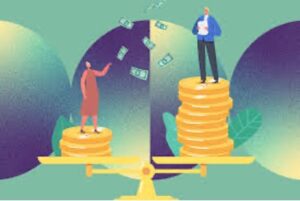
You have no doubt heard at least a dozen times that there is a “gender pay gap” in the US – i.e., that women make only about 80% (79% to 83%) of what men make, and that is evidence of bias and discrimination.

Well, it’s not true. When researchers account for career field, hours, and seniority – effectively comparing like with like – the apparent gap shrinks dramatically. Some studies say it
narrows to less than 10 cents. Some say 6 cents. Some say a penny. And for very good reasons.

For one thing, most of the so-called gap comes from choices and work patterns. Men are overrepresented in industrial jobs, heavy labor, and dangerous jobs. Women are overrepresented in teaching, nursing, and other jobs where workers generally receive lower wages.

Other factors include hours worked and seniority. Women are more likely to work part-time or take career breaks for caregiving. In fact, when studies compare full-time workers with similar hours, some data show the earnings ratio reverses!

Jobs and Professions Where Women Earn More Than Men 

A few examples:

* Modeling. Among top-earning fashion models, female models have historically earned more than male models.

* Creative Roles. Some occupational data show that in specific creative roles like producers and directors, women’s median earnings exceed men’s. One analysis reported women earning about 128% of what men make in these roles.

* Career Counselors. In the same occupational dataset, women’s pay in this field slightly exceeded men’s, reported as roughly 106%.

* Some Clerical/Administrative Roles. According to some wage surveys and Bureau of Labor Statistics breakdowns, categories like billing and posting clerks, reservation agents, and receptionists sometimes show women earning more per hour than men – though these tend to be lower-paying roles overall.

For a quick overview of the data, watch this video from Prager U. Economist Christina Hoff Summers explains the phony calculations and why they never made any sense.

And if you are up for it, here are some studies on the gender pay gap that you might want to check out:

* Blau, Francine D. & Lawrence M. Kahn, The Gender Wage Gap: Extent, Trends, and Explanations, National Bureau of Economic Research (NBER Working Paper No. 21913, updated versions through the 2010s), a foundational labor-economics review – Finds that most of the observed wage gap is explained by occupation, experience, hours worked, and labor-force attachment.

* Goldin, Claudia, A Grand Gender Convergence: Its Last Chapter, American Economic Review, Vol. 104, No. 4 (2014) – Shows that remaining wage gaps are concentrated in occupations that reward long hours, inflexible schedules, and geographic mobility, rather than unequal pay for equal work.

* US Department of Labor, An Analysis of the Gender Wage Gap (2014) – Finds that the majority of the raw wage gap is attributable to differences in occupation, industry, hours worked, and work experience.

* Payscale, Gender Pay Gap Report (annual editions, esp. 2016–2023) – Reports a large “uncontrolled” gap but shows that after controlling for job title, location, education, experience, and hours, women earn roughly 98 to 100 cents per dollar of men

* CONSAD Research Corporation, An Analysis of Reasons for the Disparity in Wages Between Men and Women (commissioned by the US Dept. of Labor, 2009) – Concludes that available data do not support claims of systemic pay discrimination for equal work; observed gaps reflect measurable differences in work patterns and career choices.

Is There Really a Difference Between Socialism & Communism?

It’s a question that comes up almost every time one gets into a discussion about the virtues of “Socialism.” Libertarians, Free Market advocates, and others who understand economics and know the history of Communism in the 20th century (like yours truly) often take the position that there is no difference. And if one wants to push the argument (that they are the same), one could say, correctly, that Karl Marx used the terms interchangeably.

But in looking at the history of this debate since Marx, one has to concede that three useful (two lucid, one somewhat fuzzy) distinctions have emerged:

1. In terms of property rights, Socialism advocates for the collective ownership of major industries, but individuals can own personal property. Communism advocates for complete communal ownership. No private property at all.

2. In terms of wealth distribution, Socialism advocates for the redistribution of wealth by government ownership and/or management of all industries involved in “the means of production” and government control over all social, legal, and bureaucratic activates that affect “quality of living,” including housing, transportation, education, and health care.

3. In terms of achieving political change, Communism explicitly supports the establishment of a central government through violent revolution, whereas Socialism (or rather Socialists) often advocates change through political and legal means and social activism, which can include violent protest.

Just the Facts 

The Idea of Communism
Communism is an economic and political concept that was more-or-less invented by Karl Marx and Friedrich Engels, who made the case that the world would be a better place for everyone if class structures, and particularly economic structures, were eliminated.

The Reality of Communism
In the 20th century, it became a system of state power following revolutions in Russia, China, Cuba, and several African states. In every case, Communist governments centralized economic, legal, political, military, and policing institutions. They then proceeded to eliminate personal liberties, including the freedom of speech and other forms of individual expression (e.g., art, music, and theater).

What About Those Nordic States?

It is often claimed that the Nordic countries are Socialist. But as their own leaders have repeatedly explained, they operate largely Free Market economies, with strong protections for private property and privately owned industries. In Denmark and Sweden, for example, the vast majority of businesses – including banks, manufacturers, retailers, and exporters – are privately owned, not state run. Government ownership is limited and far smaller than in classical Socialist systems.

Sweden’s corporate tax is 20.6%, and Denmark’s is 22%. That’s right in the middle of the US corporate tax rate, which is 21%.

Capital gains and inheritance taxes in Denmark are moderate – lower in most cases than they are in the US. And Sweden abolished its wealth tax (in 2007) and inheritance tax (in 2005).

Meanwhile, these countries provide good social services – in some (but just some) cases, providing more coverage than the US provides. And they have done that without racking up trillions of dollars of debt!

How do they do that?

This is another thing that would make people who claim Nordic countries are Socialist gag if they knew it. The tax systems in Sweden and Denmark work not because they are super-progressive (i.e., super-high taxes for rich people), but because their tax systems are broadly based. Their welfare programs are funded through flat or mildly progressive income taxes and high consumption taxes (VAT around 25%).

Translation: Middle- and working-class citizens – not just the rich – pay a substantial share of the overall taxes, unlike highly progressive tax models often associated with Socialism.

Just the Facts: About Renewable Energy

In case you think renewable energy is doomed to suffer the same fate as mainstream media, consider this:

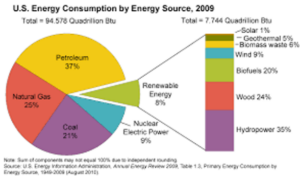
* Renewable energy generated more electricity than coal in the first half of 2025 – a historic first.

* Even if no country can quite take America’s place, China will at least flood the global market with cheap green technologies, helping to stave off the worst of the climate crisis.

My Predictions for AI, the US Stock Market, the US Economy

All thoughtful men that are concerned about humanity will be concerned about its future – i.e., hopeful that it will be good for our species, but also fearful that it might go wrong. There was a time in my life when I had a rather laissez-faireattitude about the political, economic, and social issues that were dissected and argued about in newspaper editorials and op-ed pages. I rationalized my lack of concern by insisting that all the big problems were entirely out of my hands, and that if I wanted to make the world a better place, I had to do it as an individual, one action at a time.

I still believe that is essentially correct. But since 2020, I’ve been covering a wider scope of subjects in my blog, including the social, political, and economic issues I ignored when I was younger. And my commitment to covering those issues has resulted in my reading about them daily, which has itself resulted in my caring about, and even rooting for, some outcomes.

So since I find myself attached to these opinions, I can’t resist the opportunity to do what so many blowhards do at the beginning of January: provide my kind readers with the opportunity to discover what I think is ahead for them (and for most of the rest of us) in the coming 12 months.

I’ll begin with Economics – but first, a caveat: I’m not an economist, and I’m not trying to be one. I don’t build models. I don’t forecast GDP to the decimal. And I don’t pretend that history repeats itself neatly enough to be relied upon. What I do instead – both as an investor and as a business operator – is watch incentives, behavior, and capital. I watch what CEOs do when no one is forcing them. I watch where money flows before it shows up in the headlines. And when technology is rapidly changing, I try to pay attention to who the winners and losers will be.

Based on that, this is what I think we’ll see in 2026…

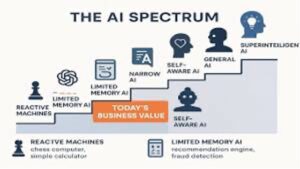
* AI will be the main factor in economic growth, profits, and productivity in every country in the “developed” world. Its effect on the rest of the world – countries with medieval cultures and economies – will eventually be huge, but not in 2026.

* AI technology will continue to immigrate into every level and sector of the economy – from mega-billion-dollar international conglomerates to local grocery stores, and from boardroom execs to department managers and rank-and-file employees.

* AI will make its way into the full spectrum of business activities – from manufacturing to assembly to testing to packaging, shipping, wholesale and retail distribution, and then to consumers, who will be using AI technology to receive, account for, and make use of virtually every product and service they purchase. Some of this will be obvious and disruptive. But much of it won’t, because businesses that begin to employ it will do so gradually and quietly to limit the disruption while they monitor its effect on top and bottom lines.

* The rate at which AI spreads will be uneven. It will move more quickly into economic and business activities whose activities and functions are most susceptible to AI implementation, such as engineering, architecture, accounting, and all services involved in producing visual effects, from local sign painters to Hollywood movie studios. It will spread more slowly in organizations that are strongly unionized, traditionally complicated, and heavily bureaucratized, such as large educational and government institutions.

* With each passing month of 2026, the landscape of the American workforce will be changing. Thousands – maybe tens of thousands – of American workers will lose their jobs. And most of those that keep their jobs will see material changes in what they do, how they do it, and with the expectation that they will significantly improve their productivity and take on additional work.

* Many jobs will be seen as less valuable. Tasks that once justified solid salaries – analysis, reporting, drafting, basic technical execution – will be quietly absorbed by AI systems. And by the end of 2026, this shift will affect most employees in most companies.

* In the second half of the year, there will be a significant disruption within companies – including restructuring mistakes and internal conflict as issues about authority, workflow ownership, and headcount assumptions become top of mind. This will happen relatively quietly at first. But it will get noticed by the media and the public in Q3 and Q4, with companies showing larger profit margins but lower levels of employee satisfaction and an increasing number of labor relations complaints.

* Due to AI’s impact on productivity, job growth will slow dramatically. This is a trend that has already begun as Amazon, Microsoft, Salesforce, and UPS have laid off thousands of employees and industry leaders like Walmart and Ford have openly said that revenue will rise while headcount falls.

* The stock market will have moments of panic, as some of these facts are reported – which will result in tens of thousands of individual investors bailing out of their positions as share prices plunge. This will increase the prices of most hard assets, including gold and silver, and it will stimulate further investing in instruments of federal, state, and corporate debt. There will be ups and downs throughout the year. But by the end of 2026, the market averages will move back up to levels that equal or exceed the January numbers, and this will pave the way for another rollercoaster ride for investors in 2027.

* Despite radical variations in certain sectors, the US GDP will end the year within 5% of what it was when the year began. My thinking here is, again, that AI is designed to make existing work more efficient, not to create new needs or even opportunities to persuade customers to believe they need new things. For 90% of its implementation, AI will quietly work behind the curtain, making every process faster and more accurate, which will mean less costly, which will mean that the product or service in which AI is residing will be subject to price deflation. Thus: fewer dollars in circulation. Just moving more quickly, bringing the cost of such products and services down.

* The Federal Reserve will cut rates three times in 2026. The Fed’s projections don’t show three cuts. And most forecasters expect one or two at most. But I’m thinking this could happen because (a) AI-driven productivity will reduce hiring demand, (b) reduced employment will look bad for Trump as we move towards midterm election, and therefore (c) POTUS and the Republican Party (which will be ascending in voter approval) will demand it.

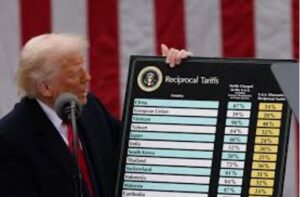
* Trump’s reciprocal tariffs will become the new normal. They are on track now to bring in close to $300 billion in revenue annually, with an effective tariff rate that has peaked at 12.1% – the highest since 1934. The current legal challenges against them will fail at the Supreme Court, and after that all the key economic indicators will point up, with a broadening and strengthening of the US economy from Q2 onward.

Note: AI is an agentic system – and agentic systems don’t just improve tools, they challenge authority, workflow ownership, and headcount assumptions. All of this will create feelings of uncertainty and anxiety – both on the capital side and with labor – and eventually the pain and discomfort of disruption will be felt. But not so much in 2026. Most companies are still early in implementing AI. The messy part – restructuring mistakes, internal conflict, and the major loss of jobs and deflation of human labor – will come after deployment. Perhaps in 2027, but (IMHO) more likely in 2028 and 2029.

Is the American Dream Over? 

According to a recent Gallup poll, a record-­low 58% of US adults say they are “extremely” (41%) or “very” (17%) proud to be an American. That’s down from 90% in 2004. For Gen Zs, that number plummets to just 47%. And it’s not just a generational gap. Another poll concluded that 70% of US citizens believe the American Dream is no longer attainable.

“That isn’t just sad,” Alex Green says, “It’s a national tragedy.”

In his new book, The American Dream: Why It’s Still Alive… And How to Achieve It, which I had a chance to read just before it was published, Alex argues that all the pessimism about America’s future is largely unfounded and that the American Dream – the idea that the United States offers anyone and everyone a chance to acquire wealth and have a good life – is still very much a reality.

I’ve known Alex for more than 30 years. I met him in the early 1980s when he was working as an analyst for an international brokerage and accepted an invitation to speak at one of the investment conferences my partner and I were putting on at various overseas destinations. We became colleagues when, motivated to teach what he had learned about successful investing, he went to work as Chief Investment Strategist for the Oxford Club, an international research and advisory club created in 1983 to serve individual investors. Since then, we’ve become connected by a longstanding discussion about what I think of as the “soft side” of finance – how wealth is most efficiently created, and the dangers of seeking wealth without the right philosophical and ethical perspectives.

What Money Can Do 

I’ve written a fair amount about the fact that having money does not automatically lead to happiness. However, that does not mean that acquiring wealth is not a worthy goal. As Alex explained in a recent email to me:

Money is independence. It liberates you from want, from work that is drudgery, from relationships that confine you. No one is truly free who is a slave to his job, his creditors, his circumstances, or his overhead.

Wealth is the great equalizer. If you have money, you have power – in the best sense. Wealth is freedom, security, and peace of mind.

It is not a guarantee of outcomes but of opportunity. It promises that everyone has the chance to improve their circumstances through their own efforts.

That last point is important. One of the things Alex and I have always agreed on is that the discussion about wealth and poverty that takes place in academia and in politics is too much about the geopolitics of wealth and the presumed power imbalance between the wealthy and the rest of the population. These perspectives can give comfort to those that are not wealthy, but the solutions they offer – geopolitical solutions – don’t work for the individual.

In other words, one cannot expect to improve one’s financial position in the world through state-level, political solutions. That has never worked and it never will. As Alex wrote in a recent essay, “Your power to change a nation of more than 330 million people is negligible. But your power to change yourself – your choices and your behavior – is limitless.”

That is just one of several key themes laid out in his new book.

The Pursuit of Wealth… and Happiness 

The idea that every American can, without help from the government or family assistance, achieve a better, richer, and fuller life, is not new. Nor is it complicated. It is embedded in the wisdom of many of America’s greatest political, economic, and philosophical thinkers, from Thomas Jefferson to Benjamin Franklin to Milton Friedman to Steven Pinker.

Unlike societies built on rigid class structures or inherited privilege, America was founded on the radical notion that merit, effort, and character matter more than bloodline or social status.

The American Dream says, “Your future is not predetermined by your past. Your efforts matter. Your choices have consequences. You can be the author of your own story.”

The American Dream places the power of change squarely in the hands of the individual.

It encourages innovation, risk-­taking, and resilience.

Belief in it turns setbacks into steppingstones and failures into learning experiences.

And that is why, as Alex says, the American Dream remains so important today. “It addresses the deepest human needs: the need for purpose, the hunger for progress, and the desire to build something lasting for future generations. In a world increasingly divided by cynicism and despair, the American Dream stands as a beacon of possibility. It has drawn millions to our shores and has guided millions more who were born here.”

It’s Our National Ethos… It Shapes Our Identity

In Alex’s view, the United States stands on three pillars:

* The Declaration of Independence, which declares that we are a free people whose rights preexist government

* The US Constitution, which both empowers and limits government to protect those rights

* The American Dream, which is how we exercise our right to pursue happiness

“Without these three pillars,” he says, “we are not the same nation. Not the same people. America is not perfect. It never has been. But it remains the best environment on Earth for ordinary people to build extraordinary lives.

“The souring of national sentiment isn’t driven by facts as much as by narratives.

“When every institution you trust – your school, the media, perhaps even your political party – emphasizes America’s sins over its successes, it’s easy to internalize the message that this country is fundamentally flawed – and the Dream is no longer real.”

Alex says that one of the chief objectives of The American Dream: Why It’s Still Alive… And How to Achieve It is to “better align perceptions with reality” – and he wrote the book for three kinds of readers:

* Disbelievers. They don’t believe the Dream is real because they don’t know what to do, aren’t doing it, or don’t realize they are already living it.

* Frustrated Dreamers. They know the Dream exists, but it feels out of reach.

* Dream Achievers. They’ve lived some version of the Dream, but they worry about their kids and grandkids. Or they want to help other Americans find the path.

“It’s natural to feel overwhelmed. If not outright depressed,” says Alex. “There’s an inertia – perhaps even a fear of failure – that keeps many from taking that first step.”

For those individuals, he has an interesting suggestion, which he explained in a recent essay he wrote introducing the book to the 160,000 Oxford Club members who rely on his wealth-building advice:

Become a star in your own reality show. 

Nielsen Media Research tells us that Americans love reality shows where contestants are put in high-pressure situations and challenged to “win” using every bit of intelligence, cunning, and resourcefulness they can muster.

If you’re behind the eight ball financially, why not view your problems the same way?

I’ll bet if you were in front of a national television audience – and in danger of being voted off the show – you’d come up with some pretty good ideas, ones that might surprise the people around you.

(After all, you know better than anyone else the wasteful or frivolous spending that holds you back.)

Mihaly Csikszentmihalyi, author of Flow: The Psychology of Optimal Experience, thinks that’s a great idea. He asserts that the quickest way to increase your life satisfaction is to stop seeing your problems as difficulties and start viewing them as challenges to be accepted with a sense of playful enjoyment…

Facing your problems requires two things: a bit of imagination and a positive attitude. The payoff, in turn, can be huge. Whether you want to start your own business, get out of debt, or start down the path to financial freedom, you can begin by relishing the opportunity.

You might surprise yourself, too. Not only by achieving your goals, but by seeing how much satisfaction you get just moving toward them in a disciplined way….

Success – or the pursuit of it – validates your life. It gives you a reason to get out of bed in the morning. It also makes you feel good….  And that is why you should star in your own reality show. (One that, not coincidentally, actually deals with reality.) The obstacles in front of you will give you the opportunity to show the world – and yourself – what you’re made of. [And you will be rewarded by experiencing] one of life’s greatest pleasures: the feeling of earned success.

Those are some of the reasons I am recommending Alex’s new book. There are others. For example, he also covers issues that are top of the mind for many American investors, such as:

* Economic trends – e.g., that the percentage of US households earning more than $100K has increased significantly since 1980

* Why the US remains a land of opportunity due to a robust economy, leading global companies, and significant contributions to science and technology

* The life-enhancing value of embracing “Radical Responsibility”

* Why we are living in a new “Golden Age” for investors

* How to shorten the road to financial independence by embracing “The World’s Simplest Investment Portfolio”

As one reviewer recently put it, “The American Dream: Why It’s Still Alive… And How to Achieve It earns a well-deserved spot on the bookshelves of all ambitious individuals seeking long-term financial prosperity and to experience the ultimate feeling of earned success.”

Here’s a link to order the book.


About Alex Green 

Alex Green was not a great student. He did not go to private schools. (“As a kid,” he says, “I didn’t even know anyone who attended a private school.) He did not study at an elite university. He did not earn any scholarships, academic honors, or advanced degrees. He had no family connections, no mentor, and no professional network. Yet he managed to become a multimillionaire while still a young man – and continues to compound his wealth today, as well as the wealth of the 160,000 Oxford Club members who follow his financial advice.