
What Does Literary Fiction Have to Do with Figure Skating?

I just read The Last Painting of Sara de Vos by Dominic Smith, this month’s selection for the Mules (my book club). Smith is impressively adept at constructing sentences and in selecting le mot juste. In those regards, he merits A+. But good fiction is more than wordsmithing. It’s about creating stories that not only arrest our attention, capture our imagination, and somehow expand our minds and hearts, but do so in a way that is beautiful.

So how do I rate this book?

Aristotle wrote the foundational treatise on literary criticism with the Poetics, where he defines the essential elements that make a piece of literature work. Though his focus was on drama (tragedy, in particular), I’ve always found it very useful in helping me understand what I like and don’t like about the plays, movies, and other visual media I consume, as well as the books I read.

It is less than perfect, however, in helping me explain how much or how little I like them – which means that I’ve had to come up with my own way to evaluate the recommendations I make on this blog.

I came up with a system that I had great hope for at first – a rating based on the work’s “horizontality” and “verticality.”

Horizontality was about how well it created its fictional world (a time, a place, and a culture).

Verticality was about how well it portrayed – through plot, characterization, and dialog – a deep sense of what a human being is and is capable of being.

These analytical tools have not only been helpful to me in writing my recommendations, they have been helpful during book discussions at our Mules meetings, giving us terms we can use to better communicate our ideas and feelings.

Which gets me back to where I started…

How do I rate The Last Painting of Sara de Vos?

After finishing the book, I had two seemingly incompatible feelings about it.

On the one hand, I was much impressed by the author’s skill as a wordsmith. On the other hand, I felt that the story itself, while good, was not great. And that the way it was told – including the action, the plot, the characterization, and the theme – was handsome, but not beautiful.

So as a reader who very much appreciates the poetic aspects of literary fiction (the diction, the syntax, the metrics, etc.), I would have rated the book very highly. But in terms of my experience of the novel as a whole – the overall aesthetics – I would have rated it good, but not great.

The problem stuck in my craw, and I went to bed without a solution. But today, I had an idea – a very simple rating system that has been used successfully for decades. I’m talking about the way they rate ice skating performances at the Olympics. Competitors get two grades: one for technicality and another for beauty.

So now I’m thinking that it might be helpful to introduce this idea to the Mules: that in addition to the other frames of reference we can use to critique the literary fiction we read, we can provide two additional numeric ratings, one for technical and another for aesthetic virtuosity.

I’m thinking this could work.

Let me know what you think.

From Jan. 2 Predictions

From KK re my comments about cybersecurity and AI in the Jan. 2 “Predictions” issue: 

“Thanks for bringing up cybersecurity in the blog. I’ve made it my top political issue, moving it ahead of the debt and the environment. The steady stream of reports of data breaches, leaks, ransomware attacks, digital extortion cases, and state-sponsored attacks have led to ‘breach fatigue.’ Today, more than ever, we need to be vigilant!

“And just for the record, AI – or as I call it, machine intelligence – is not humanity’s friend, it’s our competitor!”

My Response: Well put!

An increasingly large percentage of the posts I see these days are deep fakes… even those supposedly coming from national figures. Right now, it’s pretty easy to detect them. It will be more difficult in the future.

Another increasingly large percentage of the posts I see are made by actual humans reading from AI scripts. These, too, are easy to detect – at least for me as a writer who has dabbled with AI.

It’s hard to say what will become of all this in 10 or 15 years. In the meantime, there is going to be a surge of digital deception, disinformation, and outright fraud and scamming going on that will victimize millions of people.

What Else Happened Last Week?

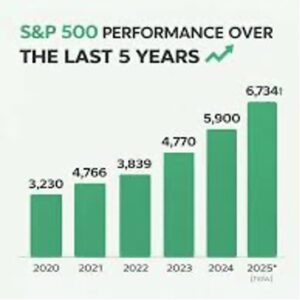
* The S&P 500 completed one of its best three-year runs ever, rising around 80% from the start of 2023 through Dec. 31, 2025.

Wall Street thinks the party is just getting started, but few expect the good times to keep rolling indefinitely.

* Trump threatened to intervene if Iran cracks down violently on ongoing protests, putting pressure on Tehran as it tries to contain discontent with its economy.

* Gavin Newsom’s wealth tax dilemma: “Wealth taxes are going nowhere in California,” he has insisted. Not so fast. A wealth tax may be going to voters this November.

Read more here.

1976: Andy Kaufman Lip-Syncs “Old MacDonald”

 With Audience Volunteers

Hard to believe this was 50 years ago. After working in small comedy clubs in the early 1970s, Kaufman gained national attention in 1975 with an appearance on SNL. He would go on to play Latka Gravas on the TV series Taxi from 1978 to 1984, when he died of lung cancer at only 35.

Some called him an anti-comedian because of his proclivity towards rudeness, which is displayed here. But equally evident is the absurd genius of this idea.

Other Fun and (Possibly) Probable Predictions for 2026

* Concerns about cyber- and digital-security will grow due to increased threats and attacks. Deepfakes in local advertising, fake business news in major media outlets, major thefts of customer accounts and information, AI-generated false claims and fake dates being reported to government regulatory agents will result, towards the end of the year, in a major loss of confidence in financial reporting by both government and corporate accounting.


* A digital trust crisis will emerge, and digital gurus will become more highly valued. Concerns about deepfakes, fraud, and synthetic data will escalate throughout 2026, culminating in a loss of confidence in digital reporting. This is already happening as AI is making all forms of digital deception cheaper and more scalable. Detection and verification technology will become more important than ever, but the technology for detection and verification will become more costly. And since it will always lag behind digital deception, public confidence in it will diminish. The ultimate result will be that consumers of information will no longer look for digital security and protection, but will turn instead to digital influencers they trust. That will give rise to a huge increase in both the number of digital gurus and the dollar impact that they have on not just commerce, but on politics and culture.


* The EU will mandate universal digital IDs and introduce a new digital euro. Both will be sold as instruments to drastically reduce crime, drastically increase financial security, and make all aspects of life – from traveling to buying groceries – easier. Libertarians will object, but the public at large will embrace them. Within months of implementation, crime will be drastically reduced, but so will personal liberty and privacy. Eventually, this will lead to a hyper-Orwellian state of living where the government will have complete knowledge of everything its citizens do and the complete ability to control their behavior by government-controlled digital monitoring, policing, and confiscation and taxation systems.


* Beijing and its geopolitical allies will continue to test the supremacy of the US dollar – and with some success, as Beijing rolls out a gold-linked offshore yuan for redenomination of its trade. By the end of the year, the dollar will still be a major reserve currency, but not the only one.


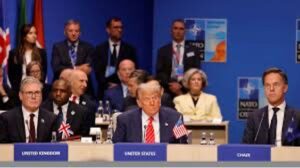
* NATO will continue to lose its influence – and by the end of the year will face replacement by another defense treaty whose members are exclusively European.


* The US and other American countries, including Canada, Central America, and most of South America will begin talks for a new defense treaty for them and them only.


* Tensions between stasis and change in the Middle East will increase. By the end of the year, the Trump administration will have secured a new peace agreement.


* Defense technology will change how wars are fought. Military investment in technology will surge, both by governments and in the private sector. The speed of innovation will increase, with the timeline from battlefield to civilian application compressed, and it will fundamentally reshape infrastructure, emergency response, and healthcare worldwide.

And, finally…

From Edison to Hamnet: Readers Weigh In on 2025

Re my Dec. 29 “Best of 2025” issue: 

“Terrific post! Nice job!” – AF

“For inventors: Thomas Edison and Charles Steinmetz. And I love Bukowski.” – BB

“I have to add a movie that is certain to be in any Top 10 this year: Hamnet.” – JS

My Response: Oddly, Hamnet was one of the very few movies I did see in 2025. It was very good… and I forgot about it!