
All thoughtful men that are concerned about humanity will be concerned about its future – i.e., hopeful that it will be good for our species, but also fearful that it might go wrong. There was a time in my life when I had a rather laissez-faireattitude about the political, economic, and social issues that were dissected and argued about in newspaper editorials and op-ed pages. I rationalized my lack of concern by insisting that all the big problems were entirely out of my hands, and that if I wanted to make the world a better place, I had to do it as an individual, one action at a time.
I still believe that is essentially correct. But since 2020, I’ve been covering a wider scope of subjects in my blog, including the social, political, and economic issues I ignored when I was younger. And my commitment to covering those issues has resulted in my reading about them daily, which has itself resulted in my caring about, and even rooting for, some outcomes.
So since I find myself attached to these opinions, I can’t resist the opportunity to do what so many blowhards do at the beginning of January: provide my kind readers with the opportunity to discover what I think is ahead for them (and for most of the rest of us) in the coming 12 months.
I’ll begin with Economics – but first, a caveat: I’m not an economist, and I’m not trying to be one. I don’t build models. I don’t forecast GDP to the decimal. And I don’t pretend that history repeats itself neatly enough to be relied upon. What I do instead – both as an investor and as a business operator – is watch incentives, behavior, and capital. I watch what CEOs do when no one is forcing them. I watch where money flows before it shows up in the headlines. And when technology is rapidly changing, I try to pay attention to who the winners and losers will be.
Based on that, this is what I think we’ll see in 2026…
* AI will be the main factor in economic growth, profits, and productivity in every country in the “developed” world. Its effect on the rest of the world – countries with medieval cultures and economies – will eventually be huge, but not in 2026.
* AI technology will continue to immigrate into every level and sector of the economy – from mega-billion-dollar international conglomerates to local grocery stores, and from boardroom execs to department managers and rank-and-file employees.
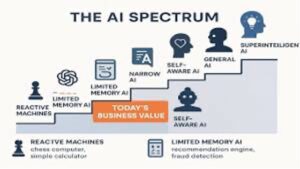
* AI will make its way into the full spectrum of business activities – from manufacturing to assembly to testing to packaging, shipping, wholesale and retail distribution, and then to consumers, who will be using AI technology to receive, account for, and make use of virtually every product and service they purchase. Some of this will be obvious and disruptive. But much of it won’t, because businesses that begin to employ it will do so gradually and quietly to limit the disruption while they monitor its effect on top and bottom lines.
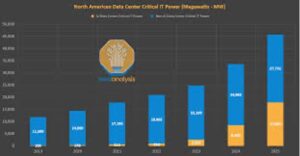
* The rate at which AI spreads will be uneven. It will move more quickly into economic and business activities whose activities and functions are most susceptible to AI implementation, such as engineering, architecture, accounting, and all services involved in producing visual effects, from local sign painters to Hollywood movie studios. It will spread more slowly in organizations that are strongly unionized, traditionally complicated, and heavily bureaucratized, such as large educational and government institutions.

* With each passing month of 2026, the landscape of the American workforce will be changing. Thousands – maybe tens of thousands – of American workers will lose their jobs. And most of those that keep their jobs will see material changes in what they do, how they do it, and with the expectation that they will significantly improve their productivity and take on additional work.
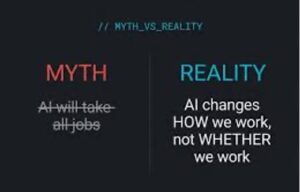
* Many jobs will be seen as less valuable. Tasks that once justified solid salaries – analysis, reporting, drafting, basic technical execution – will be quietly absorbed by AI systems. And by the end of 2026, this shift will affect most employees in most companies.
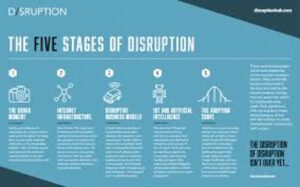
* In the second half of the year, there will be a significant disruption within companies – including restructuring mistakes and internal conflict as issues about authority, workflow ownership, and headcount assumptions become top of mind. This will happen relatively quietly at first. But it will get noticed by the media and the public in Q3 and Q4, with companies showing larger profit margins but lower levels of employee satisfaction and an increasing number of labor relations complaints.
* Due to AI’s impact on productivity, job growth will slow dramatically. This is a trend that has already begun as Amazon, Microsoft, Salesforce, and UPS have laid off thousands of employees and industry leaders like Walmart and Ford have openly said that revenue will rise while headcount falls.
* The stock market will have moments of panic, as some of these facts are reported – which will result in tens of thousands of individual investors bailing out of their positions as share prices plunge. This will increase the prices of most hard assets, including gold and silver, and it will stimulate further investing in instruments of federal, state, and corporate debt. There will be ups and downs throughout the year. But by the end of 2026, the market averages will move back up to levels that equal or exceed the January numbers, and this will pave the way for another rollercoaster ride for investors in 2027.
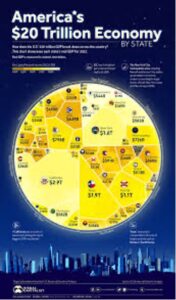
* Despite radical variations in certain sectors, the US GDP will end the year within 5% of what it was when the year began. My thinking here is, again, that AI is designed to make existing work more efficient, not to create new needs or even opportunities to persuade customers to believe they need new things. For 90% of its implementation, AI will quietly work behind the curtain, making every process faster and more accurate, which will mean less costly, which will mean that the product or service in which AI is residing will be subject to price deflation. Thus: fewer dollars in circulation. Just moving more quickly, bringing the cost of such products and services down.

* The Federal Reserve will cut rates three times in 2026. The Fed’s projections don’t show three cuts. And most forecasters expect one or two at most. But I’m thinking this could happen because (a) AI-driven productivity will reduce hiring demand, (b) reduced employment will look bad for Trump as we move towards midterm election, and therefore (c) POTUS and the Republican Party (which will be ascending in voter approval) will demand it.
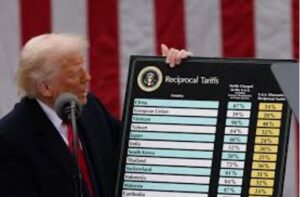
* Trump’s reciprocal tariffs will become the new normal. They are on track now to bring in close to $300 billion in revenue annually, with an effective tariff rate that has peaked at 12.1% – the highest since 1934. The current legal challenges against them will fail at the Supreme Court, and after that all the key economic indicators will point up, with a broadening and strengthening of the US economy from Q2 onward.
Note: AI is an agentic system – and agentic systems don’t just improve tools, they challenge authority, workflow ownership, and headcount assumptions. All of this will create feelings of uncertainty and anxiety – both on the capital side and with labor – and eventually the pain and discomfort of disruption will be felt. But not so much in 2026. Most companies are still early in implementing AI. The messy part – restructuring mistakes, internal conflict, and the major loss of jobs and deflation of human labor – will come after deployment. Perhaps in 2027, but (IMHO) more likely in 2028 and 2029.