10 Very Good Books on Writing 

On Monday, I answered a question asked by the son of a friend. He wanted to know what books he should read to improve his skills as a writer.

Three titles came to mind immediately: The Elements of Style by Strunk and White, On Writing by Stephen King, and On Writing Well by William Zinsser.

I thought I’d extend that list today. So, here are 10 of the best books I’ve read about writing.

1.- The Elements of Style

By William Strunk Jr. and E.B. White

It is short. It is simple. And it is also the undisputed champion of how-to-write books. It lays out the must-know rules of grammar and usage and sets the standard for prose style. I can’t even remember how many times I’ve read it or recommended it.


2.- On Writing Well

By William Zinsser

There is a reason this was one of my top three: It is just so clear and straightforward and common-sensical. Zinsser has a talent for getting to the heart of any matter he deals with. And he does that here so helpfully for beginning writers. He touches on all the most common mistakes new writers makes and provides ways to avoid them.


3.-On Writing

By Stephen King

Stephen King is known as a master of the American thriller, but he’s also a very good writer of literary fiction and essays. This book has two parts: The first is about his childhood attempts at writing. And it’s good fun. The second provides insights and advice on the technical aspects of writing – developing plot and characters and facing the blank page.


4.-Writing Tools: 50 Essential Strategies for Every Writer

By Roy Peter Clark

Like Elements of Style, Writing Tools is treasure trove of good ideas and practical tips on becoming a better writer, packed tightly into a single, slim, readable volume.


5.- The War of Art

By Steven Pressfield

“Being a writer, to Pressfield, is no more glamorous than being a plumber. A professional shows up every day and ‘fixes a toilet.’ I doubt any book has had a more positive influence on my writing life than this one.” – Donald Miller


6.- The Writing Life

By Annie Dillard

The core message here is “Kill your darlings” – i.e., don’t fall in love with your words. Be tough. Even brutal. Writing well is a great deal about cutting away everything that is unnecessary.


7.-Bird by Bird: Some Instructions on Writing and Life

By Anne Lamott

Lots of helpful hints mixed in with engaging little stories and inspiring advice about how to push through the hesitations and setbacks and build your masterpiece, bird by bird.


8.-Writing Down the Bones: Freeing the Writer Within

By Natalie Goldberg

Solid advice and smart strategies for non-fiction writers, including how to start brainstorming, the importance of learning how to listen, the vital role verbs play in writing, and even how to find an inspiring place to write. No matter the stage you’re at with writing, this inspiring read will give you the encouragement you need to keep going.


9.- Zen in the Art of Writing

By Ray Bradbury

A collection of essays about writing written by a very good and accomplished writer.


10.- The Mother Tongue: English & How It Got That Way

By Bill Bryson

Whatever the subject, I’ve never read a book by Bill Bryson that didn’t delight, amuse, and inform me. This is no exception.


And here’s one more – a book I haven’t read yet… 

The Sense of Style

By Steven Pinker

Steven Pinker offers a new take on some of the classic writing manuals. In The Sense of Style, he analyzes examples of modern prose, pointing out fantastic writing styles from those he considers awful. To help you improve, Pinker also provides tips to spruce up lackluster work.

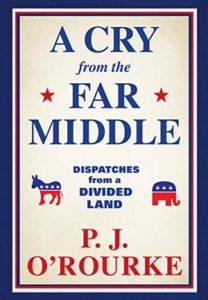
A Cry From the Far Middle 

By P.J. O’Rourke

320 pages

Published Sept. 15, 2020 by Atlantic Monthly Press

Several years ago, I met P.J. O’Rourke at a small event at a private, lodge somewhere. We were speaking on the same panel. He seemed affable and approachable. I’m sure I could have had a chat with him, but I was in a mood. Alas.

When I heard that he died on Feb. 15, I suggested to my fellow Mules that we read one of his books in honor of his passing. They agreed. And so, I came to read A Cry From the Far Middle.

I had read many of his individual essays, but this was my first P.J. O’Rourke book. And it’s a good read. It has the wit and intelligence you would expect from O’Rourke, but there is something else that made it especially sweet. Although there was no mention of it, I felt like he knew this was going to be his last book. It felt like he was writing a farewell to the world.

What I Liked About It 

* O’Rourke’s prose style: Casual but elegant, piquant but restrained, funny but serious.

* His intelligence: He is very good at showing the idiocy and/or hypocrisy in commonly held views.

* His moral posture: He lampoons, but he doesn’t take himself too seriously. There is a humility to his satire.

What I Didn’t Like So Much 

P.J. O’Rourke is smart. And funny. But I wouldn’t call him profound. That’s not a criticism of him or his writing, but of my expectations. I was expecting a Jordon Peterson, a Steven Pinker, a Yuval Harari – i.e., a revolutionary thinker. Of course, a writer doesn’t have to be profound to lampoon popular thought and political idiocies.

Critical Reception 

“[P. J. O’Rourke] occupies a rare place among the laughing class: He has somehow avoided the orifice obsession that captivates many of its members; he identifies as Republican; and he is no mere thumb-sucker, having visited more than 40 countries to report on wars, regime changes, economic revolutions and the experience of drinking cocktails garnished with the poison sacs of cobras.” (Wall Street Journal)

“Outspoken conservatives have long been a minority in comedy, particularly in the mainstream media, which provided an opportunity for P.J. O’Rourke, who for decades cornered the market for prominent right-wing humorists…. If his wry essays have a mission statement… it’s this: Starchy Republicanism is really, really fun.” (New York Times Book Review)

“O’Rourke employs sweeping generalizations, over-the-top screeds, unconvincing self-deprecation, and, above all, gale-force sarcasm. His meld of serious comment and attempted humor is an unhappy marriage, and even longtime O’Rourke devotees may not be sure where one ends and the other begins. The author has become a more jocular, less verbose version of William F. Buckley.” (Kirkus Reviews)

Click here for an interview with P.J. O’Rourke about A Cry From the Far Middle.

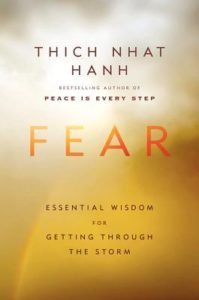
Fear: Essential Wisdom for Getting Through the Storm 

By Thich Nhat Hanh

176 pages

First published Jan. 1, 2012 by HarperOne

This was a Christmas book – a stocking stuffer that fit easily into my reindeer stocking hanging on the mantle. I put it in the bookcase where I keep books that have been given or recommended to me. Since it was a thin book, it was selected well ahead of others that have been in that bookcase for years. (Plus, it was given to me by a relative that was going to be asking, “So, did you read it? What did you think?”)

What I Liked About It 

* It’s wise.

* It’s poetic.

* It’s unpretentious.

* It’s a quick read. (Did I already say that?)

What I Didn’t Like So Much 

It’s replete with thoughts that, however wise, are so familiar that I thought it might have been better published as a Thought-of-the-Day calendar.

About the Author

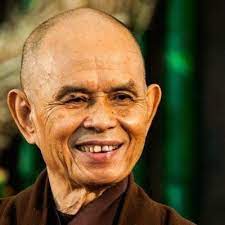
According to the NYT, Thich Nhat Hanh “ranks second only to the Dalai Lama as the Buddhist leader with the most influence in the West.”

The jacket cover describes him as a “Vietnamese Buddhist Zen Master, poet, scholar, peace activist, and one of the foremost spiritual leaders in the world – a gifted teacher who was once nominated for the Nobel Peace Prize by Martin Luther King Jr.”

And there’s this from Facebook, posted after Hanh’s death on Jan. 22 at the age of 95: “Ordained as a monk aged 16 in Vietnam, Thich Nhat Hanh soon envisioned a kind of engaged Buddhism that could respond directly to the needs of society. He was a prominent teacher and social activist in his home country before finding himself exiled for calling for peace. In the West, he played a key role in introducing mindfulness and created mindful communities (sanghas) around the world. His teachings have impacted politicians, business leaders, activists, teachers, and countless others.”

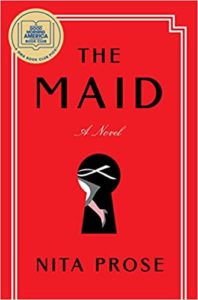
The Maid 

By Nita Prose

304 pages

Published Jan. 4, 2022 by Ballantine Books

The Maid was the March selection of my book club, The Mules. I didn’t finish it. I couldn’t .

This book is absolutely the worst piece of garbage I’ve read since I can’t remember when. It should be consigned, along with Where the Crawdads Sing and Bridges of Madison County, to the eighth circle of literary hell. The eighth circle is reserved for sinners guilty of fraud – and The Maid is, on every possible literary level, a fraud.

The Plot  

Molly Gray, who struggles with social skills and interpreting the intentions of others, relies on her “Gran” (who raised her) to help her make sense of the world. She works as a maid at the Regency Grand Hotel, and loves her job, because, in addition to her naiveté, she’s OCD about cleanliness and order. All is fine until (1) Gran dies and (2) she discovers the corpse of a Mr. Black when she goes to clean his hotel room. Being the first to discover the body, the police consider her to be a Person of Interest. And before she knows what’s happening, she is suspect number one in a murder case.

What I Liked About It 

Nothing.

What I Didn’t Like About It 

Everything.

The plot is trite and predictable, which is a mortal sin for a novel that presents itself as a mystery.

The main characters are one-dimensional and artificial.

* Mr. Black, a successful businessman, is an Evil Rich White Guy who cheats and steals to earn his wealth, exploits his employees, and abuses every woman that passes through his life.

* Molly Gray (Get it? Black/Gray) is a neuro-atypical maid who lives invisibly until she happens upon Mr. Black’s corpse.

* Gran is Maggie Smith in Downton Abbey.

* Mr. Preston, the kind old doorman, turns out – of course – to be Molly’s grandfather.

* Juan, the deus-ex-machina romantic hero, is an honest, humble, and exploited Mexican immigrant.

* Giselle, the wife of Mr. Black, is a manhandled gold digger with a heart of gold.

And the secondary characters are even worse.

The style suffers from dissociative identity disorder. (See “Good to Know,” below.) That’s because the book begins as a Whodunit, but then mutates jarringly and disturbingly to a True Romance novel about three-quarters of the way through.

The diction mutates, too. It begins with restrained literary touches, but then steadily transmogrifies into an unrestrained indulgence in the most hackneyed and florid language one can imagine. Molly’s diction is a good example. In the beginning, it is imitative of the Sam character in the Netflix series Atypical, which works. But by the middle of the book, her command of the English language is nothing less than Shakespearean. Not real Shakespeare, but the sort of Shakespeare you’d expect from Saturday Night Live. And when Molly isn’t gilding the literary rose, the author is – mostly by inserting unneeded adjectives before every other noun. You won’t find “rubbish” standing alone in The Maid. It’s going to be “utter rubbish.” And Saran wrap can’t be just plastic wrap. It has to be gossamer thin.

And finally, the world view that shapes this novel is a cornucopia of past and present Woke ideas – from the purity of the simpleminded to the heartlessness of Classism to the wickedness of Capitalism to White privilege, the male hierarchy, and the Me Too movement. But the worst of it is the morality. That lying and cheating, plotting and entrapping, manipulating and whoring, are all acceptable means when the end is Woke.

Critical Reception 

After what I’ve said, you might conclude that I believe the author is an airhead. On the contrary, I believe that Nita Prose is very smart and knew exactly what she was doing in writing this novel. In fact, I wouldn’t call it writing. This is a constructed work of fiction, designed and assembled, cliché by cliché, for a very particular purpose. Either to get onto the bestseller lists, or – and this is my secret hope – to make fun of bestsellers generally and literary fiction in particular.

Keep in mind that Prose is not some literary ingénue writing from a basement in Amherst. She is Vice President and Editorial Director at Simon & Schuster Canada. (And by the way, her given name isn’t Prose. It’s Pronovost.)

So in scanning for reviews, I expected to find two things. A call-out or two by readers, like me, who knew or guessed what she was up to. And a slew of scathing critiques, like mine. But there were neither. I found nothing but positive to very positive comments.

Here are two examples:

* “Prose threads a steady needle with the intricate plotting, the locked-room elements of the mystery, and especially Molly’s character…. The reader comes to understand Molly’s worldview, and to sympathize with her longing to be accepted – a quest that gives The Maid real emotional heft.” (New York Times Book Review)

* “The Maid is such an enjoyable read that I was sad when it ended…. To use one of Molly’s favorite words, a ‘delight’ from beginning to end.” (Washington Independent)

I did, though, find this objection in an otherwise positive review:

* “Unfortunately, the author felt a need to throw in a kitchen sink of social issues along the way, which took away from the charm of the story. Illegal immigration, domestic abuse, drug running, euthanasia, with the latter being the most egregious and out of character. I suspect it was added as an agenda of the author’s. She should have restrained herself. Unfortunately, stereotypes abound in the minor characters, especially the maid staff, and the ridiculous side story about an illegal immigrant was eye-rolling and offensive.” (Jan B on Goodreads)

How to explain a book this bad getting such universally good reviews? Here’s my theory. I believe this is, and was meant to be, a gag. A literary hoax.

I believe Ms. Prose (probably with the support of some of her friends at Simon & Schuster) wrote it as a parody of bestselling genre fiction – detective stories and romance novels.

If I’m right about that, I have nothing but the greatest admiration for her. If, however, this was meant to be a calculated way to become a bestseller, I feel ambivalent. I admire her skill, but rue her cynical view of the reading public. (Which, in any case, turns out to be true. The high level of praise for The Maid marks a low point in American taste and intelligence.)

We’ll probably never know what Ms. Prose’s intentions were, because she got a movie deal out of it – and she’s not going to do anything to spoil that.

By the way… The Maid was inspired by a nonfiction book: Maid: Hard Work, Low Pay, and a Mother’s Will to Survive by Stephanie Land. I haven’t read it. (I intend to scan it.) But I did begin watching the movie that was made from it, which is – so far – not bad. You can watch the trailer here.

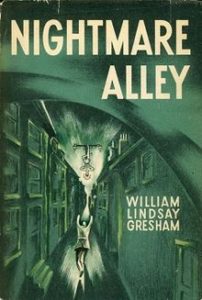
Nightmare Alley

By William Lindsay Gresham

304 pages

Originally published in 1946 by Rinehart & Co.

Every so often we Mules (my book club) select not just a book of the month, but a movie to go with it. Our book for January was new to me: Nightmare Alley by William Lindsay Gresham. And we watched two film adaptations with the same name – one from 1947 and a recent remake that is still playing in theaters.

Nightmare Alley is the story of the rise and fall of Stan Carlisle, from hapless young carnival hustler to nightclub magician to mentalist-preacher-con man of the social elite. Gifted and ambitious, he’s not the only morally questionable character in this inverted bildungsroman. The entire population of the novel is comprised of broken and incomplete and self-interested people trying to make their journey through Gresham’s social landscape of fate and failure.

Nightmare Alley is The Grifters meets Freaks. It’s Jim Thompson meets Tod Browning meets Dostoyevsky. It’s everything you could want from noir fiction with an extra dash of fatalism lifted from the darkish lyricism of Cormac McCarthy.

In short, it’s one of the best books I’ve read in a long time.


What I Liked About It 

* As I said, it has the best elements of noir literature – grim, dark, fatalistic. A view of human nature through gray-colored glasses.

* Riveting interior monologue – as good as John D. MacDonald’s.

* Vernacular dialog equal to James Ellroy’s and Dashiell Hammett’s.

* Lots of vivid and elucidating details about the carnival world.


What I Didn’t Like 

It was long. And I don’t like long books because I don’t have a lot of spare time to read. But I half-read and half-listened to it. And because it was so damned good in so many ways, I finished it in time for the Mules meeting.


Critical Reception 

Nightmare Alley got the recognition and praise it deserved:

* “For fans of vaudeville and magic, the book is a treasure trove of trade secrets.” (Walter Kirn, New York Times)

* “While I’ve known for a long time that Nightmare Alley was an established classic of noir fiction, I was utterly unprepared for its raw, Dostoyevskian power…. It’s more than just a steamy noir classic. As a portrait of the human condition, Nightmare Alley is a creepy, all-too-harrowing masterpiece.” (Michael Dirda, Washington Post)

* “Nightmare Alley remains a masterpiece, not only due to its driving narrative power, but because it’s underpinned by the premise that the human animal is alone, helpless in the face of destiny, stumbling in the dark… toward the inevitable wall of death at the end. Yet we can’t stop ourselves hoping, and fearing, that there might be something beyond that wall. The message of this disquieting book couldn’t be more human, yet that message is metaphysical rather than moral.” (Richard Rayner, Los Angeles Times)

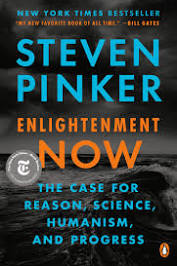
Enlightenment Now

By Steven Pinker

576 pages

Published in 2018 by Penguin Books

After I published a review of Rationality by Steven Pinker, AG, a colleague, sent me a note saying that he was happy I had discovered Pinker and recommending that I read Enlightenment Now.

I did. And Enlightenment Now is a great book. The best non-fiction book I’ve read since Yuval Harari’s Sapiens. It’s definitely a desert-island book, a book you could read over and over again.

The thesis is very simple. Contrary to what most people believe (and especially college-educated people), the world is not getting worse. From a longer-term perspective at least, in most measures of well-being, things are getting better. For example:

* People are living longer.

* People are wealthier.

* Extreme poverty numbers are plunging.

* Literacy has increased.

* Rates of death are in decline.


What I Liked About It 

* This book will educate you. Especially if you believe you are already well educated.

* It won’t just educate you; it may very well change your worldview. Very few books can do this.

* I like the way the book concludes – emphasizing what Pinker says are the essential enlightenment values: reason, science, and humanism.

* He persuasively argues that religious fundamentalism and political correctness are equally dangerous anti-reason ideologies.

If, like me, you have a huge stack of books several feet high that you’re waiting to get around to reading, put Enlightenment Now on top.


Critical Reception 

I’ve rarely read so many five-star reviews of a book. And that’s especially astonishing considering the fact that this book is intellectually subversive in today’s world of the woke. Indeed, there were detractors. Kirkus Reviews said what I expected, noting that “though Pinker is progressive, the academically orthodox will find him an apostate.” And British philosopher John Grey criticized Pinker’s advocacy of “scientism” and argued that he misunderstands Nietzsche.” But most of the reviewers gave the book nothing but praise. Here are some examples…

* “In an era of increasingly ‘dystopian rhetoric,’ Pinker’s sober, lucid, and meticulously researched vision of human progress is heartening and important.” (Publishers Weekly)

* “An excellent book, lucidly written, timely, rich in data and eloquent in its championing of a rational humanism that is – it turns out – really quite cool.” (New York Times Book Review)

* “Pinker is a paragon of exactly the kind of intellectual honesty and courage we need to restore conversation and community.” (David Brooks, The New York Times)

* “[Enlightenment Now] is magnificent, uplifting and makes you want to rush to your laptop and close your Twitter account.” (The Economist)

Steven Pinker is a professor of psychology at Harvard University. A two-time Pulitzer Prize finalist, he has been named one of Time’s 100 Most Influential People in the World Today and one of Foreign Policy’s 100 Global Thinkers. His popular and highly praised books include The Stuff of Thought, The Blank Slate, Words and Rules, How the Mind Works,and The Language Instinct. The recipient of several major awards for his teaching, books, and scientific research, He also writes frequently for The New York Times, Time, The New Republic, and other magazines.

If you’re not in the mood to read this 576-page book but have an hour to spare for watching a video presentation, any of these three will give you a good sense of what it is about:

* For an interview with Pinker at The Commonwealth Club, click here.

* For a talk he gave at Google, click here.

* For a presentation at the Cato Institute, click here.

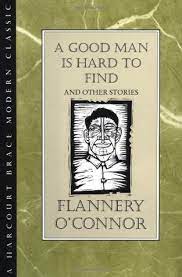
A Good Man Is Hard to Find and Other Stories 

By Flannery O’Connor

252 pages

First published in 1955 by Harcourt Brace Jovanovich

A Good Man Is Hard to Find is a collection of short stories written by Flannery O’Connor. It was the Mules’ choice for December.

Flannery O’Connor is a name I know well. She is often referred to in essays about American literature. Mostly in essays written about other authors. I knew her to be an important writer in some way, but I didn’t know what way. In fact, I knew so little about her, I spent years thinking she was a he. (Can Flannery be a man’s name?)

The title of the collection is also the title of one of the stories within. It is, I read somewhere, one of the most anthologized in American fiction. And with good reason.

These are marvelous, engaging, and powerful stories – the work of a master writer. In reading them, I found myself comparing passages to the work of some of my favorite writers, including Jane Austen, Mark Twain, and Cormac McCarthy. But they’re hard to peg. Are they Literary Fiction? Black Comedy?  Satire? Christian Morality Tales? Southern Gothic?

In discussing the book, Mules members agreed that all of these elements are there, though the collection can’t be fairly described using only one of those terms. They are better than that.

What we could not agree on was more fundamental: What was O’Connor’s view of the world when she wrote these stories? What was her view of humanity?

A few days later, one of the Mules sent out this email that gave us all more to think about:

“Smart people seem to think this month’s book by Flannery O’Connor is one of the best books ever written. I just finished the book, and I guess I’m just not that smart. So, in an attempt to figure out more about what made O’Conner tick and maybe learn why so many others think it’s such a great book, I decided to dig a little deeper into her background. There’s an incredible amount written about her. Here are just two articles that might shed some light on the possible ‘inspiration’ for her stories.”

Click here and here to read them.


What I Liked About It 

* The intimacy of the stories

* The seeming authenticity of the dialog

* The crisply evocative descriptions of the scenery

* The literary sophistication of the syntax and diction

* The frailty and insufficiency of the primary characters

* The gentle satire that runs beneath almost everything

* The insight into the frailty of human nature

* The insight into the power of social culture

* The immensely impressive crafting of every element of fiction and style


What Was Irksome

O’Connor makes abundant use of the N-word. I am not one to object to the use of any word in literature. And I never felt that the N-word was used gratuitously in these stories. Still, I found myself psychologically wincing every time I came across it, which seemed like every 5 or 6 pages. I never felt this way when reading Tom Sawyer or Huck Finn 40 years ago or when watching Quentin Tarantino movies 20 years ago. But I had it while reading these stories that were published more than 65 years ago. This is obviously not a criticism of Flannery O’Connor. If anything, it’s a criticism of our culture.


Interesting Facts

* The title refers to an old blues song, written by Eddie Green (an African-American songwriter) in 1917 and recorded by Bessie Smith in 1927.

* A film adaptation of “A Good Man Is Hard to Find,” entitled Black Hearts Bleed Red, was made in 1992. It’s available on Amazon Prime video.

Book Recommendations for 2022 


From Literary Hub’s “Best 48” 
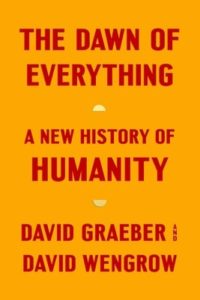
The Dawn of Everything

By David Graeber and David Wengrow

“Whether or not you’re a longtime fan of the late anarchist anthropologist David Graeber’s engagingly erudite examinations of social phenomena like debt or bullshit jobs (conveniently titled Debt and Bullshit Jobs), you will absolutely love The Dawn of Everything. Co-written with archeologist David Wengrow, DoE is a peripatetic survey of early humanity’s wide and varied attempts to organize itself, calling into question academic orthodoxies that so often treat human history as a straight narrative line that leads directly to late-stage, neoliberal capitalism. As if we didn’t make all this shit up and can’t make up some new, better shit.

“From the seasonally migratory communities of the Fertile Crescent to the egalitarian foragers of 10th-century California to the proto-cities of the ancient Ukrainian steppe, DoE is a probing look back at the ways in which people – just like us! – have tried to live together (spoiler alert: heavily policed, top-down hierarchies are not inevitable systems for human coexistence). DoE is a work of history, but also offers us a way forward: we are the ones who have imagined this world into being, and maybe we can imagine our way out.”
 

The Life of the Mind

By Christine Smallwood

“One of the purest pleasures I can experience while reading novels is also one of the rarest: when I read some detail – a character’s passing thought or observation, a way of relating one thing to another – that is deeply comprehensible, even familiar, despite the fact that I have never heard anyone say it out loud (or on the page) before. More plainly: I love it when characters in novels think the same terrible things that I think. This happens a lot in Smallwood’s precise debut The Life of the Mind, which is harrowing in some parts and hilarious in others, which is both deliciously cerebral and relentlessly physical, and which feels like a new kind of campus novel – one that’s actually honest.”
 

When We Cease to Understand the World

By Benjamin Labatut

“It is safe to say this might be the ‘word of mouth’ breakout success of the year (not often does a translated, genre-defying, contemporary NYRB title break into the New York Times 10 Best of the Year). Translated from the Spanish (Labatut is Chilean) by Adrian Nathan West, reading the first few paragraphs of When We Cease to Understand the Worldis like encountering a new intoxicant, with all its attendant thrills and shivers – and the uncertainty about where, exactly, things might lead.

“In what is essentially a fictionalized account of the real lives of a miscellany of 20th-century scientific giants (some famous, some less so), Labatut wades through the murky waters of human genius, finding there the darker implications of discovery, for society and scientist alike. Reading the inner lives of the likes of Fritz Haber, Werner Heisenberg, and Erwin Schrödinger – rendered by Labatut with the same kind of metaphorical heuristic so often employed to reveal truths about theoretical physics – one is left almost breathless by the grim consequences of all our endless wonder. There’s a reason this hybrid novel-biography has left its mark on nearly everyone who’s taken a taste.”

[ALSO A TOP-10 NYT BOOK]
 

The Great Mistake

By Jonathan Lee

“In the opening pages of Lee’s latest novel, 83-year-old Andrew Haswell Green is murdered outside his home. It is 1903, in New York City. Lee then proceeds to explain to us – in lucid, luminous prose – exactly who Green was and why he met such an end. Which doesn’t really cover the pleasures of this novel, which are many: the lithe, surprising sentences, both dignified and playful; the finely wrought character portrait; the well-paced mystery; and the constant sense of discovery, as Lee keeps showing us vibrant new pockets of a world gone – and more broadly, unearths a true forgotten history, because if you don’t know (I didn’t), Green was a real person, a lawyer who is responsible for the creation of much of New York City as we know it, and yet has mostly faded from public memory. I, at least, will not forget him now.”
 

There’s No Such Thing as an Easy Job

By Kikuko Tsumura

“It seems like ‘burnout lit’ could be its own category these days, but trust me when I say that this is not that. Well, not exactly. Our unnamed narrator is a disaffected millennial, which for obvious reasons is a staple of the genre. But her anxiety and deadpan humor, when combined with the lens of modern Japanese culture and the increasing strangeness (and even supernaturalness) of the gigs – from spying on an author (riveting stuff, as you can imagine) to punching tickets at a haunted public park – make for a quietly engrossing story. Apparently this is the first time Tsumura’s been translated into English – an egregious oversight, and one that I hope is remedied soon.”
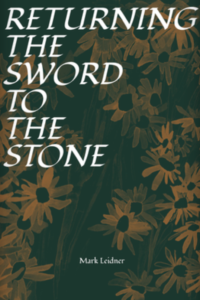
 

Returning the Sword to the Stone

By Mark Leidner

“Reading Mark Leidner will make you believe that humor is the most powerful poetic tool. Of course, almost no poets – almost no people – are as funny as Leidner, so you should probably just appreciate the poems in front of you instead of trying to make any grand proclamations about what other poems should be. This is how I felt when reading Returning the Sword to the Stone – grateful for a book so of itself, in which the humor doesn’t deflect truth, it refracts it. The poem ‘Youth is a Fugitive’ begins ‘that thinks it’s a hostage.’ I could go on, endlessly: this is the kind of book that urges relentless quotation, so I’ll restrain myself, except to say that I’m sorry to everyone to whom I texted every line of ‘I’m Running for President’ (the poetry equivalent of the best I Think You Should Leave sketches). I recommend Returning the Sword to the Stone to everyone, regardless of the size of their poetry library.


From From GoodReads Choice Awards 

No One Is Talking About This

By Patricia Lockwood

“It’s another attention-grabbing mind-blower which toggles between irony and sincerity, sweetness and blight… Lockwood deftly captures a life lived predominantly online… This portrait of a disturbing world where the center will not hold is a tour de force that recalls Joan Didion’s portrait of the dissolute 1960s drug culture of Haight-Ashbury in her seminal essay, ‘Slouching Towards Bethlehem’… Lockwood is a master of sweeping, eminently quotable proclamations that fearlessly aim to encapsulate whole movements and eras… It’s a testament to her skills as a rare writer who can navigate both sleaze and cheese, jokey tweets and surprising earnestness, that we not only buy her character’s emotional epiphany but are moved by it… Of course, people will be talking about this meaty book, and about the questions Lockwood raises about what a human being is, what a brain is, and most important, what really matters.”

[ALSO A TOP-10 NYT BOOK]
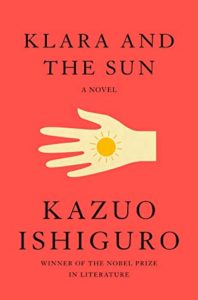
 

Klara and the Sun

By Kazuo Ishiguro

Kara and the Sun confirms one’s suspicion that the contemporary novel’s truest inheritor of Nabokovian estrangement – not to mention its best and deepest Martian – is Ishiguro… Never Let Me Go wrung a profound parable out of such questions: the embodied suggestion of that novel is that a free, long, human life is, in the end, just an unfree, short, cloned life. Klara and the Sun continues this meditation, powerfully and affectingly. Ishiguro uses his inhuman, all too human narrators to gaze upon the theological heft of our lives, and to call its bluff… Ishiguro keeps his eye on the human connection.

“Only Ishiguro, I think, would insist on grounding this speculative narrative so deeply in the ordinary… Whether our postcards are read by anyone has become the searching doubt of Ishiguro’s recent novels, in which this master, so utterly unlike his peers, goes about creating his ordinary, strange, godless allegories.”
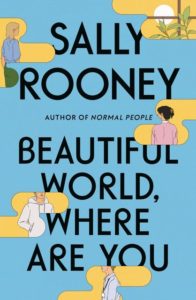
 

Best Fiction: Beautiful World, Where Are You 

By Sally Rooney

“Irish author Sally Rooney wins this year’s Best Fiction award for her celebrated novel on the complexities of romance, sex, and friendship on our swiftly tilting planet. A kind of deep-focus love quadrangle story, the book clearly hit a nerve for readers. This is the second GCA nomination for Rooney – she came in second for her 2018 novel, Normal People.”
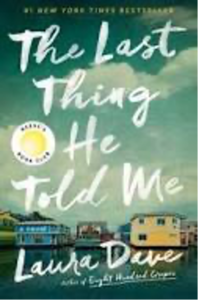
 

Best Mystery/Thriller: The Last Thing He Told Me

By Laura Dave

“Before Owen Michaels disappears, he smuggles a note to his beloved wife of one year: Protect her. Despite her confusion and fear, Hannah Hall knows exactly to whom the note refers – Owen’s sixteen-year-old daughter, Bailey. Bailey, who lost her mother tragically as a child. Bailey, who wants absolutely nothing to do with her new stepmother.

“As Hannah’s increasingly desperate calls to Owen go unanswered, as the FBI arrests Owen’s boss, as a US marshal and federal agents arrive at her Sausalito home unannounced, Hannah quickly realizes her husband isn’t who he said he was. And that Bailey just may hold the key to figuring out Owen’s true identity – and why he really disappeared.”
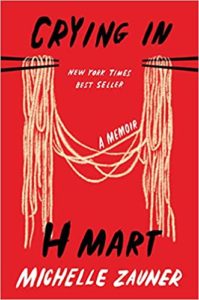
 

Best Memoir & Autobiography: Crying in H Mart

By Michelle Zauner

“An unflinching, powerful memoir about growing up Korean American, losing her mother, and forging her own identity.

“In this exquisite story of family, food, grief, and endurance, Michelle Zauner proves herself far more than a dazzling singer, songwriter, and guitarist… Vivacious and plainspoken, lyrical and honest, Zauner’s voice is as radiantly alive on the page as it is onstage. Rich with intimate anecdotes that will resonate widely, and complete with family photos, Crying in H Mart is a book to cherish, share, and reread.”
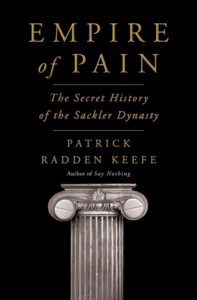
 

Best History/Biography: Empire of Pain

By Patrick Radden Keefe

“This year’s winner of the Goodreads Choice Award for History/Biography, Empire of Pain is an exhaustively researched profile of the Sackler family, the aristocratic American clan that made its fortune making and marketing the painkiller OxyContin. Patrick Radden Keefe is a master of the kind of narrative reporting style that brings novelistic intensity to rigorous nonfiction reporting. Keefe was also nominated for a GCA for his 2018 book, Say Nothing.”
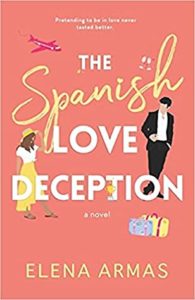
 

Best Debut: The Spanish Love Deception 

By Elena Armas

“A wedding. A trip to Spain. The most infuriating man. And three days of pretending. Or in other words, a plan that will never work.

“Spanish author Elena Armas brings several new twists to a classic rom-com setup with this debut novel, which has already won a devoted following in the Goodreads community. Catalina Martin is taking her new American boyfriend to her sister’s wedding in a small Spanish town. Aaron Blackford is tall, handsome, and supremely aggravating. Alas, he’s not actually Catalina’s boyfriend. This is Armas’ first GCA win, naturally.”
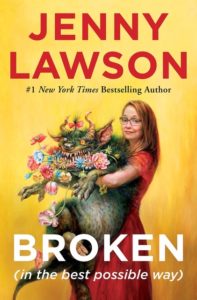
 

Best Humor: Broken 

By Jenny Lawson

“As Jenny Lawson’s hundreds of thousands of fans know, she suffers from depression. In Broken, Jenny brings readers along on her mental and physical health journey, offering heartbreaking and hilarious anecdotes along the way… A treat for Jenny Lawson’s already existing fans, and destined to convert new ones, Broken is a beacon of hope and a wellspring of laughter when we all need it most.”


From the NYT’s Best 10 
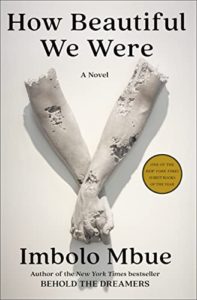
How Beautiful We Were

By Imbolo Mbue

“Following her 2016 debut, Behold the Dreamers, Mbue’s sweeping and quietly devastating second novel begins in 1980 in the fictional African village of Kosawa, where representatives from an American oil company have come to meet with the locals, whose children are dying because of the environmental havoc (fallow fields, poisoned water) wreaked by its drilling and pipelines. This decades-spanning fable of power and corruption turns out to be something much less clear-cut than the familiar David-and-Goliath tale of a sociopathic corporation and the lives it steamrolls. Through the eyes of Kosawa’s citizens young and old, Mbue constructs a nuanced exploration of self-interest, of what it means to want in the age of capitalism and colonialism – these machines of malicious, insatiable wanting.”
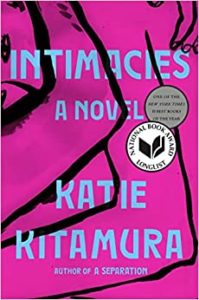
 

Intimacies

By Katie Kitamura

“In Kitamura’s fourth novel, an unnamed court translator in The Hague is tasked with intimately vanishing into the voices and stories of war criminals whom she alone can communicate with; falling meanwhile into a tumultuous entanglement with a man whose marriage may or may not be over for good. Kitamura’s sleek and spare prose elegantly breaks grammatical convention, mirroring the book’s concern with the bleeding lines between intimacies – especially between the sincere and the coercive. Like her previous novel, A Separation, Intimacies scrutinizes the knowability of those around us, not as an end in itself but as a lens on grand social issues from gentrification to colonialism to feminism. The path a life cuts through the world, this book seems to say, has its greatest significance in the effect it has on others.”
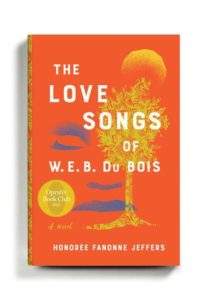
The Love Songs of W.E.B. Du Bois

By Honorée Fanonne Jeffers

The Love Songs of W.E.B. Du Bois, the first novel by Jeffers, a celebrated poet, is many things at once: a moving coming-of-age saga, an examination of race and an excavation of American history. It cuts back and forth between the tale of Ailey Pearl Garfield, a Black girl growing up at the end of the 20th century, and the ‘songs’ of her ancestors, Native Americans and enslaved African Americans who lived through the formation of the United States. As their stories converge, Love Songs creates an unforgettable portrait of Black life that reveals how the past still reverberates today.”
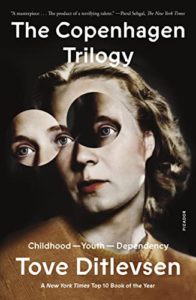
 

The Copenhagen Trilogy

By Tove Ditlevsen

“Ditlevsen’s gorgeous memoirs, first published in Denmark in the 1960s and ’70s and collected here in a single volume, detail her hardscrabble upbringing, career path and merciless addictions: a powerful account of the struggle to reconcile art and life. She joined the working ranks at 14, became a renowned poet by her early 20s, and found herself, after two failed marriages, wedded to a psychopathic doctor and hopelessly dependent on opioids by her 30s. Yet for all the dramatic twists of her life, these books together project a stunning clarity, humor and candidness, casting light not just on the world’s harsh realities but on the inexplicable impulses of our secret selves.”
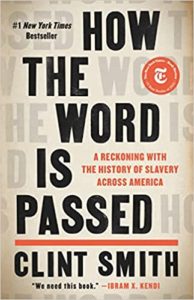
 

How the Word Is Passed

By Clint Smith

“For this timely and thought-provoking book, Smith, a poet and journalist, toured sites key to the history of slavery and its present-day legacy, including Thomas Jefferson’s Monticello; Angola, the Louisiana State Penitentiary; and a Confederate cemetery. Interspersing interviews with the tourists, guides, activists and local historians he meets along the way with close readings of scholarship and poignant personal reflection, Smith holds up a mirror to America’s fraught relationship with its past, capturing a potent mixture of good intentions, earnest corrective, willful ignorance and blatant distortion.”
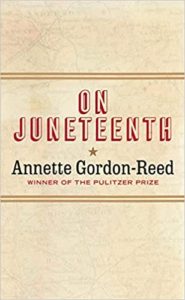
 

On Juneteenth

By Annette Gordon-Reed

“This book weaves together history and memoir into a short volume that is insightful, touching and courageous. Exploring the racial and social complexities of Texas, her home state, Gordon-Reed asks readers to step back from the current heated debates and take a more nuanced look at history and the surprises it can offer. Such a perspective comes easy to her because she was a part of history – the first Black child to integrate her East Texas school. On several occasions, she found herself shunned by whites and Blacks alike, learning at an early age that breaking the color line can be threatening to both races.”
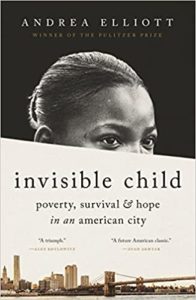
 

Invisible Child

By Andrea Elliott

“To expand on her acclaimed 2013 series for The Times about Dasani Coates, a homeless New York schoolgirl, and her family, Elliott spent years following her subjects in their daily lives, through shelters, schools, courtrooms and welfare offices. The book she has produced – intimately reported, elegantly written and suffused with the fierce love and savvy observations of Dasani and her mother – is a searing account of one family’s struggle with poverty, homelessness and addiction in a city and country that have failed to address these issues with efficacy or compassion.”


From  Esquire’s Top 50 
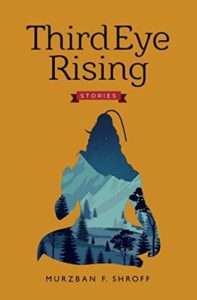
Third Eye Rising

By Murzban F. Shroff

“In these warm and wise parables of an ever-changing India, Shroff explores the tension between spiritual faith and modern life. In the harrowing title story, a dowry-less bride is forced to perform an agonizing ritual by her sadistic in-laws. Another unforgettable story invites us into the mind of a sacred cow, who narrates a confrontation between patrons at her temple. Each richly imagined story rings out with soulful truths about the collision between time-honored traditions and twenty-first century values, making for a stirring collection about where the past and present collide.”
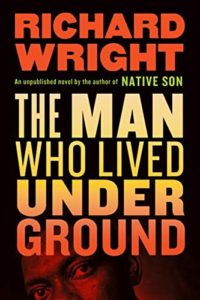
 

The Man Who Lived Underground

By Richard Wright

“What if you could look at life from outside of life? What would you see? That’s the provocative question posed in this previously unpublished novel from one of the twentieth century’s greatest writers, wherein a Black man named Fred Daniels is apprehended by the police, brutally tortured, and forced to sign a confession for a violent crime he did not commit. To escape his captors, Daniels flees into the city’s underground sewers, where he transforms into someone else entirely. Beneath an unfair world, Daniels tunnels into the basements of local establishments, leading him to startling truths about morality, injustice, and what matters most when the world’s systems are stripped away. Though the novel was written in the 1940s, its visceral vision of crime and punishment continues to hold modern resonance.”
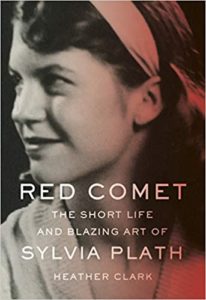
 

Red Comet

By Heather Clark

“It’s daring to undertake a new biography of Plath, whose life, and death by suicide at 30 in 1963, have been thoroughly picked over by scholars. Yet this meticulously researched and, at more than 1,000 pages, unexpectedly riveting portrait is a monumental achievement. Determined to rescue the poet from posthumous caricature as a doomed madwoman and ‘reposition her as one of the most important American writers of the 20th century,’ Clark, a professor of poetry in England, delivers a transporting account of a rare literary talent and the familial and intellectual milieu that both thwarted and encouraged her, enlivened throughout by quotations from Plath’s letters, diaries, poetry and prose.”
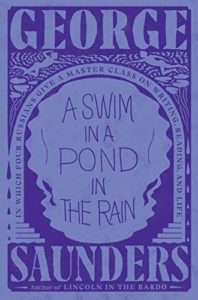
 

A Swim in a Pond in the Rain

By George Saunders

“‘The part of the mind that reads a story is also the part that reads the world,’ George Saunders writes in A Swim in a Pond in the Rain. It’s perhaps the truest distillation of Saunders’ visionary life and work, encapsulating the characteristic generosity and humanity of his artistic outlook. Saunders has spent over two decades teaching creative writing in Syracuse University’s MFA program, where his most beloved class explores the 19th-century Russian short story in translation. In A Swim in a Pond in the Rain, Saunders has distilled decades of coursework into a lively and profound master class, exploring the mechanics of fiction through seven memorable stories by Chekhov, Tolstoy, Turgenev, and Gogol. In these warm, sublimely specific essays, Saunders’ astounding powers of analysis come into full view, as does his gift for linking art with life. By becoming better readers, Saunders argues, we can become better citizens of the world.”
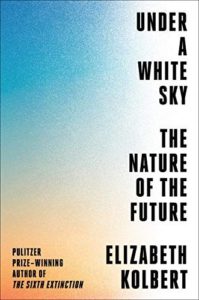
 

Under a White Sky

By Elizabeth Kolbert

“The Pulitzer Prize-winning author of The Sixth Extinction returns with another sobering look at our Anthropocene Epoch, this time centered not on the countless calamities ahead, but on the trailblazing efforts of scientists to turn back the doomsday clock. Kolbert describes the subjects of Under a White Sky as ‘people trying to solve problems created by people trying to solve problems’; she turns her lens to human interventions in nature, like the storied redirection of the Chicago River, and to the pressing need for further intervention to correct our folly. Traveling everywhere from the Great Lakes to the Great Barrier Reef, she chronicles her encounters with scientists, who are pioneering cutting-edge technologies to turn carbon emissions to stone and shoot diamonds in the stratosphere. Heralded by everyone from Barack Obama to Al Gore, Kolbert’s urgent, deeply researched text asks if our ingenuity can outrun our hubris.”
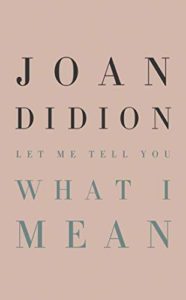
 

Let Me Tell You What I Mean

By Joan Didion

“From a titan of American letters comes a compendium of twelve early pieces, never before anthologized together, which find everyone from Martha Stewart to Ernest Hemingway in Didion’s crosshairs. Each essay showcases Didion at her very best, spotlighting her incisive reporting, her steely narrative gaze, and her commanding gifts as a prose stylist. Anthologized together in this compact volume, these peerless essays remind us just why Didion looms so large in the pantheon of American literature.”
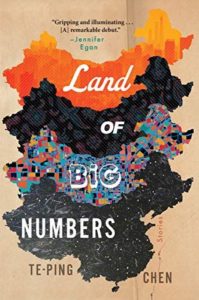
 

Land of Big Numbers

By Te-Ping Chen

“Chen’s remarkable debut collection of stories unfolds across the modern Chinese diaspora, pinballing between acutely observed realism and tragicomic magical realism. In one story, a man becomes addicted to chasing the highs and lows of the volatile Chinese stock market; in another, a group of commuters remain trapped in a subway station for months on end, awaiting permission to leave. Each haunting, exquisitely crafted story poses powerful questions about freedom, disillusion, and cultural thought, firmly establishing Chen as an emerging visionary to watch.”
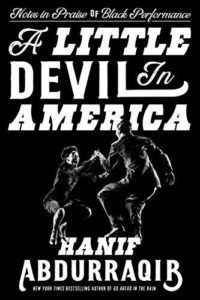
 

A Little Devil in America

By Hanif Abdurraqib

“The celebrated author of Go Ahead in the Rain returns with a far-reaching collection of twenty essays, each one a remarkable synthesis of criticism, autobiography, and cultural study about Black performance in America. Abdurraqib meditates on performances past and present, spotlighting everything from Soul Train to Whitney Houston, Josephine Baker to the Wu-Tang Clan. He illuminates what’s personal and political about Black performance, weaving a jubilant love letter to the resilient entertainers who’ve graced stages both big and small.”


In addition to those I intend to read the following seven:


Third Book’s a Charm 

Among contemporary, nonfiction writers, two of my very favorites are Yuval Noah Harrari and Steven Pinker. I audio-read their books whenever I’m in my car. Because their ideas are so good and plentiful, I am happy to read the same books over and over again. But when a new one comes up, I’ll read that, too. For example:

Yuval Noah Harrari

* I read Sapiens: A Brief History of Humankind

* I’m reading 21 Lessons for the 21st Century

* I’m will read Homo Deus: A Brief History of Tomorrow

Steven Pinker

* I read Rationality

* I’m reading Enlightenment Now

* I will read The Better Angels of Our Nature

Classics That I Missed 

Because of all those early years I spent not reading, I reached adulthood nearly illiterate in terms of the “classic” authors and books. I try to make up for that by reading five or six of the biggies each year. This year’s selections include:

* To the Lighthouse by Virginia Woolf

* Ulysses by James Joyce

* The Sound and the Fury by William Faulkner

* Invisible Man by Ralph Ellison

* The Magic Mountain by Thomas Mann

 

10 Christmas Books

(from Esquire

I am not afraid to say it: I like Christmas movies. I always have. Getting older hasn’t weakened that feeling.

Next week, I’m going to give you a list of great holiday films (many of which are good all year long). Today, I’m passing along a list of 10 great Christmas books recommended by Esquire magazine.


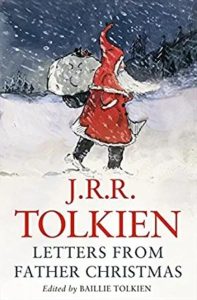
Letters From Father Christmas, by J.R.R. Tolkien 

Beginning in 1920, every Christmas in the Tolkien household was marked by a very special delivery: a letter postmarked from the North Pole, written in Father Christmas’ spindly script, containing fantastical tales of everything from escaped reindeer to accident-prone polar bears. (You can guess that Tolkien, the master myth-maker himself, was the man behind the curtain.) This handsome keepsake anthologizes two decades of Tolkien’s letters, along with beautiful reproductions of his whimsical illustrations and handmade North Pole stamps. Share it with the little ones in your life, or enjoy it all on your own.


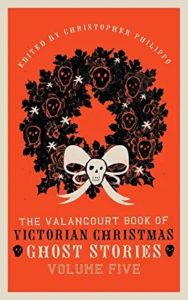
The Valancourt Book of Victorian Christmas Ghost Stories, edited by Tara Moore 

Who says fireside stories should only be feelgood tales? During the holiday seasons of the Victorian era, periodicals often published ghost stories for chilling reading on cold winter nights. Thirteen of those tales are collected here – some by well-known authors, like Sir Arthur Conan Doyle and Elizabeth Gaskell, and others by anonymous or forgotten writers. Even the heaviest pile of blankets won’t stop the shivers from going up your spine.


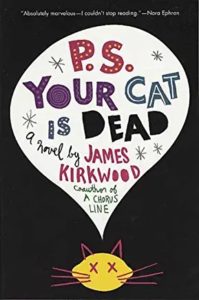
P.S. Your Cat Is Dead, by James Kirkwood 

In this biting cult classic, it’s Christmastime in New York City, and things couldn’t be going worse for Jimmy Zoole: his best friend is dead, his girlfriend is leaving him, he’s out of work, and the only person he can talk to is the burglar tied up in his kitchen. Oh, and his cat is dead, too. If it sounds grim, have no fear – this mordantly funny morality tale is like A Christmas Carol transported to the grimy New York of the seventies.


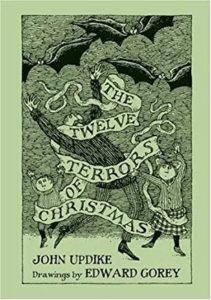
The Twelve Terrors of Christmas, by John Updike and Edward Gorey 

This gimlet-eyed little tome brings together two extraordinary minds: Updike, one of the twentieth century’s greatest writers, and Gorey, the legendary gothic illustrator. Together they take the piss out of “the happiest time of year,” revealing the hidden dark side of familiar holiday tropes, like the tick-ridden reindeer flying the friendly skies. And what’s the big deal about Santa, anyway? “If he’s such a big shot, why is he drawing unemployment for eleven months of the year?” Updike asks. When holiday stress has you at your breaking point, turn to The Twelve Terrors of Christmas for a restorative dose of levity.


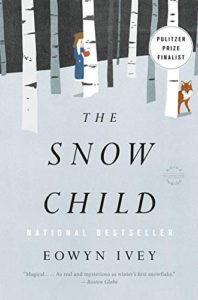
The Snow Child, by Eowyn Ivey 

With some solid vacation time ahead of you, perhaps you’re just looking to get lost in an absorbing winter’s tale. We suggest The Snow Child, an imaginative debut novel rooted in a beloved Russian fairytale. In 1920s Alaska, where loneliness and despair cast a pall across the harsh frontier, a childless pioneer couple builds a child out of snow. The next morning, their snow child is gone, and in its place, an ethereal little girl has appeared. They come to love this surrogate child as their own daughter, but the mysteries of who she is and what she’s capable of loom large. Magical and mysterious, set in a spellbindingly beautiful and dangerous landscape, The Snow Child will seize your imagination and refuse to let go.


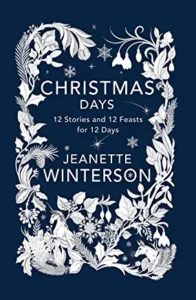
Christmas Days, by Jeanette Winterson 

From the visionary writer of Oranges Are Not the Only Fruit and Written On the Body come a dozen imaginative Christmas tales, each one suffused with Winterson’s infectious enthusiasm for the season. From mysteries to romances to ghost stories, there’s a welcome blend of nearly everything here, all of it elevated by Winterson’s distinctive prose. Recipes and recollections link each of the stories, making for a deeply personal keepsake. Feel free to dive in and out at will, rather than read cover to cover – you’ll discover something new every year.


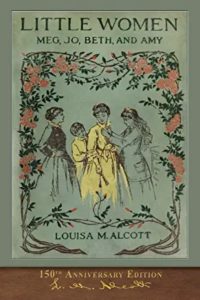
Little Women, by Louisa May Alcott 

“Christmas won’t be Christmas without any presents,” opens Little Women, as Jo March grouses about being too poor to celebrate Christmas properly. You may not think of Alcott’s seminal classic about family, girlhood, and duty as a Christmas book, but trust us: bookended by poignant Christmas scenes, it’ll hit you right in the holiday feels. The March family’s provincial New England Christmases, lit by the lambent glow of nostalgia, remind us of the real reasons for the season: generosity, togetherness, and gratitude.


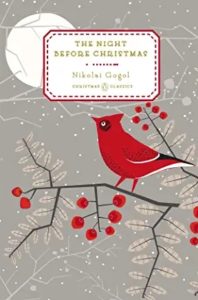
The Night Before Christmas, by Nikolai Gogol 

The godfather of Russian literature delivers a folktale unlike anything you’ve likely read before; to this day, it’s still read aloud on Christmas Eve to Russian and Ukrainian children. Gogol unspools the tale of the humble blacksmith Vakula, who goes toe to toe with the devil in a battle for the heart of Oksana, his village’s most beautiful woman. When the devil steals the moon and unleashes a snowstorm on Vakula’s village, Vakula fights back, making for a transporting Old World fairytale about good and evil.


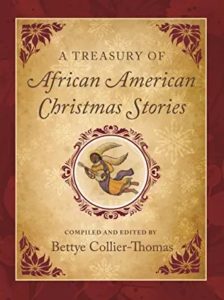
A Treasury of African American Christmas Stories, edited by Bettye Collier-Thomas 

Anthologized from Black newspapers and periodicals published between 1880 and 1953, these enchanting Christmas tales are drawn from the Black literary tradition that flowered after the Civil War. Ranging from tragedies to comedies, fables to romances, these stories tackle powerful themes of love, spirituality, racial identity, and so much more. If you’re lured in by writers you know and love, like Langston Hughes and W.E.B. Du Bois, go ahead and get comfortable, because you’re bound to discover so many more.


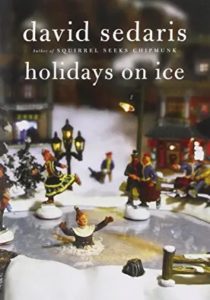
Holidays on Ice, by David Sedaris 

Does it get any better than this seminal volume of side-splitting holiday essays? In the iconic “Santaland Diaries,” David Sedaris remembers his years as Crumpet the Elf, a Macy’s department store elf who finds nothing to celebrate in Santaland. In “Let It Snow,” he bottles the exuberance of childhood snow days, all while weaving a hilarious story about getting locked out of the house during a blizzard. Holidays On Ice is a contemporary classic – and the best medicine for anyone who gets a little misty during this time of year.

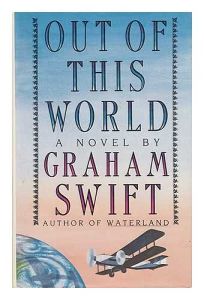
Out of This World 

By Graham Swift

212 pages

Published in 1988 by Viking Penguin

I found it among the bookshelves in the family room of our house in Nicaragua. I selected it because it was the size I was looking for (less than 300 pages) and because I liked the sound of the author’s name. Graham Swift. Very promising.

Books, like people, have very different personalities. There are some that take time to warm up to. And there are others that are instantly likeable. For me, Out of This World is one of the latter.

I liked it immediately because it was beautifully written. I’m talking about the paragraphs and the sentences. They are polished gems. Each one is its own pleasure. And the thoughts and perceptions behind this beautifully crafted language are so damn good.

If you read books primarily for plot and action, though – if you are a John Grisham fan, for example – you may not like this book. The plot… well, it doesn’t really have a plot. There are two stories that are told sequentially. The first is about a father and daughter, one living in England and the other in the States, coming to grips with the troubled history of their family. The other is a social critique of 20th century culture.

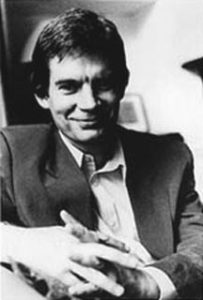
After reading the first chapter, I looked at the photograph of the author on the book flap.

I was surprised to see the face of a child. He looked like he was 17 years old. How could someone that young write so well?

It doesn’t matter.

I just wish I had discovered this book when it was written more than 40 years ago because I could have been a fan of Graham Swift’s since then.

Critical Reception

* “A moving, ingenious and often very funny tale that takes us deep into his characters’ wounded, resilient hearts with breathtaking virtuosity… rich, complicated, joyful, arresting.” (USA Today)

* “Out of This World is the latest of Graham Swift’s highly intelligent attempts to write a private and intimate novel which also takes account of history…. You can’t but applaud the scope and ambition of this novel. What it lacks is a radical approach to structure which would in some way reflect the sheer mess of the events with which it attempts to deal.” (Jonathan Coe in The Guardian)

* “Like the author’s Waterland (1984), a compendium of dark personal histories and darker meditations about the ways of the world.” (Kirkus Reviews)