Your Next (First?) Cormac McCarthy Novel

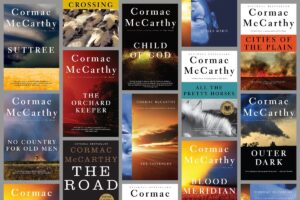
Reading the mailbag responses from Friday’s issue, I was surprised that some readers had never read anything by McCarthy and asked me for suggestions.

It’s difficult to do that because of how varied his books are in terms of complexity, literary style, and plot points.

Usually, I recommend The Road to readers that have never read McCarthy because the plot is straightforward, the characters are limited, and the size of the book is relatively small. For me, The Road is to McCarthy readers what The Old Man and the Sea is to Hemingway readers.

In any case, if you haven’t read McCarthy, and want to try one of his books, I found this “cheat sheet” by Sophia Nguyen in The Washington Post. Click here.

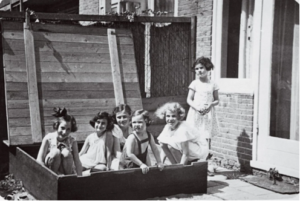
From the Smithsonian – a New Book: My Friend Anne Frank 

Hannah Pick-Goslar, who died last year, was a childhood friend of Anne Frank. In 2021, she partnered with Dina Kraft, to write an autobiography of her life as a child in Germany and then in Amsterdam, where she met Anne Frank. The book was half-finished when Pick-Goslar died, and Kraft finished it. It was published last week.

Click here.

How to Improve Your Understanding of Everything 

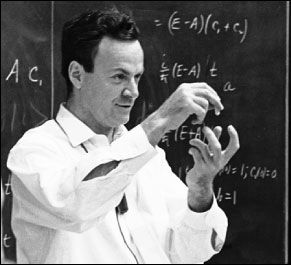
Richard Feynman (1918-1988) 

They say the best way to learn is to teach. Because teaching something you think you understand will help you understand how much you really don’t know.

That’s been true for me – from trying to teach Shakespeare’s “Dark Lady Sonnets” when I was in graduate school, to teaching Brazilian Jiu Jitsu students how to gain top position with the “scissors sweep,” to teaching apprentice copywriters how to craft emotionally compelling sales letters.

The idea that it’s easy to think you know something you don’t know was a favorite topic of Richard Feynman, a Nobel Prize-winning physicist who made important contributions to the fields of quantum mechanics, particle physics, quantum computing, and nanotechnology.

Notwithstanding his amazing accomplishments as a scientist, he said the thing he most enjoyed was teaching students about the art of learning while he was a lecturer at Cornell and Caltech. He believed that anyone with ordinary intelligence could learn the most complex subjects “as long as he/she was willing to study hard.”

And he developed a system for that. Learning specialists call it “the Feynman Technique.” If your curiosity dog is not too old to learn new tricks, you’ll enjoy reading about it here.

“Why should we consider the soul mortal?”

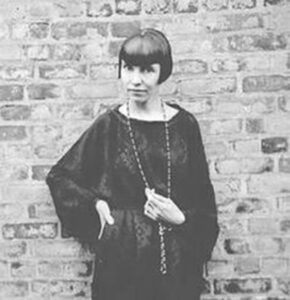
From Diaries of Note, an interesting entry by Wanda Gág, an author and artist who, in 1928, published Millions of Cats, a bestselling children’s book. Twenty years earlier, when she was 22, she wrote this entry about an ongoing discussion she was having with Adolph Dehn, a fellow art student at the Minneapolis School of Art, on the intersection of science and religion in trying to understand the mortality or immortality of the human soul. What I found enjoyable about it was not so much the reasoning (which seemed appropriate for a serious 22-year-old thinker) but the gentleness of her feelings towards both the argument and Mr. Dehn.

Click here.

“Some Monstrous Gullet Suffocating with Fury”

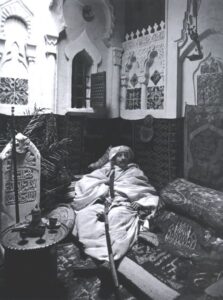
I came across this entry in Diaries of Note. It was written by Pierre Loti, a French naval officer, novelist, and diplomat. He wrote it in 1889 while on a diplomatic mission to Fez, Morocco. It’s the kind of journal entry I would like to be able to write every day. Alas, my life is too ordinary and my imagination is too mundane.

Click here.

The Trial 

By Franz Kafka

Written in 1914 and published posthumously in 1925

176 pages
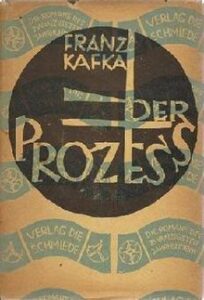
May’s book selection for The Mules was The Trial by Franz Kafka. We don’t often read classics, but I’m always happy when we do. In some cases, I get to read an important book that I’ve never read. If I’ve read it already, it’s even better. Classic books are classics for a reason. You can’t possibly get all they offer in a single read.

Prior to this, I had read only one book by Kafka: Metamorphosis. (I think it was assigned in college.) But if ever The Trialcame up in conversation, I’m sure I would have pretended to have read it. Even in high school, I was well aware that reading Kafka – and these two novels in particular – was de rigueur for anyone that wanted to present himself as well read.

I’m not sure how to describe The Trial. It reminded me a bit of Dostoevsky’s Crime and Punishment. In both books, the protagonist is involved in the criminal justice system. In both, there is a good deal of philosophical consideration that carries along just under the action. Both Kafka and Dostoevsky have an ability to present a dark, almost fatalistic, view of the world in an unsettling but comic way.

But The Trial also reminded me of some of Samuel Beckett’s plays (Waiting for Godot, Endgame, etc.) in its soporific pace, simplicity of language, and absurdist point of view. I found myself thinking, “Okay, I get it,” after the second chapter. I almost stopped reading. But, first, I decided to watch Orson Welles’s rendition of the story on film. And I’m glad I did. It was mesmerizing and sent me back into the book with the energy to finish it.

The Plot 

On the morning of his thirtieth birthday, Josef K, the chief cashier of a bank, is unexpectedly arrested by two unidentified agents from an unspecified agency for an unspecified crime. Josef is not imprisoned, however, but left “free” and told to await instructions from the Committee of Affairs.

The rest of the book is like a bad dream. For the protagonist, things go steadily from bad to worse.

The Themes 

We didn’t spend much if any time on the plot. The plot, in any good absurdist or existential novel, is not the point. Our conversation was all about the themes that presented themselves continually in the reading of the book and then came back to haunt the reader after putting it down.

At one level – the most basic, I think – The Trial is about the endless tyranny of bureaucracy. But it is also very much about the existential dilemma of being human in a nihilistic, post-Enlightenment, post-religious world, where finding meaning in life is impossible, unless one can find meaning in nothingness. (An idea that Sartre, among other existentialists, made a fair case for.)

A major theme of the book, which I was surprised most of the Mules didn’t recognize, was guilt – the result of man’s original sin: being born with a self-reflective consciousness and having to deal with its constant reminders of his weaknesses and failures.

Okay, I’ll stop here. I was hoping to give you a sense of how many interesting and potentially pompous topics The Trialcould lend to any philosophical conversation, as it did to ours that evening.

Here is what I need to say. The Trial is, as advertised, a great book. Not great in the sense of “I really enjoyed reading it,” but great in the sense of “If you want to experience why Kafka is considered so important by so many smart people, you have to read it.”

“The 10 Greatest Final Frames in Cinema History”

I enjoyed reading this short essay by Calum Russell in Far Out Magazine, in which he lists, “The 10 Greatest Final Frames in Cinema History.” I was surprised at how many I remembered. All but one. That was the final frame of The Searchers. And that was Russell’s favorite. My favorite was The Graduate.

How many do you remember? Which is your favorite?

Click here.

Do you remember Taki? The publisher of Taki’s Magazine? I’ve linked to him before. There are plenty of reasons to subscribe to his digital posts, including the diversity of opinions you’ll find there. But for me, the best reason is the fun of reading about his amazing life, past and present.

Here’s an example, but caveat emptor. Reading Taki may result in feelings of jealousy or self-denigration, as if you’ve done nothing interesting with your life.

The von Trapps of Harlem

This is a fun read about a family of 12 musicians trying to become “the Kardashians of Classical Music”!

Click here.

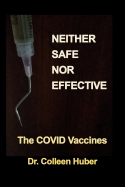
Neither Safe nor Effective, The COVID Vaccines 

By Dr. Colleen Huber

Paperback, 232 pages

Independently published May 14, 2022

I didn’t hesitate to get vaccinated when the vaccines became available. My thinking was, “This may not work. But it won’t hurt me. So, why not give it a chance?”

I’m sure millions of others had the same thought.

However, if I knew then what I know now, I would not have been vaccinated. Although there is still more to learn about the risk/reward relationship of the COVID vaccines, based on what I have learned since they came out, that ratio is not good.

On the reward side, it is now indisputable that the early claims about their effectiveness were greatly exaggerated. As for their safety, new reports are coming in every day. And there is more than enough in them to make a reasonably intelligent person take pause.

In Neither Safe nor Effective, Dr. Colleen Huber examines a gargantuan amount of data gathered from governments in Europe, the US, and Canada. And she concludes, as the title suggests, that the COVID vaccines have proven to be only minimally effective in preventing the public from getting the virus and in keeping those that have been vaccinated from spreading it.

In fact, she says, the only positive thing that can be said about them is that “it is possible” (no firm data) that they help reduce the severity of the symptoms vaccinated people experience when they get the virus.

I’ve been following the COVID story since the beginning of the outbreak. And I generally feel that I’ve read or heard just about everything that’s been reported so far. I know, for example, that the vaccine can cause cardiac issues, immune system damage, and fertility problems. But what I learned from this book is that during Pfizer’s clinical trials, patients reported no less than 1,290 adverse side effects. That information was reported to the FDA, but never released to the public until the FDA was ordered to release it by a court order.

Again… that is an astonishing 1,290 different adverse side effects!