Me, Myself, and My Laptop 

I’m writing this from my little palapas-roofed pavilion next to my pool overlooking a great expanse of the Pacific Ocean.

I’m here by myself because I told K that I was going to spend at least half of January in Rancho Santana whether she came with me or not. It’s 48 hours into my solo sojourn, and I haven’t admitted that I’m lonely and I wish she were here.

I haven’t left my property since I got here, working non-stop responding to emails and writing my blogs and book chapters. It’s just me and my laptop and all the thoughts I’ve been wanting to send out into the universe. So, don’t cry for me. You could only wish you were so lucky as to be here, working on something you think is worth working on, lifting your head and seeing this…

From Experience to Income: Launching the Monthly Money Report

Today’s issue is the first of what I intend to be a regular monthly issue. I’m calling it my “Monthly Money Report” because its contents will be limited to topics related to money: entrepreneurship, business, marketing, investing, etc.

These are subjects I spent 60+ years learning about by doing them, not reading about them. They are also subjects I’ve been writing about for the last 25 years.

If you’re a longtime reader, you know that I don’t often include these topics in my regular issues, even though all my bestselling books are very much about increasing personal income and growing wealth.

The reason for that is because I’ve always thought of this as a kind of journal in which I’d write about anything that interests me personally, rather than about what my partners and publishers want. Nevertheless, I have continued to write about wealth and wealth building for my Japanese publishers, with whom SM, one of my publishing partners, and I head up to publishing franchises.

Recently, we were approached to publish those services in the US and other English-speaking countries. After thoughtfully discussing all the reasons we shouldn’t, we said, “Yeah! Let’s do it!”

His beat will be stocks, bonds, options, and trades. Mine will be business building and wealth strategies I learned from years and years of personal experience, starting with nothing. No money. No connections. No financial or business education. And no idea what an interesting and rewarding path I was on.

Which is to say I’ll be thinking about such things more than usual in the future than I have in the past. And when I think about things, I like to write about them.

If you haven’t read any of my stuff on building wealth, don’t expect to be wowed by lengthy technical analysis or deep thoughts about long cycles or modern economic theory. My approach has always been to admit (to myself and my readers) that although there are lots of games to play in the more-money carnival, I stay away from those about which I don’t have “inside knowledge” and those about which I have no control.

So what you will see in this issue and in my future “Monthly Money Reports” are two kinds of essays: (1) those I’ve written, which means I have a high level of confidence in the advice I’m giving, and (2) those written on subjects I have little experience with, but always by experts I’ve known and worked with for at least a dozen years.

Let’s get to it…

TradeTalk: News, Economics & Insights

Get Ready for a $6 Trillion Transfer of Wealth 

In the next 10 years, according to a new report from brokerage Coldwell Banker Global Luxury reviewed in the WSJ, 1.2 million people from around the world whose net worth is at least $5 million will pass down their wealth – a total of at least $38 trillion – to their children.

That’s a lot of money.

A good chunk of it – about $4.6 trillion – will be in the form of real estate. Half of those properties are in the US, and some of them are already changing hands because many Baby Boomer parents would rather see the transfers happen while they are still alive.

This is a serious opportunity for brokers, contractors, home decorators, and other service providers. As the lucky youngsters begin to gain ownership over their pieces of this multitrillion-dollar giveaway, they will be buying and selling homes and hiring professionals to make them fit their inexperienced style.

I couldn’t even guess at what they will be buying and selling, nor what sorts of changes they will likely make. But if I were in my 30s or 40s, I’d be working on figuring out how these Gen Xers and Millennials will be directing their newfound wealth.

 
G7 Shocks the World and Makes a Sensible Decision 

This year’s G7 summit has been delayed because the date conflicted with Trump’s White House birthday party, which will showcase, among other Trumpian amusements, an MMA (mixed martial arts) fight in or around the Oval Office.

I’ve never had a high opinion of the annual get-together of the seven so-called world leaders, because they rarely arrive at a course of action that makes economic sense. And when they do, they don’t follow up on it.

But now, after 52 years of loony thinking and wasteful spending, they’ve done something that makes perfect sense. Going forward with the meeting without Trump while half the world is watching a cage fight would have been an embarrassing mistake.


Trump Says He’ll Impose a Credit Card Interest Rate Cap 
Is That a Good Thing? 

President Trump has announced that he plans to cap credit card interest rates at 10% for one year.

It was the first time in more than 10 years when nobody – neither Democrats nor Republicans – was outraged by an executive order he issued.

In fact, it felt like everyone liked the idea.

But as with the capturing of Maduro, it’s likely that the nice people with TDS will find a problem with it. And I’m pretty sure I know what that is. If a 10% limit were imposed, it would force credit card issuers to get tougher on their credit rating standards, which would prevent millions of deadbeats from acquiring cards and buying things they can’t afford.


Good News on the US Economy 

New orders for key US-manufactured capital goods increased more than expected ​in November, suggesting business spending on equipment ‌maintained a steady growth pace in the fourth quarter.

Non-defense capital goods orders excluding aircraft, a closely watched proxy for business spending, rose ‌0.7% after a downwardly revised 0.3% ​gain in October, the Commerce Department’s Census Bureau said last week.

Economists polled by Reuters had ‍forecast these so-called core capital goods orders increasing 0.3% after a previously reported 0.5% advance in October. Shipments ⁠of core capital goods rose 0.4% after gaining ‍0.8% in October.

The Principles of Wealth – a Work in Progress 

[Note: This is the Introduction to a book I wrote and then set aside many years ago. I titled it “The Principles of Wealth” because I wanted it to be – well, a little bit lofty and maybe even pretentious. I’m now back to revising it, and I’m going to be publishing chapters of it serially so I can (with your help) get some feedback that will help me get it ready for print.]

A Wealth Seeker’s First Conversation About Money
Step One: A Definition of Wealth 

One can’t have a profitable conversation about wealth without agreeing upon a definition of the word. And that’s a more difficult task than it might seem. I did a brief scan of several of my Stone Age paper-bound dictionaries and found definitions that were redundant (e.g., “material prosperity”) and others that were circular (e.g., “the state of being rich”), but nothing of use.

Let’s consider two common misunderstandings about wealth:

Many people equate wealth with the accoutrements of wealth – a yacht, a Rolex watch, a million-dollar house. But if the owner of such things doesn’t own them outright, they are false signs. In fact, there are millions of people – probably tens of millions of people – in the US alone that have huge houses, big boats, and treasure chests of bling who are not wealthy. They may, in fact, be poor. Or broke. Or hopelessly in debt.

People also equate wealth with income – thinking that having a high income makes one wealthy. But every major city in the industrialized world is crowded with high-income earners that have no wealth and little likelihood of ever acquiring it.

I’ve been thinking about a definition since I started writing this book about 10 years ago. And although I haven’t found one that is perfect, I have come up with one that I like because it’s simple, useful, adaptable, and easy to remember:

Wealth is having more of something valuable than you currently need.

If you accept this pared-down definition, you will see that there are many forms of wealth.

There is wealth of knowledge, wealth of experience, wealth of friendship, wealth of spirit, wealth of optimism, wealth of patience, wealth of hope, and wealth of love – to name a few.

All of them, most people would agree, are valuable – even if some aren’t quite things.

So, having more than you currently need of something that has value – that’s one component of wealth.

But having more than you currently need means that these valuable things must also be things that can be stored.

You might say, for example, that you can be rich in happiness in the sense of having an abundance of it. But it would be difficult to argue that you could store a portion of that abundant happiness for a later time. Happiness is ephemeral. It comes. It goes.

Exploring the various forms of wealth is a discussion well worth having. It could easily take up a book, or a library of books. But my aim here is to focus on material wealth – and to consider the possibility that there are truths about material wealth and acquiring it that are universal.

Let’s begin with a discussion of what I think of as “the first principles of wealth” – the philosophical, ethical, and social considerations.

[Note: That’s the end of the Introduction to “The Principles of Wealth.” Please write with any questions, comments, or recommendations you may have.]

Want to Grow Your Business? You Can’t Unless You Know This

Some years ago, I came up with a new idea to explain the role of leadership in business, especially in new and growing businesses.

The spark that ignited my thinking was an essay by an Ivy League professor in a business magazine. His thesis wasn’t unusual. He was arguing that CEOs are overpaid and that leading a successful business does not require genius or any other unique leadership quality. It’s all about luck and timing. Therefore, the people that happen to be running companies that experience explosive growth should not be overpraised. In terms of value, they are on par with every other executive.

There’s no doubt: Running a large business requires the participation of dozens or even hundreds of smart and hardworking leaders, including senior executives, division CEOs, and department managers.

But starting a company from scratch and growing its revenues to reach the million-dollar mark, and then growing the business again to the ten-million-dollar mark, is rarely done with the sort of management structure that is typical for Fortune 500 companies. It is almost always driven by a single individual. A single fanatically dedicated, extremely demanding, and endlessly energetic person at the top.

Read the biography of any of the great industry builders – from Andrew Carnegie to J.P. Morgan to John D. Rockefeller to Henry Ford – and you will see that in the early days of their careers they were all that sort of person. If you prefer contemporary examples, study the careers of Sam Walton, Jeff Bezos, Rupert Murdoch, Steve Jobs, or Elon Musk. You’ll see the same hard-driving personality at play.

I’ve been writing about these amazing company starters, in one form or another, since I began writing about business building and entrepreneurship in Early to Rise 25 years ago.

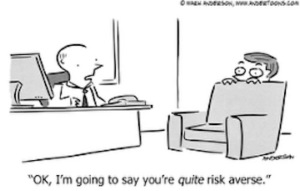
In Ready, Fire, Aim, The Reluctant Entrepreneur, and in dozens of essays, I have argued that much of what is said about entrepreneurs in popular business magazines, bestselling books about start-ups, and courses on entrepreneurship taught at major business colleges in the US is – from what I’ve seen and experienced – just plain wrong. For example, one of the common “truths” about successful entrepreneurs is that they have a high tolerance for risk and are willing to bet everything on an idea they have. I have never known a successful entrepreneur who fit that description. On the contrary, one of the defining features of those who are successful in starting multimillion-dollar businesses is an acute aversion to risk.

In Ready, Fire, Aim, I described what I call the four stages of entrepreneurial growth. I delineated the stages by revenue: (1) zero to a million, (2) a million to ten million, (3) 10 million to a hundred million, and (4) beyond a hundred million. Each stage, I argued, has its own unique challenges and opportunities. And, therefore, breaking through each of those barriers requires the person that is leading the growth to recognize the markers of change and adjust accordingly, leaving behind the practices and policies that had worked in the previous stage.

It is a rare skill, but there is more to it than that. This person must also be able to generate the same level of intensity and focus that he was able to generate during the previous stage. I have watched many would-be entrepreneurs succeed at Stage One, only to fail in Stage Two or Stage Three. I have also watched a handful of people lead their businesses through all four stages with amazing speed.

So what did those people have that accounts for the level of their success? Could there be a common denominator? Could there be some combination of ingredients – some quality of character or an approach to growing an early-stage business – that makes up the secret sauce?

That is hardly an original question. Dozens of books had been written about it by the time I started thinking about it, and dozens have been written since.

Those books offered a host of plausible answers, including a few that seemed undeniable, such as an abundance of energy and a willingness to work 24/7 to accomplish a goal. But I knew more than a few entrepreneurs and CEOs with those characteristics who did not have great success. Which meant that there must be something else.

I continued thinking and writing about that question. Meanwhile, my primary business interest had grown into a large, complex company with hundreds of information products published every year by more than a dozen semi-independent profit centers in the US and another dozen in various corners of the world.

Having a top-down view of all these small businesses meant that I was able to observe their growth patterns. What I saw was that a significant number of them struggled to grow beyond Stage Two. Most grew, but slowly, at 10% or 15% a year. And a few had the kind of explosive growth I was looking for – moving from Stage One to Stage Three ($100 million) by growing revenues by 25% to 50% for stretches of five to eight years.

The people who had driven that explosive growth did, indeed, have the already-identified abundance of energy and willingness to work 24/7 to accomplish a goal that I had expected to see. And I found four more characteristics that they shared.

1. They were very competitive. Three or four of them were outwardly aggressive, though a few were laid back and even deferential. Loud or quiet, well-spoken or crude, like every hyper-successful business builder I’ve ever known, they were all constant and indefatigable competitors. They were not just unafraid of competition, they saw it as the “fun” part of playing the game.

2. They were addicted to speed. They wanted everything done yesterday, and were willing to gently or harshly push on their teams to move quickly by working harder and longer than seemed reasonable.

3. They were insensitive to the disruption and chaos they caused. One of the primary agents in growing a business is change. Which means that growing a business from Stage One to and through Stage Three takes a certain level of insensitivity on the part of the person at the top. Company protocols and policies may need to be changed. Products and marketing, too. And sometimes employees – even good, talented, hardworking employees – need to be moved out or around. None of that is pleasant. Or easy. Or certain. It takes a certain kind of person to not just allow but continually make that happen – to push ahead when, with every step forward, something or someone is falling apart.

4. They were motivated by doubt and criticism. This came to me late in the process, because it came from thinking about what motivated me. I was cognizant of the fact that I was a walking display of all the ingredients in the secret sauce that I had thus far discovered. And perhaps because of that, I had to admit that if I had to choose the one thing that gave me the greatest motivation to accomplish almost anything it was to prove doubters and naysayers wrong. I don’t see that as a virtue. At best, it is a double-edged sword. But once I saw it in myself, it became easy to see it in others. Since then, I’ve asked just about every successful businessperson I know about it, and every one of them, without exception, has admitted to the same thing.

The secret sauce was coming together. I wasn’t sure I had all the ingredients, but I was confident that I had most of them. So rather than waiting for my idea to be fully baked, I felt that the time had come to give it a trial run.

I was invited to speak at a conference on business growth in Dubai, so I decided to present it there and see what the attendees felt about it.

I knew that to give the idea any chance of being accepted, I had to make it simple to understand. I had to come up with a proposition that would arrest attention, a thesis that would be persuasive (or at least sound reasonable), and facts and examples that would push the idea beyond the line of disbelief.

What I came up with was an agricultural metaphor:

In business, as in nature, growth is not an option. It’s a first and forever must.

The proposition: If a business is not growing, it’s dying. It may not look like it’s dying. You may be able to convince yourself it’s not dying. But that won’t change what’s happening at its core – at the cellular level.

The thesis: Maintaining a healthy level of growth in a business, as in a garden, requires two kinds of devoted attention: cultivating and maintaining.

Extending my metaphor, I decided to call the people fanatically devoted to “cultivating” a business Growers, and the people fanatically devoted to “maintaining” a business Tenders.

Growing and Tending… Metaphorically Speaking 

It was no coincidence that I used an agricultural metaphor to promote this idea. I was in the early stages of developing Paradise Palms, a botanical garden, and I had discovered that it was very much like growing a business, depending on people with two very different mindsets, instincts, and skill sets – one for growth and one for maintenance.

I was focused almost entirely on growth, working relentlessly to grow Paradise Palms from the five acres I started with to the 25 acres it occupies today. Meanwhile, to manage the property, I depended on a handful of people focused entirely on keeping it in shape – solving problems and avoiding future problems – despite the innumerable setbacks and obstacles that gardening is heir to.

Looking back on the first five years of the Paradise Palm’s development, I realized that I had spent 80+% of my time thinking about growing it. They had spent 80+% of their time thinking about tending it as it grew.

Growers are inspired by the idea of growing the business as large as it can possibly be. They worship at the altar of More and Bigger. Thus, they are forever pushing a more and bigger agenda. And forever pushing the people that work for them to work harder and longer, even if they are already working 50 or 60 hours a week.

Tenders are inspired by the idea of getting the business to run like a well-oiled machine. They worship as the alter of Peace and Order. Thus, they are forever pushing a peace and order agenda. And forever working to solve problems, mitigate disputes, and simplify complexity in operations.

In the early stages of a company’s development, its leadership must be mostly about growth. If I had to pick a ratio, I’d say it should be 80% about growth and 20% about tending. As the business grows, the ratio changes. For very large (billion-dollar-plus) business, it would be the reverse: 20% about growth and 80% about tending.

The Challenge for Every Business Founder and CEO 

To launch and develop a large and healthy business, you need both Growers and Tenders – Growers to grow the business and Tenders to keep it healthy as it grows.

Growers are rare birds – but no business can succeed without at least one Grower working relentlessly to create growth.

Tenders are more plentiful and therefore much easier to find – a good thing, because no business can succeed without having multiple Tenders working to manage the mess and chaos that the Grower creates.

But that doesn’t mean you can hire just anyone for the Tender job – especially if your business is in its early stages where the rate of growth is fast and steep and things are constantly changing. Tenders need to have great intelligence, deep industry knowledge, and an ability to negotiate and keep workers happily employed. But they must also feel comfortable with change – and Tenders with that added characteristic are not easy to find.


Rental Real Estate: How to Do Everything Wrong

In the late 1970s, I made my first investment in rental real estate.

It was a tidy little one-bedroom condominium apartment in a recently refurbished building on Massachusetts Avenue in Washington, DC. The woman selling it was the owner of a townhouse we were renting. She persuaded K and me to look at it by explaining how prices had been escalating in the area, assuring us that they would keep on rising, and by offering us a loan that required no money down.

“No money down! How cool is that!” I thought.

We went to see the apartment. It was small but not cramped. The building was old but had been remodeled recently, with a handsome entry and a gilded elevator. It had central AC, and, as she put it, “good bones.” Plus, the woman noted, it was in the center of an up-and-coming neighborhood.

“It will be easy to rent out,” she said. “You really can’t lose.”

“And there’s no down payment, right?” I said.

She smiled.

K was suspicious, but it seemed like a no-brainer to me – and it was. Alas, the no-brainer was me!

The woman was correct in telling us that property values in that part of DC had been going up. (She was also correct in predicting that they would continue to rise.) And she did, indeed, come through with a no-money-down deal, although it required us to sign some papers that didn’t quite make sense to me.

“Don’t worry about it,” she assured me. “This is what we call creative financing.”

“And the bank’s okay with it?” I asked.

“They drew up the documents,” she said.

A month later, we had a mortgage and the keys to our first investment property. All without coming up with a dollar in cash.

What the woman hadn’t told us was that the value of the apartment we bought – the estimated value that was indicated on the mortgage – was considerably higher than what it was actually worth. And at the end of the three-year term of the mortgage, I discovered, quite disturbingly, that had to file for a new mortgage. The new mortgage had a higher interest rate than what I had been paying. Plus, I had to come up with several thousand additional dollars for bank fees and other “transaction costs.”

But the pièce de résistance was that, at the end of the three-year term for the new mortgage, the balance was higher – by thousands – than it had been on the first mortgage!

I learned the hard way what negative amortization means. It means that the mortgage payments I was making were not sufficient to cover the interest payments on the loan, and not a penny was going towards the principal.

The Bad News Gets Worse 

I wish I could say that was the totality of the bad news, but there was more to come.

We had rented the apartment to a nice young woman that presented herself as a college student. As it turned out, she was earning her tuition – if she was actually going to college – by entertaining random men in her apartment at night.

This led to regular complaints from the neighbors (which were transmitted to us by the building’s foul-mouthed superintendent) and fines from the homeowners association.

To add insult to injury, after the second month, our tenant stopped paying rent!

I asked a lawyer friend of mine about how to kick her out. He told me that DC had recently enacted a string of tenant “protection” regulations that would make the eviction process long and difficult. “You’ll be lucky if you can get her gone in a year,” he told me.

I considered changing the locks when she was away, but my friend said that if I did, I’d be arrested and put in jail.

“Well, that’s a nice thought,” I told him. “I’ll be sitting in jail, still paying the mortgage, still losing money every month on the negatively amortizing loan, still paying fines to the HOA, and she’ll still be comfortably entertaining.”

I had fallen into real estate hell with no prospect of getting out.

When I finally saved enough money to pay off the overpriced mortgage and sell the damn whorehouse of an apartment, I took a hit of nearly $40,000, which was about $40,000 more than my net worth at the time.

The Silver Lining to the Story 

I made a Master’s Degree of mistakes in making that one investment – most of which I would never make again.


Ten Edifying Facts About Investing 

1. Fact: Since 1916, the Dow Jones has made new all-time highs less than 5% of all days, but over that time, it is up almost 300,000%, including dividends.
Takeaway: 95% of the time you are underwater. The less you look, the better off you will be.

2. Fact: The Dow has compounded at less than 4 basis points a day since 1970. Since then, it is up more than 30,000%, including dividends.
Takeaway: Compounding really is magic. CHF 1,000 became CHF 300,000.

3. Fact: The Dow has only been positive 52% of all days. The average daily return is 0.73% when it is up and -0.76% when it is down.
Takeaway: See #2.

4. Fact: The Dow has spent more time 40% or more below the highs than within 2% of the highs (20.6% of days vs. 18.4% of days).
Takeaway: No pain no gain.

5. Fact: The Dow lost 17% in 1929, 34% in 1930, 53% in 1931, and 23% in 1932.
Takeaway: Be grateful.

6. Fact: At the low in 2009, US stocks were back to where they were in 1996.
Takeaway: Most people think long-term means 5 to 10 years. Sometimes it can be longer.

7. Fact: At the low in 2009, Japanese stocks were back to where they were in 1980.
Takeaway: Different stock markets have different cycles.

8. Fact: Gold and the Dow were both 800 in 1980. Today, gold is $5,000/ounce, the Dow is at 49,000.
Takeaway: Cash flows > commodities.

9. Fact: Since the dot-com peak, gold is up 1,400%. Stocks are up 500%, including dividends.
Takeaway: You can support any argument by changing the start and end dates.

10. Fact: Warren Buffett is one of the greatest investors of all time. In the 20 months leading up to the dot-com peak, Berkshire Hathaway lost 45% of its value. The NASDAQ 100 gained 290% over the same time.
Takeaway: No pain, no premium.

How Currencies Can Predict the Economic Future of Countries

Three Case Studies: Iran, Japan, and the US 

When I first got into the investment newsletter business in 1982, the only thing I knew about currencies was that there was more than just dollars, pesos, and francs. I understood, in a hand-waving way, that they went up and down and that serious people had serious explanations for why. Beyond that, my ignorance was nearly complete.

Four decades later, I know more – but I’m hardly an expert. Marginally knowledgeable is the best I can claim. But currencies are one of those subjects where confidence rises faster than understanding, and I’ve learned to be suspicious of both.

That’s why, when I recently came across an essay that extended my understanding of currencies, I made some notes to include in this issue, as much to double-check what I had learned (what I think I had learned) as the desire to share it with you.

One idea I had learned about currencies from the books I had read was that the value of any currency is entirely dependent on what those that hold and/or trade that currency think about it. If they believe it’s solid, like most of the world has believed about the US dollar since WWII, then it is solid and has the chance to become a global “reserve currency.”

The essay I read made the point that currencies can be seen as “collective judgments about the future of the country that issues that currency.” Not the official story, not the political rhetoric, but what people with money at risk actually believe. Thus, one can view exchange rates as opinion polls – only the respondents don’t get to lie.

Now to the arguments made in the essay, considering three countries and their currencies: Iran, Japan, and the United States.

Iran 

The rial has fallen so far that on some exchanges it’s effectively treated as worthless. Inside the country, it still circulates. Outside it, no one wants to touch it. Iran’s official inflation rate is over 40%, which is bad. But inflation alone doesn’t explain why a currency collapses to near zero. What explains it is radical uncertainty – about the regime’s survival, the government’s finances, oil revenues, sanctions, and what the rules will be tomorrow. Currency markets don’t wait around for clarity. When the future looks unstable, they move immediately.

The rial isn’t forecasting Iran’s fate. It’s reporting on confidence – or, rather, the absence of it. If the currency were ever to strengthen meaningfully, it wouldn’t be because of hopeful speeches or policy promises. It would be because markets believed the country had a plausible path out of chaos.

Japan 

Japan’s story is quieter but just as revealing. The yen has fallen from roughly 100 to the dollar in 2016 to around 158 today. Japan usually runs lower inflation than the US, so this isn’t about prices spiraling out of control. It’s about long-term arithmetic. Government debt exceeds 200% of GDP. Interest rates are rising. And Japan lacks two advantages the US enjoys: the world’s reserve currency and overwhelming military power.

Japan has managed these risks skillfully for years. But currencies look forward, not backward. A weak yen suggests markets see growing strain in that balancing act – especially if higher rates make an already massive debt harder to service. The fact that Japanese pension funds rely heavily on US equities to meet obligations works beautifully… until it doesn’t.

The United States 

Then there’s the United States. When sweeping tariffs were announced with great fanfare, the dollar fell sharply. Markets recalibrated. Volatility was back. What’s interesting is what happened next: The dollar stabilized. Even extraordinary political pressure on the Federal Reserve barely moved it. The market’s message seemed to be: We see this. We’ve already adjusted.

Nothing Compares to Her… 

I didn’t know she had died, so when I saw this, it took me aback. Here, in a theater in Dublin, Ireland, a 1,000-member choir sings Nothing Compares 2 Uin memory of Sinead O’Connor.

Since I didn’t know much about her – other than she had a nice voice and wrote some fetching songs, including Nothing Compares 2 U (which went platinum) – I googled her biography. She had quite the fucked-up life. A blend of Joan Baez, Mary Black, and Amy Winehouse.

Here’s a video obituary of her career.