An Open Letter to President Donald J. Trump 

Mr. President, This Is Your Moment to Shine. 
Fix Our Broken Immigration System! 

Immigrants crossing the Rio Grande into El Paso, Texas
 
I’ve read two e-magazine articles in the past six or seven days on a “downside” of President Trump’s success in stemming the flow of illegal immigrants through the southern border by simply closing it.
 
The downside, according to the reports, is diminished agricultural production and construction projects and a dearth of workers in all sorts of service industries, from hotel housekeepers to farm and construction laborers, carpenters and landscapers, nursing and elder-care aides, babysitters and nannies.
 
This surprised some supporters of Trump’s border policy who had expected that for every illegal immigrant who was taken out of the US labor market, two able-bodied, native-born citizens would be there to take on the work.
 
That didn’t happen.
 
Ordinarily, foreign-born workers make up a significant portion of the labor pool in at least a half-dozen economic sectors, and it has always been true that a significant percentage of those foreign-born workers were working without proper documentation.
 
Stemming the Flow 
 
Biden’s open-border policy was an unmitigated disaster from almost every point of view. Inflation went up, wages didn’t follow, crime rose in every sector but white-collar crime. At least that’s what we thought until the Somali multibillion-dollar rip-off of state and federal taxes was exposed. The biggest expense, however, was the cost of providing social services to more than 10 million uneducated, destitute, and in some cases corrupt and criminal migrants who were welcomed into the border states and then transported by federal trains and planes to targeted cities all over the States. The ostensible aim was to allow for an orderly integration of those immigrants. The real reason was to reshape the electoral demographics of the country by beefing up the population of immigrants/Democratic voters in key voting battlegrounds. 
 
Although the mainstream media did an amazingly good job of completely ignoring the largest shift in US demographics in more than 100 years, the conservative media was putting equal time into exposing what was happening and reporting on any and all crimes and misdemeanors committed by immigrants after they were not just allowed to enter the country illegally, but were then assisted in getting relocated with transportation, housing, and a full range of social services for free.
 
Gradually, the disturbing news stories about rising crime and the tens of billions of dollars the government spent during those four years reached the awareness of non-partisan voters and “undecided” voters – and poll after poll revealed that most Americans were increasingly opposed to what the Biden administration was doing. That’s why, at the beginning of 2025, the mainstream news and open-border advocates dropped the argument they had been making – that the US is a nation built by immigrants – and switched to claiming that shutting down the border was an extremely complex and cumbersome project that would take years and many billions of dollars to accomplish. 
 
But then, when Trump took office in January of this year, he shut it down completely in less than a month.
 
What I found interesting about that was not that Trump did it so quickly, but that the mainstream media and the Democrats didn’t have anything to say about it for the first few weeks. It was almost as if they were never in favor of bringing millions of undocumented immigrants into the US, and that their opposition to Trump’s border policies was more about hating Trump than it was about loving immigrants. 
 
I wonder how long those weeks of stillness would have lasted. Perhaps long enough for both sides of the aisle to pass a common-sense border policy? But then ICE happened, and here we are.
 
Trump has never listened to my sage advice on matters of foreign and domestic policy. In fact, he hasn’t even asked for my advice, even though he keeps emailing me to say what a great American he thinks I am.
 
If he asked me now, here’s what I would tell him… 
 
My Unsolicited Advice 
 
Mr. President: Your accomplishment in closing the border so completely and so quickly is a triumph that nobody can deny. And although I understand how and why you appointed ICE to reverse Biden’s ballot-stuffing scheme, it’s equally hard to deny that it has resulted in several unintended consequences that have not just lowered your approval ratings among moderate voters, but have allowed the mainstream media to divert the public’s attention from matters that are more important and more urgent.
 
For one thing, nobody is paying attention to the massive nationwide scam that has robbed as much as $20 billion from the pocketbooks of American taxpayers. This story was and should be the story of the year, because it unmasked the corruption in Minneapolis and other cities that has been largely engineered by the Democrats for more than 50 years.
 
I know your instinct is to keep pushing forward with using ICE to clear the jails in sanctuary cities of the criminals – mostly violent criminals – that are being protected from deportation by governors and mayors who have made careers of opposing everything you say and do. But if you can put that effort on hold for a few months, you will have an opportunity to accomplish something that no other president has been able to accomplish in the last 50+ years.
 
I’m talking about putting together bipartisan support for a common-sense border policy that I believe the entire country – even voters, politicians, and media people with severe TDS – will approve of.
 
The policy itself isn’t complicated, as I’ll explain in a moment. The big problem is getting bipartisan support for it. And the good news is that you are in the rare position – even with all the hatred and divisiveness in America right now– to get it done.
 
And that is because we know from the history of politics since the early 1970s that almost every major political change did not happen with the presidents that were thought to be aligned with those changes. On the contrary, they almost always happened because of the actions taken by a president representing the other side.
 
Consider the reforms that reshaped American life over the last half-century. Overwhelming civil-rights legislation was passed under President Lyndon B. Johnson, a Texan conservative who nonetheless marshaled his own caucus to do something many in his party opposed. President Richard Nixon, to the astonishment of many, opened diplomatic relations with China. President Bill Clinton, a Democrat, signed welfare reform that alienated many liberal activists. These presidents acted not because the issues were simple – they weren’t – but because the political conditions allowed solutions that transcended the usual partisan gridlock.
 
Immigration has never received that kind of treatment. The familiar talking points have persisted not because they were right, but because they served political ends. Republicans warned that large numbers of low-skill immigrants would depress wages for native workers. Democrats focused on the sentimental narrative that the country was built by immigrants, a phrase that, while true in certain historical contexts, is a poor guide for 21st-century policy. By focusing on generalized slogans, both sides avoided grappling with the actual economics of labor supply and demand.
 
The economic reality that Washington refused to confront for decades is quite simple. American industries have long depended on immigrant labor in sectors where native-born workers are scarce. Men fill jobs in agriculture, construction, warehouses, and food processing plants, while women are disproportionately represented in domestic work, childcare, and elder care. These jobs are essential to the functioning of many communities, but they are also physically demanding, often seasonal, and not attractive to most Americans seeking upward mobility. The data back this up. Persistent labor shortages in precisely these sectors are repeatedly documented in federal workforce reports, especially in construction and agriculture, where vacancy rates consistently outpace the national average.
 
Because we never built a large-scale, enforceable system of temporary work visas tied to real labor demand, immigrants have often entered unlawfully and remained here in legal limbo. They came with an intent to work, and many did so quietly and productively. But without a lawful mechanism to govern their entry and departure, they lived under perpetual fear of detection, deportation, or permanent separation from their families. That created a shadow workforce, unmonitored and outside the protections of law, and laid the groundwork for exploitation and public resentment. This wasn’t chaos because of unwilling workers. It was the predictable outcome of a labor market without legal pathways.
 
This gets us back to where we began. During the first two years of Biden’s term of office, 7.8 million illegal migrants were stopped at the border, given a “report yourself voluntarily sometime in the future,” and then released into the United States. In addition, roughly 1.5 million “got-aways” seen by surveillance were never apprehended. 
 
That’s a total of 9.3 million illegal immigrants let into the country. By 2023, independent research estimated the unauthorized immigrant population at approximately 14 million, the highest in US history. And that figure, too, does not include the got-aways. 
 
Your announced goals began to slow illegal immigration the day after you were elected, and by the time you took office 13 months ago, illegal immigration was already slowing to a crawl. Last month, the Census Bureau and independent demographers reported the first net negative international migration in decades – meaning more people were leaving the country than entering it. Dept. of Homeland Security figures show that in a single year more than 2.5 million unauthorized immigrants departed the United States, including approximately 1.9 million voluntary self-deportations and more than 600,000 formal removals.
 
What if you announced tomorrow that you were forming an advisory board of Republicans and Democrats to come up with an immigration policy that made common sense by not just allowing but encouraging and assisting half a million or more immigrants to come into the country to help American businesses do the jobs they are meant to do?
 
You could do that because all the people with TDS who have been opposing you would be forced to agree with it. 
 
The outlines of a sensible system are not complicated or fuzzy. They are clearly visible to anyone who understands the facts about immigration and wants the US to have a program that will benefit everyone involved – our industries, our workers, our government, and even the millions of immigrants who would love nothing better than to spend time in the US, doing work that they are happy to do.
 
What would a common-sense border policy look like?
 
1. You would implement a large, enforceable, and temporary work visa program. A program that matches labor demand in specific industries with labor supply from abroad. These visas should be time-limited – typically three to nine months, depending on the job – digitally tracked, and tied to clear exit requirements. A system like this would give employers confidence that they can find the workers they need, give workers legal protections, and reduce the incentives for illegal entry.
 
2. At the same time, you would expand your plans for increasing legal immigration for skilled workers – doctors, engineers, researchers, and entrepreneurs – through a merit-based track. A large body of economic research shows that high-skill immigrants contribute disproportionately to innovation, productivity growth, and fiscal health. Countries that attract global talent tend to outgrow those that don’t. Strengthening this pathway is not ideological, it’s strategic.
 
3. You would make it clear that you want the new policy to deal humanely and efficiently with the existing unauthorized population. 
 
This is something you have already begun doing. Look at the numbers: According to most of the sources I found, your “self-deportation” idea has worked amazingly well, with 1.9 million voluntary self-deportations since you announced it.
 
That is an amazing number. And you did it not only by offering self-deportees a ticket back home and a thousand dollars. They went home because the prospect of getting caught and being sent back was unattractive. And because part of the deal was that if they did self-deport, they would be able to apply for legal immigration status as soon as they got home.
 
The cost of that program was much less than the cost of forceful deportation. Formal removals often cost governments more than $17,000 per individual, whereas modest incentives to leave voluntarily cost a fraction of that. 
 
Imagine if you raised the ante to $2,000. Or $3,000. Or even $5,000! It’s quite conceivable that we would see 5 million or even 10 million foreign-born nationals who are living in the US now take the option and return home.
 
Americans, at their core, think practically about issues like these. When asked whether they are willing to financially support or house illegal migrants in their own homes, many answer no. That reaction isn’t rooted in cruelty, but in a common-sense understanding of order, community, and personal responsibility. A legal system of immigration that respects sovereignty, enforces rules, and matches labor needs to economic demand is more likely to earn lasting public support than one that keeps borders porous and policies vague.
 
I’m not a psychologist, Mr. Trump, but I do remember you saying that your greatest wish was to be remembered as “the most loved” US president of all time.
 
That’s a high hurdle – especially considering the amount of irrational hatred half the country has for you. But minds can change. Especially when conditions change for the better. You’ve secured your legacy as perhaps the most anti-war president we’ve ever had. And you are on your way to cleaning up the multitrillion-dollar scams that have plagued our government for decades. 
 
Getting a bipartisan immigration-reform policy passed would be another monumental achievement that nobody will be able to deny. 
 
You have already accomplished something your political opponents said was impossible – restoring control of the border. Now comes the next challenge: turning that control into a constructive, lawful system that works for Americans, for workers, and for the nation’s future.
 
You can do it!
 
At this moment in history, only you can do it. It can be another great part of your legacy – another part of the challenge you gave yourself: to make American great again!

Sources

* US Customs and Border Protection, Monthly Operational Reports, 2025
* US Bureau of Labor Statistics, Occupational Outlook Handbook and Job Vacancy Surveys (2025)
* US Senate Homeland Security and Governmental Affairs Committee Reports on Border Security (2024)
* Pew Research Center, Estimates of Unauthorized Immigrant Population (2023)
* US Census Bureau, Population Estimates and International Migration (2025)
* US Department of Homeland Security Annual Enforcement Report (2025)
* US Immigration and Customs Enforcement Cost-of-Removal Data (2025)
* US Dept. of Justice Press Releases on Fraud Prosecutions Including Feeding Our Future Cases (2024)


Just the Facts 

Border Crossings and Encounters 
Federal records show border encounters have collapsed from crisis levels in the early 2020s to numbers unseen in decades, creating the conditions for law-based reform.

2021-2024
* Border encounters: ~7.8 million
* “Got-aways” (not apprehended): ~1.5 million
* Estimated net increase: 3.5–5 million
* Total unauthorized population (2023): ~14 million

2025-Jan. 2026 
In 2025, Border Patrol recorded ~238,000 border crossings, lowest since 1970. And last month, federal records recorded zero illegal border crossings.

Self-Deportation and Enforcement Costs (2025)
Financial incentives for lawful departures are significantly cheaper than detention and forced removal, suggesting a fiscally pragmatic policy tool.

* Voluntary departures: ~1.9 million
* Enforcement removals: ~600,000
* Cost per formal removal: ~$17,000+ per person
* Cost per voluntary departure program exit: ~$1,000–$2,000

Share of Workers Who Are Foreign-Born (2024)
Agriculture: 44%
Construction: 30%
Landscaping: 46%
Housekeeping: 38%
Meat Processing: 37%
Childcare: 22%

Research from the National Academies of Sciences (2017) found that immigration has small overall wage effects, but can have negative wage impacts for native-born workers without high school diplomas.

Fiscal Impact on States and Cities 
New York City alone projected spending over $12 billion between 2022 and 2025 on migrant housing, healthcare, and related services. Chicago and Denver reported similarly significant unplanned expenditures.


Will NYC Survive Mamdani’s Housing Plan

And Make Housing “More Affordable?”

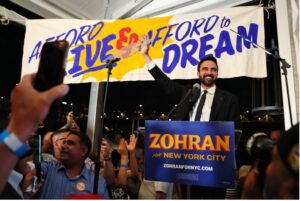
I mentioned in the Jan. 7 issue that I’ve been wondering how much of what Zohran Mamdani said he’d do as mayor during his campaign was real and how much was just vote-seeking rhetoric.

So far, it looks like the man was not bluffing.

The first hint was his choice for the new Fire Commissioner, Lillian Bonsignore, the second woman and first openly gay woman to be appointed to that post. Critics point out that she is also the first person with no experience as a firefighter to lead the 11,000-person agency. (She does, however, have 31 years of experience in the Emergency Medical Services field, and has strong recommendations from some who worked with her during the three years she served as EMS chief.)

I think she deserves a pass on the issue of “Does she have the skills and knowledge to do her job?”

I can’t say the same thing about Cea Weaver, however.

Weaver is the woman Mamdani appointed to be “tenant director,” where she will oversee, among other things, establishing regulations that affect property ownership, tenant rights, rent-control rules, and so on.

On a 2021 podcast recently unearthed by Washington Free Beacon’s Jon Levine, Weaver says her goal is to make New York City housing “worth less” by mandating rent control regulations. While she is speaking, you can see Mamdani on the side nodding enthusiastically. Then he says, “I get most of my knowledge on housing from Cea, so if you get it from me, it’s just not coming from the source.”

She’s called for the collectivization of property (which she said will particularly affect white families). She’s called property ownership a tool of “white supremacy.” She supports the impoverishment of the white middle class, and she has called for the election of Communists.

She’s also said that it’s important for “white people to feel defeated.”

Putting aside the question of whether making white people feel defeated is something she should be doing, her plan for making NYC housing more affordable is not just wrong, it’s stupidly wrong. Because its two main strategies – rent control and public housing – have done nothing but make housing more costly every single time they have been used. Not only in NYC, but everywhere in the world.

In reviewing coverage of this on one news outlet, I found the following three reader comments that I wanted to share with you:

* “These policies will make NYC a landscape of food deserts. Then Bernie Sanders can start bread lines because bread lines are the best sign that there is bread. This approach will also help the homeless who will move into the open-air drug marts that will inevitably pop up.”

* “If they force housing to be worth less, wouldn’t they then receive less in property taxes? How would they replace those tax dollars? By raising the price of other government services?”

* “This is so surreal. We’re literally watching a bunch of financially privileged Woke postgraduates explore Socialist ideas as if it’s a project for their postgraduate thesis, but who are now in charge of the largest and most diverse city in America.”

Cea Weaver in 2019

About Cea Weaver

Cea Weaver (born Celia Weaver) serves as the director of the New York City Mayor’s Office to Protect Tenants. She previously coordinated the statewide organization Housing Justice for All and was a central figure in the campaign that led to the passage of the Housing Stability and Tenant Protection Act of 2019. As a member of the Democratic Socialists of America, she has advocated for rent strikes and regulations that prioritize housing for community use rather than profit.

Chile Joins Latin American Move to the Right 

I’m sure you’ve noticed. In the last several years, we’ve seen a hopeful trend in Latin American politics. In one country after another, South and Central American voters are replacing leftist-leaning and straight-out Socialist leaders with fiscally sensible conservatives. With that change, we are already seeing a sharp decline in murders, rapes, kidnappings, and terror and a demonstrable increase in local and international business, jobs, and national GDPs.

On Sunday, December 14, voters handed a decisive victory to center-right candidate José Antonio Kast, rejecting leftist Jeannette Jara and, by extension, the broader Socialist experiment that’s been running out of credibility across the region.

Kast ran on a bluntly unfashionable platform: faster growth, fiscal discipline, safer streets, and cracking down on illegal immigration. Chile’s result now joins Argentina, Bolivia, Ecuador, Venezuela, and Honduras – all of which have turned away from hard-left presidential candidates since 2023. So much for the Chávez-era fantasy of a Bolivarian domino effect.

What makes Chile especially revealing is how fast the mood flipped. Just four years ago, voters bought into Gabriel Boric’s promise of “social justice” after the 2019 riots paralyzed Santiago. Kast lost that race. But Boric never had the mandate – or the competence – to remake Chile. His tax hikes died in Congress. His hostility toward business bled jobs. Unemployment stayed stubbornly high. And he burned enormous political capital on two failed attempts to rewrite the country’s Constitution.

The economy didn’t implode, but mediocrity can be fatal in politics. Chile saw nearly zero growth in 2023, while crime and disorder climbed. Voters weren’t fooled when Jara tried to distance herself from Boric’s record or his activist base.

Add in the Venezuelan collapse – hundreds of thousands fleeing Nicolás Maduro’s dictatorship into Chile – and the rightward swing makes even more sense. Kast promised border enforcement, deregulation, tax cuts, and a smaller state. He won’t have Congressional majorities, but he does have a clear mandate: Chileans want order, growth, and competence back.

If Kast can revive the 1990s formula – open markets, capital-friendly rules, and controlled legal immigration – Chile could again become the region’s standout. And yes, Washington could help by lowering tariffs and treating Chile as a serious trade partner.

The voters have spoken. This time, Socialism didn’t just lose, it wore out.

You can read much more about it here, here, and here.

Note: In the next issue, I’m going to give you a bunch of predictions about what’s going to happen worldwide and in the US in 2026. My prediction on this topic is that the trend will continue. But I’m also predicting that it will include some changes and agreements that may seem impossible today.

Back Home and Reluctantly Catching Up on the News

I usually don’t get jet-lagged on return flights to the US – but since we returned from Japan last weekend, I’ve been waking up around 3:00 in the morning and have been unable to get back to sleep till about 5:00. 
 
That’s given me some quiet time to catch up on some of the news I ignored while we were away – although I’m not sure that catching up was a good idea.
 
Before I touch on that, I want to say this: Flying back into Dulles Airport was a disappointing confirmation of my opinion of how much cleaner, safer, and generally more civilized Japan is than the US. The airport carpets were dirty. The escalators and elevators were grimy. The way people sort of muscle their way into lines to board flights seemed almost aggressive compared to Japanese travelers. 
 
Still, it was good to be back home, in the land of the free and the brave. 
 
What was the news I caught up on?
 
I skimmed the coverage of Mamdani’s win in the NYT, WSJ, NY Post, and a few online publications. None of the opinions I read were surprising. The Conservative publications worried about the economic damage this election will do to the city. The Liberal publications saw Mamdani’s victory as a confirmation that the future for the Democrats is further to the Left. The discussions that most interested me were about how effective Mamdani will be in getting his campaign promises realized. 
 
If he succeeds, Conservative commentators said, the city will lose a large percentage of its tax base as billionaires transport themselves and, in some cases, even their businesses to sunnier climates, while Liberal commentators said that he will prove to the world that you can have a highly taxed and heavily restricted economy with all sorts of free services without going broke. 
 
An argument I found particularly interesting went like this: The best possible outcome for Mamdani would be to have little success in getting his policies effected. There wouldn’t be a mass exodus of the city’s tax base, and – assuming crime and inflation didn’t get any worse – he’d have a decent chance of being reelected. That argument surprised me at first. But I’ve done a bit of research on NYC’s bureaucracy and past attempts to change it, and most of what I’ve read has convinced me that this outcome is more likely than any other, which would leave the city’s denizens with another four years of the same.
 
Another topic that was hot when I left for Japan – the government shutdown – was resolved at the 11th hour, with a handful of Democrats voting to open up shop again after failing to convince the voting public that the shutdown was the fault of the Republicans (even though they had voted to reopen the government more than a half-dozen times but were opposed by the Dems). 
 
The good news, I suppose, is that I can stop worrying about what damage the shutdown would do and can get back to worrying about the bigger picture – i.e., our government’s $37 trillion budget deficit.
 
What else? Let me see…
 
It looks like retail stores are still being vandalized by gangs of young people in cities where stealing anything with a value below a thousand dollars had been reduced to a misdemeanor.
 
And the CDC is still recommending COVID shots – even for young children whose chances of dying from the biowarfare-invented virus has been zero and while evidence for the multitude of bad outcomes from the mRNA vaccines continues to mount.
 
Oh, well. 
 
I’m happy to be back to our house across the street from the beach, smoking a Perdomo Robusto this evening with my favorite after-dinner drink (3/4 Cognac and 1/4 B&B), writing on my laptop and watching the sun go down. 

Quoting the Dream: Voices on America’s Promise

“The American Dream is that dream of a land in which life should be better and richer and fuller for everyone, with opportunity for each according to ability or achievement.” – James Truslow Adams, American writer and historian


“The faith that anyone could move from rags to riches – with enough guts and gumption, hard work and nose to the grindstone – was once at the core of the American Dream.” – Robert Reich, former US Secretary of Labor


“The American dream is not that every man must be level with every other man. The American dream is that every man must be free to become whatever God intends he should become.” – Ronald Reagan

Doug Casey on the Fed’s Quiet War Against the Middle Class

Doug Casey is one of my favorite people. Long before it became a common discussion, he was on national TV explaining the value of free markets and the danger of large government and government debt.

The Doug I know is more than just a bestselling author and an early pioneer in free market economics. He’s also a man who has led a life of action, and even adventure. He’s done business all over the globe with industry leaders, traveling salesmen, bounty hunters, and diamond traders. He’s met with heads of state, negotiated international deals, and publicly debated powerful, deep-state-embedded politicians.

All that, and he has the charm to win favor with youngsters.

Years ago, I was sitting in a lounge in an airport in Denver (I think) with my family and Doug came in. I invited him to sit with us, hoping he wouldn’t say anything that would freak out K or the kids. He talked freely for half an hour. And when he left, my Number Three Son, who was about 12 years old at the time, said, “Dad. That guy is one of your coolest friends.”

In the following excerpt from an interview by International Man, Doug talks about the Federal Reserve’s recent rate cut and his view of the current administration and the future of the US economy. (I’ve done some editing on this to emphasize what I feel were Doug’s most important points.)

International Man: The Federal Reserve recently cut interest rates. What does it signal about the current state of the US economy?

Doug Casey: Let me introduce the subject with a joke.

Einstein dies and goes to heaven. St. Peter greets him effusively and says, “Unfortunately, Mr. Einstein, because we’re a centrally planned economy – for obvious reasons – we have a temporary housing shortage, and have to put you up with three roommates for a while.”

Einstein goes to his new apartment, and the first guy comes up to him and says, “Mr. Einstein, I have an IQ of 130, and I’d love to get to know you better.” Einstein says, “Great. After lunch, let’s bounce around a few concepts of astrophysics that have been on my mind.”

The second guy comes up and says, “Mr. Einstein, I’m not as smart as that first guy. I’ve only got an IQ of 100, but I still want to get to know you better.” Einstein says, “Great. Let me put away my grip, and let’s play a game of chess.”

The third guy comes up and says, “Mr. Einstein, I’m not as smart as those other guys. I’ve only got an IQ of 70, but I still want to get to know you.” Einstein says, “So, where do you think interest rates are headed?”

International Man: That’s funny!

Doug Casey: It also says a lot about guessing the direction of interest rates, which matters. Because they’re actually the most important single indicator in an economy.

International Man: How so?

Doug Casey: Interest rates are the price of capital, the lifeblood of an economy. In terms of their importance to the economy, you can think of them as blood pressure and pulse readings for measuring the health of humans. When a central bank lowers rates, it’s like giving a patient amphetamines. When interest rates are lowered, it’s like giving the patient barbiturates.

Central bankers are like doctors who are given the challenge of healing a sick patient and then keeping him healthy. But the only medical treatments they can use are amphetamines and barbituates.

I understand why Trump wants lower interest rates. They encourage people to buy things, consume, and borrow money. That increases consumption, business earnings, and employment. But this, like the artificial high you get from amphetamines, is only temporary because ultimately it discourages saving, and without saving, there’s no capital. The immediate and direct consequences of lowering rates might be an artificial boom. But the indirect and delayed consequences are a very real bust.

Interest rates should not be dictated by politicians and bureaucrats. Only free and dynamic conversations between borrowers and lenders can determine the “correct” level of rates.

International Man: Traditionally, the Fed has two mandates: price stability and maximum employment. Lately, Stephen Miran – a Trump-appointed Fed governor – has argued for a “third mandate”: moderating long-term interest rates. What do you make of that?

Doug Casey: Not only shouldn’t the Federal Reserve have mandates – it should be abolished. Unfortunately, it’s become so intertwined with the economy that people have come to believe it’s an essential component of the cosmic firmament. The Fed determines the amount of money and credit, its cost, and the way the banks operate. It finances the government’s debt, which is especially important since the government is bankrupt. But I hate talking about what “should” happen; “should” only happens in a dream world.

Initially, the Fed only had one mandate: price stability. That alone was a ridiculous goal. Then, maximum employment became the Fed’s second mandate – also impossible and absurd. And now they’ve taken on a job that may be even more ridiculous: controlling long-term interest rates.

Since the Fed was created, the dollar has lost over 95% of its value. Forget about price stability; the general price level has gone up by a factor of over 20, which is a total and abject failure. The Fed is, by necessity, an institution committed to the printing of money, which means that it is also an engine of inflation….

These people don’t have a clue about economics or the way the world works. And if Trump knows any better, he’s not acting on it. He wants to pack the Fed with puppets who will print money, vainly trying to keep interest rates below the rate of currency debasement. The result will be a catastrophe….

International Man: For the average American – someone with a mortgage, some savings, maybe a 401(k) – how do these potential shifts in Fed policy translate into real-life consequences?

Doug Casey: A lower standard of living, class warfare, and eventually chaos….

If you can get a 30-year 6% mortgage now, I’d do it. Long-term rates are headed up, and the dollars you owe will depreciate.

But in the kind of chaos that’s being created in the world today, on many fronts, your best investment is in yourself.

It’s critical that you and your family have as many skills and abilities as possible. No matter how things sort out, you want to be in a position to survive and prosper. I urge you to get my new book, The Preparation. It covers a host of things that most people haven’t even considered. Sorry for the commercial, but I think it’s important.

A Final Plea to My Big Apple Friends & Frenemies:  Mamdani?

Really? 

Tomorrow, you will have a chance – not a great chance, but a chance – to defeat Zohran Mamdani. But some of you – maybe many of you – don’t want to do that. You want to elect him.
 
I get it. Mamdani is a fresh face in NYC politics. He’s energetic, likeable, and boyishly good-looking. 
 
When I first looked him up him six or eight weeks ago, my impression was positive. He seemed pleasant and approachable. Even charismatic. Thus, my initial impulse was that – notwithstanding what I’d heard about his politics – I wanted to like him. Perhaps the way I like Bernie Sanders.
 
The Conservative Media was very much alarmed by his growing popularity among NYC voters – particularly wealthy Liberals, whose votes generally decide the outcome of the mayoral elections. They said he was a Socialist. They said he refused to condemn 9/11. They said that he was the coddled child of a wealthy family and had never worked an honest day in his life, except for a few temporary jobs as a waiter and barista. Oh, and then there was that failed attempt to be a rapper.
 
Those are not the sort of ad hominem accusations to which I give a moment’s notice. Were they, how could I have come around, however gradually and begrudgingly, to liking and supporting Donald Trump?
 
Mamdani’s elevator pitch was a bit more concerning. Free buses. Free education. And free housing for the homeless and “undocumented migrants,” as he called them. 
 
Did he really believe he could fund all of his campaign giveaway promises by taxing the Super Rich? Hadn’t anyone in his election campaign group done the math? Had no one told him that those insanely hardcore New York City lovers were already giving up 51% of their income to taxes? Or that since Bill de Blasio’s disastrous tenure, the city was losing its multimillionaires – its most precious financial resource – by the jumbo jet-ful?
 
When I brought up the subject to the liberal NYC denizens I count as friends, they seemed saddened and distraught by such questions. “I’m voting for a Muslim and a Socialist,” one of them – a high-income, high-net-worth Jew – gleefully retorted. As if to say, “Take that and shove it down your conservative gullet!”
 
I remembered reading that on the verge of the Bolshevik Revolution, the luxurious banquet rooms and upscale cafes stirred with happy admiration for the latest trend of the intellectual elite – a movement called Communism.
 
What were my college-educated one-percenters so excited about? It was free bus transportation and city-owned grocery stores! 
 
Writing in The Free Press (I think it was), James Freeman said, “Grocery stores have been consistently among the most obvious, visible demonstrations of the failures of Socialism.” And that today they look like Russian supermarkets before they reintroduced private Capitalism – warehouses of mostly empty shelves except for periodic shipments of identical boxes and cans of bland and low-nutrition grains and vegetables. 
 
In 2000, “60 Minutes” was doing a story on Boris Yeltsin and the fall of the Soviet Union. Leon Aron, who had written a biography of Yeltsin, described the Russian’s visit to a supermarket in Houston: “If there was an epiphany in Yeltsin’s life it was seeing a US supermarket overflowing with ‘lemons of this color and the shining red peppers of that color… and everything is glistening….’ He was literally shaken by the quality of goods. On his flight back to Russia he sat with his head in his hands, repeating, ‘Look what they’ve done to our poor people.’” 
 
As for his position on the Mideast crisis, Mamdani’s been an outspoken critic of Israel in the manner of most Liberals and Leftists, including my giddily optimistic Jewish friend. As if, other than his contention that Israel’s execution of the war against Hamas has been “disproportional” to the barbaric slaughter of 1,200+ peaceful civilians, he would pose no threat to Jewish Americans living under his mayorship. This, despite the fact that he has refused to condemn the slaughter. In fact, in an interview on Fox News just last week, host Martha MacCallum asked Mamdani whether he believed Hamas should disarm and be barred from future leadership in Gaza. “I believe that any future here in New York City is one that we have to make sure that’s affordable for all, and as it pertains to Israel and Palestine, that we have to ensure that there is peace. And that is the future that we have to fight for,” he said in response.
 
In fairness to the lack of concern among so many NYC one-percenters and its large Jewish population, there is the argument that the city is just too big and disorganized to be destroyed by one man in a single term. De Blasio couldn’t do it (although he made a good effort), and it’s possible that Mamdani won’t permanently damage New York. But since he might, you have to ask yourself: Why take a chance? 

Bernie Sanders Goes to West Virginia 

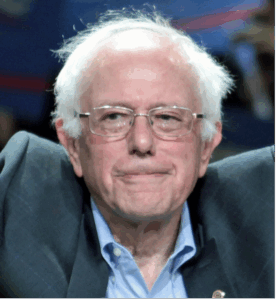
A high school acquaintance who despises Trump sent me this video. I was hoping it wouldn’t trigger my I-Hate-Trump-Haters switch, and it didn’t. It does two things that I liked: It reinforces Bernie’s image as a regular guy. A likeable regular guy. And it shows the power of selling an idea by ignoring subtleties and complexities and having a simple story to tell that is compelling.

Here is how I responded to my friend: Thanks for the video! I enjoyed it. It made me like Bernie again! (Not enough to vote for him, but enough to recognize his modesty, sense of humor, and tenacity.)