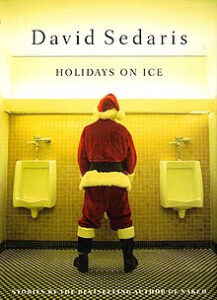
Holidays on Ice 

By David Sedaris

128 pages

Originally published Dec. 1997

I knew I had a few Christmas-themed books on the shelves somewhere. I was hoping to find one that would entertain the grandkids. The one I chose could certainly work for the kids, but it would also work for me because it was written by David Sedaris, who is always reliable for a good, smart laugh.

Holidays on Ice is a collection of essays and stories about Christmas. I am reading it now, repeating passages to family and friends who are visiting. My favorite so far is the first one in the book – “Santaland Diaries” – which is Sedaris’s take on working as an elf at a department store grotto.

Critical Reception 

* “Not remotely politically correct or heartwarming.” (Liesl Schillinger, New York Times)

* “David Sedaris is the rare writer who makes you feel more charming and witty after every encounter.” (Lucy Mohl, Seattle Times)

“This is comedy, pure and simple, with occasional moments of surprising sweetness.” (Connie Ogle, Miami Herald)

The Sun Also Rises 

By Ernest Hemingway

Originally published 1926

272 pages

This was Hemingway’s first novel. And I think it’s a very good one.

Plot 

It’s the story of a small group of 20-something British and American expats traveling from Paris to Pamplona several years after WWI. Jake, the main character, is a writer, an outdoorsman, a bullfighting aficionado, a heavy drinker, a war veteran, and a romantic. (Who does that sound like?) He’s in love with Lady Brett Ashley, with whom just about every other character in the novel is in love with. Jake has certain advantages in this contest, as Brett is attracted to manly men. But he has one significant disadvantage: He’s been rendered impotent (or so it seems) from a war wound. Thus, Jake spends most of the story in her periphery, watching her have affairs with acquaintances and friends.

If you know anything about Hemingway, it will be difficult to read this without seeing it as a roman à clef. You’ll want to guess who the other characters are modeled on. (And there’s plenty of research to read about that.) It will also make you wonder if the speculations about Hemingway’s sexual preferences might be true.

But it’s more than a roman à clef. It’s also a travelog, a period piece, and a portrait of the artist as a young man. Which could have been a bit of biting off more than this young writer was able to chew. But it manages to do that and more. It’s also about finding meaning in one’s life after the innocence of youth has been eradicated by experience.

Theme 

That bit I just mentioned about the loss of innocence and the search for meaning has been characterized by some critics as the emblematic chronicle of what Gertrude Stein called “The Lost Generation” – the rejection by the writers and artists who fought in WWI of traditional European and American values and their struggle to feel comfortable reinstalling themselves in the quotidian lives of their fellow countrymen that were protected from the horrors of that war.

Critical Reception 

The Sun Also Rises received mixed reviews when it was first published. One of the problems some critics had with it was that although the story was tragic, the protagonist wasn’t heroic. And the ending was neither triumphant nor tragic. (This was beautifully captured at the end of the novel when Brett says to Jake that had things been different, they could have had “a damned good time together.” Jake’s response, the last line of the novel: “Wouldn’t it be pretty to think so?”)

Critics no longer feel that way. In fact, it could be argued that The Sun Also Rises led the way for what some call the modern tragedy.

Another problem some critics had with it was Hemingway’s literary style – the understatement, the pared down sentimentality, the presentation of images and scenes without explanations. Like the treatment of the story, Hemingway’s writing style (most of which he was tutored in by Gertrude Stein and Ezra Pound) became the literary standard of American prose.

Today, The Sun also Rises is regarded as one of Hemingway’s best books, and one of the best American novels ever written.

Building a Story Brand 

By Donald Miller

240 pages

Published Oct. 10, 2017

Donald Miller has a blog called “Story Brand” about advertising. He also has an advertising business. His USP (Unique Selling Proposition) is his expertise in creating simple, believable stories about… well, about USPs.

It’s a topic I’m familiar with. And a thesis I embrace. So, I was expecting to like the book. And I did. Miller is a good writer. By that, I mean he is a good thinker who can articulate his ideas clearly and concisely.

In Building a Story Brand, you’ll get plenty of good, individual ideas that will be eyeopeners for novices and reminders for pros. But you will also get Miller’s blueprint for how to write the perfect story brand. One that is simple, believable, and emotionally persuasive.

I recommend it for copywriters, marketers, CEOs, and anyone who wants to create stronger advertising for a business, a non-profit, or an organization of any kind.

Are We Living in George Orwell’s Nightmare or Aldous Huxley’s? 

How many times in recent years have you thought, “This is just like 1984.”? Or “This reminds me of Brave New World”? Click here to read a short, but insightful essay on that subject.


Small Things Like These 

By Claire Keegan

128 pages

Published Nov. 30, 2021

Every once in a while, I read a book that makes me want to read everything the author has written. That is how I feel after reading Claire Keegan’s Small Things Like These.

The Genre: Small Things Like These is only 128 pages. I’d call it a novella, but by the time I finished it, it felt like a novel. So, let’s call it a short novel. The story takes place a week before Christmas, and much of it is driven by the advent of that holiday. So, it is a Christmas story. A very good one, that will remind you immediately of Charles Dickens’s A Christmas Carol. But it reminded me, too, of O. Henry’s Gift of the Magi and short stories (whose titles I can’t remember now) by Pearl Buck, Leo Tolstoy, and Anton Chekhov. This is definitely a good book to give as a Christmas present to anyone that likes literary fiction.

The Plot: The “action” is almost entirely in the mind of the protagonist, a 40-something coal merchant living in the mid 1980s in a small town in Ireland. He is the hardworking father of four children, and the only thing he cares about is making a good living for his family. Of course, something happens, something small, that challenges that.

Critical Reception 

Small Things Like These was shortlisted for the 2022 Booker Prize and the 2022 Rathbones Folio Prize. It won the Orwell Prize for Political Fiction.

My Opinion 

I’ve written here and there about how I judge the books I read. In general, I look at four things:

* Breadth – How well does it give me an understanding of the world the story takes place in?

* Depth – How deeply does it delve into what is sometimes called “the human condition”?

* Stickiness – How compelling is the plot? How effectively does it glue me to the page?

* Literary Style – How finely wrought is the writing?

That said, this is how I’d rate Small Things Like These:

* Breadth – 3.5 stars. While restricting the action to the week before Christmas, Claire Keegan does a surprisingly good job of painting a detailed picture of the people and culture of the town. By page 60, I felt like I knew the place all too well.

* Depth – 3.5 stars. The protagonist’s challenge, and Keegan’s handling of how he thinks about it and deals with it, took me into uncomfortable territory: recognizing how difficult it is to measure up to our personal moral standards.

* Stickiness – 3.0 stars. It’s a small story, with a minimalist plot. But it is told with such compassion and power that I was never bored.

* Literary Style – 4.0 stars. It’s been a long time since I discovered a writer that humbled me like Claire Keegan did with this book. (The last time, I think, it was Cormac McCarthy). She writes perfectly proportioned paragraphs. Beautifully simple and simply beautiful sentences.

My Overall Rating: an average of 3.875 stars

Click here to watch a video of Claire Keegan answering a few questions about the book.

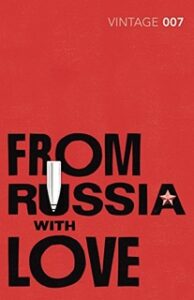
From Russia with Love 

By Ian Fleming

First edition April 8, 1957

253 pages

And…

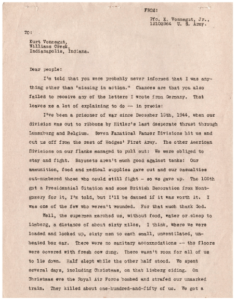
Until I came across this in Letters of Note, I had no idea that Kurt Vonnegut was a prisoner of war. This letter to his family explains a lot about his view of war and the world, as expressed in his novels.

To read the entire letter, click here.

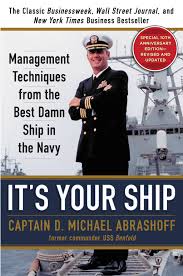
It’s Your Ship 

By D. Michael Abrashoff

Originally published May 22, 2002

240 pages

This book was published 20 years ago. I happened upon it in a used bookstore last week. It’s a quick read because Michael Abrashoff is a good storyteller and he has a good story to tell: his experience in taking over as commander of USS Benfold, one of the worst-run ships in the Navy. Abrashoff comes across as smart and experienced and accepting of his limitations. He also has a good sense of humor.

I recommend It’s Your Ship for anyone that is in a position of taking a leadership role in an organization that is established and set in its ways. I, of course, particularly liked the observations that I agree with, such as:

“The thing about rules and policies is they become very hard to fix once they are put in place. Both the people who put them in place and the people whose jobs it is to exercise them become highly motivated advocates of the policies. Even if the policies originally made sense, they become very hard to change. When you try to change something but can’t, you start becoming a tenant and stop being an owner.”

Click here for a short (5-minute) read about the book.

And here to watch an interview with the author.

And here to watch him making a presentation at a conference.

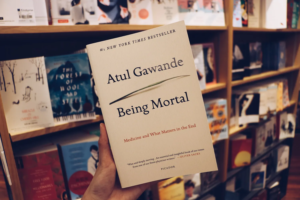
Being Mortal: Medicine and What Matters in the End 

By Atul Gawande

282 pages

First published Oct. 7, 2014

 Someone must have recommended it. And I must have asked Gio to order it for me. It appeared on my desk last Monday.

I wondered whether it was suggested as something I should read after writing about my stroke. I couldn’t remember. But I liked the look of the book. The size, the thickness, the cover design. And I liked the title.  Being Mortal promises a philosophical treatment of one of the deepest questions we can ask ourselves. And the subtitle – What Matters in the End– promises a big and useful answer. An idea that could change or advance my view of death.

It didn’t take me many pages to realize that the author had a somewhat different objective in writing the book. For him, the question is about geriatric medicine: What should our goals be in terms of providing health care to the old and dying?

Doctors, Gawande says, are too often uncomfortable dealing with their dying patients’ understandable anxieties. They choose, instead, to give them treatments that don’t improve the quality of their remaining years and can make things worse.

One of his most provocative arguments is that hard-won health and safety reporting requirements for elder care facilities might satisfy family members but ignore what really matters to the patients. Despite the popularity of the term “assisted living,” he says, “we have no good metrics for a place’s success in assisting people to live.” And as he points out, a “safe” life isn’t what most people really want.

Although, Gawande identifies no perfect solutions to the problems he presents, the presentation is important and stirring. If nothing else, reading this book will help you better prepare for your own or your loved ones’ final days.

Critical Reception 

* “In his newest and best book, Gawande has provided us with a moving and clear-eyed look at aging and the harms we do in turning it into a medical problem, rather than a human one.” (The New York Review of Books)

* “Gawande’s book is so impressive that one can believe that it may well [change the medical profession].” (Diana Athill, Financial Times/UK)

* “A needed call to action, a cautionary tale of what can go wrong, and often does, when a society fails to engage in a sustained discussion about aging and dying.” (San Francisco Chronicle)

Click here to watch a video review of Being Mortal.

The Haunting of Hill House and Their Eyes Were Watching God 

If the book we choose to read is thin – say, less than 350 pages – the Mules will often read a second book. I don’t get it. It seems to me that one book is more than sufficient to fuel a good discussion. But I don’t complain. The elder Mules, those that make these decisions, are wise. I trust them.

In October, we read two books, neither of which I had even heard of before: The Haunting of Hill House by Shirley Jackson, and Their Eyes Were Watching God by Zora Neale Hurston. Usually, when we read two books, there is something that connects them. (In November, for example, we are going to read From Russia With Love and a biography of Ian Fleming.)

This time, as near as I could tell, there was no connection. The subject matter was different. So were the themes, styles, and genres.

But there was one thing that was true of both of them: They are superbly written.
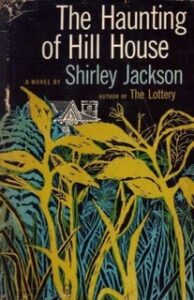
 

The Haunting of Hill House (1959)

By Shirley Jackson

246 pages

The Haunting of Hill House is the story of six people that spend time in a supposedly haunted house. They include Dr. Montague, an occult scholar looking for solid evidence of a “haunting”; his wife, a believer in spirits; Theodora, a feisty young woman; Luke, the future heir of the house; and Eleanor, a fragile young woman that supposedly had experiences with poltergeists when she was young.

As the days pass, odd and scary things begin to happen. Mostly to Eleanor, who is the central character through which we come to understand the others.

We began our discussion by trying to identify the book’s genre. Was it a gothic horror novel? Or a psychological thriller? We could not agree. And so, we went on to discuss other matters. The novelty of the story, the development of the characters, the quality of the writing – and we disagreed about all that too.

That is not exactly right. Nearly all the assembled Mules, and those attending by Zoom, felt that it wasn’t a good book. The plot was not surprising. The characters were cliché. There were none of the twists and turns and surprises they wanted from a story of this type. It was just not interesting. There were, however, two Mules (GG and yours truly) that felt differently. We thought it was a very good book. And we thought it was very well written.

In support of our argument, I accused my fellow Mules of being dense. GG, averse to ad hominem attacks, made a case for the literary quality of the novel by reading the first paragraph out loud…

“No live organism can continue for long to exist sanely under conditions of absolute reality; even larks and katydids are supposed, by some, to dream. Hill House, not sane, stood by itself against its hills, holding darkness within; it had stood for eighty years and might stand for eighty more. Within, walls continued upright, bricks met neatly, floors were firm, and doors were sensibly shut; silence lay steadily against the wood and stone of Hill House, and whatever walked there, walked alone.”

Everyone had to admit: That was damn good writing.


Critical Reception 

Although outnumbered at the meeting, GG and I weren’t the only critics that recognized the quality of this book. In The Magazine of Fantasy & Science Fiction, Damon Knight selected it as one of the 10 best genre books of 1959 and declared it to be “in a class by itself.” In 2018, The New York Times polled 13 respected horror novel writers to choose the scariest book of fiction they had ever read. Two of them, Carmen Maria Machado and Neil Gaiman, chose The Haunting of Hill House.

But the ultimate praise came from the ultimate horror fiction writer of our time, the one and only Stephen King. He called it “one of the finest horror novels of the late 20th century.”

Interesting 

Shirley Jackson decided to write the book after reading about a group of 19th century “psychic researchers” who had studied a “haunted” house and reported their supposedly scientific findings to the Society for Psychic Research. After the book was published, she said, “No one can get into a novel about a haunted house without hitting the subject of reality head-on; either I have to believe in ghosts, which I do, or I have to write another kind of novel altogether.”
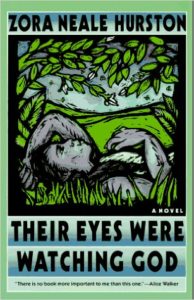
 

Their Eyes Were Watching God (1937)

By Zora Neale Hurston

 219 pages

After defending The Haunting of Hill House for an hour or so, it was to GG’s and my relief that the Mules were unanimous in liking Their Eyes Were Watching God. They liked the story. And the main character. And the minor characters. And the themes. And the book’s literary qualities.

An example of the writing – the first paragraph:

“For some they come in with the tide. For others they sail forever on the horizon, never out of sight, never landing until the Watcher turns his eyes away in resignation, his dreams mocked to death by Time. That is the life of men.”

Their Eyes Were Watching God is the story of Janie Crawford’s life, from “a vibrant, but voiceless, teenage girl into a woman with her finger on the trigger of her own destiny.” It is, from what I’ve been told, a standard text for high schools today. It’s considered important in its exploration of feminism and the African American experience in Florida in the early 20th century.

Critical Reception 

Initially, the book was slammed by Richard Wright and other leading figures of the Harlem Renaissance for perpetuating a stereotypical view of African Americans that, in Wright’s words, “eat and laugh and cry and work and kill; they swing like a pendulum eternally in that safe and narrow orbit in which America likes to see the Negro live: between laughter and tears.”

Hurston’s reputation was restored in the Black community in 1975 when Alice Walker published an essay in Ms.magazine (“In Search of Zora Neale Hurston”) that is largely credited with reviving interest in her work. “A people do not throw their geniuses away,” Walker is famously quoted as saying. “And if they are thrown away, it is our duty as artists and as witnesses for the future to collect them again for the sake of our children and, if necessary, bone by bone.”

The book was reissued two years later and has since appeared on many “100 best” lists.