Quoting the Dream: Voices on America’s Promise

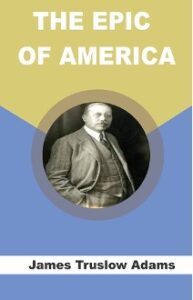
“The American Dream is that dream of a land in which life should be better and richer and fuller for everyone, with opportunity for each according to ability or achievement.” – James Truslow Adams, American writer and historian


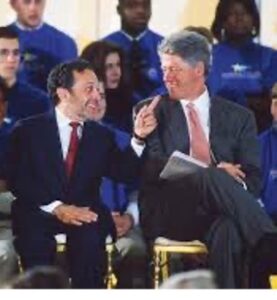
“The faith that anyone could move from rags to riches – with enough guts and gumption, hard work and nose to the grindstone – was once at the core of the American Dream.” – Robert Reich, former US Secretary of Labor


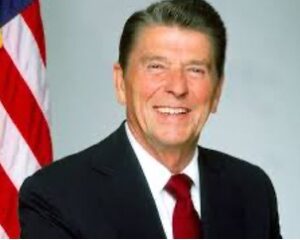
“The American dream is not that every man must be level with every other man. The American dream is that every man must be free to become whatever God intends he should become.” – Ronald Reagan

Is the American Dream Over? 

According to a recent Gallup poll, a record-­low 58% of US adults say they are “extremely” (41%) or “very” (17%) proud to be an American. That’s down from 90% in 2004. For Gen Zs, that number plummets to just 47%. And it’s not just a generational gap. Another poll concluded that 70% of US citizens believe the American Dream is no longer attainable.

“That isn’t just sad,” Alex Green says, “It’s a national tragedy.”

In his new book, The American Dream: Why It’s Still Alive… And How to Achieve It, which I had a chance to read just before it was published, Alex argues that all the pessimism about America’s future is largely unfounded and that the American Dream – the idea that the United States offers anyone and everyone a chance to acquire wealth and have a good life – is still very much a reality.

I’ve known Alex for more than 30 years. I met him in the early 1980s when he was working as an analyst for an international brokerage and accepted an invitation to speak at one of the investment conferences my partner and I were putting on at various overseas destinations. We became colleagues when, motivated to teach what he had learned about successful investing, he went to work as Chief Investment Strategist for the Oxford Club, an international research and advisory club created in 1983 to serve individual investors. Since then, we’ve become connected by a longstanding discussion about what I think of as the “soft side” of finance – how wealth is most efficiently created, and the dangers of seeking wealth without the right philosophical and ethical perspectives.

What Money Can Do 

I’ve written a fair amount about the fact that having money does not automatically lead to happiness. However, that does not mean that acquiring wealth is not a worthy goal. As Alex explained in a recent email to me:

Money is independence. It liberates you from want, from work that is drudgery, from relationships that confine you. No one is truly free who is a slave to his job, his creditors, his circumstances, or his overhead.

Wealth is the great equalizer. If you have money, you have power – in the best sense. Wealth is freedom, security, and peace of mind.

It is not a guarantee of outcomes but of opportunity. It promises that everyone has the chance to improve their circumstances through their own efforts.

That last point is important. One of the things Alex and I have always agreed on is that the discussion about wealth and poverty that takes place in academia and in politics is too much about the geopolitics of wealth and the presumed power imbalance between the wealthy and the rest of the population. These perspectives can give comfort to those that are not wealthy, but the solutions they offer – geopolitical solutions – don’t work for the individual.

In other words, one cannot expect to improve one’s financial position in the world through state-level, political solutions. That has never worked and it never will. As Alex wrote in a recent essay, “Your power to change a nation of more than 330 million people is negligible. But your power to change yourself – your choices and your behavior – is limitless.”

That is just one of several key themes laid out in his new book.

The Pursuit of Wealth… and Happiness 

The idea that every American can, without help from the government or family assistance, achieve a better, richer, and fuller life, is not new. Nor is it complicated. It is embedded in the wisdom of many of America’s greatest political, economic, and philosophical thinkers, from Thomas Jefferson to Benjamin Franklin to Milton Friedman to Steven Pinker.

Unlike societies built on rigid class structures or inherited privilege, America was founded on the radical notion that merit, effort, and character matter more than bloodline or social status.

The American Dream says, “Your future is not predetermined by your past. Your efforts matter. Your choices have consequences. You can be the author of your own story.”

The American Dream places the power of change squarely in the hands of the individual.

It encourages innovation, risk-­taking, and resilience.

Belief in it turns setbacks into steppingstones and failures into learning experiences.

And that is why, as Alex says, the American Dream remains so important today. “It addresses the deepest human needs: the need for purpose, the hunger for progress, and the desire to build something lasting for future generations. In a world increasingly divided by cynicism and despair, the American Dream stands as a beacon of possibility. It has drawn millions to our shores and has guided millions more who were born here.”

It’s Our National Ethos… It Shapes Our Identity

In Alex’s view, the United States stands on three pillars:

* The Declaration of Independence, which declares that we are a free people whose rights preexist government

* The US Constitution, which both empowers and limits government to protect those rights

* The American Dream, which is how we exercise our right to pursue happiness

“Without these three pillars,” he says, “we are not the same nation. Not the same people. America is not perfect. It never has been. But it remains the best environment on Earth for ordinary people to build extraordinary lives.

“The souring of national sentiment isn’t driven by facts as much as by narratives.

“When every institution you trust – your school, the media, perhaps even your political party – emphasizes America’s sins over its successes, it’s easy to internalize the message that this country is fundamentally flawed – and the Dream is no longer real.”

Alex says that one of the chief objectives of The American Dream: Why It’s Still Alive… And How to Achieve It is to “better align perceptions with reality” – and he wrote the book for three kinds of readers:

* Disbelievers. They don’t believe the Dream is real because they don’t know what to do, aren’t doing it, or don’t realize they are already living it.

* Frustrated Dreamers. They know the Dream exists, but it feels out of reach.

* Dream Achievers. They’ve lived some version of the Dream, but they worry about their kids and grandkids. Or they want to help other Americans find the path.

“It’s natural to feel overwhelmed. If not outright depressed,” says Alex. “There’s an inertia – perhaps even a fear of failure – that keeps many from taking that first step.”

For those individuals, he has an interesting suggestion, which he explained in a recent essay he wrote introducing the book to the 160,000 Oxford Club members who rely on his wealth-building advice:

Become a star in your own reality show. 

Nielsen Media Research tells us that Americans love reality shows where contestants are put in high-pressure situations and challenged to “win” using every bit of intelligence, cunning, and resourcefulness they can muster.

If you’re behind the eight ball financially, why not view your problems the same way?

I’ll bet if you were in front of a national television audience – and in danger of being voted off the show – you’d come up with some pretty good ideas, ones that might surprise the people around you.

(After all, you know better than anyone else the wasteful or frivolous spending that holds you back.)

Mihaly Csikszentmihalyi, author of Flow: The Psychology of Optimal Experience, thinks that’s a great idea. He asserts that the quickest way to increase your life satisfaction is to stop seeing your problems as difficulties and start viewing them as challenges to be accepted with a sense of playful enjoyment…

Facing your problems requires two things: a bit of imagination and a positive attitude. The payoff, in turn, can be huge. Whether you want to start your own business, get out of debt, or start down the path to financial freedom, you can begin by relishing the opportunity.

You might surprise yourself, too. Not only by achieving your goals, but by seeing how much satisfaction you get just moving toward them in a disciplined way….

Success – or the pursuit of it – validates your life. It gives you a reason to get out of bed in the morning. It also makes you feel good….  And that is why you should star in your own reality show. (One that, not coincidentally, actually deals with reality.) The obstacles in front of you will give you the opportunity to show the world – and yourself – what you’re made of. [And you will be rewarded by experiencing] one of life’s greatest pleasures: the feeling of earned success.

Those are some of the reasons I am recommending Alex’s new book. There are others. For example, he also covers issues that are top of the mind for many American investors, such as:

* Economic trends – e.g., that the percentage of US households earning more than $100K has increased significantly since 1980

* Why the US remains a land of opportunity due to a robust economy, leading global companies, and significant contributions to science and technology

* The life-enhancing value of embracing “Radical Responsibility”

* Why we are living in a new “Golden Age” for investors

* How to shorten the road to financial independence by embracing “The World’s Simplest Investment Portfolio”

As one reviewer recently put it, “The American Dream: Why It’s Still Alive… And How to Achieve It earns a well-deserved spot on the bookshelves of all ambitious individuals seeking long-term financial prosperity and to experience the ultimate feeling of earned success.”

Here’s a link to order the book.


About Alex Green 

Alex Green was not a great student. He did not go to private schools. (“As a kid,” he says, “I didn’t even know anyone who attended a private school.) He did not study at an elite university. He did not earn any scholarships, academic honors, or advanced degrees. He had no family connections, no mentor, and no professional network. Yet he managed to become a multimillionaire while still a young man – and continues to compound his wealth today, as well as the wealth of the 160,000 Oxford Club members who follow his financial advice.

Why Is It That So Few People Get Rich? 

Robert Frank, a columnist for The New York Times, has argued for some time that the key difference between the “haves” and the “have nots” in this country is not talent, hard work, and persistence but luck.

That sort of analysis sticks in my craw for two reasons: It is born from jealousy. It is absolutely not true.

It is true that many highly successful people, when asked for the secret to their success, cite luck as the reason. As I’ve said many times in previous essays, this is ingenuous. One need only read their autobiographies (or biographies written about them) or speak to anyone who has worked for them to know that it was a combination of personal strengths and disciplined habits.

They default to luck as an explanation for two reasons: Because it makes them seem modest and therefore likeable. And because when one looks back on a successful career, it often seems like it was a matter of luck.

In my case, it never seemed like luck. It seemed much more like decades of difficult challenges, frequent heart-crushing mistakes, and countless 12-hour days.

Alex Green (see today’s main essay, above), recently wrote about Dr. Bob Rotella, a leading sports psychologist whose views are diametrically opposed to Robert Frank’s, and summarized some of Rotella’s most important findings from his book How Champions Think:

No. 1: Intense Optimism – It’s tough to achieve great goals without an unwavering conviction that you will achieve them. Exceptional people generally do this through intense, purposeful visualization. Optimism keeps them juiced, excited about their prospects and willing to work harder than others. Optimism alone doesn’t guarantee anything, of course. But it is an essential ingredient. There is an almost perfect correlation between negative thinking and failure.

No. 2: A Confident Self-Image – We all construct a mental picture of ourselves. To a great extent, that self-image determines what we become in life. Champions view themselves as winners. And they devote their lives to making that image a reality.

No. 3: Habits of Excellence – Exceptional people follow strict habits that make success almost inevitable. Commitments are a dime a dozen. But unwavering perseverance is a virtue in short supply.

No. 4: An Unwavering Commitment to Process – Exceptional people don’t just pursue a dream. They fall in love with the process that makes it come true. They don’t just work longer and harder. They work smarter.

No. 5: Single-Mindedness – Champions don’t generally live well-rounded lives. They know they cannot be great business leaders, great parents, great athletes, great socializers, and tireless contributors to their communities. They have a passion for one thing and pursue it with the zeal of the newly converted.

No. 6: Honest Evaluation – Many people set high standards for themselves. But then they go easy on the self-evaluations. Average achievers tend to overestimate how hard they work. Champions don’t. They define excellence in specific terms and commit themselves to the most rigorous standards.

No. 7: Resilience – Failure is inevitable in business and in life. But exceptional people don’t let it define them. They find something to cling to, some hope for the future. Each setback comes with some lesson to be learned.

The Entrepreneur’s Compass: Thanks to ‘Ready, Fire, Aim

“Thank you for Ready, Fire, Aim!” 

“I wanted to personally thank you for writing Ready, Fire, Aim. It’s one of the few books that’s truly shaped how I think and operate as an entrepreneur. I’ve bought at least 10 copies over the years to share with friends and team members, and I reread it every quarter. It’s become something of a compass for me.

“Your ability to distill complex entrepreneurial stages into such actionable insight has had a lasting impact on my business and mindset. It’s rare to find a book that stays relevant at every stage of growth, but yours does exactly that.” – JC

Work, Adventure, and Gratitude: My Tokyo Week

I’m a Lucky Bastard. A Lucky, Grateful Bastard. 

I’m writing this on Sunday, in our room on the 11th floor of the Prince Sakura Tower, which looks down on central Tokyo, a landscape of haphazardly arranged modern, glass-and-steel skyscrapers, mid-century office buildings, and aging wood-framed houses, small restaurants, bars, and retail shops – with the occasional colonial era mansion standing in the middle of it all.

The city is quiet now. But in less than an hour it will come to life, thrumming with the movement of millions starting their day. Like New York or London or Beijing, Tokyo is electric with the dense energy of its people, which makes the infrequent visitor feel humbled and happy in equal measure.

K and I have been here now for 12 days. Our time together, which comprises roughly half of my time here, has been given to touring museums, visiting gardens, and exploring local neighborhoods that K read about in the very considerable research she does before every trip abroad. As I mentioned in my last post, we’ve spent the majority of our time in Tokyo, but we also spent two days in Matsumoto and a day and an evening in Nagano.

For me, the touring part of this trip has been a great success. I’m especially excited about the ideas I’ve stolen from two botanical gardens we visited that I’ll use to make my botanical garden in Florida more fun and picturesque for visitors.

The other half (for me) has been business – one day of preparation and five days of speeches, panel sessions, hot-seat counseling, TV and YouTube interviews, and a half-dozen promotions for my books and next year’s conference events.

I almost can’t believe the success Sean and I have had with this little publishing partnership I started in Japan. In the last 24 to 30 months, the investment newsletter we write together has gone to the top of our publishers’ charts. (Sean does the hard work – running our stock portfolio. I do the easy part – writing opinion pieces about getting rich.) And we’ve sold more of my books to Japanese readers than John Wiley and my other US publishers sold to Americans in the last 10 years.

And get this: The company that sells my ideas on business and marketing launched a new campaign that sold, in its first month, more than 1,000 copies of one of my books for $300 a book!

What lights me up is not the experiences themselves. I’ve had similar experiences throughout my career. What makes me feel so good is that I’m having all this fun at the ripe old age of 75 – a time of life when I should be retired.

I’ve tried retirement. I tried it first when I was 39 and then at 49 and at 59. I didn’t try again at 69 because by then I knew that there was nothing in the retirement picture that was attractive to me.

I feel lucky to be able to continue working at this level – waking up each morning insanely motivated to attempt to cram 12 hours of work into 6, and then waking up the next morning with the same beautifully unreasonable ambition.

I feel lucky to be able to spend the better part of my working time with men and women who are, for the most part, 20 to 30 years younger than I am. I love the challenge of keeping up with them in terms of sheer output. And although I can feel that this is a race I will one day have to cede, I am happy to know that I can – at my age (and because of my age) – stimulate their thinking and inspire them to meet or exceed my output when they reach my age.

I feel lucky to be able to spend most of a week once a year in Japan speaking to several thousand conference and digital attendees – sober, intelligent, middle-aged and older Japanese men and women who, notwithstanding the language barrier, have spent thousands of dollars and come hundreds of miles to hear what I have to say about the economy, investing, and my particular philosophy of building wealth and living a rich life.

I felt lucky the night before last, after my interview with Professor Fuji on his popular podcast, to be invited by him to spend an evening with our mutual teams at a geisha house, one of only two or three authentic geisha houses in Tokyo. I went to a geisha house in Kyoto the last time I was in Japan, but it was nothing like what I experienced here. Some of the rituals – the personal service, the music, the conversations, and the dancing – were similar. But the total geisha experience, thanks to Professor Fuji, was on an entirely different, entirely more exotic, and thoroughly more exciting level.

I remember sitting there between two ethereal beauties, being catered to like I had never been catered to before and thinking, “This is what being a sheik feels like. Better yet – this is how 007 would be treated if he were in Tokyo on a mission!”

So not a bad work week for a man who, had I accepted my culture’s view of my expiration date, would have been back in the States, puttering around the golf course or sitting home watching TV.

Here I am in the recording studio of Professor Fuji…

And here I am trying to flip him, but he knows his Jiu Jitsu and has already lowered his center of gravity (which is why he’s smiling!)…

Doug Casey on the Fed’s Quiet War Against the Middle Class

Doug Casey is one of my favorite people. Long before it became a common discussion, he was on national TV explaining the value of free markets and the danger of large government and government debt.

The Doug I know is more than just a bestselling author and an early pioneer in free market economics. He’s also a man who has led a life of action, and even adventure. He’s done business all over the globe with industry leaders, traveling salesmen, bounty hunters, and diamond traders. He’s met with heads of state, negotiated international deals, and publicly debated powerful, deep-state-embedded politicians.

All that, and he has the charm to win favor with youngsters.

Years ago, I was sitting in a lounge in an airport in Denver (I think) with my family and Doug came in. I invited him to sit with us, hoping he wouldn’t say anything that would freak out K or the kids. He talked freely for half an hour. And when he left, my Number Three Son, who was about 12 years old at the time, said, “Dad. That guy is one of your coolest friends.”

In the following excerpt from an interview by International Man, Doug talks about the Federal Reserve’s recent rate cut and his view of the current administration and the future of the US economy. (I’ve done some editing on this to emphasize what I feel were Doug’s most important points.)

International Man: The Federal Reserve recently cut interest rates. What does it signal about the current state of the US economy?

Doug Casey: Let me introduce the subject with a joke.

Einstein dies and goes to heaven. St. Peter greets him effusively and says, “Unfortunately, Mr. Einstein, because we’re a centrally planned economy – for obvious reasons – we have a temporary housing shortage, and have to put you up with three roommates for a while.”

Einstein goes to his new apartment, and the first guy comes up to him and says, “Mr. Einstein, I have an IQ of 130, and I’d love to get to know you better.” Einstein says, “Great. After lunch, let’s bounce around a few concepts of astrophysics that have been on my mind.”

The second guy comes up and says, “Mr. Einstein, I’m not as smart as that first guy. I’ve only got an IQ of 100, but I still want to get to know you better.” Einstein says, “Great. Let me put away my grip, and let’s play a game of chess.”

The third guy comes up and says, “Mr. Einstein, I’m not as smart as those other guys. I’ve only got an IQ of 70, but I still want to get to know you.” Einstein says, “So, where do you think interest rates are headed?”

International Man: That’s funny!

Doug Casey: It also says a lot about guessing the direction of interest rates, which matters. Because they’re actually the most important single indicator in an economy.

International Man: How so?

Doug Casey: Interest rates are the price of capital, the lifeblood of an economy. In terms of their importance to the economy, you can think of them as blood pressure and pulse readings for measuring the health of humans. When a central bank lowers rates, it’s like giving a patient amphetamines. When interest rates are lowered, it’s like giving the patient barbiturates.

Central bankers are like doctors who are given the challenge of healing a sick patient and then keeping him healthy. But the only medical treatments they can use are amphetamines and barbituates.

I understand why Trump wants lower interest rates. They encourage people to buy things, consume, and borrow money. That increases consumption, business earnings, and employment. But this, like the artificial high you get from amphetamines, is only temporary because ultimately it discourages saving, and without saving, there’s no capital. The immediate and direct consequences of lowering rates might be an artificial boom. But the indirect and delayed consequences are a very real bust.

Interest rates should not be dictated by politicians and bureaucrats. Only free and dynamic conversations between borrowers and lenders can determine the “correct” level of rates.

International Man: Traditionally, the Fed has two mandates: price stability and maximum employment. Lately, Stephen Miran – a Trump-appointed Fed governor – has argued for a “third mandate”: moderating long-term interest rates. What do you make of that?

Doug Casey: Not only shouldn’t the Federal Reserve have mandates – it should be abolished. Unfortunately, it’s become so intertwined with the economy that people have come to believe it’s an essential component of the cosmic firmament. The Fed determines the amount of money and credit, its cost, and the way the banks operate. It finances the government’s debt, which is especially important since the government is bankrupt. But I hate talking about what “should” happen; “should” only happens in a dream world.

Initially, the Fed only had one mandate: price stability. That alone was a ridiculous goal. Then, maximum employment became the Fed’s second mandate – also impossible and absurd. And now they’ve taken on a job that may be even more ridiculous: controlling long-term interest rates.

Since the Fed was created, the dollar has lost over 95% of its value. Forget about price stability; the general price level has gone up by a factor of over 20, which is a total and abject failure. The Fed is, by necessity, an institution committed to the printing of money, which means that it is also an engine of inflation….

These people don’t have a clue about economics or the way the world works. And if Trump knows any better, he’s not acting on it. He wants to pack the Fed with puppets who will print money, vainly trying to keep interest rates below the rate of currency debasement. The result will be a catastrophe….

International Man: For the average American – someone with a mortgage, some savings, maybe a 401(k) – how do these potential shifts in Fed policy translate into real-life consequences?

Doug Casey: A lower standard of living, class warfare, and eventually chaos….

If you can get a 30-year 6% mortgage now, I’d do it. Long-term rates are headed up, and the dollars you owe will depreciate.

But in the kind of chaos that’s being created in the world today, on many fronts, your best investment is in yourself.

It’s critical that you and your family have as many skills and abilities as possible. No matter how things sort out, you want to be in a position to survive and prosper. I urge you to get my new book, The Preparation. It covers a host of things that most people haven’t even considered. Sorry for the commercial, but I think it’s important.

American Baseball, Japanese Twist

This Is What Happens When Japanese Culture Takes On American Baseball 

AV, a friend and colleague of mine at Rancho Santana and a self-proclaimed “super fan” of Japanese superstar pitcher Shohei Ohtani, sent me the following article:

Shohei Ohtani: If He Had Been Born in the United States, They Would Have Ruined His Future” 

In a town of 120,000 people, surrounded by rice fields and steel factories, a boy named Shohei Ohtani threw baseballs with his father after work, while everyone else watched cartoons. What began as a pastime in Iwate Prefecture became a prophecy: an athlete destined not just to dominate the game, but to reinvent it. What looked like a kid with a glove ended up being a storm that shook the foundations of modern baseball.

From a young age, Ohtani was a genetic and emotional anomaly. His father, Toru, a former amateur baseball player, and his mother, Kayoko, a former national badminton athlete, instilled in him an obsession with excellence. In high school, he was already throwing at 100 mph, but he didn’t brag: He measured, recorded, analyzed. In Japan, he learned that perfection is not pursued for applause, but for respect. There, young Shohei forged his mind of steel.

And here’s the crucial point: If Ohtani had been born in the United States, he would never have become Ohtani.

The American development system would have turned him into a product, not a person. Scouts would have classified him as a pitcher or slugger and forced him to choose. In the United States, baseball is run like a factory: talent packaged, tasks assigned, dreams trimmed.

In contrast, Japan gave him freedom, not labels. It allowed him to explore, fail, learn, and become the impossible player that every other system would have killed before he was born.

When he arrived in the Major Leagues with the Los Angeles Angels, the world discovered the myth was real. In Anaheim, he won his first MVP awards, challenged metrics and reporters, and forced statisticians to invent new categories to describe him. He threw 100 miles per hour and the next day hit two home runs.

It was as if Babe Ruth had been reincarnated with a Japanese chip. And when it seemed he couldn’t grow any more, he arrived at the Dodgers… and turned his talent into a global enterprise. His $700 million contract, with deferred payments and a commercial machinery connecting Asia and America, was not just a sports move: It was a business merger between human talent and financial engineering. In a year, Ohtani generated more money than he cost. In a single uniform, the Dodgers found their gold mine and baseball found its new economic model. But the human body is not a stock.

Surgeries, demands, and media pressure are ticking time bombs. And the real risk lies in deification: When an entire sport depends on one man, the myth can become a prison. If Ohtani gets injured, all of baseball trembles. It’s the paradox of genius: What elevates the game also makes it fragile.

Even so, no one in history has had such a colossal projection. If he maintains his health and pace, Shohei Ohtani could monopolize the MVP for the next decade. No one else has the talent, duality, or cultural impact to compete with him. If he succeeds, he will shatter all existing records for the award and redefine what it means to be “the best player in the world.”

Ohtani didn’t just change baseball: He rewrote it in two languages. And if time proves him right, we won’t be seeing the new Babe Ruth… but the first Ohtani. Because while others aspire to glory, he is managing it for the long term.