An Evening with John Savage

Setting: A casual bar on the West Side of Manhattan
Time: Evening

We were on our way to something – a party of some kind that involved seeing several friends we hadn’t seen since our high school graduation. I had taken the train in from Freeport, where K and I had rented a one-bedroom apartment where we would live while we figured out the next chapter of our lives. WC lived in the city, way down south in the financial district, where he worked. We met on 42nd and Broadway and were walking uptown.

It had been just over two years since I’d seen WC. He looked pretty much the same – a gaunt, freckled, formerly good-looking Irishman, but with what looked like ten extra years of wear and tear. We hugged hello and I noticed the familiar odor of alcohol on his breath. Since our high school days, WC had been a drinker, sometimes a solo at-home drinker. So, it did not surprise me that he’d obviously been drinking earlier that evening. Nor did it surprise me when he suggested that we stop on the way to the party for “a quick one.”

“We’ll be at the party in less than ten minutes,” I complained.

“You’ll like this place,” he said.

I knew he didn’t care whether I liked it or not. And I knew that his suggestion wasn’t a suggestion. Before putting himself in the social uncertainty of a party, he needed a bit of liquid confidence – a light thumb on the scale of the evening’s possibilities.

It was more a tavern than a bar, an old tavern, a time-worn tavern, a weathered, dimly lit tavern that promised anonymity. (Which, I realized, was the reason WC had picked it.)

The bar itself looked to have been there since the building was constructed in the early 1900s. The wood was fine-grained and dark. Maybe oak, but darkened by years of neglect, of neglected spilled drinks and neglected cigarette embers. I followed WC to what I guessed was his regular spot in the corner.

My guess was confirmed when the bartender, a stout, red-cheeked, middle-aged man with glossy yellowed eyes, came over and set down a mug of beer and a shot of whiskey in front of WC before asking me what I wanted. I ordered a beer.

We sat in the corner reminiscing about the old days – stories we had told one another too often. When we finished our drinks, I pulled out my wallet to pay. But CW patted my arm and said, “Let’s have one more for the road.”

He motioned to the bartender to bring us a second round.

A moment later, a cluster of people came in and seated themselves. They were a few years older than we were – late 20s or early 30s – and looked fashionable somehow, although I couldn’t tell you why. They were full of energy and talking loudly, as if they felt they had something clever to say.

I didn’t recognize any of them. But CW did. He had been studying them carefully since they entered.

“What’s so interesting?” I asked.

“Do you see that guy? The older guy with the blondish hair?”

He seemed vaguely familiar.

“Yeah, I see him,” I said. “What about him?”

“That’s John Savage,” he said.

“Who’s John Savage?” I replied.

He looked shocked. “Are you kidding? You don’t know who John Savage is?”

I shrugged.

The Deer Hunter?” he said.

“Yes!” I said. “He’s that guy who lost both his legs in the Vietnam War…”

“Right,” he said.

I looked again. It really was John Savage – the very same man who had been so compelling in The Deer Hunter, the actor who was as good in his role as Robert De Niro and Christopher Walken were in theirs.

And now I could see that the people with him were not a cohort but an entourage. They were at least ten years younger than he was. They were dressed better. And they were very attentive to whatever he was saying, to his every gesture. They were more than fans. They were sycophants. And John Savage looked drunk. And bored.

WC finished his drink.

“Ready to go?” I asked him.

“Nah,” he said. “I’m tired. I’ve got a meeting tomorrow morning.”

“What? You’re leaving? You invited me. You’re the one that wanted to go!”

“Well, I don’t want to go now,” he said.

He put his hand on my shoulder.

“I’ll call you tomorrow,” he said. And he walked out the door.

I was thinking about John Savage and his entourage. Something was wrong there, but I couldn’t put my finger on it.  I wondered what he’d been doing since The Deer Hunter. Had he made another movie? Two?

“SDS?” a woman in the entourage said quite loudly. “What’s SDS?”

Savage had his head down, shaking it as if to say, “Who are these people?” and “How did I get here?”

“Students for a Democratic Society,” I replied. The entire group looked at me. I shook my head and went back to sipping my beer.

Their conversation picked up energy. Savage stayed seated, hunched over his drink, nodding reflexively whenever someone spoke to him.

I had to pee. I got up and walked around their table to reach the bathroom. It was as old and decrepit as the rest of the place. There were four full-sized urinals against one of the walls. A few seconds later, someone entered and took the urinal next to me. I thought it was odd that he would not place himself at least one urinal away. I began to feel uncomfortable.

“SDS,” the man said, and laughed a little.

I looked. It was John Savage.

“Nobody remembers,” I said.

As we walked over to the washbasins, we struck up a conversation. Not just a casual, NYC conversation where you trade quips about everything you know about anything that comes up. We went off on a comical diatribe about how the “young” people don’t know anything, and about how the world is changing, and about what things will be like in ten years.

We walked back to the bar, arms over shoulders – literally, arms over shoulders – and sat down at a small table. As we ordered shots of whiskey, it felt to me like we were on screen playing two guys in a bar.

We downed the shots and he said, “I’m going to the China Club. Wanna come along?”

I was not familiar with The China Club. But I was hanging out with a famous movie star. How could I say no?

As we made our way to the door, he stopped at the table where his entourage was sitting.

“Hail a cab,” he said to me. “I’ll be right out.”

He came out of the bar with two girls, one on each arm. He was smiling. They were laughing. I thought I saw a smudge of white on his nose.

“Great timing!” he said as a cab pulled up. He opened the door and climbed into the back seat with the girls. I looked at him, thinking, “Is this SOB dumping me?”

He looked as if he was reading my mind. He gave me a piteous look. “Come on! We’re going to the China Club! You and me. And…”

He looked at the girls, who proudly announced their names.

“Yes!” he shouted happily. “You. Me. Leslie and Jane! “Get in!”

I hopped in the front.

“To the China Club!” he declared.

The charisma that must have been part of his success as an actor was in full force. The women were laughing. The cab driver was laughing. And I felt ecstatic.

I glanced back and smiled at him. Whereupon he grabbed one of the women by the head and began to kiss her, quite aggressively. What was confusing wasn’t that she seemed to enjoy it… it was that while he was kissing her, he was looking at me. And he held that look as he released her head, grabbed the head of the other woman, and began kissing her. It looked like he was trying to send a message to me. I just wasn’t sure what that message was.

I don’t remember what The China Club looked like from the outside, but the inside was cavernous with dozens of small tables and chairs surrounding a dance floor behind which was, I think, a band.

The moment we entered, it was apparent that John Savage knew the China Club and the China Club knew him. We were escorted to a table that was already set with a bucket of champagne and four flutes. But he didn’t want to sit down. He wanted to dance. He took the two women by the hand and led them toward the dance floor.

“Come on!” he said to me.

I stood there. I couldn’t move. I was out of my depth.

As they began dancing, he kept waving at me to come join them.

I couldn’t do it.

As I was walking to the exit, I glanced back. The girls were still dancing… but he was standing still, looking at me as if he expected an explanation.

Postscript: $50,000 Gym Fights 

This is a new type of fighting sport. I’m guessing it will catch on… although probably as an amateur event, given the fact that the danger to the individual losers is small and the credit to the winner is not that great. But if what you’re looking for is strikes per minute, it delivers!

Notes From My Journal: Ready, Fire, Aim Redux

Of all the books I’ve written on business and wealth building, I have become increasingly fond of Ready, Fire, Aim because so many readers have credited it with helping them build successful, multimillion-dollar businesses.

I think the reason it is so helpful is because the thesis of the book is that there are four distinct stages of growth that all businesses must go through, each with its own challenges and opportunities. And aside from warning new entrepreneurs of what was ahead of them, I gave them a roadmap to get their businesses to where they wanted them to be.

Recently, SM and I were discussing possible themes for a book we might publish in Japan. We were talking about why Ready, Fire, Aim did so well there and in the States, and he came up with a great idea – a way to borrow the strategy I used in RFA and use it for a book about building wealth.

Below is the start of my thinking on how that might work.

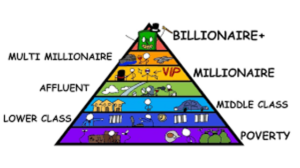
The Five Stages of Building Wealth

What to Expect on the Way Up

Just as there are stages one goes through in building a business, are there “stages” one goes through in building wealth? As we get richer, are there points at which we will encounter problems that could slow us down or even reverse our course and send us moving in the wrong direction?
 
And likewise, are there opportunities that come along on our journey that have the potential to accelerate our upward climb? Opportunities that can quickly and easily leapfrog us from one level of wealth to a higher one?
 
The answers aren’t obvious. And when I began to think about it, I had doubts. Maybe, I thought, the experience of growing richer is unique for everyone. Perhaps there is nothing universal about it – no common challenges and opportunities that can be identified and understood.
 
I thought back to my own journey – to the roadblocks that suddenly rose up before me and the forks in the road that made me wonder which path to take.
 
I remembered the painful moments when I allowed those roadblocks to halt my forward progress. I remembered the disappointment I felt, the self-doubt, and even the psychological battering I gave myself for ever thinking that I could one day become rich. I remembered, for example, feeling rich after I bought my first house, only to have my accountant explain to me that I had no wealth at all. What I had was a bank account with $5,000 in it and a $170,000 mortgage. 
 
As time passed, those painful memories were joined by happier ones. I remembered the first year I earned $150,000, and the first year I earned a million dollars, and the first year I earned $10 million.
 
And something interesting happened. A pattern began to emerge. It became clear that wealth does not accumulate in a straight line. It grows in stages – five stages, to be exact.
 
Two Ways to Measure Wealth 

The two most common ways to measure wealth are by income and net worth.

Income is an unreliable metric for defining wealth, since one can have a very high income and still be living from paycheck to paycheck and be deeply in debt. Nevertheless, for my purposes here, I’ve taken income into consideration because, in thinking about the challenges and opportunities I felt at various points along my own path from poverty to wealth, I recognized that many of them arose due to the level of my income, rather than the level of my net worth.

So, after much reflection and perhaps a bit too much research, this is what I’ve come up with…

The Five Stages of Wealth by income:

1. Less than $100,000
2. $100,000 to $350,000
3. $350,000 to $1 million
4. $1 million to $10 million
5. More than $10 million

The Five Stages of Wealth by net worth:

1. Zero to $100,000
2. $100,000 to $1 million
3. $1 million to $10 million
4. $10 million to $100 million
5. More than $100 million

Stage One: Income less than $100,000; Net worth zero to $100,000  

Description: Life is tough. You are living paycheck to paycheck, barely scraping by. You have debt and no savings.

Problem: You are not making enough money to support yourself – and certainly not enough to support a spouse or children. You may lack the knowledge, skills, and credentials you need to get a higher paying job. You may feel stuck. And the people around you may assume that this is simply your lot in life.

Solution: You’ve got to start making a lot more money. Not eventually. Not next month or next week. You have to start right now.

Challenge: You need to reinvent yourself. You must make a serious commitment to not just make more money, but to become a non-stop money-making machine.

Game Plan: Get humble. Stop making excuses. Take responsibility for your current condition.

Stage Two: Income $100,000 to $350,000; Net worth $100,000 to $1 million 

Description: You are (or should be) paying your bills and living modestly, but not saving.

Problem: You are working hard, but you are not making enough money to grow your wealth through investing. Because you are working so hard just to keep up with your financial obligations, you are feeling tapped out of the energy required to make a change.

Solution: You need to jack up your income – and not by 5% or 10%. You need to increase your income by 30% or more.

Challenge: You cannot safely do that, no matter how smart you think you are, through investing in stocks and bonds. Nor do you have the time and money to start a business that could, at least on paper, bring you more income.

Opportunity: You have only two possible ways to significantly increase your income by 30% or more: Find a job within the company you currently work for that will pay you 30%+ more than what you are making now. Or find a job with another company that will start you off with a salary that is 30%+ more than what you are making now.

Game Plan: You can pursue either option – or you can pursue both options simultaneously. If I were you, I would chart a course for myself to become a more valuable employee than I am now, with the intention of eventually being so valuable that my boss would be happy to give me a 30% raise. At the same time, I would research other companies in my industry, pick one that is growing quickly, and get a job with them.

Stage Three: Income $350,000 to $1 million; Net worth $1 million to $10 million 

Description: You are (or should be) paying your bills, living well, and saving an increasing percentage of your net income.

Problem: With this level of income, you can live a rich life – so long as you spend your money wisely. The problem for many people that move into this income range is that they do not spend their money wisely. They attempt to upgrade the quality of their lives by increasing their spending even faster than the rate at which their income is increasing.

Solution: You have to train yourself to be financially disciplined. You can increase your spending, but only by a fraction of the amount that your income is increasing.

Challenge: You have to resist the urge to ratchet up your spending too much in an effort to ratchet up your enjoyment of your increased income.

Opportunity: By controlling your spending, you will have enough extra money to use to increase your wealth through investing.

Game Plan: When your income is $150,000 to 250,000, you should save at least 10% of what you have after taxes. When your income gets to between $500,000 and $1 million, you should aim at saving 20%.

Stage Four: Income $1 million to $10 million; Net worth $10 million to $100 million 

Description: You are paying all your bills without thinking about it. You can buy a more expensive home, drive luxury cars, buy expensive toys, and take amazing vacations.

Problem: When you have an income this large, it is easy to lose any sense of financial discipline.

Solution: You have to realize that, at some point, spending a lot of money will do little to nothing to improve the quality of your life.

Challenge: You need to continuously remind yourself that spending money foolishly, even if you have plenty to spend, is not good. It does not make you feel better about yourself. Nor does it make your friends and loved ones admire you.

Opportunity: Once you are in the habit of spending money wisely, you will be amazed at how quickly your wealth increases. One opportunity at this level is the safety net you can build for yourself against future, unexpected financial damage. Another is the experience of being able to share your wealth.

Game Plan: Continue saving an increasingly large percentage of your net income as it rises. Move your goal up from 20% at $1 million to 25% at $2 million, 30% at $3 million, 40% at $4 million, and 50% at $5 million. At the same time, begin to experiment with donating some of your money to a cause or charity you believe in.

Stage Five: Income more than $10 million; Net worth more than $100 million 

Description: You are among a very tiny percentage of income earners. In theory, you can afford to buy anything you want.

Problem: You can buy anything you want.

Solution: In making spending decisions, recognize that you will get much more pleasure and satisfaction from the money you share with others.

Challenge: Charity at a multimillion-dollar level is difficult and complicated. You have to learn how to give away your money wisely.

Opportunity: You must continue to find something meaningful to do with the money you don’t need (which is now most of your income).

Game Plan: Move slowly here, because it’s easy to do more harm than good with charitable donations.

The Main Lessons I Learned on the Way Up 

Looking back on my own journey, what surprises me most is not how complicated building wealth was. It’s how predictable and solvable the problems at each stage turned out to be – and how rewarding the opportunities were.

Are We Looking at a Potential Economic Crisis?

BS, a reader and friend, asked my opinion of something hedge fund manager Paul Tudor Jones said recently in an interview with Patrick O’Shaugnessy. Jones pointed out that the US is more dependent on equity prices than ever, with the stock market cap currently standing at 252% of GDP – a significant increase from the 65% in 1929 and 170% in 2000. And he suggested that a 35% correction could trigger an economic crisis.

Here’s what I think…

Jones is talking about what is called the “Buffet indicator” – the total stock market value divided by GDP.

And he’s right. At ~250%, it’s historically very high. But critics of this metric would argue that GDP is domestic, but the market cap includes global earnings. And since many large US companies earn a large share of their profits overseas, this needs to be factored in. Another factor is that many of today’s major corporations are high-tech, and they can grow faster than bread and butter companies.

So yes, 250% is, by simplistic historical standards, very high. But it’s not apples-to-apples with 65% in 1929.

When the stock market takes a dip, corporate CEOs slow down hiring and other expenditures, credit conditions tighten, and consumers pull back on spending. That, in theory at least, has a stabilizing effect on the market.

I did some quick AI research and found that we have already had three drops that were close to 35%.

* 2000–2002: ~50% Nasdaq decline, recession mild
* 2008–2009: ~55% decline, but that was a banking crisis, not just equities
* 2020: ~35% drop, economy snapped back quickly

The key distinction, my research suggests, is a matter of “cause and effect.”

If a stock market drop is caused by tightening liquidity or sentiment, it’s going to be painful but will likely be survivable. A drop tied to banking system stress or credit collapse, though, is inarguably dangerous.

The way things have been going since Nixon ended the gold standard is that the Fed is always trying to backstop the stock market through fiscal measures that release liquidity to create some stability. But that stability is temporary – and then the cycle repeats itself and US debt becomes greater and greater. So logic dictates that at some point we could have an economic collapse.

Bottom line: Jones is right in saying that equity valuations are historically high, and he’s probably also right in that the economy is more sensitive to asset prices than before. But to say that the leap to 35% will automatically trigger “systemic economic damage” may be overly simplified.

I hate to say it, but what all of this means to me is that neither Jones nor anyone else can know for sure.

Readers Write: Re “Teach Your Children Well”

“Thank you for this outstanding essay. I’ve never read any defense of the liberal arts that was so powerful, yet so concise. This made me think: I don’t know your stance on religion, but wouldn’t you add theology (as a liberal art) and fear of God as bonus teachings that complete an education?” – CL

My Response: No, I don’t see religion as a liberal art in the sense I was using it. My essay was about essential skills for lifetime success – and my point about the traditional liberal arts curriculum is that it’s designed not just to convey knowledge but, more importantly, to teach the skills I was advocating.

You could argue that some religions espouse behaviors that require skill building, such as kindness and charity. But they cannot be taught the way a skill can be taught. One could even say that they cannot be taught at all, that they can only be learned. And I think that’s generally true. We learn those behaviors primarily by observation and imitation. You can try to teach your children to be kind and charitable, but unless they see you acting with kindness and charity, they will likely become what they see, not what they are told to do. Which is how I see most religions: a set of ideas and beliefs that are not just taught but also enforced, and lots of adherents, including religious leaders, that don’t practice what they preach.

Another reason I wouldn’t include religion as a liberal art is because there is nothing inherent in it that is universally good. If you say it is the belief in a god, I’d point out that though Christians, Muslims, and Jews share a belief in monotheism, the values they teach and embody are, in some ways, radically different.

Postscript: Have you heard of “Operation”?

“Operation” is a battery-powered game that was invented in 1964 by an American college student and sold by him to the Milton Bradley company for $500. Today, the franchise is worth about $40 million.

In this sorta-funny, definitely gross bit from “Saturday Night Live UK,” Riz Ahmed plays a man who becomes addicted to playing it.

The Triumph of the Executive Order

Notes from My Journal: 

Perhaps the most effective PR strategy that Team Trump adopted for his second term of office is the protocol and precedent for signing executive orders.

Understanding a reality that has been true since January of 2016 – that half of US voters and three-quarters of the US media have advanced TDS and will stop at nothing to impeach him and oppose all the promises he made when running for president in 2024 – they decided to have the POTUS issue a continuous stream of increasingly wide-reaching and in some cases downright alarming executive orders. And to issue them relentlessly, one after another, so that neither his political opponents nor the mainstream media would have time to launch a successful counter-offensive. By the time they could muster up their argument about what was wrong with EO #1000, Trump would be announcing EO #1001, which would seize the headlines for the next 24 to 48 hours, leaving EO #1000 all but something in the past.

This has allowed Trump to, among many other things, launch his border strategy, which included restricting birthright citizenship (currently blocked in court), reinstating travel restrictions, drastically reducing refugee admissions, initiating a federal government and workforce overhaul, creating DOGE, ending Radical Indoctrination in K-12, restoring biological definitions of sex in federal policy, and bans and rollbacks on federal energy and regulatory policies.

It has been a two-edged political sword for the Democrats. While the attention span of Trump’s amateur and professional critics has greatly shortened since January, so has the attention span of Conservatives and Libertarians who are quickly forgetting and even discounting so many of Trump’s accomplishments.

It’s One of the Biggest Scams in US History

Yet, it’s on the verge of becoming yesterday’s news! 

Can you name the three biggest financial scams of the past 25 years?

If you guessed Enron (around $60 billion), WorldCom (around $165 billion), and Lehman (around $65 billion), you guessed correctly.

The details of these scams, which were big news in 2002, 2008, and 2001, are clearly remembered today by the small percentage of Americans who invested in them (probably in the low millions). But for most people, they simply evoke the vaguest of memories about rich people losing some of their money by betting on fraudulent companies.

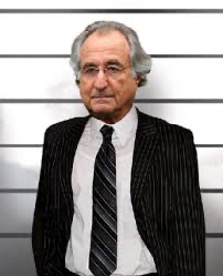
However, if I asked you to name two scam artists who ripped off innocent people of billions of dollars in recent years, you would probably remember Bernie Madoff and Sam Bankman-Fried.

Those stories hit harder, I think, for one very good reason: The rip-offs were conceived of and conducted by individuals, rather than faceless financial corporations. 
 
And if I asked you how big those rip-offs were, you might remember that they were both in the $50 billion to $60 billion range – an amount that seems almost inconceivable, given that they were pulled off by scumbags that had no reputable associations to give them credibility, no government-verified annual reports, and no real, traceable numbers to establish their false claims.
 
You may even be wondering, “Why haven’t I seen a detailed explanation of how they managed to steal so much money from wealthy, sophisticated investors and even respectable financial institutions?”
 
Well, the answer is interesting. 
 
Consider that Madoff’s $64 billion “greatest Ponzi scheme in history” shrank down to single-digit billions in unrecovered principal, thanks to clawbacks and Justice Dept. distributions that paid back around 94% of verified claims. 
 
And, in fact, the same thing is true of all of these huge scams: Investors incurred enormous losses thanks to inflated valuations and fake statements. But if you dig down to the hard cash that actually went in and wasn’t ever recovered, the numbers drop dramatically. (Understand, I’m not making light of those losses. They caused real pain for a lot of people. But it wasn’t what the headlines implied.) 
 
I bring this up because all of it is a prelude to a different kind of financial scandal – one that could eventually dwarf the others in terms of money taken not only from the pockets of wealthy and sophisticated investors, but from tens of millions of ordinary American taxpayers who will never see that money again.
 
It’s a big story – the story of a massive criminal enterprise that involves not only the scamsters themselves, but the political systems in which they operated, including local bureaucracies, the federal government, and the media.
 
Finally – and this may be the most interesting part – it is a story about culture and immigration and the manipulation of the American dream.
 
A Factual Expose:
The Largest Welfare Fraud in US History –
Why Are So Few People Talking About It?
 
You may have seen a fleeting headline or two about “Feeding Our Future,” the Minnesota nonprofit accused of siphoning off roughly a quarter‑billion dollars in federal child‑nutrition reimbursements during the pandemic. Federal indictments include descriptions of fake meal sites, fabricated attendance logs, and money spent on luxury cars and homes instead of food for children. 
 
The case involved approximately $250 million in allegedly fraudulent federal child-nutrition reimbursements, according to Justice Dept. filings. That alone made it one of the biggest welfare fraud cases in recent years. But when federal prosecutors dug into it, the numbers they came up with were much larger.
 
According to federal and state officials that reviewed the findings, the total fraud money paid out to scammers since 2018 across 14 Medicaid and human-services categories is somewhere between $9 billion and $18 billion.
 
And that’s just in Minnesota. The same scam and the same group of operators have now been discovered in New York and California.
 
Especially interesting is how all of this was brought to light. Because it wasn’t uncovered by a famous reporter or a major news outlet. This massive case of fraud was pushed into the national conversation by a 20-something, self-titled citizen investigator named Nick Shirley, who went on YouTube to reveal what he had discovered about empty Somali-run daycare centers billing the state for full-time care. Supplying spreadsheets, emails, and videos of altercations he’d had with those running the daycare centers, Shirley did what mainstream media was unable or unwilling to do.
 
Internal staff and state auditors had been complaining for years about suspicious billing patterns. The Minnesota Dept. of Education had referred Feeding Our Future to the FBI during the pandemic, and sloppy contracts were flagged by whistleblowers long before Shirley’s story went viral. 
 
But because the state’s Somali population was implicated in the fraudulent activity, the issue became a politically charged hot potato. Early reports about it were called fake news, and the early voices that expressed outrage over it were labeled xenophobic and racist.
 
Just the Facts: 
Why It’s Called the Somali Scandal 
 
Minnesota is home to approximately 94,000 people of Somali ancestry. It is one of the biggest Somali communities in the country, but it remains a relatively small share of the overall state population of roughly 5.7 million. 
 
Yet the demographic distribution of defendants charged in Minnesota fraud cases tied to welfare, Medicaid, and other child-assistance programs has been striking. 
 
As of early 2026, 98 individuals had been charged – and of those, 85 were Somali American, according to federal sources. (Independent demographic research shows that among Somali-headed households in Minnesota, approximately 54% receive SNAP benefits, 73% have Medicaid participation, and nearly 89% of households with children receive some form of means-tested welfare assistance.)
 
The Somali Fraud in Historical Perspective 
 
What does this all mean? 
 
If you’re measuring scandals by headlines, Bernie Madoff wins. If you’re measuring by suggested wealth destroyed, the big corporate scandals top the list. 
 
But if you measure by something relatable to every one of us in terms of real dollars leaving taxpayers’ wallets that will never be reclaimed, the so-called Somali Scandal was larger, by far, than any scheme ever that bilked taxpayers through government-legislated social services.
 
What is perhaps more disturbing than the size of the scam is how many Somalis were involved in it. It wasn’t merely several dozen con artists stealing money surreptitiously. It was the thousands – possibly tens of thousands – of Somali parents that were playing the con from the other side by getting cash payments to enroll their children in daycare programs that they knew were fraudulent because their children never used them.
 
And for me, at least, there is another level of shame and culpability here. It is the politicians and media that didn’t put an end to it for years and years, despite numerous warnings from whistleblowers. 
 
The list of corrupt pols went from local bureaucrats right up to the governor and the government bureau chiefs who stifled whatever investigations the whistleblowing started and continued the funding and distribution of these billions of dollars of stolen money.
 
And if all that is not sickening enough, when the story was finally brought out by Nick Shirley, the mainstream media began a campaign to discredit him. And when that didn’t work, to accuse him and anyone else who called for justice to be xenophobic racists.
 
And guess what? The defenders of the largest government/private financial scam in my lifetime has all but disappeared from political and social policy discussions.
 
It’s now more than four months since Nick Shirley’s vlog went viral. And apart from some “racist” conservatives that want to see more than a dozen or so minor players in the scheme go to jail, nobody in the media – not even the conservative media – is talking about it.
 
Culture, Clans, and Human Values 

Ayaan Hirsi Ali is a Somali-born Dutch American writer, activist, and former politician. According to her, Somalia’s core organizing principle is clan allegiance. In Somalia, every child is taught their lineage and who they “fight and die for.” And when 100,000–150,000 Somalis move to a place like Minnesota, you inevitably get transplanted clan dynamics.

Politics, trust, and conflicts are all filtered through something called “amoral familism,” she says, a term coined by Edward C. Banfield in his 1958 book The Moral Basis of a Backward Society. It describes a social system where loyalty to the family takes precedence over everything else.

Hirsi Ali writes about it here in The Free Press.

And speaks about it here.

Charles Ponzi and the Ever-Reappearing Ponzi Scheme

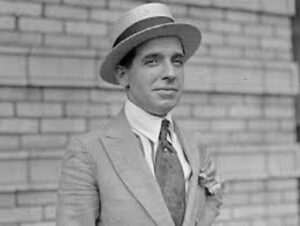
Charles Ponzi arrived in the US in 1903, broke, ambitious, and without the wherewithal to hold a steady job and build a future for himself, as did so many thousands of others.
 
After quitting one job and getting fired from the next, he spent several years tinkering in the street hustles and con games that were popular at the time, but never managed to get very far with them.
 
He did, however, get a bit of an education from his grifting: He learned that the cons that worked the best – the ones that regularly produced the biggest stakes – were those that preyed upon the target’s desire to “get rich quick.” One scheme in particular involved gambling games where the target wins the first few times and is then encouraged to increase his wagers to make even more money, until he loses all or most of it. (Ponzi was said to be very good at this.)
 
In 1920, Ponzi devised the scheme that bears his name. It was essentially the same hustle he’d been practicing for several years, but he upgraded his look and his language and changed the frame of the ploy from gambling to investing.
 
He presented himself as an authorized seller of “international postal-reply coupons” that would give investors a 50% return within 45 days. 
 
That should have raised eyebrows – and it did, at first. But after several months of regularly giving his early investors the 50% returns he’d promised, word got out. Ponzi became trusted and admired, and the scheme started selling itself.
 
The reality – and the part of the scheme that was almost impressively audacious: There was no such thing as an “international postal-reply coupon.” But it sounded like some sort of financial instrument that could have existed. And, like Ponzi’s old cons, early investors were allowed to “win,” paid with money scammed from new marks.
 
Eventually, the heralded story of Ponzi’s ability to deliver what he promised was replaced by the dawning knowledge that something was awry. 
 
The genius – if you want to call it that – of the scheme was not the churning of other people’s money. That was how all such cons worked. The genius was that when he upgraded the name of his game from gambling to investing, he kept the promised ROI at 50% – which had some plausibility to it – rather promising 100% or more in the hope of bilking more people. This, incidentally, was the same strategy that Bernie Madoff used in showing investors falsified past returns in the 15% range, rather than promising 30% to 50% returns, which would have made experienced investors highly doubtful.